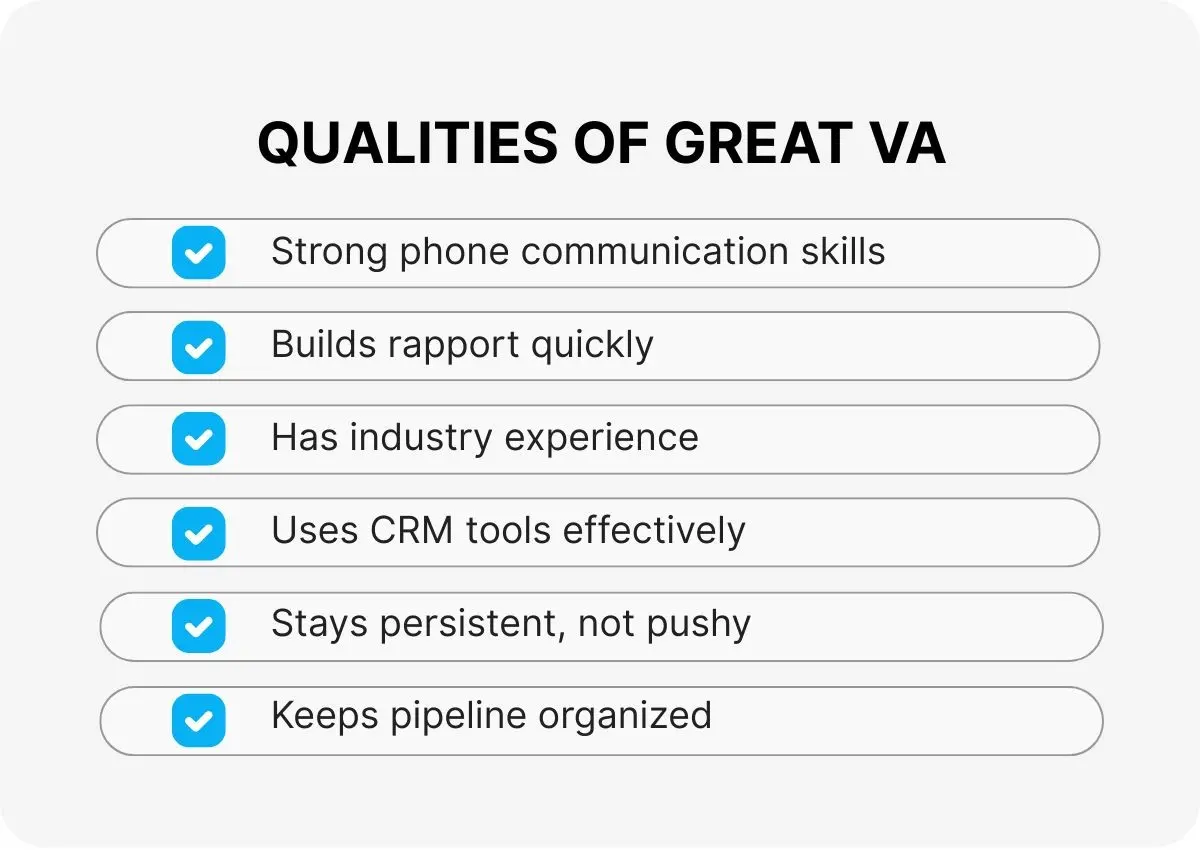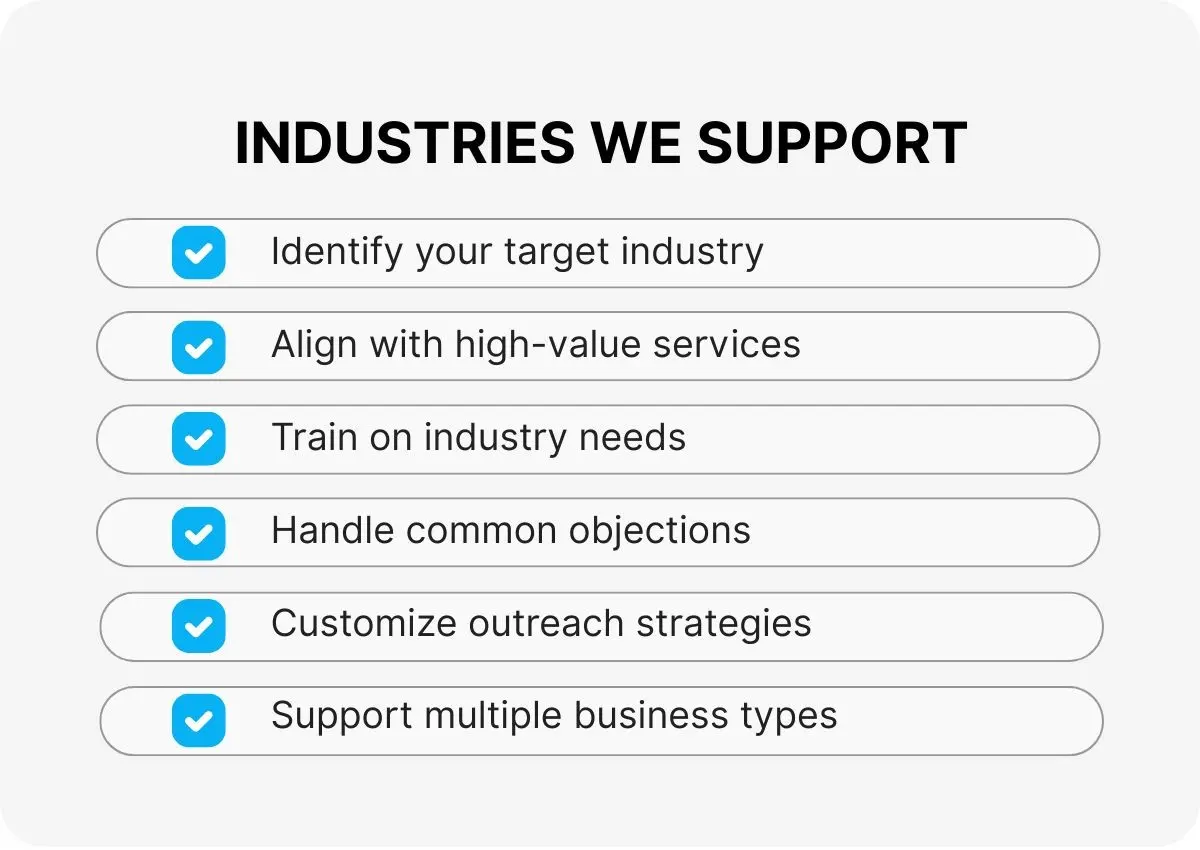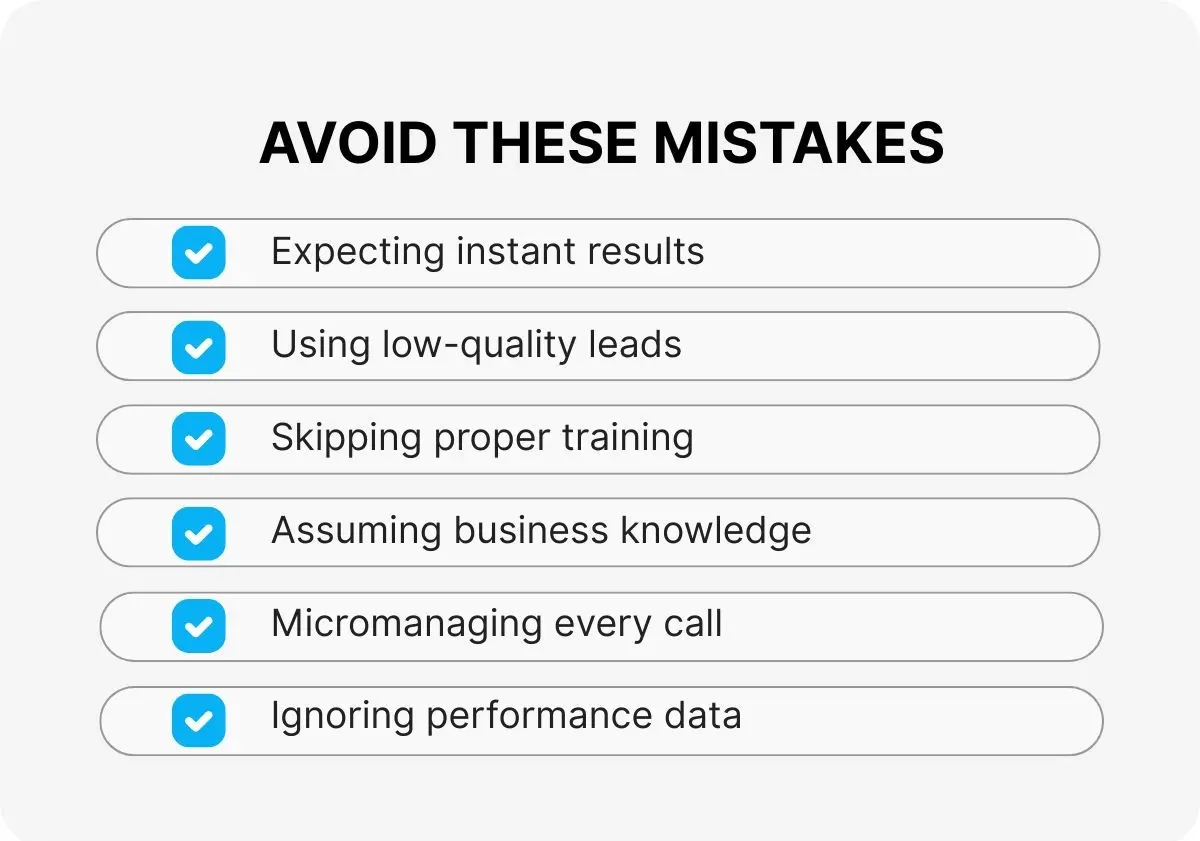
Navigating the cost of appointment setting services can be challenging. Stealth Agents provides a cost-effective way to maintain a strong sales pipeline without breaking the bank. Our skilled appointment setters manage lead outreach, follow-ups, and scheduling, so you can concentrate on closing deals and growing quickly—helping you save money while boosting your ROI.
How much does appointment setting actually cost?
- Identify and qualify leads: They zero in on prospects who truly fit your target audience and show real interest in what you offer—no more wasting time on dead-end contacts.
- Understand the costs involved: Whether it’s the pricing for personalized calls, professional LinkedIn outreach, or tailored emails, the cost of appointment setting services depends on the methods used to engage leads and build connections.
- Schedule meetings: They handle the back-and-forth of coordinating calendars, confirming availability, and making sure every meeting is set at a time that works for both sides.
In 2025, appointment‐setting services typically cost between $50 to $500 per scheduled meeting, depending heavily on lead quality, industry, and the complexity of qualification. Hourly rates for outreach or setter work often range from $25 to $75/hour, though retainer packages can climb to $2,000-$5,000+ per month for high-volume, high-touch campaigns. Setup or onboarding fees—covering things like scripts, tools, training, and strategy—commonly fall in the $300-$1,000 range. At Stealth Agents, we transparently structure appointment-setting costs so you know exactly what you’re paying for—not just the appointments, but the real ROI behind each connection.
Outsourcing appointment-setting services is a proven way to increase conversions and streamline sales processes, but how much will they cost in 2025? With businesses relying more on virtual assistants and automation, the demand for skilled appointment-setting professionals continues to grow, leading to varied pricing structures based on industry needs, service models, and expertise levels.
Studies show that companies using professional appointment setting services experience higher lead conversion rates and improved efficiency, making it a worthwhile investment. Whether you opt for hourly pricing, per-appointment rates, or monthly packages, understanding the cost factors can help businesses make informed decisions.
A key consideration when looking into appointment setting services is the cost involved.
By understanding the pricing models, you can ensure you’re investing in a service that connects your sales team with qualified leads, helping to eliminate wasted spend and maximize your return.
Their expertise ensures that only qualified leads reach your sales team, ultimately boosting productivity and maximizing the return on investment for your sales efforts.
In short, outsourcing appointment-setting isn’t just about saving time—it’s about focusing your resources where they matter most, ensuring your team connects with prospects who are actually ready to buy.
For companies looking to outsource cost-effectively, Stealth Agents provides expert appointment-setting virtual assistants tailored to your needs. Book a free consultation today to explore virtual assistant pricing and discover how appointment setting services can help you scale in 2025.
When comparing appointment setting services, it’s important to understand the pricing models available and how they might align with your business needs and budget. Here’s a breakdown of the most common options, including what you get for your investment, pros and cons, and typical price ranges:
1. Hourly Rate
When considering the cost of a virtual setter, one common pricing model is the hourly rate, which typically ranges from $25 to $75 per hour.
This rate covers all the time spent on making calls, preparing for appointments, and creating reports.
Companies usually bill monthly, calculating the total hours worked to determine the final cost.
Pros:
- Flexibility to scale hours up or down as needed.
- Potential for high-quality appointments since more time can be devoted to lead qualification.
Cons:
- Unpredictable monthly costs based on fluctuating hours.
- Requires ongoing monitoring to ensure productivity.
2. Pay-Per-Appointment
The pay-per-appointment model can range from $25 to $75 per hour. The price variation is largely due to the complexity of the setter service provided and the industry in which the company operates.
For example, some companies may charge as much as $600 per appointment, especially if the service requires high expertise.
3. Pay-Per-Lead
This model charges based on the time spent generating leads rather than the number of leads themselves. Depending on various factors, the cost can range from $20 to $200 per hour.
These factors include the complexity of your target market and the customization required for your campaign.
4. Pay-Per-Qualified-Lead
In the pay-per-qualified-lead model, businesses pay between $50 and over $1,000 for each lead that meets specific criteria.
The process involves additional steps to ensure that the leads are well-qualified before they are handed over to the sales teams.
While it is more expensive than other models, the increased cost is justified by the higher quality and complexity of the generated leads.
Pros:
- Higher quality prospects who meet your specific requirements.
- Reduces time spent by your sales team on unqualified leads.
Cons:
- Higher per-lead costs.
- May require more complex qualification criteria and communication.
5. Flat Fee
This means you pay a set price ranging from $500 to over $5,000 per project.
This fee typically covers all necessary expenses for your campaign, including script development and strategy creation.
Pros:
- Predictable, all-in-one pricing.
- Covers a comprehensive set of services from scripting to reporting.
Cons:
- Less flexibility if your needs change during the campaign.
- Upfront commitment may be higher than pay-as-you-go models.
Understanding these models empowers you to select the structure that aligns best with your business goals, budget, and appetite for risk.
Each offers unique advantages, whether you prioritize predictable costs, higher-quality leads, or flexibility in scaling your outreach efforts.
5. Flat Fee
This means you pay a set price ranging from $500 to over $5,000 per project.
This fee typically covers all necessary expenses for your campaign, including script development and strategy creation.
6. Setup Fees
Setup fees for appointment-setting generally range from $300 to $700. These fees cover essential initial costs, including script development and the creation of effective campaign strategies.
So, you should note that this is an additional charge in addition to the regular service pricing models.
Differences in Cost: B2B vs. B2C Appointment Setting
When evaluating the cost of appointment setting, it’s important to recognize how B2B and B2C services differ. Generally, B2B services command a higher price tag.
Why? These campaigns often target decision-makers at companies, requiring more in-depth industry knowledge, longer sales cycles, and a greater degree of lead qualification.
The process involves tailored outreach and careful vetting of each opportunity, all of which increase the time and effort involved—and, ultimately, the cost for B2B appointment setting companies.
In contrast, B2C appointment setting usually focuses on higher call volumes but simpler criteria for booking.
The leads are often less complex to qualify, and the sales process tends to be shorter. This efficiency is reflected in lower costs per appointment or lead.
To sum things up:
- B2B appointment setting: Higher cost per lead or appointment due to complexity, longer cycles, and need for specialized expertise.
- B2C appointment setting: Generally more affordable, with simpler qualification and faster turnaround times.
Factoring these differences into your budget can help you choose the right model for your specific business goals.
How Much Should I Pay for an Appointment Setter from Stealth Agents?

What Factors Affect Appointment Setting Services Cost?
1. Pricing Model
The primary elements include the service provider’s experience and expertise. More seasoned professionals usually charge higher rates due to their refined skills and proven track records.
Moreover, the complexity of the target market significantly impacts pricing. Services aimed at niche or highly specialized markets may demand a premium due to the increased effort required to generate leads.
Another crucial aspect is the geographical scope; international campaigns typically incur higher costs than local or regional efforts.
Lastly, the number of appointments set each month can affect pricing, with higher volumes potentially offering economies of scale and reduced per-appointment costs.
2. Target Leads
When you, different industries and market segments require specialized approaches, directly impacting the pricing structure.
Conversely, reaching out to a broader, less specialized audience can be more straightforward and, thus, less expensive.
When you hire appointment setters, the industry’s complexity and the specificity of the target lead profile influence the overall costs associated with services.
3. Call Volume
The number of calls the service makes directly influences the overall price. Volume typically means more resources are needed, increasing the cost.
When a company needs a service to make thousands of calls a month, the appointment-setting service will need additional staff and tools to handle the workload efficiently.
On the other hand, lower volumes typically result in lower costs since fewer resources are required.
4. Complexity of Products or Services
The cost will naturally be higher if your business requires detailed knowledge, such as understanding technical products or services.
This happens because the agents need extensive training to understand and adequately communicate the intricacies of your offerings.
Moreover, more complex ones often involve sophisticated software to manage appointments, requiring additional investment.
5. Service Scope
Some lead virtual assistant providers may offer basic packages that include only scheduling, while others offer more comprehensive solutions that can entail lead generation, follow-up calls, and detailed reporting.
The customization and personalization level also impact costs; tailoring to fit specific industry needs or adapting scripts to match a company’s unique voice can require additional resources and expertise.
The expertise and experience of the agents delivering these further affect the pricing.
6. Technology Integration
Finally, the level of technology involved in appointment-setting significantly impacts the overall cost.
Advanced technologies like CRM software, automated dialing systems, and AI-driven analytics tools can streamline operations and increase efficiency, as can the virtual assistant tools.
Automated dialing systems save time by connecting agents directly to clients, while AI tools can analyze customer data to identify the best times to reach out.
Technological advantages come at a higher cost due to initial investments, maintenance, and updates.
How to Reduce Appointment Setting Services Cost?
First, consider outsourcing agencies specializing in this area (Stealth Agents); they often provide more affordable rates than hiring full-time staff. Partnering with experts in call center appointment scheduling ensures you get professional support without the overhead costs.
Another effective approach is to use technology and automation tools to streamline the process, saving time and money. Moreover, training existing employees to handle appointment-setting tasks can eliminate the need to hire additional personnel and only hire setters, thus reducing costs.
Why Do You Need Appointment Setting Services?
These help manage and schedule client meetings, ensuring your sales team can focus solely on closing deals rather than hunting for leads.
Is Setter legit? Absolutely, as these streamline operations and optimize sales efficiency.
One of the primary benefits of being recognized among the best companies is efficiency; your team can concentrate on what they do best, while the appointment-setting service ensures your calendar is filled with high-quality leads.
Moreover, these provide a professional touch, making a great first impression on your prospects and laying a solid foundation for future business relationships.
What is the Pay Appointment Setting?
Pay Per Appointment Setting is a service where a business pays for each meeting scheduled with a customer.
Instead of paying for leads that might not be interested or qualified, the business only pays when a confirmed appointment is set up.
Frequently Asked Questions
What is the average response time for appointment setting services to deliver qualified leads?
Most appointment setting services deliver qualified leads within 24-48 hours after first contact. The time can vary depending on the industry and how complex the lead requirements are. B2B leads may take longer because decision-makers are harder to reach, while B2C leads are often scheduled the same day.
How do appointment setting services handle time zone differences for global campaigns?
Appointment setters use scheduling tools and flexible work hours to manage time zone differences. They make sure to call prospects during their local business hours. Many services offer 24/7 coverage or have teams in different regions to handle international campaigns.
What industries typically see the highest ROI from appointment setting services?
Industries like technology, healthcare, financial services, and consulting often get the best results. These industries have longer sales processes that need skilled lead qualification. B2B software companies can see 3-5 times their investment back, while healthcare and financial services benefit from high-value clients.
How long should businesses expect to wait before seeing results from appointment setting campaigns?
Businesses usually see early results within 2-3 weeks of starting a campaign. By weeks 4-6, they can expect a steady flow of qualified appointments. Full results and improvements often take 60-90 days as scripts are adjusted and the target audience is better understood. Industries with longer sales cycles may take more time.
What qualifications should I look for when evaluating appointment setting service providers?
Look for providers with experience in your industry, a good track record, and clear reporting. Important qualifications include sales training, knowledge of CRM tools, and quality checks. The best providers offer dedicated account managers, regular updates, and experience working with businesses like yours.
How do appointment setting services ensure data privacy and compliance with regulations?
Reputable services follow strict rules like GDPR, CCPA, and TCPA. They use secure CRM systems, encrypted communication, and signed non-disclosure agreements. They also keep records of consent, respect do-not-call lists, and train their teams on privacy laws.
What metrics should businesses track to measure appointment setting service performance?
Key metrics include how many appointments show up, how many turn into sales, the cost per lead, and the return on investment (ROI). Other important numbers are the ratio of calls to appointments, lead quality scores, and the average deal size. Tracking these helps improve the campaign and measure success.
How do seasonal fluctuations affect appointment setting services costs and availability?
Costs can go up by 15-30% during busy times like Q4 because of higher demand and fewer prospects available. Holidays may slow down response times, which can delay campaigns. Some providers adjust their pricing or strategies to handle slow periods and take advantage of busy seasons.
What training do appointment setters receive before handling client campaigns?
Appointment setters usually get 40-80 hours of training. This includes learning sales techniques, CRM tools, industry knowledge, and communication skills. They also practice handling objections, customizing scripts, and following compliance rules. Ongoing training helps them stay updated on new tools and market trends.
How do appointment-setting services integrate with existing CRM and sales tools?
Most services work with CRMs like Salesforce, HubSpot, and Pipedrive. They sync lead details, appointment info, and call history in real-time. Integration includes automated follow-ups, lead scoring updates, and smooth handoffs to your sales team to keep everything running smoothly.