
Updated Sep 13, 2026
The right supply chain outsourcing model depends on the work, risk, systems, and service level you need.
Supply chain outsourcing providers handle the operational work that eats time without generating revenue.
UN Trade and Development forecasts 1% growth in both total seaborne trade and containerized trade during 2026. Its Review of Maritime Transport 2025{target="_blank" rel="nofollow"} also projects average annual growth of 2% for total seaborne trade and 2.3% for containerized trade from 2026 through 2030.
Those forecasts point to steady volume, but they do not guarantee savings for one company. A buyer still needs to compare the full cost and operating risk of each option.
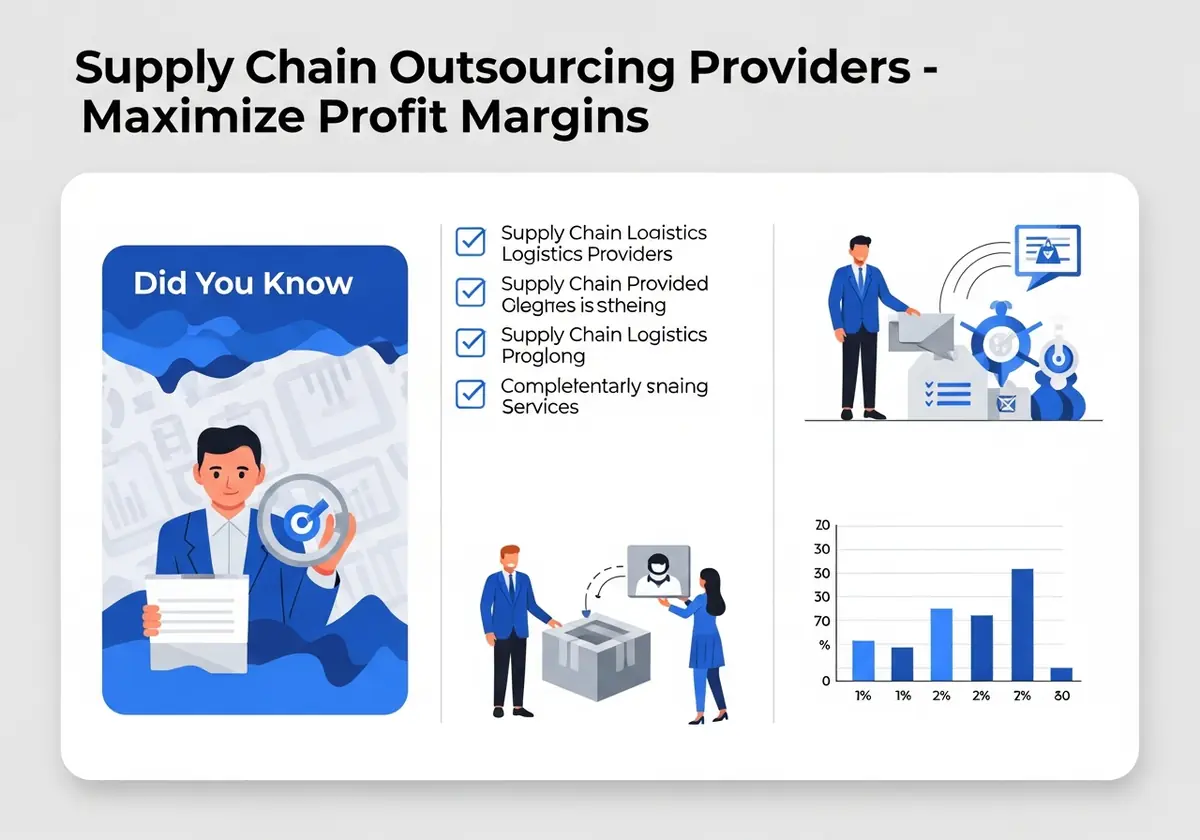
What is supply chain management outsourcing
Supply chain outsourcing providers handle defined parts of product movement, including ordering stock, tracking shipments, and coordinating with factories and vendors.
Instead of that work landing on your plate or getting spread across your internal team, a dedicated provider owns it. You stay focused on sales and growth while they keep operations running.
Supply chain outsourcing spans several models:
- Third-party logistics (3PL): A provider manages warehousing, transportation, and fulfillment
- Fourth-party logistics (4PL): A provider manages your entire supply chain network, including other vendors
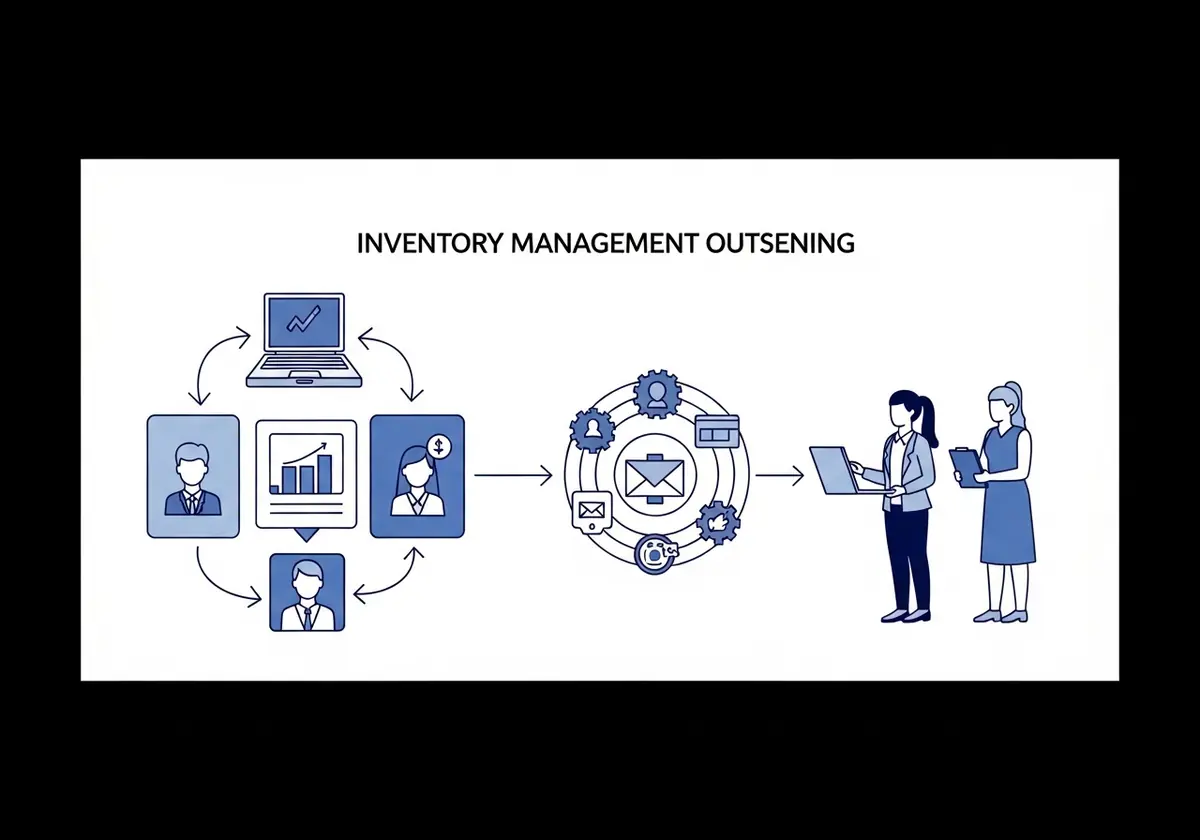
- Business Process Outsourcing (BPO): Back-office supply chain functions like procurement admin, data entry, and vendor coordination
- Logistics-as-a-Service (LaaS): Technology-driven, subscription-style logistics that scales with demand
What 2026 supply chain data shows
Current public data supports a measured approach rather than a promise of automatic savings:
- UNCTAD forecasts 1% growth in seaborne and containerized trade during 2026.
- UNCTAD reports that longer routes caused ton-miles to rise 5.9% in 2024, almost three times the growth in trade volume.
- The OECD Supply Chain Resilience Review{target="_blank" rel="nofollow"} found significant import concentration was 50% higher in the early 2020s than in the late 1990s.
- OECD modelling found that broad relocalization could reduce global trade by more than 18% and global real GDP by over 5%, without consistently improving resilience.
The OECD's June 2026 report on efficient, resilient, AI-enabled supply chains{target="_blank" rel="nofollow"} adds a useful operating test. Digital tools can improve forecasting and traceability, but companies still need data governance, cybersecurity, skilled staff, and accountable decisions.
The useful question for a buyer is specific: can a provider make dependencies visible, keep records current, and route an exception before it affects a customer?
For a full breakdown of adoption rates and ROI data across supply chain functions, see AI supply chain management statistics 2026.
Supply chain resilience in 2026
A resilient operation can see a dependency and respond when a route, supplier, or system fails. Useful controls include supplier mapping, alternate carriers, tested escalation paths, and agreed inventory rules.
An outside provider can maintain records and coordinate a response. It cannot remove the client's responsibility for sourcing choices, compliance, or continuity planning. Ask the provider to show how it handled a real exception and how the client approved each material decision.
AI and Agentic AI in Supply Chain Outsourcing
Some providers use AI for forecasts, route suggestions, document checks, and exception alerts. The buyer still needs to understand the source data and review process.
What AI does in your supply chain today:
- Demand forecasts based on sales history and current orders
- Route suggestions based on cost, capacity, and delivery limits
- Alerts for shipment delays or document errors
- Supplier scorecards based on agreed measures
SAP{target="_blank" rel="nofollow"} and Deloitte{target="_blank" rel="nofollow"} discuss AI agents that can complete connected supply chain tasks. Treat this as a control question, not a buying slogan. Ask which actions the system can take, which need approval, how staff review errors, and where the audit log is stored.
Where nearshoring fits
Nearshoring can shorten some transport lanes and make supplier visits easier. It can also raise unit costs or move a dependency without removing it.
The OECD warns that large-scale relocalization does not consistently make supply chains more stable. Test the decision by product and lane. Compare lead time, capacity, landed cost, supplier concentration, customs exposure, and recovery options before moving work.
What the quoted price misses
Headline pricing leaves out part of the cost. Compare proposals by total cost of ownership, including transition work, internal oversight, software, exceptions, and exit costs.
Hidden cost categories that traditional procurement overlooks, according to Supply Chain Dive:
| Cost Category | Description |
|---|---|
| Inventory carrying costs | Capital tied up in transit, warehousing, and safety stock |
| Quality and scrap | Rework, returns, and obsolescence from low-cost sourcing |
| Expediting fees | Air freight and rush orders when lead times fail |
| Regulatory compliance | Tariffs, customs documentation, import compliance labor |
| Reputational risk | Brand liability from supplier violations in Tier 2/Tier 3 |
Businesses working with full-service outsourcing providers get TCO transparency built in - because the provider owns the cost of delays, quality failures, and exception handling, not you.
ESG Risk in Outsourced Supply Chains
Environmental, social, and governance exposure does not stop with direct suppliers. Ask how a provider records upstream suppliers, checks evidence, and escalates a suspected violation.
Legal liability under international supply chain due diligence laws does not require knowledge of the violation. Companies can face penalties for what happens in their extended supplier networks regardless of whether they knew about it.
What this means for outsourcing decisions:
- Ask providers about Tier 2/Tier 3 visibility, not just first-tier supplier audits
- Request ESG screening protocols - leading providers now screen new suppliers against environmental and labor violation databases before onboarding
- Look for supplier diversity reporting - investors and regulators increasingly scrutinize supply chain ESG data in earnings reviews and due diligence
A provider can support monitoring and documentation. Your company still owns its legal duties and supplier decisions.
Logistics-as-a-Service (LaaS): The Flexible Model
Logistics-as-a-Service is emerging as a distinct outsourcing model - technology-driven, subscription-style logistics that scales up or down with your business rather than locking you into fixed capacity contracts.
LaaS differs from traditional 3PL in key ways:
- Pay-as-you-scale pricing instead of fixed warehouse lease commitments
- Technology platform access - real-time inventory visibility, order management, and analytics included
- Provider-managed compliance - the provider handles carrier compliance, customs documentation, and regulatory filings
- Rapid onboarding - most LaaS providers can activate new clients in days rather than the months required to stand up traditional logistics infrastructure
For businesses in growth mode or dealing with seasonal demand spikes, LaaS removes the capacity risk that comes with long-term logistics contracts.
How to Choose a Supply Chain Outsourcing Provider
The framework that separates strong providers from weak ones goes beyond price comparison. Top-performing businesses evaluate outsourcing partners across multiple dimensions:
1. Technology stack What AI and automation tools does the provider operate? Can they give you real-time inventory visibility? Do they integrate with your existing ERP or order management system?
2. Geographic network Where are their warehouses, carrier relationships, and nearshore operations? Do they have backup capacity in different regions if a primary facility is disrupted?
3. Track record in your vertical A provider with deep e-commerce experience thinks differently from one built around B2B manufacturing supply chains. Industry specialization matters.
4. ESG and compliance capabilities Do they audit their own Tier 2 supplier networks? How do they handle customs compliance, import regulations, and labor standards?
5. Scalability and flexibility Can they handle a 3x demand spike without service degradation? What is their SLA for onboarding new SKUs or product categories?
6. Pricing transparency Do they show you all-in costs, or do the savings on paper disappear into fees, surcharges, and handling charges?
The shift in 2026 is from transactional outsourcing - picking vendors based on the lowest quote - to strategic partnerships where the provider contributes to your business's long-term scalability and resilience.
Your Current Supply Chain Management Is Slowing You Down
Working constantly without gaining traction is exhausting. If a large part of your day goes to vendor emails and shipment tracking, that time is not going toward sales, customers, or anything that actually grows the business.
Most business owners hit this wall at some point. Outsourcing is the practical exit.
Supply Chain Management Outsourced Tasks
1. Inventory Management
A virtual assistant handles stock monitoring from day one. They track levels, set reorder alerts, and flag when products are running low before you hit a shortage - not after.
Your customers stay happy. Your fulfillment rates stay consistent.
2. Vendor Communication
They handle emails and calls with factories and suppliers so you are not chasing anyone. Orders stay on schedule. Problems get caught before they turn into expensive delays.
Consistent vendor communication also keeps supplier relationships healthy, which matters more than most people realize until something goes wrong.
3. Order Tracking and Logistics
They watch your shipments across every carrier every day. When a delay appears, they flag it and work to resolve it before it becomes your problem.
4. Data Organization
Clean records tell you exactly where your money is going. A Growth Operations Assistant can use tools like Notion to keep inventory counts, supplier reports, and lead data organized in one accessible place.
5. AI-Assisted Demand Forecasting
Leading supply chain providers now use AI tools to predict demand before shortages hit. Your team orders stock at the right time, not after a stockout has already cost you sales.
Forecasting can reduce both overstock and stockouts, but results depend on the input data, demand pattern, and planning rules. Ask a provider to test forecasts against your historical baseline before using them for purchasing decisions.
6. Supplier Risk Monitoring
Proactive monitoring of supplier performance, financial health signals, and compliance flags before they create operational problems. This is especially valuable for businesses with Tier 2 and Tier 3 supplier exposure.
7. Nearshore Coordination
Managing nearshore supplier relationships, local carrier networks, and cross-border compliance documentation for businesses shifting production closer to their markets.
Signs You Need Supply Chain Outsourcing Providers Now
Growth opportunities slipping by while you are buried in operations is a clear signal. If your team is constantly reactive instead of proactive, the operations side is likely the problem.
Specific indicators:
- Frequent stockouts or overstock situations eating into margin
- Vendors that are slow to respond or difficult to coordinate
- No real-time visibility into where your inventory or shipments are
- Your team spends more time on operational tasks than on sales or customer success
- You are manually tracking orders in spreadsheets
The right outsourcing partner changes that dynamic.
Compare outsourced and in-house costs
An in-house operations hire costs salary, benefits, office space, and months of onboarding. Supply chain outsourcing services skip all of that.
A virtual team from Stealth Agents costs a fraction of a local hire, and the work gets done without the overhead.
Stop Running Operations Alone
Your time is worth more than vendor emails and shipment tracking. Let supply chain outsourcing providers handle the operational detail while you focus on the work that grows revenue.
Hire Stealth Agents for Supply Chain Support
Stealth Agents provides supply chain virtual assistants with 10+ years of experience across e-commerce, manufacturing, and distribution. They handle the operations. You handle the growth.
When your systems are clean, your vendors are managed, and your team is not buried in operational work, the business runs better. Stealth Agents gives you that support without building an in-house team.
Frequently Asked Questions
1. What do supply chain outsourcing providers do every day?
They track shipments, coordinate with vendors, update inventory records, monitor supplier performance, and catch problems before they escalate. It is the backend operational work that keeps fulfillment running without you having to manage every detail.
2. How does outsourcing help me make more money?
When your supply chain runs well, you fulfill orders faster, lose fewer customers to delays, and free your team for sales. Calculate potential savings with your own workload, local employment costs, software, management time, provider fees, and transition costs.
3. Is hiring Stealth Agents expensive?
Not compared to an in-house hire. An office employee costs salary, benefits, equipment, and months of ramp time. With Stealth Agents, there is no overhead and pricing scales with what you actually need.
4. How quickly can I get started with Stealth Agents?
We match you with trained supply chain agents ready to start. There is no lengthy recruitment or onboarding delay.
5. How do I know if I need outsourcing?
Frequent order delays, messy inventory records, and vendors that are hard to reach are all clear signals. If your team is busy but growth is slow, operations are almost certainly the bottleneck.
6. Why choose Stealth Agents over a freelancer?
Freelancers work independently and are harder to manage at scale. Stealth Agents gives you a dedicated team with supervision, backup coverage, and systems built for consistent output - not a single contractor you have to manage yourself.
7. What happens if my business grows?
We scale with you. More agents, expanded hours, new task categories - without disrupting what is already working.
8. What are the biggest supply chain outsourcing trends in 2026?
In 2026, providers are adding AI-assisted forecasting, document review, and exception handling. Buyers are also paying closer attention to supplier concentration, alternate routes, cybersecurity, and traceability. The OECD's 2026 supply chain report explains why technology and resilience controls need to develop together.
9. What is Logistics-as-a-Service (LaaS)?
Logistics-as-a-Service is a technology-driven, subscription-style outsourcing model where you pay for logistics capacity as you use it rather than committing to fixed infrastructure. It includes real-time inventory visibility, carrier management, and compliance handling - all on a scalable pricing model. LaaS is particularly suited for fast-growing businesses and those with seasonal demand variation.
10. How do I evaluate supply chain outsourcing providers in 2026?
Look beyond the quoted price. Evaluate providers on their AI and automation capabilities, geographic network depth, ESG and compliance protocols, industry vertical experience, and total cost of ownership transparency. The best providers in 2026 function as strategic partners, not just transactional vendors.