According to Grandview Research, the global business process outsourcing market is on track to reach $525 billion by 2030.
Research shows that outsourcing can reduce operating costs by 30% to 50% for small businesses, while freeing up 20-25% of owner/manager time to focus on growth. Businesses that outsource non-core functions, like customer service, admin support, or marketing, often see improved efficiency and scalability within months of switching. By partnering with Stealth Agents, small businesses gain access to experienced virtual talent who deliver high-quality work affordably, letting you scale smarter, save more, and stay focused on what matters most.
This shows how much companies rely on outsourcing to grow and stay competitive.
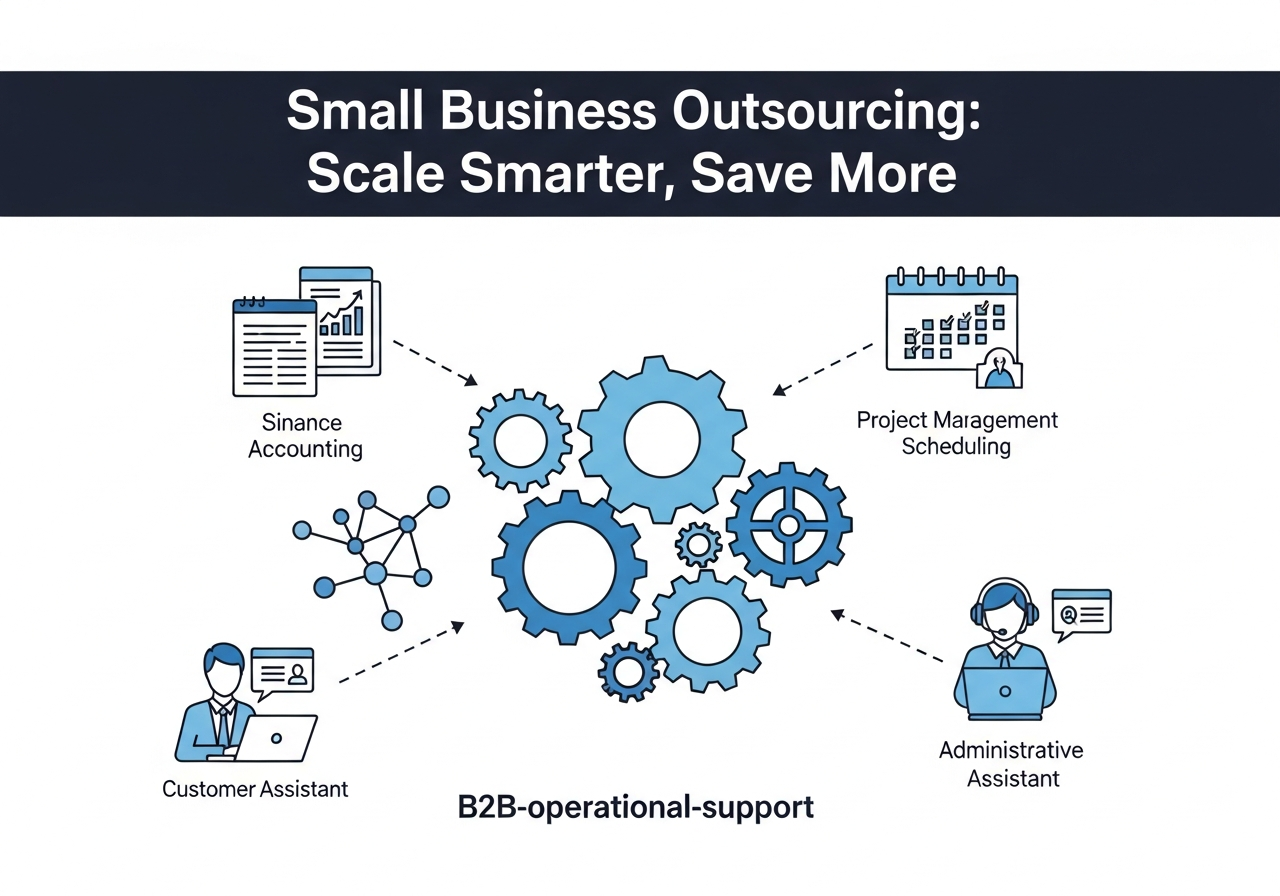
Small Business Outsourcing: Scale Smarter, Save More – This article discusses how businesses can benefit from outsourcing virtual assistant services, provides a list of different services, and explains where to hire them.
Are you interested in learning more about our pricing?
Please book an appointment with one of our experts to discuss your business needs and find the perfect solution for your budget. Hire Stealth Agents now!
How Remote Work Revolutionizes BPO Services
The global embrace of remote work, especially after Covid, has brought a new wave of innovation to the business process outsourcing (BPO) industry.
Instead of simply reducing costs, BPO providers now focus on delivering better-quality services, tapping into a global pool of talent. This shift means companies no longer have to limit themselves to local expertise—instead, they can access top-notch professionals from anywhere in the world.
Remote work has also made it easier for BPO firms to adopt the latest technologies quickly. From automation tools to advanced communication platforms, these innovations help streamline operations and deliver even greater value. Ultimately, the move to remote work has transformed BPO from a basic cost-saving strategy into a powerful way to enhance productivity, scale resources, and gain a competitive edge.
What is Outsourcing for Small Businesses?
Outsourcing services for small businesses involves hiring outside parties to perform tasks, handle operations, or provide services that are either outside of their skillset or would be more time- and cost-efficient if done by others.
This includes accounting and customer service, ITT support, bookkeeping, and digital marketing.
Leveraging a jewelry virtual assistant can be an ideal solution for jewelry businesses, allowing them to streamline operations and enhance customer interactions.
By outsourcing, businesses can focus on their core activities while benefiting from the expertise and efficiencies.
But the scope of outsourcing extends even further. Businesses across various industries frequently delegate specialized processes such as
- Insurance: Claim processing services that speed up settlements and reduce administrative headaches.
- Law Firms: Document indexing, annotation, and discovery support to simplify case preparation and management.
- Healthcare: Healthcare form processing, including tasks like Test Requisition Form (TRF) management, to ensure accurate records and compliance.
- Finance & Accounting: Handling brokerage statements, loan processing, and other time-intensive paperwork.
- Logistics: Keeping supply chains running smoothly through efficient document management and data entry.
- Transportation, Retail, and Utility: Document processing and data entry services that boost productivity and accuracy.
How Can Business Process Outsourcing and Automation Drive Digital Transformation?
Business process outsourcing (BPO) and automation go hand in hand when it comes to digital transformation. By partnering with specialized agencies to manage everything from workflow automation to customer support, businesses can unlock significant cost savings and tap into cutting-edge technology—without massive upfront investment.
Here’s how outsourcing and digital tools pave the way for transformation:
- Cost efficiency: Outsourcing partners often use the latest automation platforms—think UiPath, Zapier, or Salesforce—to deliver services faster and more accurately, helping you reduce errors and operating expenses.
- Expertise on demand: You gain access to a pool of skilled professionals who continuously upgrade their knowledge to keep pace with rapidly evolving digital trends.
- Scalability: Need to ramp up during peak seasons or scale back when things get slow? Outsourcing provides the flexibility to adapt instantly, without the hassle of hiring or layoffs.
- Focus on innovation: Free from repetitive back-office tasks, your team can devote more energy to core strategies and customer-centric projects, fast-tracking your digital initiatives.
What is the process for starting to outsource a business process?
Embarking on outsourcing for your small business might sound daunting, but breaking it down into simple steps can make the transition smooth and successful. Here’s how you can get started:
1. Assess Your Needs and Define Objectives
Begin by pinpointing which tasks or processes would benefit most from outsourcing. Consider areas outside your team’s strengths—like payroll, customer support, or social media management.
Be clear about your goals, whether that’s saving time, reducing costs, or accessing specialized skills.
2. Gather Documentation and Map Out Processes
Before handing over anything, ensure you have a solid understanding of how the process currently runs within your business.
Document workflows, gather any existing instructions, and outline job roles involved. This step will help your outsourcing partner mirror your processes effectively.
3. Choose the Right Outsourcing Partner
Research potential partners, focusing on those with experience in your industry or business size. Look for companies that prioritize communication, have strong data security practices (adhering to standards like ISO27001, SOC2, and GDPR), and provide transparent pricing. Don’t be shy—ask for references!
4. Set Up Training and Transition Support
Once you’ve selected a partner, collaborate to onboard and train their team. Provide guidelines, share training materials, and work together to clarify expectations. Some providers will help create new resources or update existing documentation to ensure a seamless transition.
5. Implement, Test, and Track Performance
Start with a pilot phase or limited rollout. This allows both parties to adjust to new workflows and address any hiccups. Monitor performance regularly by agreeing on measurable key performance indicators (KPIs) and scheduling frequent check-ins.
6. Prioritize Security and Data Protection
Work with your provider to establish clear protocols for data privacy and access control. Reliable partners will already follow strict compliance requirements, but it’s wise to confirm how your data will be handled.
Outsourcing doesn’t have to feel overwhelming. With preparation and the right partner, you’ll be free to focus more on what you do best—growing your business and delighting your customers.
How Does Outsourcing Automate Your Workflow?
When you opt for business process outsourcing, you’re not just delegating tasks—you’re unlocking the potential for business process automation as well. Many outsourcing providers use advanced technologies and platforms such as Zapier, UiPath, or Microsoft Power Automate to streamline repetitive processes.
This means that routine activities like data entry, invoice processing, or even customer onboarding can be handled by automated systems, reducing errors and freeing up your team’s valuable time. Automation also boosts efficiency, allows for faster turnaround, and helps ensure consistent results.
By leveraging both skilled professionals and cutting-edge automation tools, your operations become smoother, more scalable, and ready to adapt as your business grows.
How Does Process Automation Fit Into Business Process Outsourcing?
When small businesses turn to business process outsourcing (BPO), they aren’t just handing off tasks—they’re also opening the door to advanced process automation.
Many BPO providers now incorporate technologies like cloud-based automation platforms (think Zapier, HubSpot, or Microsoft Power Automate) to streamline repetitive tasks and increase accuracy.
Here’s how process automation works hand-in-hand with outsourcing:
- Efficiency Boost: Automation tools handle routine operations such as data entry, invoicing, or scheduling—freeing up both your team and your outsourcing partner to focus on more strategic priorities.
- Scalability and Flexibility: Need to ramp up operations quickly? Automated workflows make scaling up (or down) much simpler, supporting growth without extra hassle.
- Cost Savings: By reducing manual intervention, process automation helps cut labor costs and minimize errors, making every dollar count.
- Real-Time Insights: Cloud automation platforms offer analytics, so you and your BPO provider can monitor performance, spot opportunities for improvement, and make smarter business decisions together.
What Are the Keys to Success in Business Process Outsourcing?
Achieving success with business process outsourcing isn’t just about handing off tasks—it’s about creating a seamless partnership that supports your business goals.
Start by thoroughly understanding which processes are best suited for outsourcing. Next, select a team or provider that not only has the right expertise but also aligns with your company’s values and standards.
Clarity is essential.
Develop detailed process maps and provide clear instructions or training resources to ensure everyone is on the same page. Effective onboarding, paired with practical training materials and supportive technology, will set your outsourced team up for success from day one.
Don’t overlook communication! Set expectations early and establish regular check-ins or reporting structures. Use performance metrics to track progress and make sure both efficiency and quality stay top-notch—think frequent feedback and open dialogue.
Finally, embrace flexibility. Being willing to adjust processes or goals as your business evolves will help you get the absolute most out of your outsourcing partnership. By treating your third-party team as an extension of your own, you’re far more likely to achieve results that propel your company forward.
What Role Does Business Process Automation Play in Outsourcing?
Business process automation is transforming the way companies approach outsourcing, especially for small businesses eager to maximize efficiency and keep costs down.
By bringing automation into the mix, outsourced teams can handle repetitive or complex tasks much faster—and with greater accuracy—than manual processes ever allowed.
Picture tools like AI-powered chatbots for customer service, machine learning algorithms sorting through data, or cloud-based platforms streamlining document management.
Major players like UiPath, Blue Prism, and Automation Anywhere are already supporting businesses worldwide with these technologies.
Here’s how business process automation makes a difference in outsourcing:
- Faster Turnaround Times: Automated workflows mean tasks move through the pipeline quickly, helping businesses deliver results to their customers faster.
- Improved Accuracy: Automation reduces human error, making processes like bookkeeping, data entry, or invoicing more reliable and consistent.
- Cost Savings: By streamlining operations, businesses can cut down on labor costs and allocate resources where they matter most.
- Scalability: Automated solutions are easy to scale up or down, allowing small businesses to adapt as they grow without hiring extra staff.
- Better Insights: Automation often includes built-in analytics, helping business owners make data-driven decisions based on real-time information.
How Do AI and Automation Enhance Business Process Outsourcing Services?
In today’s fast-paced business world, efficiency and accuracy are top priorities for any growing company. That’s where artificial intelligence (AI) and automation tools come in, transforming the landscape of business process outsourcing (BPO).
By integrating AI and automation, outsourcing providers can process transactions faster and with greater precision. Whether it’s data entry, customer service inquiries, or financial reporting, automated systems reduce the risk of human error and enable 24/7 operations.
For example, chatbots and virtual agents like those from IBM Watson or UiPath can handle repetitive customer requests, ensuring your clients always receive timely responses.
Key advantages AI and automation bring to BPO include:
- Streamlined workflows: Automated tools help handle routine tasks, freeing up your team’s time for more strategic work.
- Cost savings: Increased efficiency often means lower labor costs and reduced overhead.
- Enhanced insights: With AI-driven analytics, businesses receive real-time data to support better decision-making.
- Increased scalability: As your company grows, automated systems adapt quickly, making it simple to scale up operations when needed.
- Continuous improvement: Machine learning algorithms constantly refine processes, driving ongoing improvements in speed and quality.
Defining Your Outsourcing Objectives
Before diving into business process outsourcing, it’s important to clarify your objectives to achieve the best results for your company.
Here are some questions to help set a strong foundation:
- Are you aiming to streamline and improve existing workflows within your team?
- Is process automation on your wishlist to eliminate manual and repetitive tasks?
- Do you want to boost overall efficiency or just focus on specific operational bottlenecks?
- Are you hoping to gain access to specialized expertise that isn’t readily available in-house?
- Do you need better scalability to keep pace with business growth—similar to how many tech startups rely on outsourcing partners to expand quickly?
- Are cost savings an important factor for you, or is the main driver about freeing up resources to focus on your core business goals?
How Is a Business Process Outsourcing Solution Implemented?
Implementing a business process outsourcing (BPO) solution involves several essential steps to ensure a smooth transition and successful results.
First, your chosen BPO team gets thoroughly familiar with your company’s specific processes and objectives. This includes outlining key workflows, documenting step-by-step instructions, and often creating training materials such as instructional videos.
These resources help new team members understand exactly how tasks should be performed, eliminating guesswork and streamlining onboarding.
Next, clear goals and quality standards are defined.
Together with your outsourcing partner, you’ll identify key performance indicators (KPIs) to measure ongoing results. For example, you might establish targets for accuracy, turnaround time, or customer satisfaction depending on which process is being outsourced—whether it’s customer support, bookkeeping, or digital marketing.
Ongoing tracking and regular performance reporting help both parties stay aligned. You’ll receive detailed updates that highlight successes and identify areas for improvement, keeping operations on course while letting you focus on your business’s core strengths.
What steps are involved in transitioning business processes to an outsourcing provider?
Transitioning your business processes to an outsourcing provider isn’t as daunting as it might seem. In fact, with a little planning and the right partner, it can be surprisingly smooth.
Here’s how the process typically unfolds:
- Discovery & Assessment:
The outsourcing provider will take time to understand your current operations, goals, and pain points.
You’ll collaborate to outline which tasks or functions are best suited for delegation. Documentation, workflow instructions, and existing training materials are gathered to give the provider a clear picture of your day-to-day.
- Process Mapping & Preparation:
If certain procedures or guides are missing, don’t worry—your provider can help fill in the gaps by creating additional resources and clear-cut work instructions. This way, everything runs like a well-oiled machine from the start.
- Team Selection & Training:
With your specific needs in mind, the provider will assemble a team dedicated to your business. These team members are trained on your processes, tools, and expectations before they ever touch your workflows.
- Technology Setup:
Need a secure cloud platform or special tools? The provider will set these up for you, ensuring a seamless handover of responsibilities and protecting your sensitive data.
- Testing & Launch:
Before they take full control, there’s a trial run. This test phase helps iron out any kinks and ensures the team is fully prepared to operate at your required standards.
- Performance Metrics & Continuous Improvement:
Clear KPIs are set from day one, so you know exactly how things are going. Your outsourcing partner will monitor performance, share reports, and tweak processes as needed to keep everything running smoothly.
- Data Security & Compliance:
Top outsourcing providers take security seriously. They comply with regulations like ISO27001, SOC2, PCI DSS, GDPR, and HIPAA, using robust protocols to safeguard your information.
Once your processes are in the hands of experienced professionals, you’re free to focus on what matters most—growing your business and delighting your customers.
How Are BPO Team Members Recruited, Trained, and Managed?
Ensuring quality outcomes in business process outsourcing starts with building the right team. BPO providers look for candidates with not only academic credentials—often graduates in fields like accounting, engineering, computer science, or data science—but also the practical skills to hit the ground running.
Solid analytical abilities, strong problem-solving skills, and proficiency in English (or additional languages such as Spanish, German, or French as required) are highly valued.
But skills on paper aren’t enough. Relevant industry experience and familiarity with each client’s domain give team members insight into the unique challenges and opportunities associated with your business needs.
To make sure every team member is up to speed, comprehensive training programs are standard practice:
- Initial Orientation: New hires receive in-depth onboarding tailored to your specific processes and requirements.
- Ongoing Training: Refresher courses utilize online platforms and instructional videos, ensuring the team stays updated with best practices and any new workflow changes.
- Work Instructions: Step-by-step guides provide clear direction for recurring tasks, minimizing confusion and mistakes.
What Qualifications and Training Do BPO Team Members Need?
When it comes to outsourcing, the quality of your results depends heavily on the people behind the scenes.
The best business process outsourcing (BPO) teams are made up of individuals with a combination of relevant industry experience, technical know-how, and a dedication to ongoing learning.
BPO team members typically bring:
- Strong backgrounds in specific industries—such as finance, healthcare, or customer support—so they understand the unique needs of your business.
- Essential technical qualifications, such as proficiency with CRM software (like Salesforce), project management platforms, or industry-specific tools.
- Extensive training in core skills, including effective communication, data privacy compliance (think GDPR awareness), and specialized task management.
What are the types of outsourcing services?
1. On-shore
This type of outsourcing occurs when businesses choose to delegate tasks to a company located within the same country.
This approach has several advantages, including easier communication due to the absence of language barriers and the shared time zones.
Another benefit is that both companies are familiar with local laws and business practices, resulting in a smoother working relationship.
2. Offshore
This is hiring companies or individuals in foreign countries to handle specific business tasks or services.
This type of outsourcing is commonly chosen for its cost-saving benefits, as labor and operational expenses can be lower in other countries.
Offshore virtual assistant outsourcing is popular for various services, including customer support, IT and software development, accounting, and data entry tasks.
3. Near-shore
It refers to partnering with companies located in neighboring countries or those in close geographical proximity.
This is often chosen for convenience in similar time zones, making communication and collaboration smoother.
On the other hand, cultural similarities can enhance mutual understanding and streamline project execution.
Common Challenges of Outsourced Data Entry
While outsourcing data entry can free up valuable time for your team, it’s not without its hurdles. Understanding these potential challenges can help set realistic expectations and ensure smoother collaboration.
Some of the most common issues include:
- Data Security Concerns
Sharing sensitive information with third-party providers can pose security risks. Ensuring robust data protection protocols and NDAs is essential, especially when working across borders with varying privacy laws.
- Quality Control
Inconsistent or inaccurate data entry can disrupt business operations. It’s important to establish clear quality benchmarks and conduct regular audits.
- Communication Barriers
Differences in language, time zones, and work cultures can sometimes lead to misunderstandings or delays. Setting clear guidelines and maintaining proactive communication—perhaps via platforms like Slack or Microsoft Teams—can help bridge these gaps.
- Turnaround Times
While outsourcing often promises efficiency, tight deadlines might be tricky to meet depending on the provider’s workload or location. Align expectations and confirm turnaround times early in the process.
- Hidden Costs
Unexpected fees can crop up if service agreements aren’t detailed and transparent. Always review contracts carefully and clarify any unclear terms before committing.
Cloud-Based Business Process Outsourcing Services
Cloud-based business process outsourcing (BPO) services are a modern approach where companies use online platforms to delegate various business tasks to third-party providers.
Instead of relying on traditional, on-premises solutions, these services operate entirely over the internet, creating digital workspaces for collaboration among remote teams.
Key Benefits of Cloud-Based BPO
- Cost Savings: Using cloud-based BPO reduces the need for physical infrastructure and helps minimize operational expenses—ideal for businesses looking to trim overhead.
- Scalability and Flexibility: Cloud solutions make it easy to scale up or down depending on your current needs, which is useful for businesses experiencing seasonal demand or rapid growth.
- Access to Advanced Technology: You can take advantage of the latest machine learning, automation, and artificial intelligence tools to optimize your processes without investing heavily in tech development.
- Enhanced Collaboration: Digital platforms allow remote teams and outsourcing partners to work together in real time, no matter where they’re located.
- Improved Data Security: Many cloud service providers offer robust security measures, ensuring that sensitive information is protected as you outsource key processes.
What Technologies Are Commonly Used in BPO Solutions?
Modern business process outsourcing (BPO) solutions are powered by a range of innovative technologies designed to boost efficiency, accuracy, and scalability for businesses of all sizes.
Here are some of the key technologies driving today’s BPO industry:
- Automation and Robotic Process Automation (RPA): Automation tools and platforms like UiPath, Blue Prism, and Automation Anywhere handle repetitive tasks such as data entry, invoice processing, and basic customer service. This cuts down on manual errors and frees up your team’s time for more strategic work.
- Artificial Intelligence (AI) and Machine Learning (ML): AI and ML help BPO companies deliver smarter solutions, especially in areas like predictive analytics, chatbots, and natural language processing. This means faster decision-making and improved customer experiences.
- Cloud Computing: Services like AWS, Google Cloud, and Microsoft Azure allow BPO providers to operate securely and efficiently across different regions, offering flexible storage, seamless collaboration, and reliable disaster recovery.
- Business Analytics: Integrating data analytics into BPO processes enables businesses to gain actionable insights from the information they process, helping drive continuous improvement and informed decision-making.
- Advanced Communication Tools: Platforms like Slack, Microsoft Teams, and Zoom make it easy for teams to stay connected, communicate with clients, and ensure projects run smoothly—regardless of location.
Best Small Business Outsourcing Services
Stealth Agents stands out when looking for the best small business outsourcing services.
They offer various services, including virtual assistants for payroll, tailored specifically for small business IT outsourcing services.
This makes them an excellent choice for anyone looking to streamline their operations and focus on growth.
Working with them as an outsourcing partner helps take some of the workload off your shoulders, letting you focus more on growing your business.
Stealth Agents is also a top choice for virtual assistant companies for small businesses.
Their services are designed to cater to the specific needs of small businesses, providing them with cost-effective outsourcing solutions for startups and customizable plans.
Real-World Examples of Business Process Outsourcing Success
To give you a better idea of how outsourcing can positively impact businesses, let’s look at a few scenarios where organizations have seen impressive results by delegating specific tasks:
- A regional healthcare network turned to third-party specialists for their utility bill processing and accounts payable management. As a result, they significantly improved payment accuracy and freed up their internal team to focus on patient care.
- An energy efficiency company leveraged outsourcing for large-scale data entry and invoice processing. By trusting experts with these time-consuming administrative tasks, they managed to achieve over 99% processing accuracy, even when dealing with thousands of utility bills every month.
- A retail chain in Canada streamlined its complex billing workflow by partnering with external vendors for utility bill processing. The outcome? 100% on-time payments, with a clear, centralized overview of their finances—no more scrambling at the end of the month.
- A sustainable textile manufacturer decided to outsource their accounts payable tasks. This move not only reduced operational costs but also helped them eliminate payment backlogs and enjoy a more consistent cash flow.
- A multi-location service business handled recurring AR backlogs by outsourcing invoice indexing and collections follow-ups. Their staff could finally breathe easier, knowing they wouldn’t be buried under paperwork each quarter.
What Documentation and Information Are Needed to Begin a BPO Partnership?
Getting started with a business process outsourcing (BPO) partnership means gathering some key information up front to set your collaboration up for success.
At the beginning of the process, you’ll want to provide:
- Detailed documentation of your current business processes. This can include step-by-step process maps, checklists, workflow diagrams, and any standard operating procedures (SOPs) currently in place.
- Existing work instructions and training materials. If you have onboarding guides, employee handbooks, or specific training modules, these are helpful for ensuring the BPO provider clearly understands how your operations run.
- Clear objectives and goals for outsourcing. Are you looking to cut costs, access new expertise, or simply free up your in-house team? Defining your purpose will help your outsourcing partner tailor their services to your needs.
- Any relevant compliance requirements or security protocols. Especially for sensitive industries, sharing these early on helps avoid hiccups down the road.
- Key contacts and escalation points. Make sure your BPO partner knows who on your team to reach out to for quick resolution of questions or issues.
Benefits of Outsourcing Services for Small Businesses
1. Cost Saving
Firstly, outsourcing services helps small businesses keep more money in their pockets.
Instead of hiring full-time staff or investing in expensive equipment for tasks like accounting or IT support, they only pay for a third-party service when needed.
This business process outsourcing for small businesses means you don’t have to pay the salaries, benefits, and other costs associated with having more employees.
It’s clever to manage your budget and ensure you spend money where it matters most.
Optimizing Efficiency and Handling Fluctuations
Another big perk? Outsourcing lets you tap into efficiency. Daily workloads can fluctuate significantly, which can be challenging to manage with a small in-house team. Outsourcing partners are ready to scale up or down as needed, providing specialized staff who already know the ropes—no lengthy training or onboarding required. This flexibility not only keeps costs in check but also means you’re always prepared for busy seasons or sudden projects.
Speeding Up Processes with New Tech
A great bonus of outsourcing is speed. Third-party providers often use the latest tools—think artificial intelligence and machine learning—to get jobs done faster and more accurately. Whether it’s processing invoices, managing customer support, or handling data entry, these technologies help shrink turnaround times and boost overall productivity.
Access to the Best Talent—Without the Hassle
Recruiting and training are a headache (and an expense) for any business. Outsourcing opens the door to a global pool of experts who are ready to get started right away. That means you get the right skills for each task, without the costs and risks of hiring full-time employees—and you can worry less about employee turnover slowing you down.
2. Access to Talent
Access to a broader talent pool is a significant advantage for small businesses outsourcing services.
When outsourcing business solutions for small businesses, you’re limited to the local skill set available in your immediate area.
Instead, you can work with experts from across the globe, ensuring your business needs are met with the highest level of expertise.
This global talent pool brings innovative solutions and perspectives to your business that you might not find locally.
Leverage of Best Practices and Latest Tools
Partnering with business process outsourcing providers gives small businesses a distinct edge by tapping into expertly refined best practices. These companies aren’t just experienced—they’re always on top of the latest industry trends, bringing proven systems and up-to-date knowledge right to your doorstep.
What’s more, many BPO partners harness tools like automation and artificial intelligence to handle tasks efficiently and accurately. For instance, firms such as Accenture or Infosys are well-known for their advanced solutions, ensuring work flows smoothly without unnecessary hiccups.
By relying on specialists who consistently optimize their operations, your business not only keeps pace with industry standards but also adopts improvements much faster than going it alone. This lets you stay focused on big-picture goals while confidently knowing your processes are both efficient and future-ready.
How BPO Fuels Faster Tech Adoption
One of the often-overlooked benefits of outsourcing for small businesses is how it unlocks access to cutting-edge technologies—without the headaches of managing change in-house.
Business process outsourcing (BPO) providers are at the forefront of adopting innovations like artificial intelligence and automation tools. When you partner with these experts, your business can leap ahead by using the latest software and streamlined processes they’ve already mastered.
There’s no need to wait through long training cycles or hefty investments; you simply gain immediate access to their advanced capabilities.
For small businesses, this means you can:
- Stay competitive: BPO partners continuously upgrade their tech to serve many clients, so you naturally benefit from their improvements.
- Reduce risk: Rather than gamble on new tech yourself, you rely on the tested systems of seasoned professionals.
- Accelerate digital transformation: From cloud-based data management to AI-assisted customer service, outsourced teams help you modernize operations practically overnight.
3. Increased Productivity
This happens because outsourcing lets the business focus on what it does best without getting bogged down by tasks.
For example, if a small business outsources its accounting, the team does not need to spend time crunching numbers and can instead concentrate on growth.
Outsourced business operations for small businesses can transform a crowded, stressful schedule into a streamlined process where goals are more readily achieved.
Beyond just freeing up time, outsourcing often means your business operations become faster and more accurate.
When small businesses partner with outsourcing providers—especially those that use business process automation—tasks get completed with fewer errors and in less time. This means routine processes, like bookkeeping or payroll, are handled smoothly and efficiently, helping your business adapt quickly to changes in workload.
With improved accuracy and quicker turnaround, outsourcing doesn’t just lighten your to-do list; it also helps maintain the integrity and reliability of your essential operations. This added efficiency is a win-win: you get more done, spend less time fixing mistakes, and your business keeps moving forward.
4. Risk Management
When you hand over specific tasks to experts, you pass their rest here, and they do it; it’s I. Small businesses sourced IT experts to know better how to avoid or handle problems because they deal with these tasks.
For instance, an IT service provider is more equipped to handle cyber threats and can ensure your business data stays safe.
On top of that, business process outsourcing service providers take risk management seriously by following strict data security standards like ISO27001, SOC2, PCIDSS, GDPR, and HIPAA. These companies embed data protection and access control protocols directly into their workflows, giving you peace of mind that sensitive information is handled with extra care.
By leveraging their up-to-date knowledge and robust security practices, you’re not just avoiding common pitfalls—you’re actively protecting your business from unexpected setbacks. This level of risk management is tough to achieve on your own, but with the right outsourcing partner, you’re covered.
5. Reliable Support from Remote Work Teams vs. Freelancers
When it comes to outsourcing, many small businesses wonder whether to work with individual freelancers or invest in building dedicated remote work teams through staff outsourcing. The difference is significant—and it pays to know what you’re getting.
Consistency and Commitment
Freelancers are often a short-term fix. They might juggle multiple clients or projects, meaning your business isn’t always their top priority. With dedicated remote teams, however, your business gets consistent support, ensuring tasks are completed reliably and deadlines are met—without having to constantly hunt for new talent.
Access to Specialized and Trained Talent
Staff outsourcing provides you with a team of professionals who have not just subject matter expertise—such as accounting, data science, or IT—but also undergo regular, role-specific training. They’re equipped with up-to-date industry knowledge, whether your needs are basic bookkeeping or advanced technical solutions.
Clear Communication and Process Control
Remote teams use structured onboarding, training platforms, and clear performance guidelines, unlike freelancers who might lack standardized procedures. This translates to fewer headaches, smoother handoffs, and more predictable results for your business—think of it as having a well-oiled machine handling your operations rather than DIY patchwork.
Scalability and Flexibility
As your business grows, remote work teams can easily scale with you. You can add more hands on deck or expand into new areas (like multilingual customer support or cloud-based solutions) as needed, all while keeping quality consistent.
Reduced Management Burden
With dedicated teams, you don’t have to micromanage every step. Performance metrics and quality assessments are handled by the service provider, freeing you up to focus on what matters—growing your business.
So, while freelancers are great for quick tasks, partnering with a remote work team delivers the long-term, reliable results most small businesses need to thrive.
Small Business Outsourcing Services List
How BPO Drives Digital Transformation and Streamlines Processes
Partnering with a business process outsourcing (BPO) provider isn’t just about trimming costs or hiring outside help—it’s also a proven shortcut to accelerating digital transformation and process automation.
Many small businesses find that working with a BPO partner unlocks the doors to advanced technologies, like cloud platforms, artificial intelligence, and machine learning, without the up-front investment or steep learning curve.
Here’s why this matters:
- Speed and Accuracy: BPO firms often deploy automated tools that process data and tasks faster and with fewer errors than manual efforts. Imagine letting go of tedious, repetitive work—like invoicing or data entry—so your team can redirect their focus toward projects that drive growth.
- Built-In Technology Upgrades: Leading providers keep up with evolving tech trends, meaning your business gets to tap into the latest process automation, analytics, and security solutions, often before your competitors even realize they exist.
- Smarter Insights: With AI and analytics woven into daily operations, automated processes produce valuable reports and trends. This helps you quickly spot opportunities, identify bottlenecks, and make more informed decisions.
- Seamless Scalability: As your business grows, a BPO partner’s digital tools make it easy to ramp up or pivot operations—without the pain of buying new software or hiring a team of IT wizards.
Cloud-Based Outsourcing: Scalability, Flexibility, and Advanced Tech at Your Fingertips
Cloud-based business process outsourcing (BPO) solutions are a game changer for small businesses aiming for flexibility and growth.
With cloud outsourcing, you aren’t tied down by traditional office spaces or hardware—you can scale your operations up or down in response to demand. If business is booming, it’s easy to add new users or increase your storage without missing a beat. During slower seasons, you simply scale back, ensuring you only pay for what you truly need.
But the benefits don’t stop there. Cloud platforms provide direct access to powerful technologies like automation, machine learning, and artificial intelligence—tools that once seemed out of reach for many small businesses. Now, you can automate repetitive tasks, generate insights from your business data, and use smart software to improve efficiency and decision-making.
Collaboration also becomes a breeze. Cloud-based workspaces—think Google Workspace or Microsoft 365—let remote teams connect, share files, and manage projects in real time, wherever they are. This approach not only streamlines workflows but also supports a dynamic, distributed team structure—perfect for growing businesses that value agility.
In essence, cloud BPO gives small businesses the toolkit they need to stay nimble, competitive, and focused on their core strengths.
The Role of Innovation and Emerging Tech in BPO Services
Innovation isn’t just a buzzword—it’s at the heart of how business process outsourcing (BPO) has evolved. Today, advancements in automation, artificial intelligence (AI), and cloud platforms are redefining what BPO providers can offer, especially for small businesses eager to punch above their weight.
What does this mean in practice? Here’s how emerging tech is reshaping the BPO landscape:
- Automation & AI: BPO providers increasingly rely on tools like machine learning and AI-powered software to tackle repetitive and complex tasks. Think invoice processing, chat support, or even data analysis—these aren’t just getting faster; they’re getting smarter.
- Cloud Solutions: Moving operations to cloud-based systems means your business can scale services up or down in a flash, streamline communication, and collaborate with teams anywhere—from London to Manila—while keeping sensitive data secure.
- Remote Collaboration and Digital Transformation: The shift to remote work (accelerated by the global pandemic) has pushed BPOs to invest in better digital workflows and collaboration tools, ensuring your outsourced projects move smoothly and securely, even across continents.
So, what’s in it for small businesses?
- Faster Results: With new tech, tasks that once took days now happen in hours. Your productivity goes up, and you can respond to market changes much more quickly.
- Better Access to Talent: Automation frees human experts to focus on tasks that need real problem-solving skills—so you get more value from every pound or dollar you spend.
- Staying Ahead: BPO providers keep up with the latest tech, meaning your business benefits from the newest innovations—without the need to invest heavily in new systems yourself.
How Performance Metrics and Quality Standards Are Handled in BPO Solutions
When you outsource a process, clear performance metrics and quality benchmarks become the backbone of the entire operation.
Right from the beginning, these expectations are set out in simple, straightforward language, so everyone is on the same page.
The journey usually looks like this:
- Customized Onboarding: Your outsourcing team is trained on your unique business processes, using step-by-step instructions and easy-to-follow training materials. This ensures consistency no matter who’s handling the task.
- Defined Workflows: Every process is mapped out, much like setting up a reliable assembly line, so there are no surprises along the way. For example, accounting tasks follow a checklist that mirrors the steps an in-house team would use.
- Quality Control: Specific quality standards are established and integrated from day one. Regular audits, spot checks, and peer reviews are common—think of them as the “silent supervisor” that keeps things running smoothly.
- Transparent Performance Tracking: Today’s BPO solutions leverage digital dashboards (like those from Zoho, Monday.com, or even Trello) so you can see real-time updates on productivity, accuracy, and turnaround times.
- Ongoing Improvement: Monthly or quarterly reports break down key metrics and highlight areas to celebrate—or address. Feedback loops help both you and your outsourcing provider fine-tune the process as your business grows.
How Machine Learning Boosts Data Extraction in BPO
One of the powerful ways outsourcing providers deliver value is by harnessing advanced technologies such as machine learning.
When it comes to data extraction—think invoices, receipts, or large datasets—machine learning tools quickly recognize patterns and pull out relevant information much faster than manual processes ever could.
By using algorithms trained on millions of documents, machine learning systems can:
- Accurately identify key fields like names, dates, and transaction amounts.
- Minimize human error by automatically flagging inconsistencies or incomplete data.
- Continuously improve at data extraction as they process more information, leading to smarter, quicker results over time.
The Value of Skilled and Well-Trained BPO Teams
When it comes to outsourcing, having a team of skilled and well-trained professionals isn’t just a bonus—it’s a necessity. Think of them as the engine powering your business’s efficiency and reputation.
First, a knowledgeable team is more likely to get the job done right the first time. With experienced members who understand the ins and outs of your industry, you’ll face fewer mistakes, reducing headaches and costly corrections down the line.
Beyond experience, great training makes all the difference. Ongoing education—whether through online platforms, video modules, or hands-on instructions—keeps everyone on the cutting edge. It ensures that your outsourced tasks are handled with up-to-date strategies and tools, helping your business remain competitive.
And let’s not forget about adaptability. Well-trained professionals can quickly grasp new assignments, changes in compliance, or updates in technology. This means your business stays agile and ready to tackle whatever comes next.
Finally, having a talented team not only improves quality but also helps maintain consistency. When performance metrics are used to track progress and spot areas for improvement, your outsourced operations get smoother, faster, and more reliable over time.
In short, investing in skilled and properly trained BPO team members is one of the smartest moves a small business can make. It’s the key to unlocking real value from your outsourcing efforts and setting your operation up for long-term success.
Small Business Outsourcing Services List
1. Accounting & Bookkeeping Services
Accounting services are a vital part of the small business outsourcing services list.
It’s shocking that out of 10 British businesses, 9 businesses outsource operations.
Specifically, about 24% of these organizations in the UK turn to external providers for their accounting needs.
This trend highlights how essential and beneficial outsourcing accounting services can be, especially for small businesses.
This business outsourcing support service saves time and allows business owners to focus more on growing their business while leaving this complex and time-consuming task.
2. Customer Support
Customer support is crucial for any business, but it can be quite a challenge for small businesses to manage efficiently.
That’s why that business chose to outsource this function.
Operational delegation helps them ensure their customers receive professional and timely help without investing in a large in-house team.
This strategy allows small businesses to focus more on their core activities while still providing excellent services.
3. HR Consultant
A study by NAPEO shows that working with a PEO can save a lot of money, giving back a 27.2% return on investment.
This is because hiring an HR consultant or team externally allows companies to access expert services without the overhead costs of full-time employees.
It’s a move. It’s missing employee-related tasks, compliance, and benefits efficiently.
4. Information Technology (IT)
Information Technology (IT) services are a massive part of outsourcing, especially for small businesses.
IT services represent about three-quarters of the total value of all outsourcing contracts worldwide.
To put that in perspective, out of the $92.5 billion worth of contracts handled by outsourcing firms, $66.5 billion was just for IT services.
This shows how important and popular IT outsourcing has become for small businesses, which helps them handle their tech needs.
5. Marketing Services
Small businesses often face challenges in reaching their target audience effectively. Outsourcing marketing services can be essential.
These IT outsourcing services for small enterprises encompass various activities, from social media management and email marketing to SEO and content creation. SEO virtual assistance makes it easier. Small businesses can ensure their brand resonates with customers by partnering with experts and driving engagement and sales.
This outsourcing in small businesses allows business owners to focus on their core operations, knowing their marketing needs are in skilled hands.
Takeaways
Small business outsourcing services are more than just a cost-saving solution—they are a strategic tool that can transform your operation.
By outsourcing, you gain access to specialized expertise, streamline your operations, and free up precious time to focus on growing your business.
What handles administrative tasks? Whether you need to scale up your IT or marketing efforts, outsourcing allows you to do more with less while maintaining a competitive edge.
Now is the time to consider how small business outsourcing services can help your business achieve its full potential.
Frequently Asked Questions
How much does outsourcing cost compared to hiring full-time employees?
Outsourcing can significantly reduce costs compared to hiring full-time staff. Savings depend on factors like your location, the type of work, and the role. It’s a flexible and cost-effective solution for many businesses.
What are common mistakes small businesses make when outsourcing?
Some mistakes include not checking the background of the service provider, giving unclear instructions, poor communication, expecting results too quickly, and not having strong data security. Businesses also sometimes try to outsource important tasks too soon without proper planning or backup systems.
Which small business tasks are best for outsourcing?
Tasks like customer service, bookkeeping, digital marketing, IT support, and admin work are great for outsourcing. Other tasks like human resources, data entry, content writing, and social media management also work well. However, key tasks like product development, planning, and direct sales are usually kept in-house to maintain control.
How do you make sure the work is good when outsourcing?
To keep quality high, set clear goals, have regular check-ins, and create detailed instructions. Use tools to track performance and review the work often. Some companies provide managers to oversee the work and use dashboards to track progress and results.
What legal things should small businesses know before outsourcing?
You need to think about protecting data (like GDPR or HIPAA rules), signing agreements to protect your ideas, and making sure contracts cover things like service quality, liability, and how to end the deal. If outsourcing overseas, you’ll also need to consider taxes, local laws, and other rules. Always talk to a lawyer to make sure everything is covered.
How quickly can small businesses see savings from outsourcing?
Most small businesses start saving money and time within 3-6 months. Time savings can happen right away, while cost savings build up over the first few months. If outsourcing frees up time for business growth, you might see more income within 6-12 months.
What backup plans should small businesses have in case outsourcing doesn’t work?
Have a plan in case things go wrong. Keep records of how tasks are done, update passwords, and have a list of other service providers you can call. It’s also smart to keep some tasks in-house, move slowly when handing over work, and make sure contracts include clear rules for ending the deal and getting your data back.
How do small businesses handle time zone differences when outsourcing overseas?
To manage time zones, set overlapping work hours for important tasks, use tools to communicate when you’re not online, and agree on how quickly responses are needed. Schedule regular video calls during times that work for both sides. Some businesses like having teams in other time zones because they can work while you’re sleeping.
When is a small business ready to outsource?
If you’re spending too much time on tasks that aren’t your main focus or feeling stuck in your daily operations, it might be time to consider outsourcing. Small businesses with 3-10 employees often see the biggest benefits. Key signs include spending too much time on repetitive tasks and having the capacity to delegate responsibilities to free up your focus.
How do you help employees when outsourcing their tasks?
Be honest with employees about changes, train them for new roles, and involve them in setting up the outsourcing process. Give them clear new responsibilities and, if possible, move them to higher-value tasks like building customer relationships or helping with planning. Keep their knowledge handy so they can work with the outsourced team.