
Updated Jun 8, 2026
Whether you are new to Remote Csr vs Call Center Csr or looking to improve your current setup, this guide covers what matters.
Companies save $32,800 per year when they switch from call centers to remote customer service reps.
Here is why smart businesses are making this switch right now.
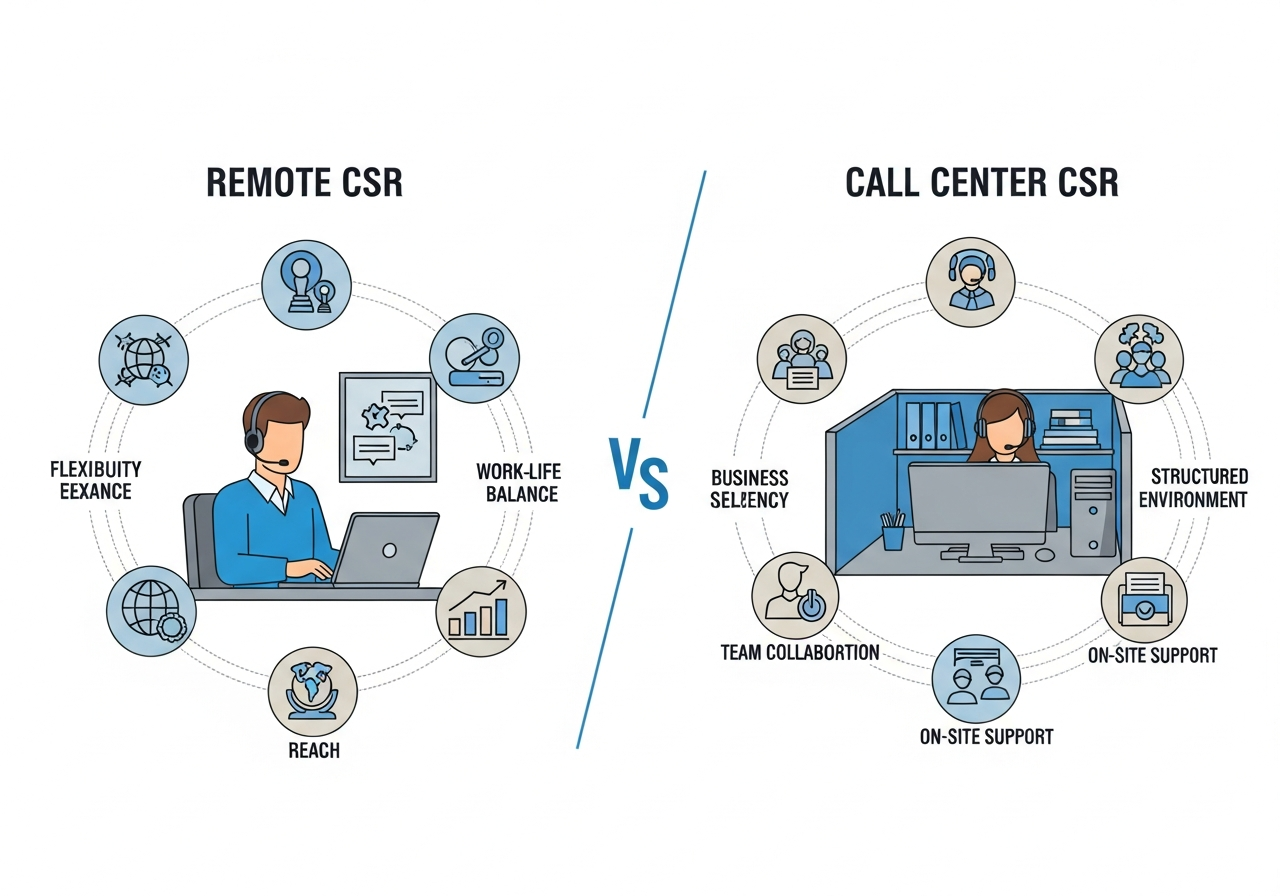
Quick Overview: Remote CSR vs Call Center CSR
| Factor | Details |
|---|---|
| Monthly Investment | $1,600/month (full-time, dedicated) |
| In-House Equivalent Cost | Customer Service Rep salary + benefits = $52,000/year |
| Your Annual Savings | $32,800 back in your business |
| Availability | Extended hours, multiple time zones |
| Training Time | Ready to start in 2-3 days |
| Technology Needed | They bring their own setup |
| Backup Coverage | Included at no extra cost |
Remote customer service reps give you better service at a lower cost than traditional call centers.
The Hidden Cost Of Traditional Call Centers
Call centers charge you for every minute your customers are on the phone.
Many business owners spend $4,000 to $8,000 per month on call center services.
You also lose control over how your customers get treated.
Studies show that 67% of customers hang up when they cannot reach a real person within 3 minutes.
Tasks Your Remote Customer Service Rep Can Handle
| Category | Specific Tasks | Time Saved Per Day |
|---|---|---|
| Phone Support | Answer calls, take messages, schedule appointments | 4-6 hours |
| Email Support | Respond to emails, follow up with customers | 2-3 hours |
| Live Chat | Help website visitors, answer questions | 3-4 hours |
| Order Management | Process orders, track shipments, handle returns | 2-4 hours |
| Data Entry | Update customer records, log support tickets | 1-2 hours |
| Social Media | Respond to comments, handle complaints | 1-3 hours |
Your remote CSR becomes the friendly voice of your company.
They handle all customer contact so you can focus on growing your business.
Most business owners get back 15 to 20 hours per week when they hire a remote CSR.
💡
Did You Know?
Remote CSR workers answer calls 35% faster than call center staff because they focus only on your business.
The True Cost Comparison
Cost Factor Call Center In-House CSR Remote CSR
Base Cost $4,000-8,000/month $40,000/year salary $19,200/year
Benefits & Taxes Included in rate $12,000/year $0
Office Space $0 $3,000/year $0
Equipment & Setup $0 $2,500/year $0
Training Time Minimal $2,000 Included
Total Annual Cost $48,000-96,000 $59,500 $19,200
Annual Savings Save $28,800-76,800 Save $40,300 Best Value
Backup Coverage Extra fee None Included
Remote CSR reps cost 70% less than hiring someone in your office.
You save even more money compared to expensive call center contracts.
How A Remote CSR Transforms Your Customer Service
Your customers get personal attention instead of rushed phone calls.
Remote CSRs learn your business so they can answer questions right away.
They work during your business hours or even extend your availability.
Happy customers spend 67% more money with companies that treat them well.
-
Faster response times to emails and calls
-
Personal touch that customers remember
-
Better follow-up on customer issues
-
More time for you to focus on sales
-
Professional image for your business
-
24/7 coverage options available
A Day In The Life Of Your Remote Customer Service Rep
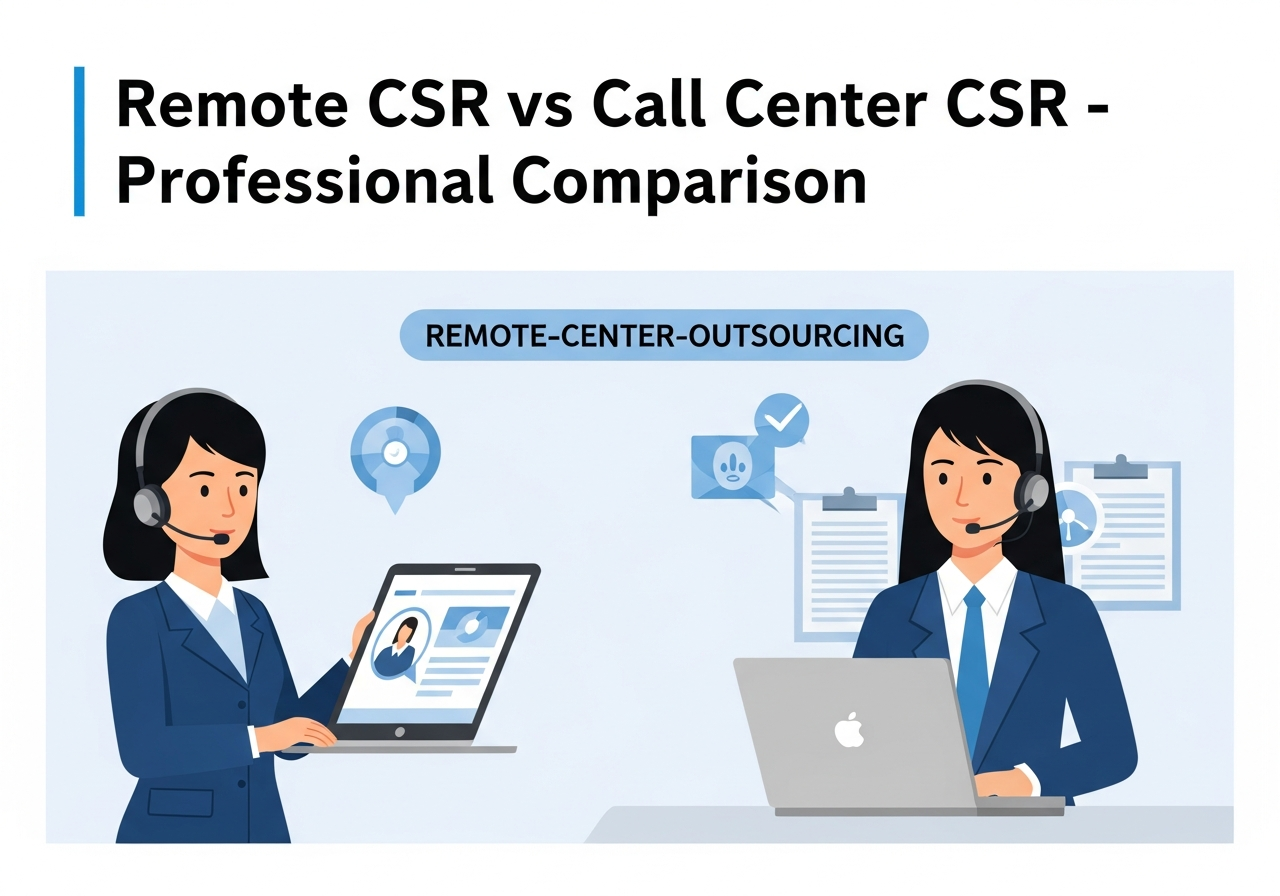
Your remote CSR starts each day by checking overnight emails and messages.
They answer phone calls using your business name and follow your scripts.
Throughout the day they update customer records and handle support tickets.
They end each day by sending you a report of all customer interactions.
💡
Remote CSR vs Call Center CSR Pro Tip
Give your remote CSR a company email address and phone number so customers think they work in your office.
What Makes A Great Remote Customer Service Representative
The best remote CSRs have excellent phone and email skills.
They stay calm when customers are upset or confused.
Great remote CSRs ask good questions to solve problems quickly.
They also keep detailed notes so nothing falls through the cracks.
Keys To Success With Your Remote CSR
| Success Factor | Implementation | Results |
|---|---|---|
| Clear Guidelines | Write simple scripts and procedures | Consistent customer experience |
| Regular Check-ins | Weekly calls to review performance | Continuous improvement |
| Proper Tools | Give access to your customer database | Faster problem solving |
| Feedback Loop | Ask customers about their experience | Higher satisfaction scores |
| Emergency Plan | Backup CSR for busy times | No missed calls ever |
Most businesses see better customer service within the first two weeks.
Industries We Support With Remote Customer Service
E-commerce stores use remote CSRs to handle order questions and returns.
Real estate agents rely on them to schedule showings and follow up with leads.
Healthcare practices use remote CSRs for appointment scheduling and patient calls.
Service businesses depend on them for booking jobs and handling complaints.
Common Mistakes To Avoid With Remote Customer Service
Do not hire a remote CSR without giving them proper training first.
Avoid choosing the cheapest option because quality matters with customer service.
Never forget to set up backup coverage for when your main CSR is sick.
Some businesses fail because they do not check in regularly with their remote team.
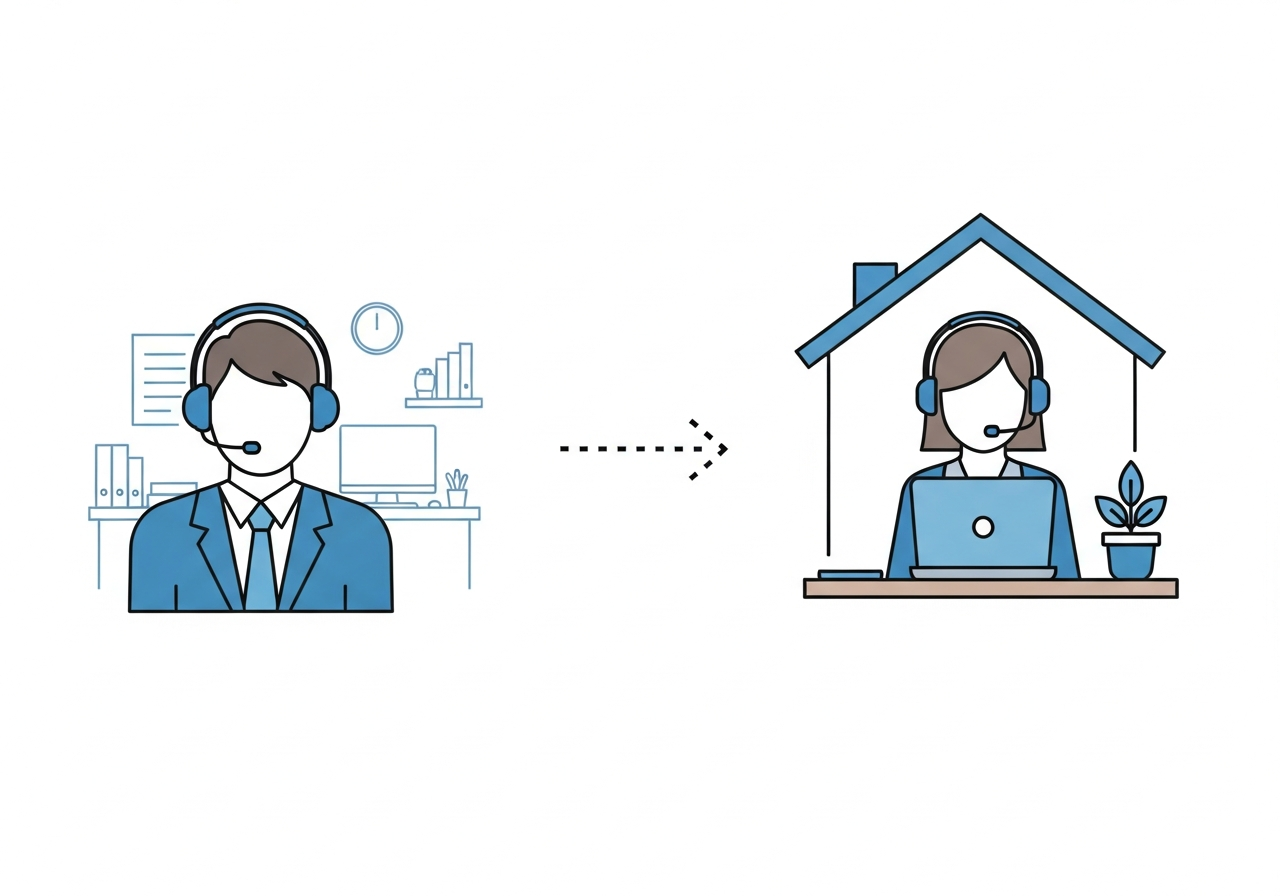
The Stealth Agents Difference For Customer Service
We match you with a CSR who has experience in your type of business.
Your remote CSR gets backup support so your phones are always answered.
We provide a Campaign Manager who helps train your CSR and checks their work.
Most clients see improvements in customer satisfaction within just one week.
Common Questions About Remote Customer Service Reps
How Fast Can A Remote CSR Start Helping My Business?
Most remote CSRs can start taking calls within 2 to 3 business days.
We spend time setting up their phone system and training them on your business.
What Happens If My Remote CSR Gets Sick Or Takes Vacation?
Every Stealth Agents client gets backup coverage at no extra cost.
A trained backup CSR jumps in so you never miss important customer calls.
Can My Remote CSR Work During My Business Hours?
Yes, remote CSRs can work any schedule that fits your business needs.
Many clients have their CSR work extended hours to serve more customers.
How Do I Know If My Remote CSR Is Doing A Good Job?
You get daily reports showing all customer interactions and call summaries.
Your Campaign Manager also does quality checks and provides feedback.
🎯
Key Takeaway
Remote CSRs give you professional customer service at a fraction of call center costs while giving you complete control over the customer experience.
Ready To Transform Your Customer Service?
Thousands of business owners have already made the switch to remote customer service.
Stop paying expensive call center fees and start giving your customers the personal attention they deserve.
Contact Stealth Agents today to find your perfect remote customer service representative.
Ready to Get Started?
Stealth Agents provides dedicated support teams to handle the work that matters. Compare plans and pricing or explore our services to find the right fit for your business.