Summarize This Article With AI :

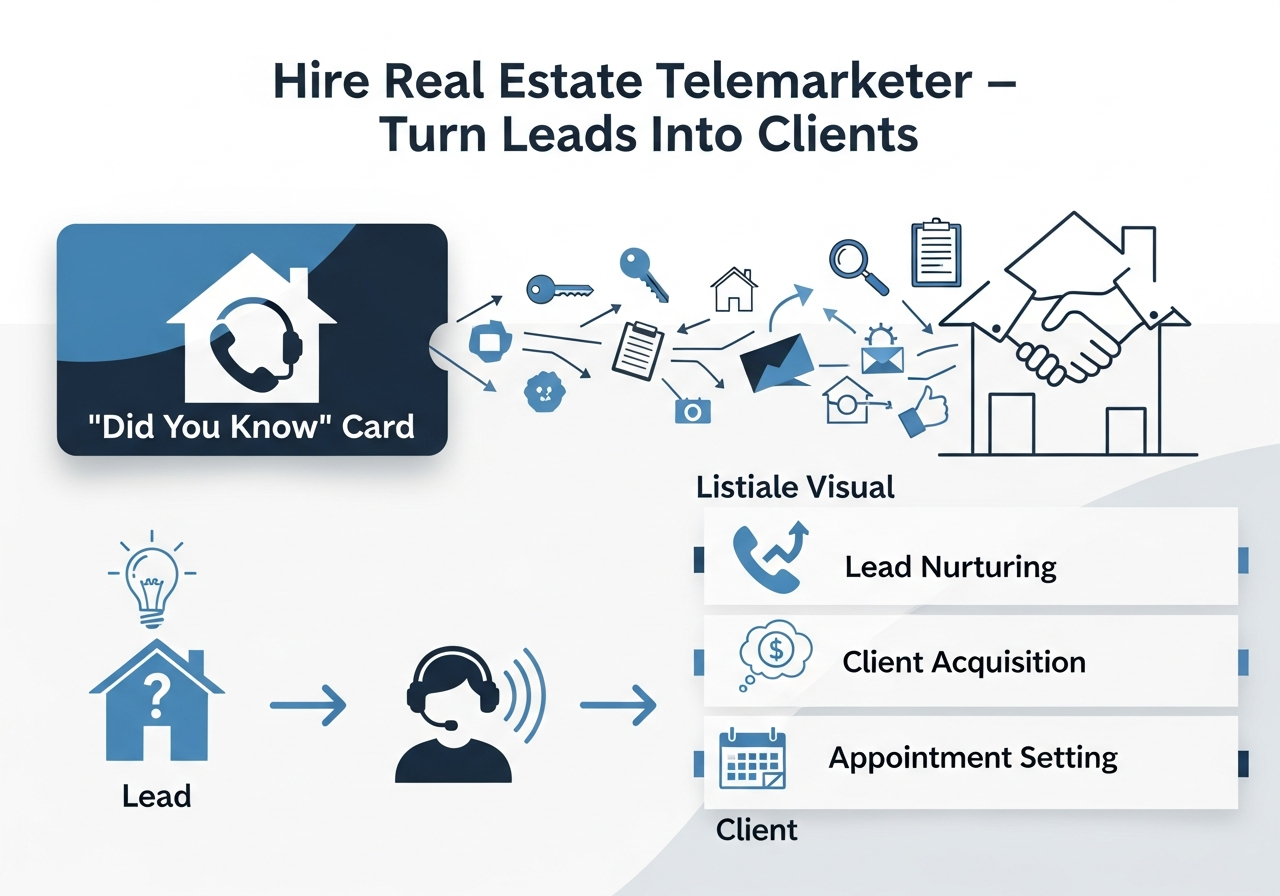
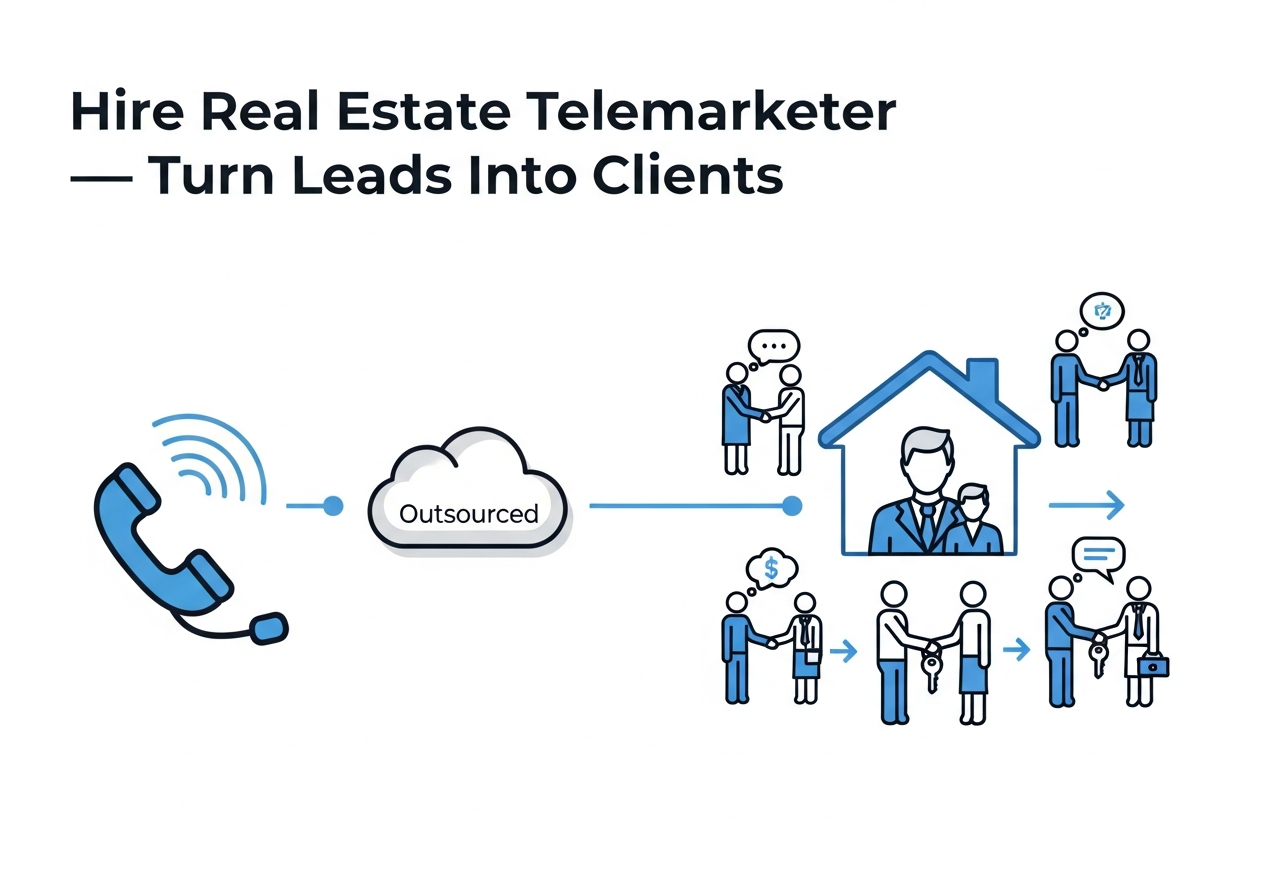
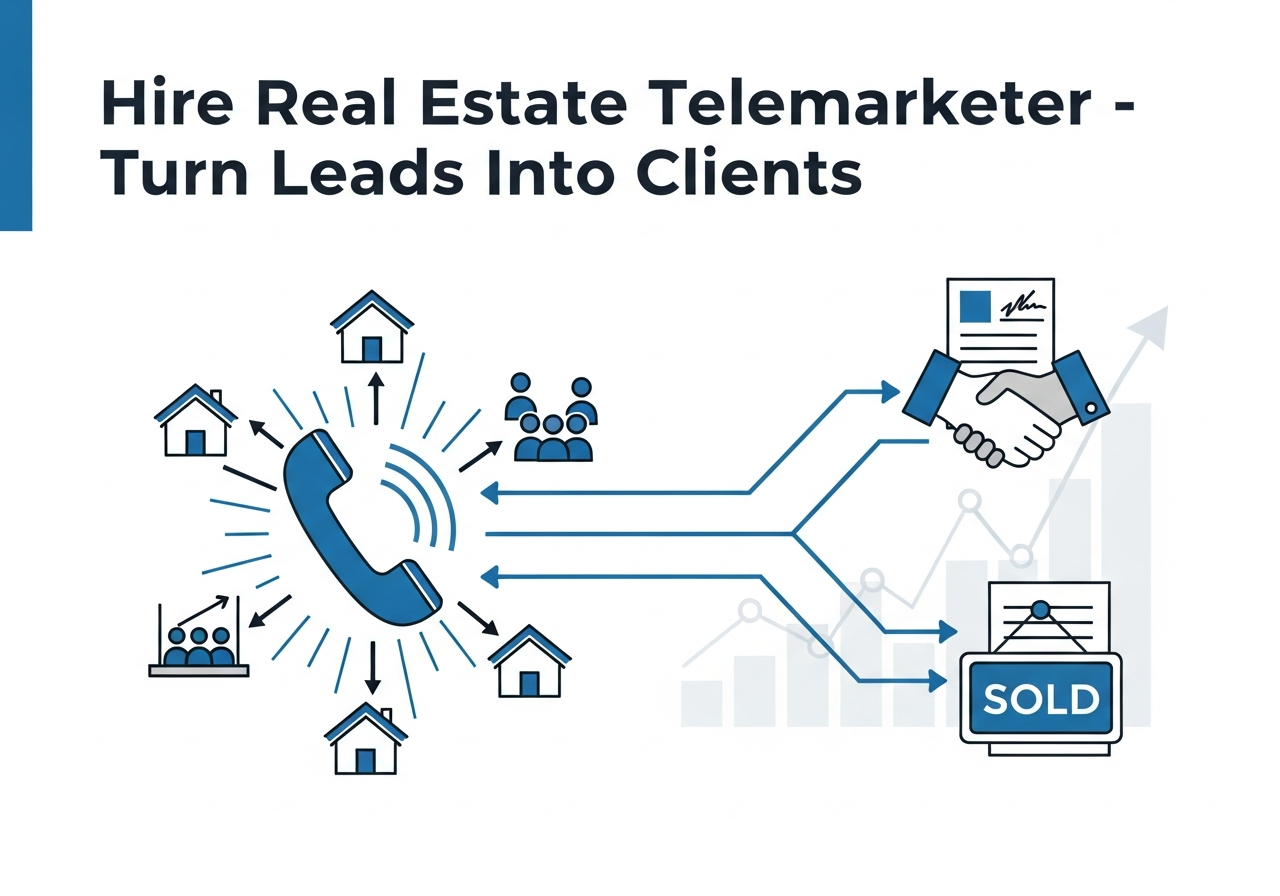
Real estate telemarketer services from Stealth Agents help you convert more leads, book more appointments, and close deals faster, all without the overhead of in-house staffing. With expert cold-callers trained specifically for real estate, Stealth Agents takes care of outreach so you can focus on selling.


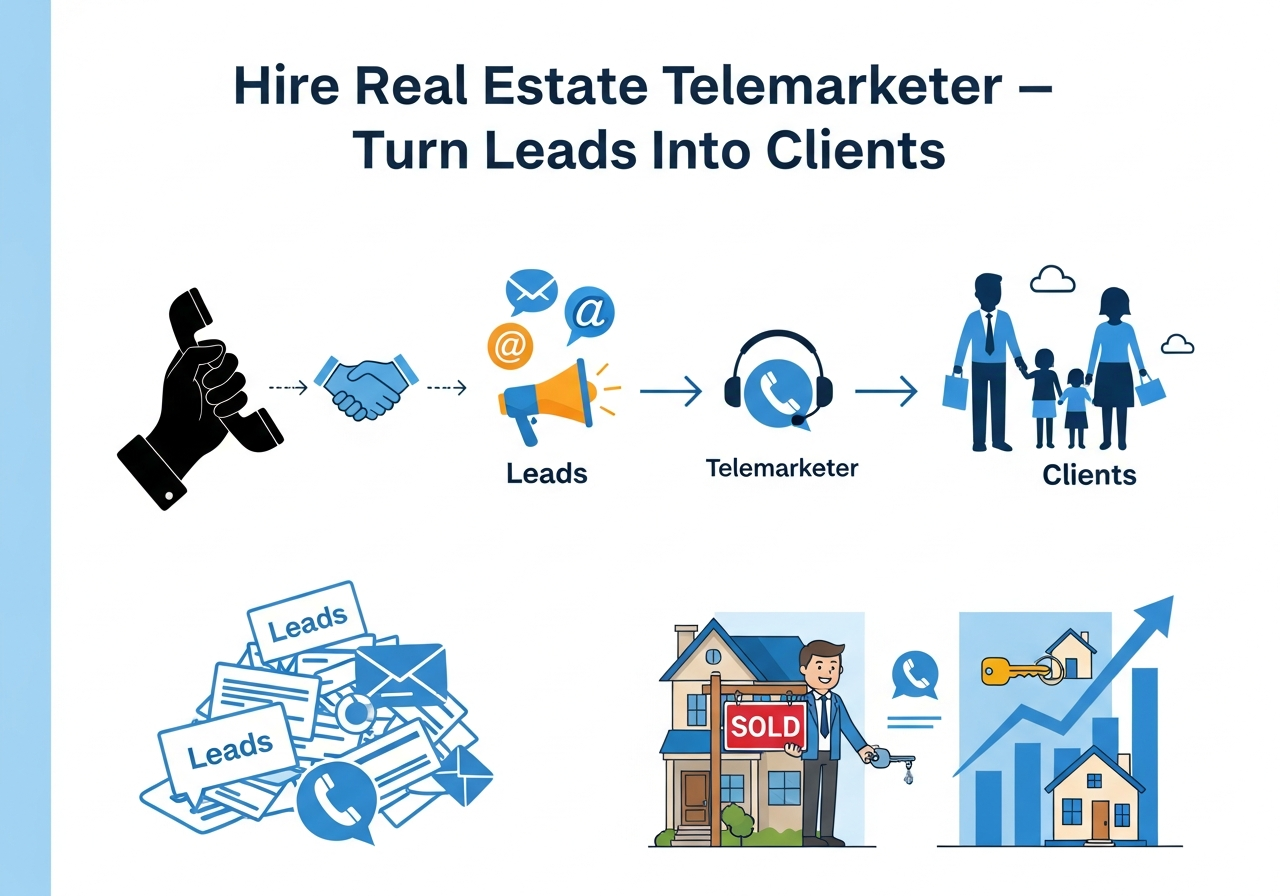
The real estate industry thrives on consistent lead generation, and companies using dedicated telemarketers see up to a 40% higher lead-to-client conversion rate.

A Real Estate Telemarketer helps agents and brokers manage cold calls, qualify prospects, and schedule appointments, ensuring no opportunity slips through the cracks. With the U.S. real estate market projected to surpass $310 billion in revenue by 2025, proactive communication is more vital than ever.

A real estate telemarketer can bridge the gap between potential leads and loyal clients, driving measurable growth for your business.


With 72% of companies affirming that telemarketing improves lead generation efforts, tapping into this resource is essential for staying competitive.


How Telemarketing Stands Out in Sales Lead Generation

While agencies often diversify their approach, using everything from social media and local advertising to online search and networking, telemarketing remains a powerhouse for pinpointing and connecting with qualified leads. Each channel undoubtedly brings its own strengths.


For instance, Facebook campaigns can amplify your brand’s visibility, and Google Ads make you discoverable to those already searching.


But telemarketing takes a more direct and more personal, approach.


Telemarketers engage prospects one-on-one, using meaningful conversations to uncover those crucial qualifiers: true interest, purchasing power, decision-making authority, and readiness to act.


This proactive outreach doesn’t just cast a wide net; it zeroes in on high-potential buyers, ensuring the sales funnel is filled with leads who are a solid fit for your listings or services.


The real edge? When leads are handpicked through live conversations, your in-house sales team can jump in faster, nurture relationships, and convert those warm prospects into actual deals, often before your competitors even spot them. It’s all about speed, precision, and building rapport from the very firsthello.”


Many small to upscale companies struggle to balance client acquisition with other operational demands, losing out on growth opportunities.


Furthermore, a cost-effective option is outsourced telemarketing services, which can save acquisition costs by up to 50%.


Stealth Agents is your trusted partner to hire experienced real estate telemarketers, enabling you to focus on closing deals while they handle the calls. They offer free consultations tailored to your preferences, including virtual assistant pricing and service options.


How Real Estate Telemarketing Powers B2B and B2C Sales

Whether you’re targeting commercial investors or residential homebuyers, real estate telemarketing brings a tailored approach to every conversation.


For B2B scenarios, such as reaching out to property developers or business owners seeking new locations, telemarketers bring industry knowledge to the table, identifying decision makers and speaking their language.


They can nurture qualified leads, schedule walkthroughs, and build rapport with stakeholders, streamlining complex deals and long sales cycles.


Meanwhile, on the B2C side, telemarketers are adept at engaging potential homebuyers and sellers. They can quickly identify pain points, answer initial questions, and move prospects forward, giving you a steady pipeline of interested, prequalified leads.


By customizing outreach based on each audience, skilled telemarketers help maximize results and ensure your messaging resonates, no matter who picks up the phone.


Why Hire A Real Estate Telemarketer

A real estate telemarketer can be vital in streamlining agent and agency lead generation and client outreach.


They specialize in connecting with potential buyers and sellers, offering telemarketing solutions designed to save time and increase effectiveness.


Recent industry statistics suggest that compared to conventional marketing strategies, telemarketers can increase response rates by up to 30%. This approach ensures that agents focus on closing deals rather than spending hours cold-calling or following up with unresponsive leads.


Online jobs have highlighted how remote telemarketers provide affordable, high-quality services, making them an excellent choice for real estate professionals.


They bring valuable communication skills that convert prospects into warm leads, improving the chance of a successful transaction. By hiring a skilled telemarketer, real estate businesses can expand their reach, build trust with more clients, and ultimately achieve better results.


What Does A Real Estate Telemarketer Do

1. Generating Leads and Building Interest

A real estate telemarketer focuses on connecting with prospective clients to generate valuable leads for property listings. They use scripts and proven sales techniques to engage potential buyers or sellers during phone conversations.


Their role includes gathering accurate data about client preferences and matching them with suitable property opportunities.


Real estate telemarketers, often working alongside a commercial real estate virtual assistant, conduct follow-ups with interested clients to keep them engaged throughout the decision-making process. Their efforts frequently result in identifying property buyers or sellers who weren’t active in the market.

Telemarketers play a big part in filling pipelines with high-quality leads, creating more agent opportunities.

Studies show that telemarketing efforts can boost qualified leads by up to 40%, offering significant returns for real estate teams.


Crafting and Customizing Telephone Scripts

When it comes to reaching prospects, the right script can make all the difference. Real estate telemarketers work closely with your agency to develop call scripts that not only align with your brand’s message, but also reflect your specific goals and market niche.


Rather than relying on generic conversations, these scripts are carefully tailored, taking into account the tone, information, and approach that resonates best with your potential clients. This collaborative process often starts with your input, ensuring the key selling points you value most are front and center.


Experienced telemarketers also draw on insights from industry leaders like the National Association of Realtors, as well as best practices from successful U.S. firms, to help fine-tune scripts for greater engagement.


As calls progress, scripts are regularly reviewed and enhanced based on real-world performance and client feedback, keeping interactions fresh and highly effective.


This level of customization means every conversation is intentional, helping your team build trust and communicate value clearly, setting the stage for productive relationships and qualified appointments.


Scripted vs. Ad-Lib Telemarketing: Which Approach Works Best?

When it comes to telemarketing for real estate, businesses can choose between two main approaches: sticking to a formal script or allowing calls to unfold more naturally with ad-libbed conversation.


  • Using a formal script: This method ensures that each call follows a consistent structure, covering all essential points and compliance requirements. Formal scripts help maintain professionalism and can be especially useful for new telemarketers or when targeting large volumes of leads with standardized information, think of the consistency you’d expect from brands like Keller Williams or RE/MAX.


  • Ad-libbing the conversation: On the other hand, an ad-lib approach allows the telemarketer to tailor their responses to the prospect’s unique needs and personality. This style feels more conversational and can quickly build rapport, much like a seasoned agent chatting at a local open house. Ad-libbing works best when flexibility is needed, such as with high-value clients who require a more personalized touch.


Ultimately, the right balance depends on your business goals and client preferences. Many successful real estate teams blend both, ensuring clear communication while giving agents the freedom to adapt in real time.


Data Sources for Real Estate Telemarketing Campaigns

A successful real estate telemarketing campaign starts with the right contact list.


There are several reliable data sources to consider:

  • Existing Client Lists: Many agents use their in-house database of past clients, leads, or previous inquiries, ensuring outreach targets those already familiar with the agency.


  • Purchased or Third-Party Lists: Agents can also use lists acquired from reputable providers like Experian, Redfin, or Zillow, giving access to a broad range of potential buyers and sellers meeting specific criteria.


  • Company-Generated Lists: Some teams prefer assembling their own lists based on open houses, referrals, or website registrations, harnessing fresh leads from day-to-day interactions.


2. Scheduling Meetings for Real Estate Agents

Telemarketers streamline a realtor’s busy schedule by setting up meetings with prequalified clients.


After determining genuine interest during calls, they arrange dates for property visits or consultations. This allows agents to focus on selling while telemarketers handle time-consuming coordination tasks.


Efficient scheduling ensures realtors meet the right people at the right time to keep their sales flow active.


Telemarketers confirm attendance and send timely reminders to reduce no-shows and rescheduling. Global telemarketing services enable teams to reach diverse audiences and expand client opportunities.


With enhanced appointment management, real estate transactions progress faster from prospecting to closing.


3. Nurturing Long-Term Client Relationships

Real estate telemarketers are key to ongoing communication with current and future clients.


Through regular follow-ups, they ensure clients feel valued, leading to better customer loyalty and referrals. By answering questions and providing personalized updates, telemarketers build trust over time.


Their efforts contribute to creating stronger business reputations that attract even more prospects.


Many teams hire Filipino telemarketers for their exceptional customer service and proactive approach to engagement. This consistent contact can increase referral rates, which accounts for around 30% of annual real estate sales.


Telemarketers enable companies stand out in a crowded market by strengthening the link between prospects and agents.


Leveraging Existing and Previous Clients

It’s often more cost-effective, not to mention more profitable, to retain current clients than to focus solely on acquiring new ones. Existing and past clients make up the foundation for future growth in any real estate business.


Telemarketers play an essential role in this process, reaching out not only for continued engagement but also to gather valuable feedback and nurture relationships over time.


By focusing on customer retention as well as new acquisition, telemarketers help real estate companies boost revenue per client and unlock a reliable source of referrals.


Their ongoing conversations with clients don’t just maintain relationships, they actively enhance the company’s reputation, making it easier to generate fresh leads through word-of-mouth and repeat business.


4. Conducting Market Research and Data Collection

Their role includes gathering critical information about the real estate market for improved decision-making.


Telemarketers ask targeted questions during calls to understand market trends, preferences, and demands. They organize collected data to support agents in developing tailored strategies for selling or buying properties.


This ensures real estate professionals have up-to-date insights to meet the specific needs of potential clients.


Telemarketing services worldwide contribute by providing localized knowledge about target demographics. Efficient data collection can boost the chances of closing deals by equipping agents with actionable information.


Accurate data empowers teams to create impactful marketing campaigns and value-driven solutions for their clients.


5. Managing Follow-Up and Sales Processes

Telemarketers are critical in driving leads closer to the closing stage by managing follow-up outreach.


They address client hesitations, answer questions, and share property availability or pricing updates.


Telemarketers monitor leads throughout the sales funnel to identify when agents should step in.


Their persistence ensures that potential buyers or sellers remain engaged, even if their decisions take time. Effective follow-up systems can increase conversion rates by up to 50% compared to unmonitored leads.


Telemarketers’ work bridges communication gaps and ensures smoother transitions within the real estate sales process. These efforts consistently lead to more successful transactions when combined with proactive agent involvement.


Roles and Responsibilities

A real estate telemarketer is vital in supporting sales teams and ensuring the smooth flow of property transactions.


  • Identify and qualify potential leads by engaging them through well-structured phone conversations that align with the client’s interests.


  • Schedule meetings between realtors and interested prospects, optimizing the agent’s time to focus on high-value activities like closing deals.


  • Maintain regular follow-ups with leads to nurture relationships and sustain client interest through personalized communication.


  • Conduct market research to gather essential insights, including preferences, trends, and demographic data, which are integral to effective property marketing.


  • Manage and organize contact lists, ensuring accurate documentation of conversations and updates in customer relationship management (CRM) systems.


  • Collaborate with sales agents to ensure that updates and concerns from leads are addressed and prioritized promptly.


  • Use worldwide telemarketing solutions to enable teams to increase their client base and access several marketplaces properly.


  • Filipino telemarketers are hired by many companies due to their excellent customer service and ability to establish relationships across cultures.


Additional Outbound and Inbound Call Center Services

Telemarketing is just the beginning when it comes to comprehensive call center solutions for real estate agencies.


Outbound Services

Beyond property-related calls, teams can leverage outbound call centers for a range of activities, including:

  • Conducting surveys to gauge client satisfaction or market sentiment, much like the survey tactics used by J.D. Power to measure car buyer happiness.


  • Generating new leads, not just for homes but for related services like interior design consultations or mortgage lending.


  • Setting appointments so agents’ calendars stay full, allowing them to focus on closing deals rather than chasing callbacks.


  • Handling inside sales outreach, think of it as a virtual showroom tour, making first contact and pre-qualifying prospects before the agent steps in.


  • Managing debt collections and follow-ups on overdue payments for property management clients.


Inbound Services

On the inbound side, call centers can handle a host of queries and requests to amplify both agent productivity and client experience:

  • Responding to inquiries about listings, open houses, or promotional campaigns, similar to how Amazon fields product questions before a big Prime Day.


  • Offering ongoing customer service, ensuring every client (or potential client) feels supported, even after hours.


  • Assisting with dealer or office location services, guiding callers to the nearest branch or specialist, much like Apple’s own customer support for store finder queries.


  • Processing orders or sales leads, be that offers on properties, requests for brochures, or signups for virtual tour events.


  • Managing website and direct response leads, ensuring every digital inquiry lands in the right agent’s hands quickly.


What Specific Skills Should I Look For When Hiring A Real Estate Telemarketer?

A successful real estate telemarketer needs a diverse set of abilities to thrive. These skills fall into three key categories: cognitive, interpersonal, and technical. Below, we’ll explore each group in detail.

Cognitive Skills

1. Critical Thinking


  • A real estate telemarketer must think quickly to address buyer concerns or objections during phone conversations.
  • They must analyze client needs and tailor their responses to provide valuable and persuasive information.
  • This skill helps them prequalify leads effectively, improving the overall efficiency of real-estate assistants and executives.


2. Problem-Solving

  • Quick problem-solving abilities allow telemarketers to handle roadblocks like difficult questions or objections from potential clients.
  • Being resourceful can help untangle tricky scenarios and guide prospects toward favorable resolutions.
  • This makes them valuable contributors to your team, especially for complex negotiations or unfamiliar properties.


3. Attention to Detail

  • Telemarketers that pay close attention to detail can compile correct client data, therefore preventing any crucial information from being lost.
  • By carefully noting information, they can create more effective follow-ups or proposals suited to client needs.
  • This is essential for understanding real estate documents and processes outlined in the telemarketer job description.


Interpersonal Skills

1. Communication

  • Excellent telemarketers shine in simplifying difficult property details in understandable words so clients may make wise judgments.
  • Strong verbal skills and active listening enable them to connect with prospects naturally.
  • This contributes to building rapport for professionals in growing areas like the real estate telemarketing sector in the Philippines.


2. Empathy

  • Empathy helps telemarketers understand and resonate with customer concerns or emotions during sales calls.
  • Telemarketers who genuinely care about customer needs establish trust faster and keep clients engaged.
  • This interpersonal skill supports long-term business relationships and consistent performance gains.


3. Persuasion

  • Mastering persuasion allows telemarketers to present property benefits while making potential buyers comfortable and confident.
  • A tension-free, inviting approach ensures their pitch resonates without sounding overly aggressive or forced.
  • These strategies are foundational for learning how to become a real estate telemarketer and achieve consistent results.


Technical Skills

1. CRM Proficiency

  • Familiarity with CRM tools is critical for managing leads and tracking conversations efficiently.
  • Telemarketers using these systems stay better organized and meet performance targets with ease.
  • This skill primarily benefits remote professionals like those seeking global real estate telemarketer jobs.


2. Cold Calling Expertise

  • Executing the best cold calling script real estate agents rely on requires knowing the structure and intention of effective outreach.
  • This proficiency helps telemarketers confidently approach various prospects, boosting their chances of success.
  • A solid grasp of cold calling can also help elevate the productivity of executive assistant real-estate personnel they support.


3. Digital Tools Knowledge

  • A real estate telemarketer needs operational knowledge of tools like property listing platforms or job sites for lead generation.
  • These technologies streamline workflows, especially for remote telemarketers in regions like the Philippines.
  • Continuous learning of new technical platforms ensures they remain adaptable to the market’s evolving demands.


These skills ensure a telemarketer contributes confidently and effectively to your real estate team. By combining cognitive, interpersonal, and technical expertise, they become indispensable assets to your business.


Understanding Resources and Risks in Real Estate Telemarketing

Launching a real estate telemarketing program isn’t just about dialing numbers, it’s an investment of your time, team energy, and capital.


Just like purchasing a property, there are both costs and potential pitfalls to consider before you get started.


What Resources Should You Allocate?

  • Training and Onboarding: Telemarketers need thorough training to understand your listings, legal requirements, and the nuances of your target market, think of it as preparing them for the open house of every call.


  • Technology and Tools: From CRM software to VoIP systems and data security platforms, reliable tech keeps your operation running smoothly and your client information safe.


  • Personnel: Building the right team, whether in-house or remote, calls for budgeting for salaries, incentives, and even ongoing education for evolving digital marketing trends.


Key Risks to Watch For

  • Regulatory Compliance: Real estate telemarketing involves strict adherence to laws like the National Do Not Call Registry and regional data privacy policies. Failing to comply can lead to hefty fines or a tarnished reputation.


  • Lead Quality and Conversion: Not all leads are created equal. Investing heavily without assessing the quality of your data or your team’s approach can drain resources with little return.


  • Reputation Management: Each interaction shapes your brand. Poor scripting, lack of empathy, or high-pressure tactics can damage trust, especially in tight-knit local markets.


How Can These Risks Be Managed?

  • Start with a Pilot Program: Before committing extensive resources, test the waters with a small, flexible campaign. Adjust your scripts, learn from feedback, and scale up as you refine your process, no need to buy the whole block before previewing a single property.


  • Continuous Monitoring: Regularly assess your team’s performance metrics, listen to call recordings (with consent), and hold debriefs to spot issues early. Think of it as routine maintenance for your outreach engine.


  • Stay Adaptable: Markets shift, and so do customer expectations. Leverage digital analytics, stay updated on compliance updates, and encourage your team to provide feedback on what’s working and what isn’t.


  • Flexible Budgeting: Just like with property investments, set aside a contingency budget. Being ready to pivot, whether it’s scaling back during slow seasons or ramping up during a hot market, keeps you agile.


How Can I Assess The Experience And Skills Of A Telemarketer Before Hiring

1. Ask for Proof of Past Success : Request examples of their past achievements, like the daily number of calls or leads converted. This helps you understand their performance and results


2. Test Their Communication with a Mock Call: Conduct a role-play call to see how they handle objections or questions, especially if you need a skilled real estate telemarketer.


3. Review Their Relevant Experience: Check if they’ve worked in similar roles. For example, someone who has worked as an executive assistant real-estate telemarketer might already know the industry.


4. Check References and Past Reviews: Look for feedback from previous employers. A telemarketer with positive reviews and happy past clients is likelier to deliver.


5. Try a Paid Trial Period: Offer a trial period to see their actual performance on the job. Real-world testing gives you a clear idea of their skills and potential.


How Do I Get Started With Hiring A Real Estate Telemarketer?

Hiring a real estate telemarketer begins with a meeting with a reputable agency, such as Stealth Agents, to discuss your business needs. These professionals provide telemarketing solutions that help real estate businesses generate leads and close deals more efficiently.


Over 50% of American companies outsource to cover skill gaps, making telemarketing a growing and effective solution for many industries.


To get started, outline goals such as appointment setting, lead qualification, or client follow-ups to tailor the services to your goals.


Agencies often provide experienced telemarketers who can work remotely, saving time and reducing recruitment costs compared to in-house hiring. This approach ensures you receive skilled and reliable support while focusing on scaling your real estate business.


Take time to finalize a plan that aligns with your objectives, ensuring your telemarketing solutions deliver maximum value.


What Is The Onboarding Process For Stealth Agents  

The onboarding process of Stealth Agents is designed to be seamless and supportive, ensuring your needs are met effectively. Whether you’re hiring a real estate telemarketer or another type of virtual assistant, the steps are tailored to streamline your experience.


  • 📞 After the call, we gather all necessary info directly with the VA to ensure smooth communication.
  • 🕐 We spend up to 7 business hours training and finding the perfect skill match for your needs.
  • 👥 A dedicated campaign manager will supervise and guide your VA.
  • 🔄 Monthly VA reviews are conducted, making it easy to request changes or improvements directly through your campaign manager.


Did you know that studies show that 94% of consumers prefer businesses that provide consistent and reliable support, like our approach?


Takeaways

Hiring a real estate telemarketer could be your business’s strategic move to turn prospects into clients efficiently.


With their expertise, you can ensure consistent outreach, personalized communication, and follow-ups that make a lasting impression on leads.


They take the workload off your plate, letting you focus on other essential aspects of your business while ensuring no opportunity slips through the cracks.


Your pipeline stays active through their skills, experience, and dedication, giving your business the edge it needs to grow steadily.


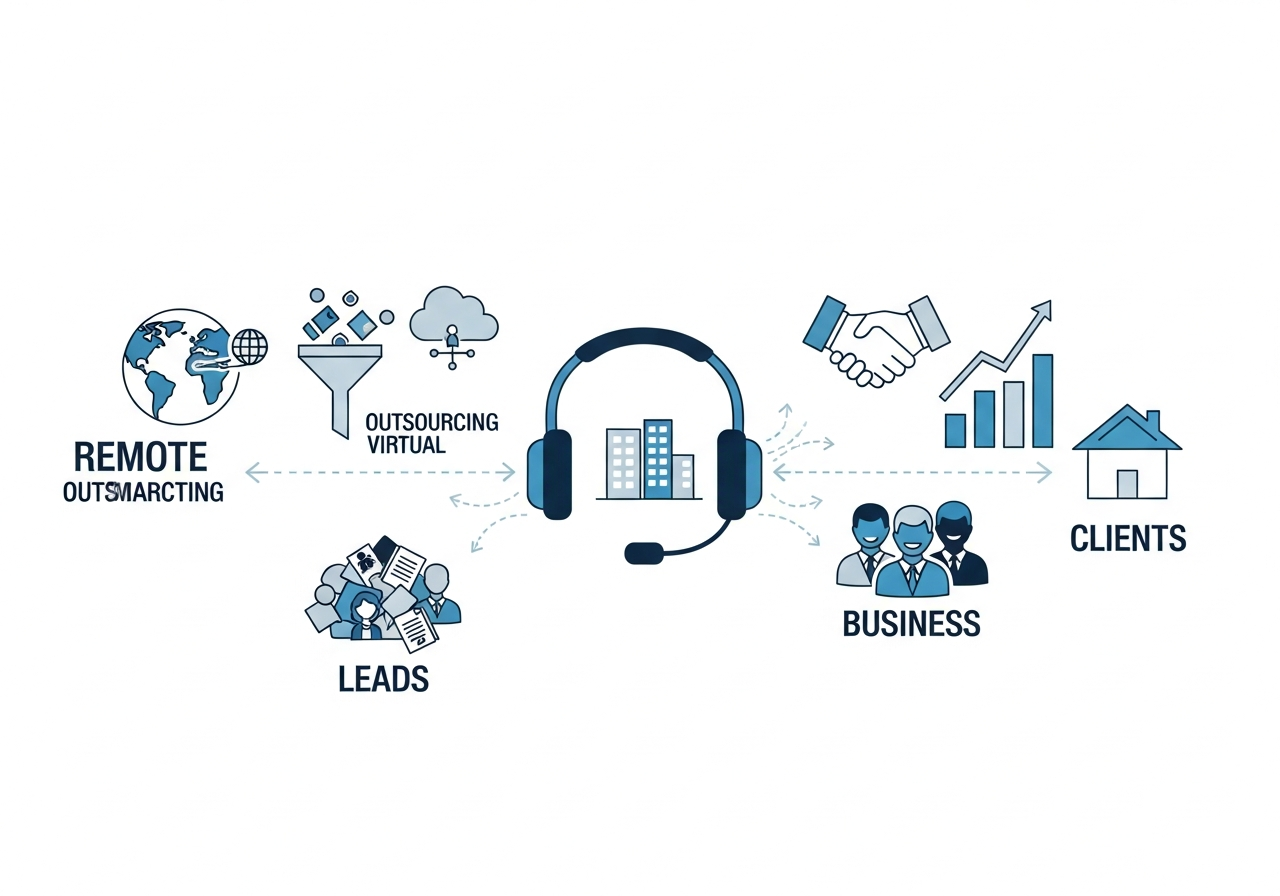
Why Outsource Real Estate Prospecting?

A steady stream of qualified leads is essential for your real estate team’s success.


However, keeping that pipeline full often means your in-house sales talent ends up dividing their attention between cold calling and closing deals. When push comes to shove, closing always takes priority, meaning prospecting can fall by the wayside.


That’s where a dedicated telemarketer shines. By outsourcing prospecting tasks, you free up your team to focus on what they do best: building relationships and closing sales.


Meanwhile, a professional telemarketer handles the heavy lifting of cold calls, appointment setting, and lead qualification with proven systems and strategies.


Not only does this approach maximize efficiency, but it also reduces operational costs and ensures that every prospect receives timely, personalized communication.


With your in-house team focused on conversions and a telemarketer fueling the funnel, you’ll see improved lead quality and more opportunities to close sales, all while maintaining a smooth, client-centered experience.


Summarize This Article With AI :