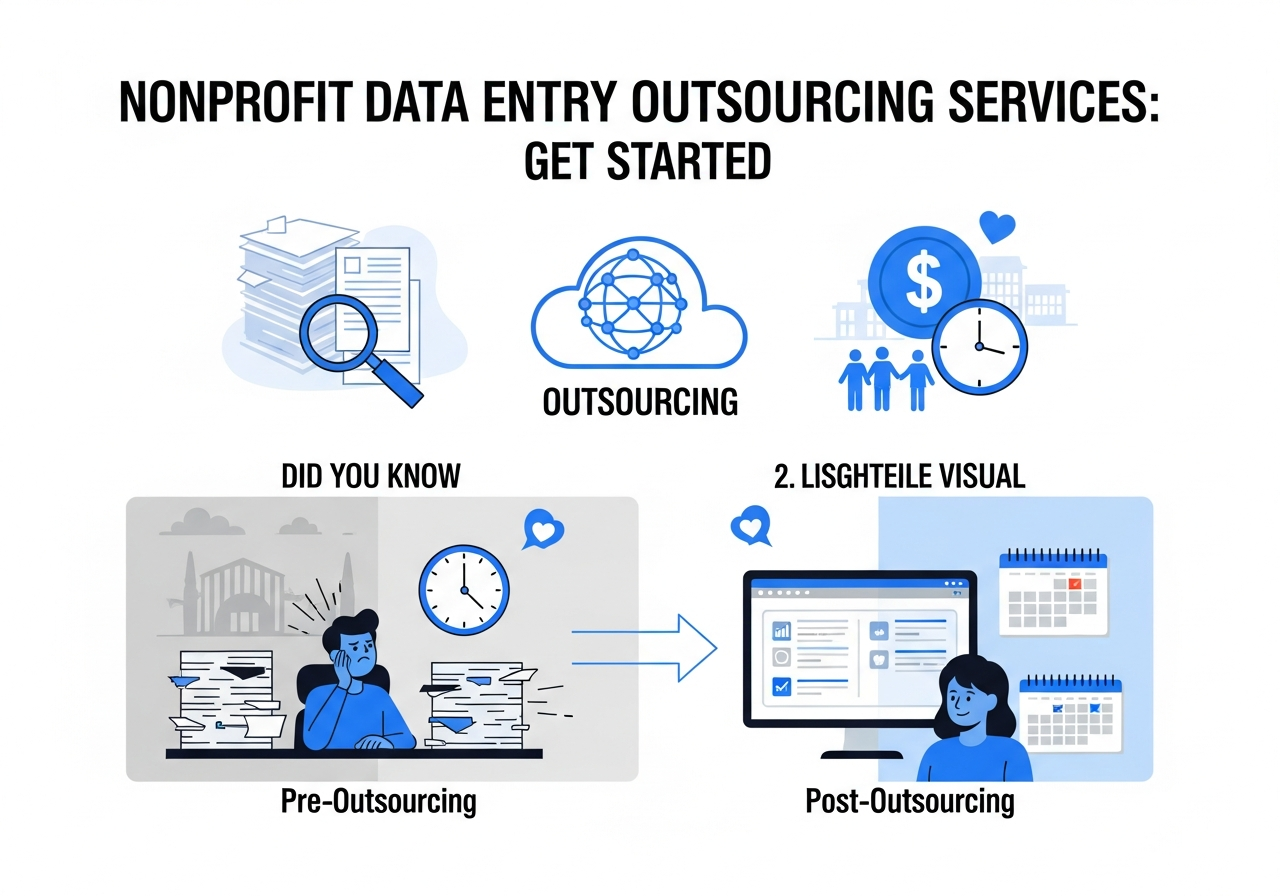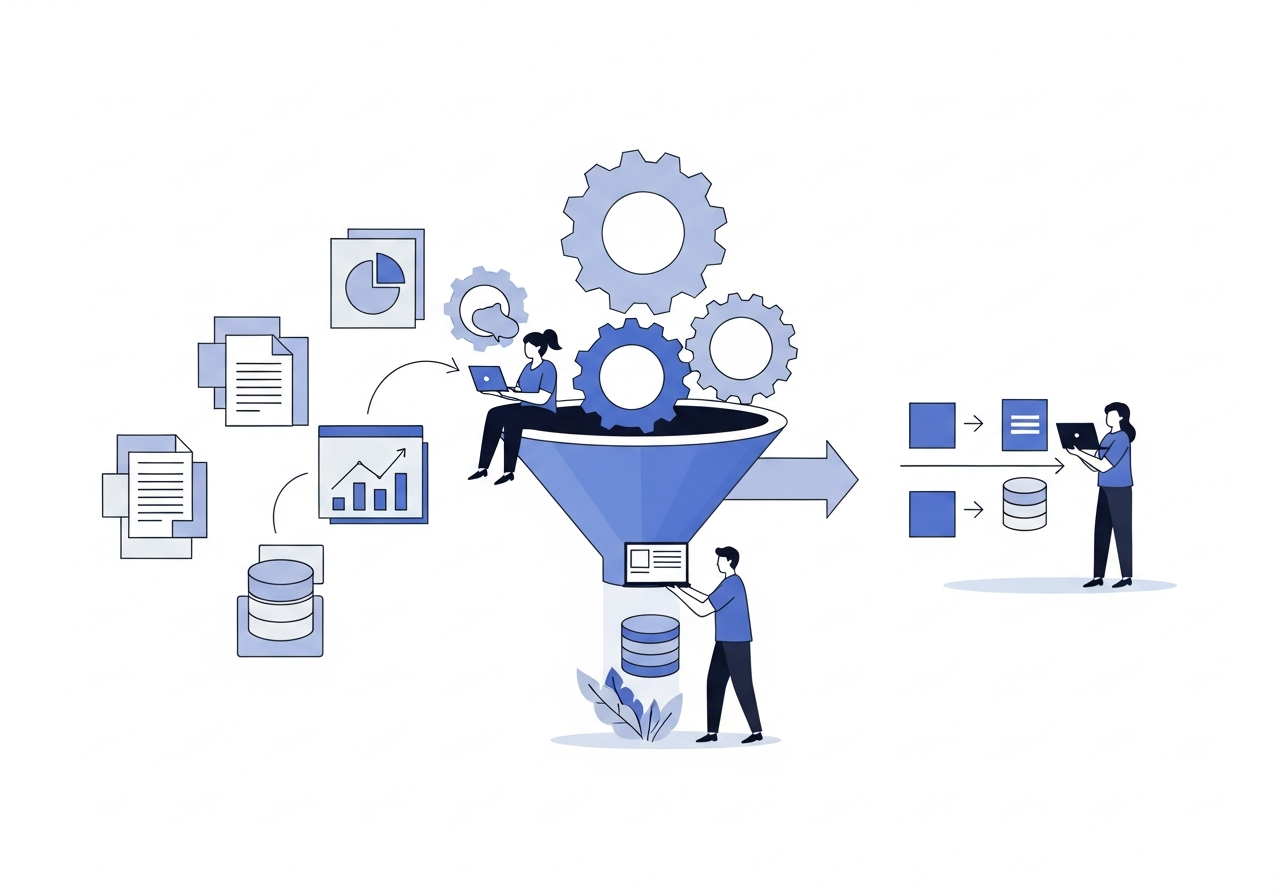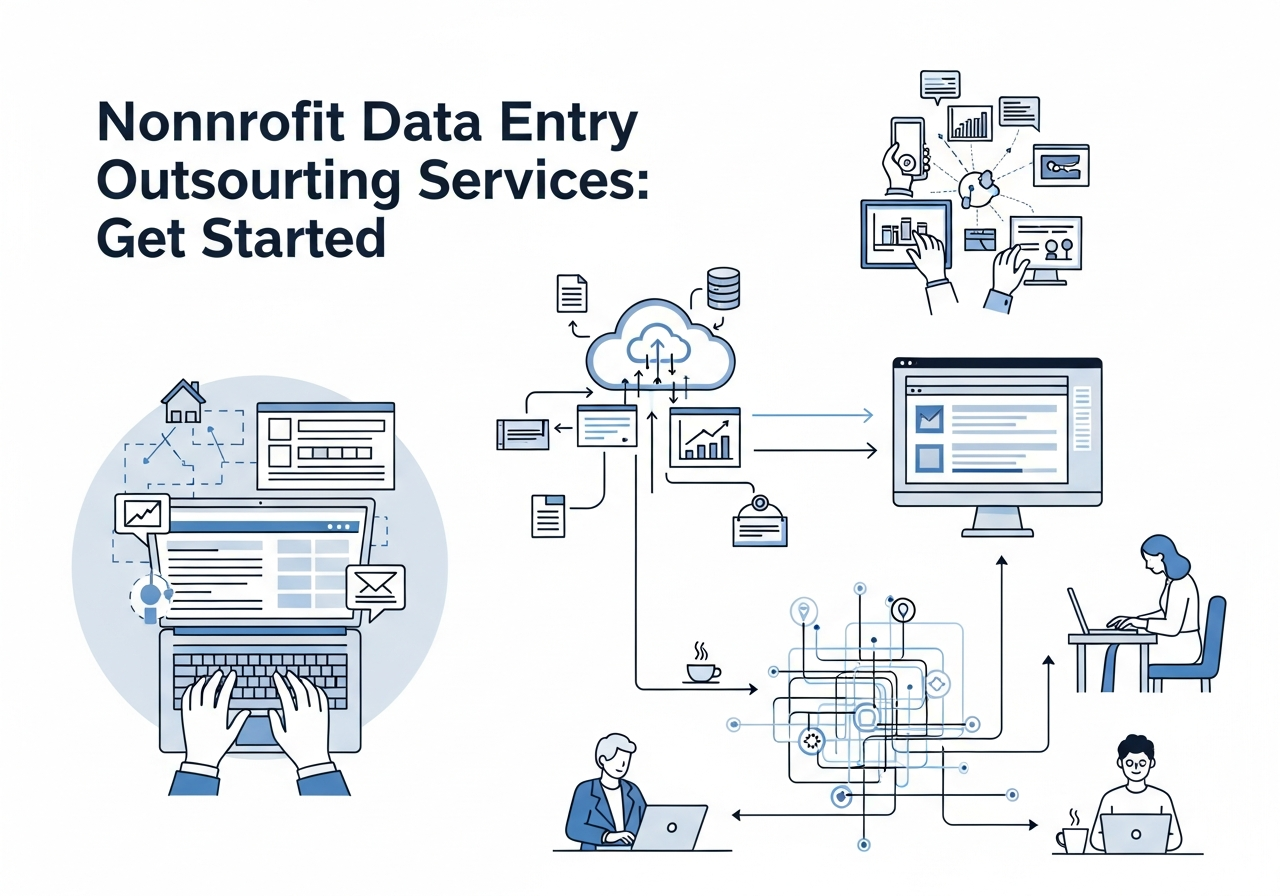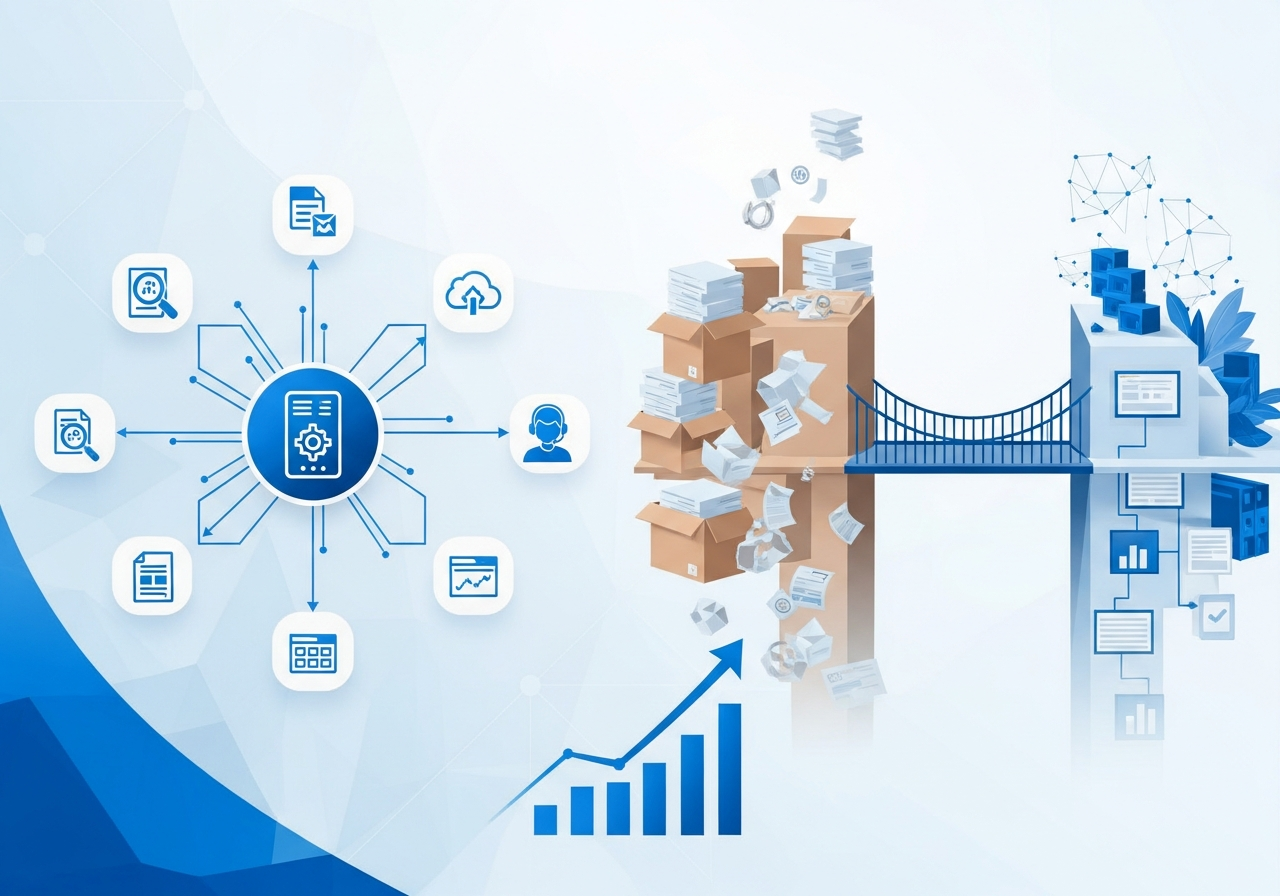
Nonprofit data entry outsourcing is the smartest way for nonprofits to save time, cut costs, and focus on their mission, without getting buried in administrative work. Stealth Agents provides trained virtual assistants who handle your data accurately and securely, so your team can prioritize impact over input. Book your free consultation today at StealthAgents.com.
Tracking data is vital for nonprofits but is often time-consuming and overwhelming. Outsourcing nonprofit data entry can save time, reduce errors, and help organizations focus on their mission.
Studies show that outsourcing non-core tasks can cut operational costs by up to 30%.
Nonprofits often struggle to keep donor records, volunteer lists, and financial data accurate and up to date. Outsourcing services like virtual assistants can make a huge difference.
Below, we’ll explore the benefits, challenges, and best practices of outsourcing your organization’s data entry needs.
If you’re ready to stryou’ree operations and free up valuable time, book a free consultation on virtual assistant pricing with Stealth Agents today to explore our virtual assistant options.
What Is Nonprofit Data Entry Outsourcing?
Nonprofit data entry outsourcing is delegating data management tasks to skilled professionals outside the organization.
Many nonprofits use this method to save costs, improve productivity, and focus on core missions without sacrificing data accuracy. A virtual assistant for nonprofits can efficiently handle donor records, membership lists, or event registrations, ensuring timely updates and organization.
What Does Data Entry Outsourcing Involve?
At its core, data entry means adding, verifying, and editing electronic information, making sure your records are accurate, accessible, and up to date. For nonprofits, this often covers a wide range of data, such as:
- Donor and volunteer records
- Event registrations
- Membership databases
- Meeting notes
- Financial and fundraising data
Skilled data entry professionals don’t just input information; they also verify accuracy, edit details when needed, and format data for reports and presentations. Many are proficient with various data management tools and conversion software, allowing nonprofits to receive information in the formats that best suit their needs. This level of expertise ensures your organization’s data is always ready for board meetings, grant applications, or compliance checks.
Reports show that outsourcing administrative work can reduce operational costs by 30% or more while offering access to specialized expertise.
This approach is constructive for nonprofit teams that juggle limited resources and increasing administrative demands. With the rise of flexible remote work opportunities, outsourcing has become popular for nonprofits seeking dependable and affordable support.
By delegating tasks like data entry, nonprofits can allocate more time to connecting with their communities and achieving their objectives.
What Services Are Included in Nonprofit Data Entry Outsourcing?
Nonprofit data entry outsourcing offers valuable support to organizations by managing time-consuming tasks and freeing up resources to focus on their mission. Here are the top eight services provided:
1. Donation Data Management
Accurate donation records are critical for maintaining reliable financial reports.
Outsourcing ensures all donor information, amounts, and transaction details are recorded without errors.
Studies show that over 40% of nonprofits face challenges with data accuracy, making this service a must-have.
Pristine donation data allows nonprofits to analyze trends and craft effective fundraising strategies.
The streamlined process also ensures compliance with financial audits.
2. Membership Database Maintenance
Membership data can become overwhelming with organization growth.
Outsourced professionals handle updates, ensuring all member contact details and payment records are current.
Well-maintained membership databases help organizations strengthen relationships and improve community engagement.
With the rise of remote work solutions, nonprofits find outsourcing an efficient option.
Improved accessibility to member data also boosts outreach efforts.
3. Volunteer Records Entry
Nonprofits rely heavily on volunteers, making proper records essential for operational planning.
Outsourcing this task ensures volunteer data, including skills, schedules, and hours is consistently managed.
Precise data helps nonprofits assign tasks effectively and recognize contributions appropriately.
A well-organized volunteer database fosters stronger relationships between organizations and their helpers.
Professionals handling data entry free up staff to focus on impactful outreach.
4. Grant and Funding Application Data
Grant applications require accurate and comprehensive data submission for success.
Outsourced data entry professionals ensure applications are completed with attention to detail and compliance.
Reliable documentation increases the likelihood of securing essential funds.
Through organized grant records, nonprofits can also track their application history for future opportunities.
This service reduces the administrative burden on nonprofit teams.
5. Event Registrant Details
Successful events depend on accurate registrant data to streamline attendance and logistics.
Outsourced services handle RSVPs, attendee preferences, and payment records, ensuring cleanliness and accuracy.
With events contributing significantly to nonprofit fundraising efforts, this task is vital.
Outsourcing also ensures that event details are processed quickly for seamless planning.
This efficient service aligns with the increasing demand for remote administrative support.
6. Sales Order Data Entry
Sales order data entry is often necessary for charities selling items during fundraisers.
Professionals manage order records, ensuring accurate sales, inventory, and payment tracking.
Timely updates prevent discrepancies that could disrupt financial planning.
Outsourcing this task supports nonprofits during busy campaigns by maintaining precise records.
Clean data aids in tracking the impact of fundraising activities.
7. General Administrative Data Entry
Nonprofits manage surveys, partnership lists, and more that require proper formatting and organization.
Outsourcing ensures that such data is systematically recorded to avoid mistakes during audits or campaigns.
Experienced virtual assistants, especially those specializing in nonprofit needs, are ideal for these tasks.
Delegating administrative data entry minimizes chaos while allowing teams to focus on their goals.
This service is essential to preserving productivity.
8. CRM Data Management
Nonprofits depend on CRM platforms to organize donor, member, and volunteer data.
Outsourced professionals handle updates, migrations, and troubleshooting for seamless database management.
Accurate CRM data directly influences fundraising success and stakeholder engagement.
Roper database handling also improves decision-making and aids targeted outreach. Entrusting this task to experts provides nonprofits with consistent and reliable tools for advancement.
Partnering with the best virtual assistant for nonprofits ensures professional handling of administrative tasks and maximizes an organization’s ability to make meaningful changes.
Advantages of Multilingual Teams in Data Entry Outsourcing
Outsourcing data entry to multilingual teams brings nonprofits a wealth of benefits, especially as many organizations operate across diverse communities and languages.
Key advantages include:
- Greater Data Accuracy: Multilingual professionals minimize misinterpretation when handling names, addresses, or information submitted in languages other than English. This is crucial for global nonprofits or those working with immigrant populations.
- Expanded Outreach Capabilities: With multilingual support, your organization can build and maintain databases that reflect the true diversity of your stakeholders, improving engagement with non-English-speaking donors, members, or volunteers.
- Improved Cross-Border Collaboration: International campaigns or partnerships run more smoothly, as language barriers are less likely to compromise the quality or speed of your data management.
- Enhanced Compliance: Regulations often require precise handling of information in local languages. A multilingual data entry team ensures your nonprofit meets these standards and avoids costly mistakes.
Can a Data Entry Service Handle Donation Records, Volunteer Lists, and Grant Applications?
A data entry service can quickly handle your organization’s volunteer lists and grant applications.
Outsourcing your nonprofit’s data to save time and reduce mistakes when dealing with massive amounts of data.
Studies show that human errors in data entry can cost businesses millions annually, but outsourcing minimizes this risk.
A skilled data analyst is a nonprofit professional who ensures your data is accurate, organized, and ready to use whenever needed.
This lets you focus on what matters most, helping your community and achieving your nonprofit’s goals.
Nonprofit’s Entry Service Integrate with My Nonprofit’s ExistinNonprofit’sand Databases?
A data entry service can work perfectly with your nonprofit’s current nonprofit’s databases.
Most nonprofit data entry outsourcing providers ensure their tools and processes match your existing software.
For example, 87% of nonprofits use software like QuickBooks; many data entry services are designed to sync with it.
Whether you’re managing donyou’rea or tracking expenses, they ensure everything works together without causing errors.
A junior data analyst can also oversee the process, ensuring smooth data integration and accuracy.
What Qualifications Should a Nonprofit Look for in a Data Entry Service Provider?
Nonprofits consistently handle significant data, from donor records to operational logs. Finding the right data entry service provider ensures efficiency and accuracy. Here are five key qualifications every nonprofit should look for:
Setting Clear Expectations with Your Outsourcing Partner
Clarity is key when establishing a successful outsourcing relationship for your nonprofit’s data entry needs.
Defining specific goals, timelines, and deliverables upfront ensures both you and your data entry service provider are on the same page from day one.
This transparency helps avoid miscommunications and ensures projects remain on track,especially critical when dealing with sensitive tasks like donor management or grant applications.
Consider outlining important details in your service agreement, such as:
- Data accuracy standards
- Turnaround times for project milestones
- Security protocols for handling confidential information
1. Proven Accuracy and Attention to Detail
Accuracy is non-negotiable when it comes to nonprofit data entry outsourcing. A minor error can disrupt financial reports or even donor communications. Look for providers with a track record of meticulous data entry work.
Studies highlight that manual data entry errors cost organizations an average of $600 billion annually, underscoring the importance of precision.
Experience with nonprofit-specific tasks, such as maintaining donor histories and financial transparency, is vital.
Providers should implement double-checking processes or robust quality assurance measures.
Checking past client testimonials or documented success rates can help nonprofits assess their reliability. Ultimately, accuracy ensures smoother operations, better reporting, and a strong reputation in donor relationships.
Key Skills Every Data Entry Professional Needs
To excel as a data entry professional, whether you’re managing volunteer lists or handling sensitive donor records, you need far more than quick fingers on a keyboard.
Success in this role relies on a blend of practical skills and focused habits that ensure every data point is accurate and secure.
Here’s what sets the best apart:
- Impeccable Attention to Detail: Even the smallest typo can cause extensive issues down the line. Precision is essential for reliable records and error-free reports.
- Efficient Typing Abilities: Speed matters, but not at the expense of accuracy. Proficient typing helps meet deadlines and manage large volumes without mistakes.
- Excellent Organizational Skills: Managing vast amounts of data demands clear systems for sorting, filing, and retrieving information quickly.
- Confidentiality and Discretion: Nonprofits often handle personal or financial data. Top data entry professionals treat sensitive information with the highest care, respecting privacy and compliance standards.
- Strong Communication: Whether following up on unclear records or clarifying requirements, clear verbal and written communication is crucial.
- Time Management: Meeting tight deadlines while juggling multiple projects keeps nonprofit workflows on track.
- Software Proficiency: Comfort with platforms like Microsoft Excel, Google Sheets, and nonprofit-specific tools (think QuickBooks or Salesforce) is increasingly essential.
- Problem-Solving and Critical Thinking: Spotting inconsistencies and resolving data issues quickly shows a proactive approach.
- Ability to Focus: Extended periods of concentration help ensure that no details are missed, especially during large data migrations or updates.
2. Experience with Nonprofit-Specific Needs
A provider familiar with nonprofit data management adds immense value to your operations. Nonprofits require tailored support for fundraising activities, such as managing grant applications, volunteer logs, or sales order data entry.
This industry-focused knowledge cuts down training time and boosts efficiency from day one.
Vendors serving nonprofits often bring insight into data compliance, such as staying aligned with regulations like the General Data Protection Regulation (GDPR).
A recent study revealed that nonprofits process large amounts of data 30% more frequently than for-profit businesses.
Always ask for specific examples of work with nonprofit clients. Look for flexibility and adaptability, as nonprofits often operate under unique demands or fluctuating budgets.
3. Efficiency Without Compromising Quality
Nonprofits operate in fast-paced environments where tight deadlines are standard.
A provider should meet deadlines while ensuring data entry meets the highest quality standards.
Many data entry services now utilize automation tools for repetitive tasks, saving time and effort.
According to data from industry surveys, automated tools can improve turnaround times by up to 40%. However, pairing human review with automated solutions ensures accuracy doesn’t drop.
It doesn’t also include transparent communication and the ability to scale services when the workload increases due to fundraising campaigns or reporting seasons. Selecting the best virtual assistant for nonprofits means finding a provider that merges productivity with precision.
4. Understanding of Data Security and Privacy
Data security is a critical concern since nonprofits often store sensitive information. From donor credit card details to confidential grant information, safeguarding this data must be a top priority.
With 61% of nonprofits reporting cybersecurity incidents in recent years, your provider should adhere to strict security protocols.
Providers should be well-versed in cybersecurity measures, including encrypted storage and secure file transfers.
Look for certifications like ISO/IEC 27001 for data privacy or proof of compliance with local data laws.
Checking their internal security training methods is a good way to ensure that everyone on staff knows how important it is to keep data private.
5. Cost-Effectiveness and Transparency
Nonprofits frequently work within limited budgets, prioritizing cost-effective solutions without compromising quality.
A reliable provider offers clear pricing structures without hidden fees, allowing for informed financial decisions.
Consider whether they offer flexible payment plans based on project size or hours worked.
According to labor industry statistics, nonprofit data entry outsourcing can save 40-60% on operating costs compared to in-house data management. Transparency is equally critical, as clear communication ensures no surprises once the project begins.
Compare quotes from multiple providers to evaluate who meets your budget without sacrificing results. By prioritizing these qualifications, nonprofits can streamline their operations and focus on their mission.
Key Tips for Outsourcing Data Entry Services
Outsourcing data entry can streamline operations and free up time for your core mission, if executed wisely.
Here are essential considerations to help you find the right partner and maximize value:
1. Consider the Full Cost Spectrum
It’s important to look beyond sticker price when assessing your options. In addition to the service fee, factor in transition costs, training, and ongoing contract management.
Amazon’s tight project monitoring and McKinsey’s reports on outsourcing emphasize that overlooking these “hidden” costs is a common pitfall. Build a thorough budget to avoid financial surprises and ensure sustainability for your organization.
2. Set Clear Expectations Upfront
Miscommunication can derail a partnership before it begins. Clearly define your goals, expected deliverables, turnaround times, and preferred communication channels in your service agreement.
For example, nonprofit organizations often benefit from specifying processes for donor updates or compliance tasks. The more explicit your guidelines, the smoother the collaboration.
3. Evaluate Provider Reputation and Track Record
Take time to assess your potential partner’s history with clients in your sector. Request references, read reviews, or check platforms like G2 or Clutch for independent evaluations.
Peer-reviewed testimonials offer insights into reliability, flexibility, and overall satisfaction, crucial indicators for long-term success.
4. Understand Their Contingency Planning
No one likes to plan for the unexpected, but it’s essential. Ask about backup procedures, data recovery strategies, and continuity measures in case of disruptions.
Top-tier providers often have documented policies, look for companies who aren’t shy about sharing details. This readiness can mean the difference between a minor hiccup and a major headache.
5. Prioritize Robust Security Measures
Your data especially sensitive donor or financial information, deserves the highest protection. Seek out providers with certifications such as ISO/IEC 27001 and demonstrated compliance with regulations like GDPR or HIPAA.
Inquire about their encryption technology, staff training, and regular audits. Security should never be an afterthought.
Why Choose Stealth Agents for Nonprofit Data Entry Outsourcing?
Stealth Agents is the leading choice for nonprofit data entry outsourcing because they prioritize accuracy, reliability, and dedicated support for your organization’s needs. The organization provides highly trained virtual assistants who specialize in handling sensitive nonprofit data with precision and confidentiality.
Research shows that outsourcing tasks like data entry can save organizations up to 70% in operational costs, helping nonprofits allocate more resources to their mission. Stealth Agents’ outstandingAgents’tion stems from their commitment to providing dependable services tailored to nonprofit organizations’ uniquuniquenizations.
With years of experience in online support roles, they deliver exceptional performance, even under strict deadlines, ensuring your organization runs smoothly. They also employ advanced data management practices and prioritize secure handling, which is essential for nonprofits managing donor information or membership records.
By choosing Stealth Agents, your nonprofit gains a trustworthy partner, enabling you to focus on creating a more significant social impact.
Takeaways
Choosing nonprofit data entry outsourcing can save your organization time, money, and unnecessary stress.
By delegating routine and tedious tasks, your nonprofit can focus more on what truly matters, making a difference in the community.
With trustworthy support, accurate data management, and efficient service, outsourcing ensures your operations run smoothly without the hassle of managing everything in-house.
These services bring reliability and flexibility to handle your unique needs. Entrusting your nonprofit’s data to tononprofit’sperts makes every hour count toward a more significant impact.
Frequently Asked Questions
How can nonprofits ensure the security of their data when outsourcing data entry services?
Nonprofits can keep their data safe by choosing providers with strong security measures like encryption and secure file sharing. Look for certifications such as ISO/IEC 27001 and compliance with rules like GDPR. Regular security checks and training staff on data privacy are also important to protect sensitive information.
What are the key considerations for nonprofits when choosing a data entry outsourcing partner?
Nonprofits should look for a provider with experience in nonprofit work, high accuracy standards, and strong security practices. It’s also important to check reviews and references to ensure reliability. Clear and fair pricing is another key factor to consider.
How can outsourcing data entry help nonprofits with limited budgets?
Outsourcing data entry saves money by removing the need to hire in-house staff or buy extra equipment. It gives nonprofits access to skilled workers at a lower cost, allowing them to focus more resources on their mission and making a bigger impact.
Why is multilingual capability important for data entry outsourcing in nonprofits?
For nonprofits working with diverse groups or internationally, multilingual capability ensures data is handled correctly in different languages. This reduces mistakes, helps connect with non-English speakers, and supports better collaboration across borders.
How does data entry outsourcing improve volunteer management for nonprofits?
Outsourcing helps keep volunteer records accurate and up to date, including skills, schedules, and hours worked. This makes it easier to assign tasks, recognize volunteers’ efforts, and build stronger relationships, leading to better teamwork and community involvement.
What role does automation play in nonprofit data entry outsourcing?
Automation speeds up repetitive tasks and reduces mistakes. It helps process data faster, giving nonprofits more time to focus on important projects. Combining automation with human checks ensures the data is accurate and reliable.
How can nonprofits benefit from outsourcing data entry during peak fundraising periods?
During busy fundraising times, outsourcing helps handle large amounts of data quickly and accurately. This includes processing donations and event sign-ups, allowing staff to focus on connecting with donors and planning fundraising activities.
What are the best practices for integrating outsourced data entry services with existing nonprofit systems?
To make the process smooth, nonprofits should ensure the provider’s tools work well with their current systems. Clear communication, regular updates, and a project manager to oversee the process can help avoid problems and keep things running smoothly.
How can nonprofits measure the success of outsourced data entry services?
Nonprofits can check success by looking at how accurate the data is, how quickly tasks are completed, and how much time and effort is saved. Feedback from staff and improved workflows are also good signs of a successful partnership.
What should nonprofits include in their service agreement with a data entry outsourcing provider?
The agreement should clearly state expectations like accuracy, deadlines, and security rules. It should also include roles, responsibilities, and how to handle private information. Adding details about pricing, payment, and what happens if something goes wrong helps avoid misunderstandings.