Updated Mar 5, 2026
A loan processor virtual assistant helps lending businesses run faster while reducing operational costs. Loan processing involves many slow, repetitive administrative tasks that consume valuable time.
When files stall, closings get delayed and revenue is lost.
This article explains how a virtual assistant removes processing bottlenecks, lowers expenses, and helps your team close more loans every month.
Why Loan Processor Virtual Assistant Matters
Mortgage approvals can take weeks when documents are missing or follow-ups fall through the cracks.
These delays are one of the biggest reasons loans don't close on time. Every stalled file is a deal at risk.
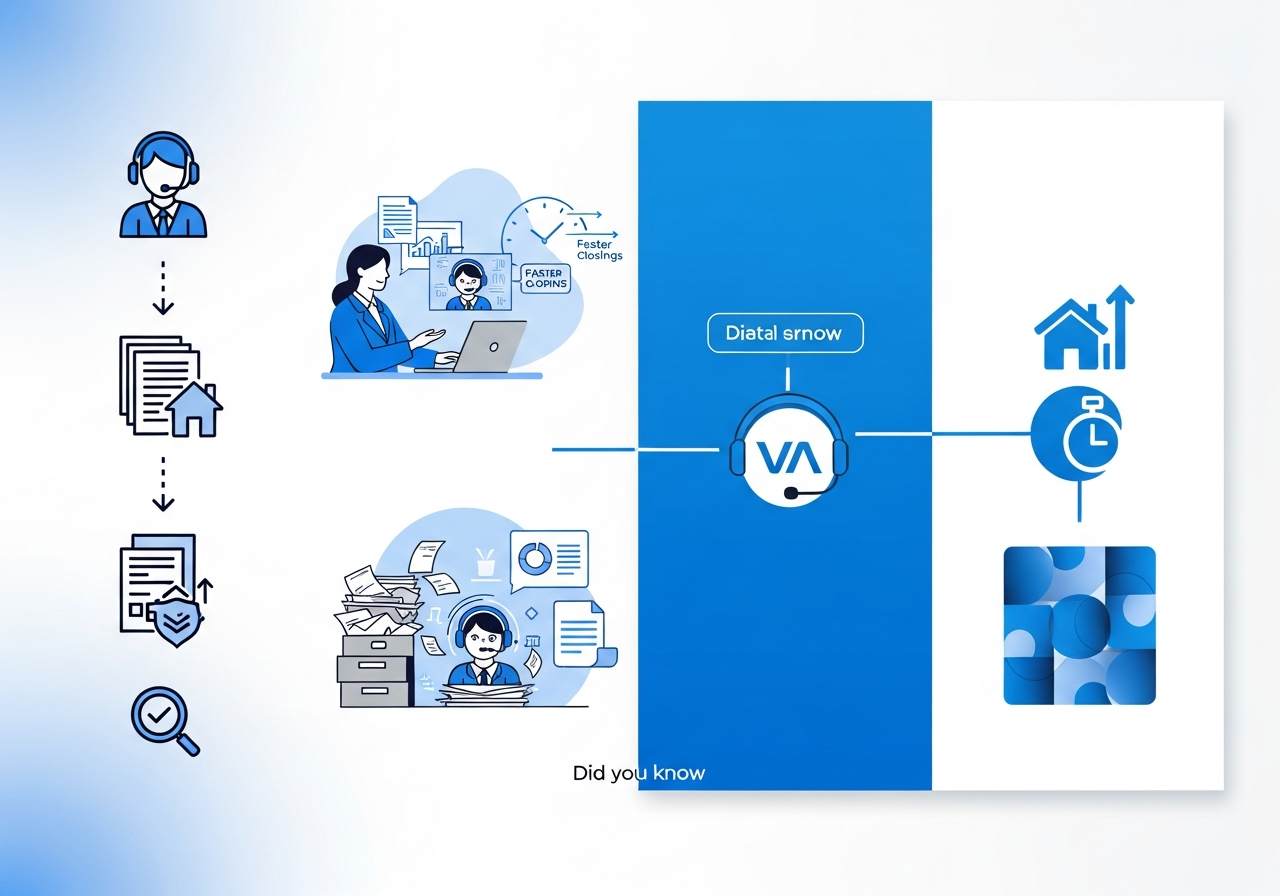
A loan processor virtual assistant handles the tasks that cause those delays.
This includes collecting documents, tracking conditions, communicating with borrowers, and preparing files for underwriting. The result is faster submissions and quicker closings.
What a Loan Processor Virtual Assistant Handles
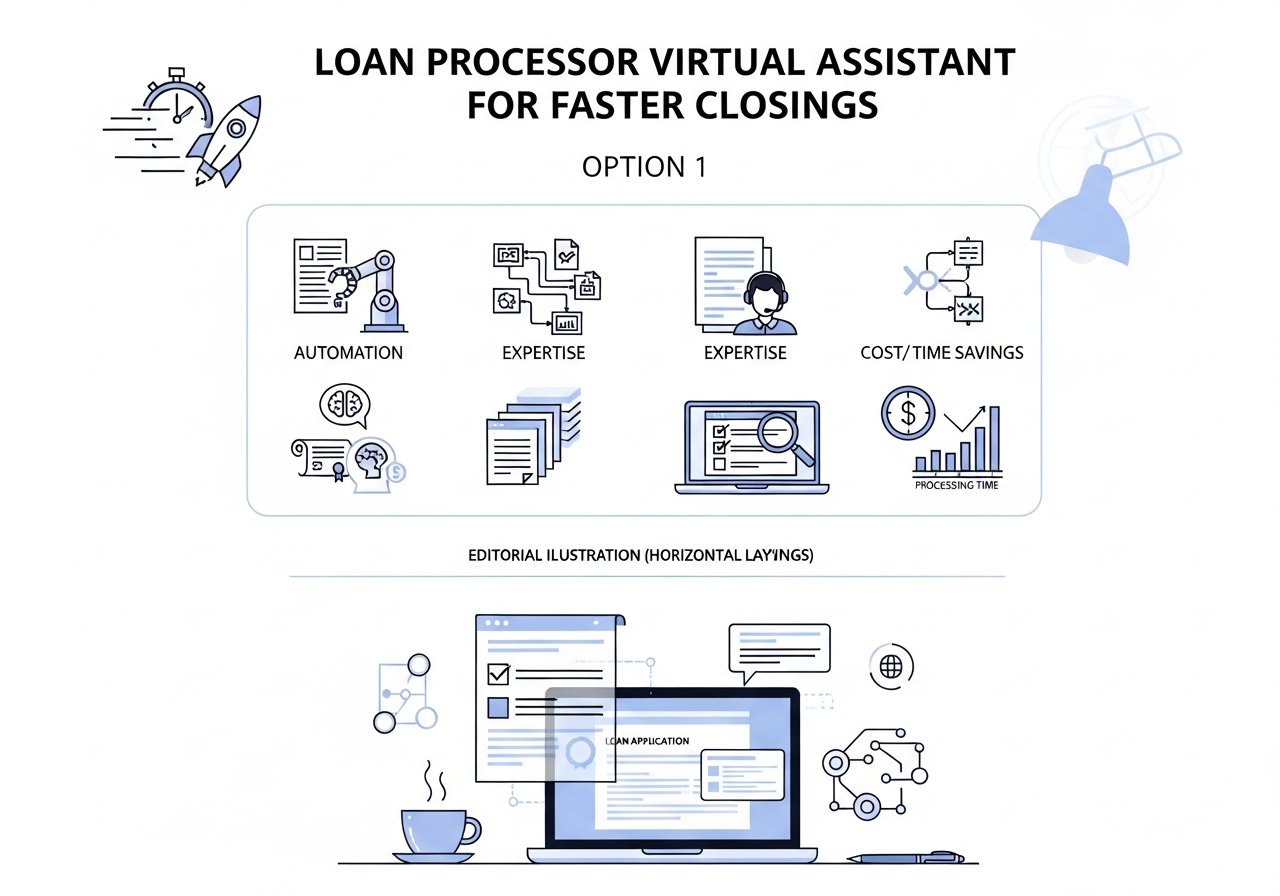
A loan processor virtual assistant manage loan files throughout the lending lifecycle to keep approvals moving without delays.
Instead of your loan officers handling paperwork, follow-ups, and system updates, a dedicated processor ensures every file progresses smoothly toward closing.
1. Document Collection & Review
Collecting borrower documents consumes significant processing time. Missing tax returns, pay stubs, or bank statements often delay applications.
A loan processor virtual assistant follows up with borrowers, gathers required documents, and reviews files for completeness before submission.
This prevents incomplete applications from reaching underwriting and saves your team hours each week.
Businesses handling high mortgage volumes often combine processing support with a dedicated mortgage virtual assistant to streamline borrower communication, document tracking, and underwriting preparation across multiple loan files.
2. Loan Origination System (LOS) Data Entry
Manual data entry inside platforms like Encompass or Calyx increases the risk of costly errors. Incorrect inputs can delay underwriting or trigger compliance issues.
Industry analysis shows that 11.5% of mortgage files contain missing or incorrect information, contributing to nearly $7.8 billion in additional across the lending industry.
A loan processor virtual assistant accurately enters and updates borrower information within your LOS.
Clean and complete data allows loan files to move forward without unnecessary revisions.
3. Verification of Employment (VOE)
Employment verification frequently slows loan approvals due to delayed employer responses.
Your virtual assistant manages employer outreach, follow-ups, and documentation tracking until verification is completed.
Consistent follow-up helps reduce processing delays and improves turnaround times.
Many lending teams also rely on a bookkeeping virtual assistant to maintain organized financial records, making borrower income verification faster and reducing delays during employment and income checks.
4. Condition Management and Clearance
Underwriting conditions often require additional documentation or clarification before approval.
A loan processor virtual assistant monitors conditions, gathers required documents, and coordinates communication between borrowers, underwriters, and loan officers.
Faster condition clearance keeps loans progressing toward approval.
5. Closing Package Preparation
The final stage of loan processing requires precise coordination and documentation accuracy.
A loan processor virtual assistant prepares closing files, organizes required documents, and coordinates with title companies and stakeholders.
Proper preparation helps ensure loans close on schedule with fewer last-minute issues.
How a Loan Processor VA Saves You Time
Loan officers spend hours every week on tasks that don't bring in revenue.
Uploading documents, updating loan origination systems, following up on conditions, and coordinating with underwriters all take time away from originating new loans.
Industry data shows that processors commonly manage 20 to 30 loans per month. That's a heavy workload.
Shifting that work to a virtual assistant frees your team to focus on closing deals and building referral networks.
How a Loan Processor Virtual Assistant Saves You Money
Hiring a full-time, in-house loan processor is a big financial commitment.
The average U.S. loan processor salary ranges from $43,000 to $58,000 per year. before factoring in benefits, taxes, office space, and software costs.
A loan processor virtual assistant helps you cut those costs significantly.
They handle tasks like document preparation, loan file management, and compliance checks remotely, ensuring efficiency without the added expense of an in-house employee.
It’s a simple, cost-effective way to streamline your loan processing operations.
How a Loan Processor VA Increase Funded Loans
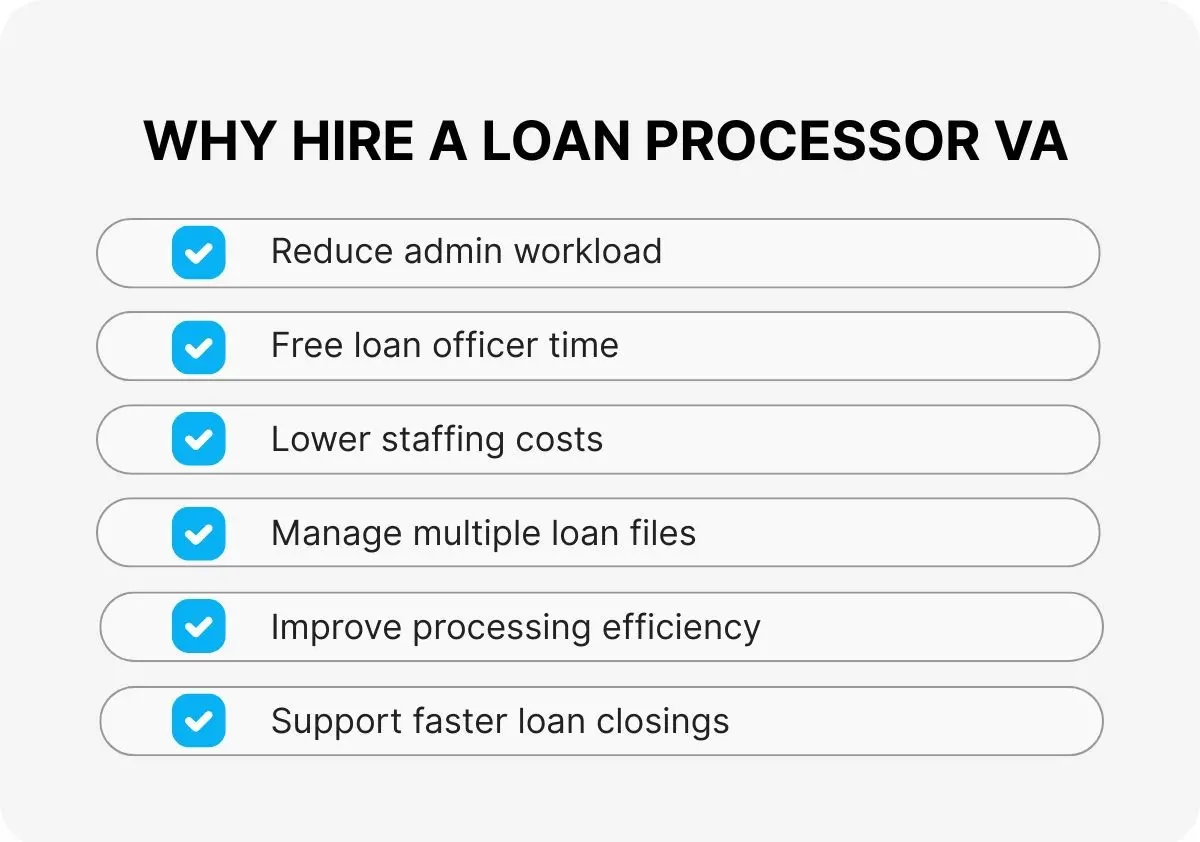
Processing capacity sets a ceiling on how many loans you can close. When admin work piles up, growth stalls - even if demand is strong.
A virtual assistant raises that ceiling. You can handle higher loan volume, turn files around faster, and keep operational costs predictable. Growth becomes possible without adding to your fixed expenses.
When you remove the administrative burden from your loan officers, their productivity skyrockets. Instead of spending 20 hours a week on processing, they spend that time networking with realtors and taking applications.
Faster turn times mean you get paid faster. They also reduce the number of conditions and resubmissions. Cleaner files breeze through underwriting.
By shifting paperwork to a cost-effective VA, you unlock the revenue potential of your sales team. You get more closings with the same number of loan officers.
Is a Loan Processor Virtual Assistant Right for You?
A virtual assistant is a great fit for mortgage brokers with growing pipelines, loan officers closing multiple files each month, and lending teams experiencing approval delays.
It also works well for firms that want to scale without expanding their payroll. That said, a virtual assistant works best when you already have a standardized loan workflow in place.
If your loan volume is inconsistent or your process isn't yet defined, it's worth building that foundation first.

Why Stealth Agents Is Built for Loan Processing Support
We build teams based on roles. When you come to us for loan processing support, we match you with a Loan Processor Virtual Assistant who fits that specific profile.
We manage performance and continuity. You get the benefit of a large support organization with the personal touch of a dedicated team member.
This is your competitive advantage. While other lenders are struggling to hire and retain expensive local talent, you are scaling efficiently.
You can handle peak lending cycles without the stress of hiring or the pain of layoffs when the market cools.
Conclusion
Loan processing delays cost time and money. Hiring internally adds payroll risk. Letting files go unmanaged slows down approvals and damages client relationships.
A loan processor virtual assistant gives you a smarter path forward. It reduces your workload, controls your costs, and helps you close loans faster.
For any lending business looking to grow efficiently, it's one of the most practical steps you can take.
Stop forcing your high-performers to do data entry. Increase your funding volume with Stealth Agents.