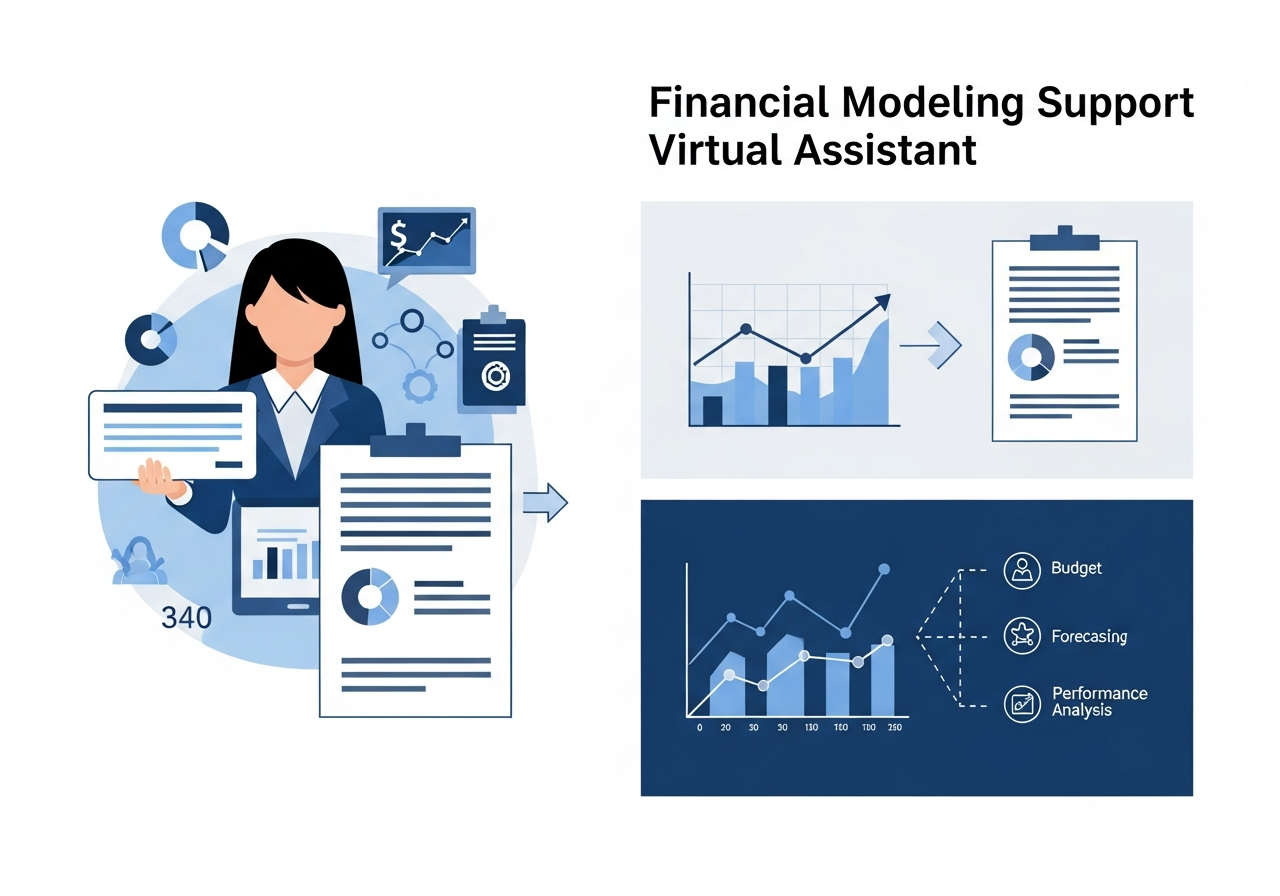
Financial modeling support virtual assistant services from Stealth Agents help you simplify complex financial tasks, from forecasting and budgeting to investor-ready reporting, without hiring full-time staff. If you’re aiming for smarter decisions, cleaner models, and more time to focus on growth, Stealth Agents delivers the expert backup you need.
Accurate financial forecasting lays the foundation for well-informed business decisions and long-term growth.
Financial modeling support helps businesses interpret complex data, forecast trends, and position themselves for success in competitive industries.
With Stealth Agents, you can hire experienced virtual assistants who specialize in building and managing high-quality financial models.
Many businesses struggle with labor-intensive tasks, such as cash flow projections, budget planning, and scenario analysis, which consume valuable time and resources.
Entrusting these tasks to a skilled virtual assistant eliminates these challenges, freeing you to focus on strategic priorities and expansion.
Data-driven organizations find that strong financial modeling reduces risks by 30% and facilitates enhanced decision-making.
Virtual assistants provide tailored solutions for your specific needs, allowing your business to remain agile and competitive.
Book a free consultation today to see how Stealth Agents can transform your operations and learn more about our virtual assistant pricing.
Why Consider a Financial Modeling Virtual Assistant?
Whether you’re juggling budgets, forecasting future growth, or simply trying to keep your spreadsheets from becoming a tangled mess, a virtual assistant with expertise in financial modeling can be a game-changer.
These professionals are adept at streamlining your workflow, organizing your data, and ensuring you have clear, actionable insights to guide your business decisions—all while saving you valuable time.
Financial modeling VAs can help with:
- Creating and updating complex Excel models
- Preparing financial forecasts and scenario analyses
- Organizing receipts and tracking expenses
- Compiling, cleaning, and visualizing data
- Drafting clear reports for stakeholders and investors
What Is Financial Modeling Support Provided By A Virtual Assistant?
Financial modeling support provided by a virtual assistant involves handling tasks like data analysis, creating detailed financial reports, and building predictive models to help businesses make informed decisions.
By hiring a financial record-keeping virtual assistant for this service, businesses can save valuable time and focus on other critical operations.
These assistants are skilled in using various tools and software to process financial data accurately and efficiently.
Financial services industry virtual assistants can help with budgeting, forecasting, and generating reports that align with your business goals.
Their support can improve the accuracy and presentation of your financial models, ensuring better communication with stakeholders.
Virtual assistants often work remotely, offering businesses the flexibility to scale services according to their needs.
Hiring such expertise is a practical way to gain comprehensive financial modeling support without needing a full-time hire.
What Is the Process for Hiring a Virtual Assistant for Financial Services?
Securing a virtual assistant for your financial services needs is refreshingly straightforward—and designed to get you up and running with minimal friction.
Here’s how the process typically unfolds:
- Initial Consultation: Schedule a call, often complimentary, to discuss your business goals, pain points, and the specific financial tasks you need handled—be it reporting, forecasting, or data analysis.
- Needs Assessment: An expert will help you outline a game plan, identifying the precise skill sets your project needs (such as expertise in QuickBooks, Excel, or financial modeling software).
- Candidate Matching: Based on your requirements, you’ll be matched with experienced virtual assistants who possess a track record in areas like cash flow management, budgeting, or nonprofit financial reporting.
- Onboarding & Setup: After selecting your virtual assistant, you’ll receive support with onboarding—setting up secure access to relevant systems, defining deliverables, and establishing clear communication protocols.
- Begin Collaboration: You can now delegate financial tasks confidently, knowing you have specialized support on hand to boost productivity and free up time for strategic work.
How Do Accounting Virtual Assistants Differ From Bookkeeping Virtual Assistants or Virtual Bookkeepers?
While the terms “accounting virtual assistant” and “bookkeeping virtual assistant” are often used interchangeably, it’s important to understand the key distinctions between these roles so you can choose the support that best fits your business needs.
Bookkeeping virtual assistants and virtual bookkeepers primarily focus on the day-to-day recording and organization of financial transactions. Their tasks typically include:
- Maintaining your general ledger
- Recording receipts and expenses
- Reconciling bank statements
- Processing invoices and payments
Accounting virtual assistants, on the other hand, offer a broader scope of financial expertise. In addition to basic bookkeeping, they can:
- Prepare financial statements and management reports
- Analyze financial data for trends or inefficiencies
- Assist with tax preparation and compliance
- Support budgeting and forecasting
- Liaise with external accountants or auditors
What Related Services Do Virtual Assistants Offer?
Virtual assistants aren’t just financial wizards—they bring a wealth of expertise across essential business functions. Here are a few ways they can power your team beyond financial modeling:
Administrative Support
Virtual assistants can streamline everyday operations by managing calendars, organizing digital files, and coordinating meetings. Their attention to detail ensures nothing slips through the cracks, keeping your business running like clockwork so you can focus on growth rather than paperwork.
Sales Development
Looking to accelerate your pipeline? Virtual assistants help with lead generation, prospect research, and managing your CRM. By nurturing prospects and qualifying leads, they ensure your sales team spends more time closing deals and less time on tedious tasks.
Customer Service
Exceptional customer experiences set you apart. Virtual assistants can handle client inquiries, manage support tickets, and provide timely, professional responses. This boosts satisfaction and loyalty, leaving every customer interaction on a positive note.
How Can Virtual Assistants Help With Financial Analysis?
Virtual assistants can provide valuable help with financial analysis by gathering and analyzing data to support informed business decisions.
A nonprofit financial reporting virtual assistant can handle large volumes of financial information, prepare detailed reports, and identify patterns or trends.
With their expertise in financial modeling support, virtual assistants can create forecasts and budgets tailored to business goals.
They are skilled in tools like Excel and other financial software, ensuring precise data processing and presentation.
Hiring a Virtual assistant for financial records allows businesses to streamline tasks and reduce workload.
These professionals can prepare financial summaries that help businesses communicate their performance to stakeholders.
By hiring such assistance, businesses can gain professional financial modeling support without making a full-time commitment.
How Can a Virtual Assistant Help Finance and Investment Planning Professionals Grow Their Business?
Virtual assistants play an essential role in supporting finance and investment planning professionals by lightening the load of administrative and operational tasks. Their behind-the-scenes support enables you to spend more time on client strategy, portfolio management, and relationship building.
Whether you’re looking to build your pipeline or maintain strong client relationships, here’s how a virtual assistant can make a difference:
- Lead Management and Outreach: A virtual assistant can help research potential clients, prequalify leads, and manage follow-up communication, ensuring your pipeline remains active and organized.
- Document Preparation and Collection: From gathering required paperwork to tracking down signatures, virtual assistants streamline routine processes, so important forms are submitted accurately and on time.
- Calendar Management and Meeting Coordination: Let a virtual assistant handle your scheduling, reminders, and meeting arrangements, so you never miss an opportunity or double-book a call.
- Client Communication: Virtual assistants can manage emails, respond to client inquiries, and assist with client onboarding, helping you maintain prompt and professional communication.
- Networking Support: They keep track of networking opportunities, industry events, and introductions, making it easier for you to expand your professional network.
What Are The Benefits Of Hiring Financial Modeling To A Virtual Assistant?
1. Save Valuable Time
Hiring a virtual assistant specializing in financial modeling can save you a significant amount of time.
They are experienced in analyzing complex data, creating forecasts, and preparing financial reports quickly and efficiently.
Instead of spending hours crunching numbers, a skilled assistant can take it off your hands seamlessly.
Their expertise allows them to handle tasks like creating cash flow projections or investor presentations while you focus on other priorities.
By taking on detailed work, they reduce the need for constant revisions and follow-ups.
This means you can reallocate time to strategy planning or client meetings.
Financial modeling support from a financial virtual analyst ensures timely and high-quality results, allowing you to better manage your workload.
2. Improve Accuracy in Financial Projections
Virtual assistants trained in financial modeling have the skills to deliver precise financial projections.
Accurate numbers are crucial when making decisions about investments or budgeting.
These specialists use software tools and analytical methods to minimize errors in calculations.
Their attention to detail ensures every assumption, formula, and variable is consistent throughout the reports.
Rather than taking risks with in-house errors, their focus on accuracy builds a reliable foundation for financial planning.
This trustworthiness in data can also improve investor confidence during presentations or proposals.
Hiring such professionals for financial modeling support ensures error-free and dependable results.
3. Reduce Staffing Costs
Hiring a virtual assistant for financial modeling is often more economical than adding a new permanent employee.
Virtual assistants typically work on a project or hourly basis, which eliminates the need for full-time salaries or benefits.
This means you only pay for the work you need, helping control overhead expenses.
More importantly, you avoid costs related to training or upgrading in-house staff skills.
The knowledge and expertise of these virtual assistants mean they can start delivering results right away.
By saving on these expenses, businesses can allocate resources to more critical areas of growth.
Financial modeling support from a virtual assistant is a practical solution for businesses looking to cut costs.
4. Gain Access to Specialized Expertise
Virtual assistants offering financial modeling services often come with niche expertise and advanced knowledge.
They’re well-versed in industry-standard tools like Excel, financial modeling software, and data analytics platforms.
Having worked with various companies, they bring a diverse range of experience to your project.
Their specialized skills allow them to design models tailored to your specific business needs.
This level of expertise might not always be readily available to regular office staff.
Such professionals can handle everything from stress-testing models to guiding loan applications and merger plans.
With their financial modeling support, you get insights and solutions that align perfectly with your goals.
Combine Technology and Human Insight for Maximum Results
Pairing powerful AI tools with the experience of a virtual assistant unlocks even greater advantages for your business.
AI solutions like Tableau, Power BI, or Google Sheets add speed and automation to data gathering, cleansing, and preliminary analysis. But that’s just the beginning—virtual assistants bridge the gap by adding context, judgment, and professional insight.
Here’s how this dynamic duo benefits your business:
- Faster, More Accurate Analysis: AI crunches the numbers and flags patterns, while a trained assistant reviews the results to ensure context and real-world relevance.
- Personalization and Strategy: Automated reports become actionable only when shaped by a human who understands your company’s goals, norms, and constraints.
- Seamless Workflows: Hand off routine tasks like data imports and model updating to the machines, allowing your assistant to focus on interpreting findings and preparing clear, decision-ready presentations.
- Continuous Improvement: As AI-driven models surface trends or anomalies, your assistant can quickly investigate root causes, suggest changes, and adapt your approach.
5. Enhance Decision-Making
Reports and analyses prepared by a virtual assistant can significantly improve decision-making processes.
The financial models they create allow you to visualize potential outcomes based on different scenarios.
These insights are essential for evaluating risks, opportunities, and growth strategies.
By providing well-structured data and presentations, they ensure complex information becomes easier to understand.
This is especially helpful for businesses looking to make quick yet informed decisions.
Their expertise in financial modeling support ensures every number and recommendation is grounded in solid analysis.
With accurate and detailed models, you can confidently move forward with your business strategies.
6. Increase Flexibility in Project Management
Virtual assistants offer flexibility in how you manage your financial modeling projects.
You can hire them for specific tasks, such as forecasting, budgeting, or performance tracking, as needed.
Unlike full-time employees, their adaptable schedules mean you get support on demand.
This capability is beneficial during high-pressure periods, such as the end of fiscal quarters or investor meetings.
Their ability to scale their work based on your project’s scope makes them a versatile asset.
You won’t have to worry about frequent delays or interruptions in critical tasks.
Financial modeling support provided in this way ensures an efficient and timely workflow for your business needs.
7. Lower Risk of Employee Burnout
Complex financial modeling tasks can be time-intensive and demanding, leading to possible staff burnout.
Delegating this work to a virtual assistant helps balance the workload among your team members.
A fresh pair of eyes on detailed data also reduces the stress of double-checking or correcting errors after hours.
This means your in-house team can focus on its strengths without being distracted by tedious number crunching.
By easing the pressure, employee morale tends to increase, fostering a more positive work environment.
When hiring for financial modeling support, this added relief can improve team productivity in other key areas.
Ultimately, the risk of overworking yourself or your employees is significantly reduced.
8. Improve Financial Presentations
Virtual assistants skilled in financial modeling can elevate the quality of your business presentations.
They understand the importance of creating clear, professional summaries that appeal to stakeholders or investors.
Aligned with accurate data and compelling charts, their work makes complex models easier to communicate.
You’ll be able to answer questions effectively with well-organized visuals and supporting documents.
This level of preparation often leaves a lasting impression on your audience, increasing confidence in your proposals.
Their financial modeling support ensures the information presented is not only reliable but also highly engaging.
With their assistance, your pitches and decision-making presentations become more impactful.
Enhance Client Relations and Onboarding
Virtual assistants bring real value to your client management process, especially in the financial sector.
They serve as the dependable touchpoint for clients—promptly handling inquiries, scheduling important meetings, and keeping appointment calendars running like clockwork.
When welcoming new clients, virtual assistants streamline onboarding by gathering vital information and necessary documentation, ensuring everything is in order from day one.
They manage communications efficiently—whether it’s via email, phone, or even Slack—so clients always feel connected and supported.
Whenever billing questions arise, virtual assistants can coordinate with your finance team to resolve concerns swiftly, keeping client trust intact.
By freeing up your senior staff to focus on complex tasks, a skilled assistant helps foster lasting relationships and a smooth onboarding experience that sets the tone for future collaboration.
Streamline Client Onboarding
Virtual assistants play a crucial role in making the client onboarding process seamless and professional.
They efficiently guide new clients step by step, ensuring that all required documents and information—like tax forms, NDAs, and project briefs—are collected and organized.
With their structured approach and attention to detail, nothing important slips through the cracks.
You’ll notice that clients feel more welcome and confident from the outset, as every query is addressed promptly and instructions are crystal clear.
This elevated experience not only accelerates the start of your projects but also sets a positive tone for the entire client relationship.
Executive Support Tasks
Finance virtual assistants are equally adept at handling executive responsibilities behind the scenes, ensuring that leadership teams stay organized and focused.
They can expertly coordinate your calendar—juggling appointments, investor meetings, board sessions, and critical deadlines, so you never miss a beat.
Email management becomes seamless, with your virtual assistant triaging messages, prioritizing urgent correspondence, and drafting timely, polished responses.
Communication between internal teams and external partners flows smoothly, thanks to their ability to act as a reliable liaison—translating business needs and updates quickly and professionally.
By entrusting these executive tasks to a skilled finance virtual assistant, you free up valuable time and can focus on strategic decisions, confident that the daily details are meticulously managed.
Creating Compelling Financial Infographics and Social Media Graphics
Virtual assistants with a flair for design can transform financial data into eye-catching infographics and shareable graphics. Whether you want to distill quarterly reports into bite-sized visual summaries or create trend graphics for platforms like LinkedIn or X, their expertise ensures your information stands out.
They work with tools like Canva, Adobe Illustrator, or Piktochart to craft visuals that align with your brand identity while keeping complex data accessible. From quick tips on budgeting to comprehensive explanations of market trends, a virtual assistant can handle the visual storytelling so your message resonates with your audience.
Additionally, they can schedule and manage these posts across your chosen platforms, ensuring consistency and maximizing engagement. This combination of design skill and digital savvy means your financial insights don’t just inform— they captivate.
What Specific Financial Tasks Can A Virtual Assistant Handle?
1. Managing Financial Reports
A virtual assistant can handle the preparation and management of detailed financial reports.
This includes consolidating income statements, balance sheets, and cash flow reports to give you a clear picture of your financial health.
They can analyze historical data and prepare trends to identify areas that need improvement or growth.
By organizing data in a comprehensible format, they help business owners make informed decisions.
With their financial modeling support, even complex projections are presented with accuracy and clarity.
Virtual assistants also ensure the regular updating of financial reports so they stay relevant and reliable over time.
This task relieves business owners from time-consuming administration while maintaining high standards for data presentation.
2. Budget Creation and Tracking
Creating a budget and tracking expenses is another crucial task a virtual assistant can manage.
With experience in financial modeling support, they design budgets that align with your business goals and economic limitations.
They monitor your spending patterns and identify areas where you overspend or have underutilized funds.
Regular budget tracking allows them to adjust projections in real time to keep your finances on track.
These assistants can also set up alerts for approaching spending limits to avoid any unnecessary surprises.
They document every financial movement for easier analysis and better long-term planning.
By delegating this role, you’re assured of consistency and careful allocation of resources.
3. Preparing Financial Forecasts
Virtual assistants are equipped to create detailed financial forecasts, which are essential for strategic planning.
These forecasts include revenue projections, profit margins, and expenditure analysis tailored to your specific business situation.
They use advanced modeling techniques and tools to ensure precise and actionable outcomes.
Forecasts aren’t just predictions; they’re grounded in performance data, market trends, and historical numbers.
With financial modeling support, they provide the strategies needed to handle uncertainties and mitigate risks effectively.
Virtual assistants format these forecasts into professionally presented documents or presentations for stakeholders.
Businesses greatly benefit from their ability to predict future outcomes and prepare accordingly.
4. Handling Tax Preparation
A virtual assistant can help manage financial data for tax preparation and compliance.
They organize receipts, transactions, and other critical paperwork needed for accurate tax filing.
By categorizing expenses properly, they ensure all tax deductions are claimed efficiently.
Virtual assistants stay up-to-date on tax regulations to help businesses maintain compliance and avoid penalties.
They can prepare reports required by accountants, saving time and reducing errors during tax season.
With their help, filing taxes becomes less stressful, allowing businesses to focus on core operations.
Financial modeling support in this area ensures that all taxable items and strategies are thoroughly calculated and documented.
5. Invoice and Payment Management
Managing invoices and ensuring timely payments can also be effectively delegated to a virtual assistant.
They prepare and send invoices, track outstanding payments, and follow up on overdue accounts.
This continuous tracking ensures better cash flow management and avoids delays in receivables.
A virtual assistant can also organize payment schedules for creditors, ensuring timely bill settlements.
With financial modeling support, they maintain detailed records of all transactions for future reference.
Their involvement in this process helps minimize errors, such as duplicate payments or missed obligations.
This task management improves overall financial efficiency, benefiting your business operations.
Are Virtual Assistants Cost-Effective For Financial Modeling?
Virtual assistants are a cost-effective option for businesses seeking financial modeling support.
By hiring a virtual assistant, companies can handle essential tasks like budgeting, forecasting, and developing financial models without the expense of a full-time employee.
These professionals are experienced in processing and analyzing financial data with accuracy, using tools such as Excel and other software.
They can create detailed reports and projections, helping businesses achieve their financial objectives.
The flexibility of hiring a virtual assistant allows businesses to pay only for the services they need, reducing overall expenses.
Their skillset ensures high-quality financial modeling support tailored to the unique needs of each business.
This approach offers an affordable way to access professional expertise, saving businesses both time and money.
Common Concerns and Experiences When Hiring Virtual Assistants
Many business owners approach hiring virtual assistants with a mix of optimism and hesitation. Concerns often center around trust, quality, and the tangible value gained from outsourcing key tasks. Over time, though, the experiences of those who take the plunge reveal some consistent themes:
- Initial Uncertainty and Nervousness:It’s common for first-timers to feel unsure about handing over responsibilities. There’s a natural worry about whether a virtual assistant will understand the nuances of the business or keep up with established standards.
- Time Savings and Efficiency: Most find that, after a brief transition, delegating repetitive or time-consuming tasks results in reclaiming valuable hours. This frees up business leaders to focus on revenue-generating work or high-level strategy—something echoed by professionals in real estate, tech startups, and agencies alike.
- Return on Investment: Savvy business owners often highlight how the modest cost of a virtual assistant is easily offset by increased productivity and the fresh opportunities their support makes possible. The common refrain: the return, both financially and operationally, is well worth it.
- Integrated Support: Virtual assistants often become essential parts of teams, taking on everything from lead follow-up and client communication to transaction coordination and marketing efforts. Their flexibility allows them to slip seamlessly into both support and operations roles.
- Reliability and Communication: There is widespread appreciation for virtual assistants who communicate clearly, keep projects moving smoothly, and proactively identify ways to add value—such as cleaning up databases, organizing processes, or unearthing new business leads.
- Culture Fit and Adaptability: Business leaders in diverse fields—from brokerage firms in New York to healthcare providers in Los Angeles—report that concerns about remote integration often dissolve. They’ll note how quickly virtual assistants mesh with company culture and adjust to evolving business needs.
- Overcoming Disappointment With Other Solutions: Some business owners have tried other outsourced solutions in the past, often encountering overpromises or under-delivery. Hiring the right virtual assistant can be a remedy, offering stability where past hires have fallen short.
- Cost Savings Versus In-House Hiring: Compared to bringing on a full-time, in-house employee, virtual assistants not only save on payroll but also eliminate overhead—no need to find desk space or purchase equipment. These savings contribute directly to the bottom line.
Takeaways
A virtual assistant can be an invaluable resource for businesses looking to streamline financial modeling tasks while maintaining accuracy and efficiency.
From budgeting and forecasting to creating detailed reports, their expertise ensures your financial needs are met without the commitment of hiring a full-time employee.
By choosing a virtual assistant, you gain flexibility, professional insight, and cost savings that support your overall business goals.
Whether you’re looking for help with financial planning or detailed analysis, their skills can make a significant impact on your business operations.
Stealth Agents offers experienced virtual assistants who specialize in financial modeling support to match your unique business requirements.
You can call Stealth Agents today and book a free discussion to explore your preferences and pricing options.
Take a step toward smarter financial modeling support with professionals ready to assist you.