
Updated Aug 5, 2026
Life insurance appointment setters handle prospecting calls, qualify leads against age, health, and budget criteria, and schedule confirmed meetings directly on an agent's calendar. Businesses typically pay $1,200–$2,500 per month for a dedicated remote setter, compared to $45,000–$65,000 annually for an in-house hire.
What Life Insurance Appointment Setters Do
An appointment setter in the insurance space is not a closer. Their job is to move a cold or inbound lead to a confirmed, calendar-blocked meeting with a licensed agent. That requires:
- Outbound and inbound calling - working lead lists, purchased data, or referrals with consistent follow-up cadences
- Lead pre-qualification - asking structured questions about coverage needs, budget range, beneficiary situations, and prior coverage to filter prospects before an agent's time is spent
- Calendar management - booking meetings directly into the agent's scheduling tool (Google Calendar, Calendly, or CRM-integrated schedulers)
- Reminder and confirmation follow-up - sending texts or emails 24–48 hours before appointments to reduce no-show rates
- CRM data entry - logging call outcomes, lead disposition, and appointment status in systems like Salesforce, HubSpot, AgencyBloc, or Velocify
The role sits between marketing (generating leads) and sales (closing policies). Without a setter filling this gap, licensed agents burn qualified selling hours on prospecting tasks that don't require a license.
Required Skills for Insurance Appointment Setters
Not all appointment setters are suited to insurance. The industry has a longer trust cycle than most consumer sales, and prospects often have privacy concerns around health and financial information.
Communication skills
- Clear, unhurried phone presence - insurance prospects often include seniors who need more time
- Ability to handle objections without escalating to a close (that's the agent's job)
- Professional written communication for confirmation emails and follow-up texts
Organizational skills
- Managing high call volumes (80–150 dials per day for outbound roles) without losing track of disposition
- Accurate CRM logging to prevent duplicate outreach or lost follow-up
- Calendar coordination across time zones when agents work regional books
Insurance-specific knowledge
- Familiarity with basic product types (term, whole, universal, final expense, Medicare supplement)
- Understanding of the difference between a quote conversation and an advice conversation - setters should not give product recommendations
- Awareness of state licensing boundaries - setters are typically unlicensed and must stay within permissible script topics
Insurance Compliance Considerations
This is where insurance appointment setting differs from general sales roles. Setters operate close to regulated territory and must be trained on the boundaries.
What setters can and cannot say
Unlicensed setters can describe the purpose of a meeting, confirm the agent's credentials, and ask qualifying questions. They cannot quote premiums, recommend specific products, or discuss policy terms - those activities require a license in most states.
Do-Not-Call (DNC) compliance
Outbound calling in insurance is subject to the National DNC Registry as well as state-specific DNC lists. Setters must be trained to check lists before dialing, log consent status, and honor opt-out requests immediately.
TCPA and consent for text outreach
If setters use SMS for reminders or follow-up, written prior express consent is generally required under the Telephone Consumer Protection Act. Insurance leads sourced from third parties should include documented consent records.
HIPAA adjacency
Life insurance applications involve health information. While appointment setters typically do not handle Protected Health Information directly, agencies should establish clear data-handling guidelines and ensure setters do not document or share health details beyond what the CRM schema requires.
How to Hire Life Insurance Appointment Setters
Define the role scope first
Decide whether the setter will work outbound-only (dialing purchased leads), inbound-only (fielding web and ad leads), or a blend. Outbound roles require more resilience and scripted objection handling. Inbound roles require faster qualification skills and scheduling speed.
Evaluate for insurance fit, not just sales experience
General appointment setting experience does not automatically translate. Look for candidates with prior insurance, financial services, or healthcare appointment setting backgrounds. Ask for call recordings or role-play a qualification call during the interview.
Key interview questions:
- How do you handle a prospect who says they already have coverage and don't need more?
- Walk me through how you would qualify a lead for a final expense policy.
- What do you do if a prospect asks you to compare policies or quote a price?
- How do you manage follow-up when a prospect says "call me next month"?
Verify training and compliance readiness
Ask whether the candidate has completed any insurance industry training, even informal onboarding at a prior employer. Evaluate whether they understand the DNC registry and can explain when they would not dial a number.
Set clear performance benchmarks
Common metrics for insurance appointment setters:
| Metric | Typical target |
|---|---|
| Dials per day (outbound) | 80–150 |
| Contact rate | 8–15% of dials |
| Appointment set rate (of contacts) | 15–25% |
| Show rate | 60–80% of scheduled appointments |
| No-show reschedule rate | 50–70% of no-shows recovered |
Choose between in-house and outsourced
In-house setters make sense when you have high call volume, a complex CRM environment, or a preference for direct management. Expect $18–$24/hour in most U.S. markets, plus benefits and overhead.
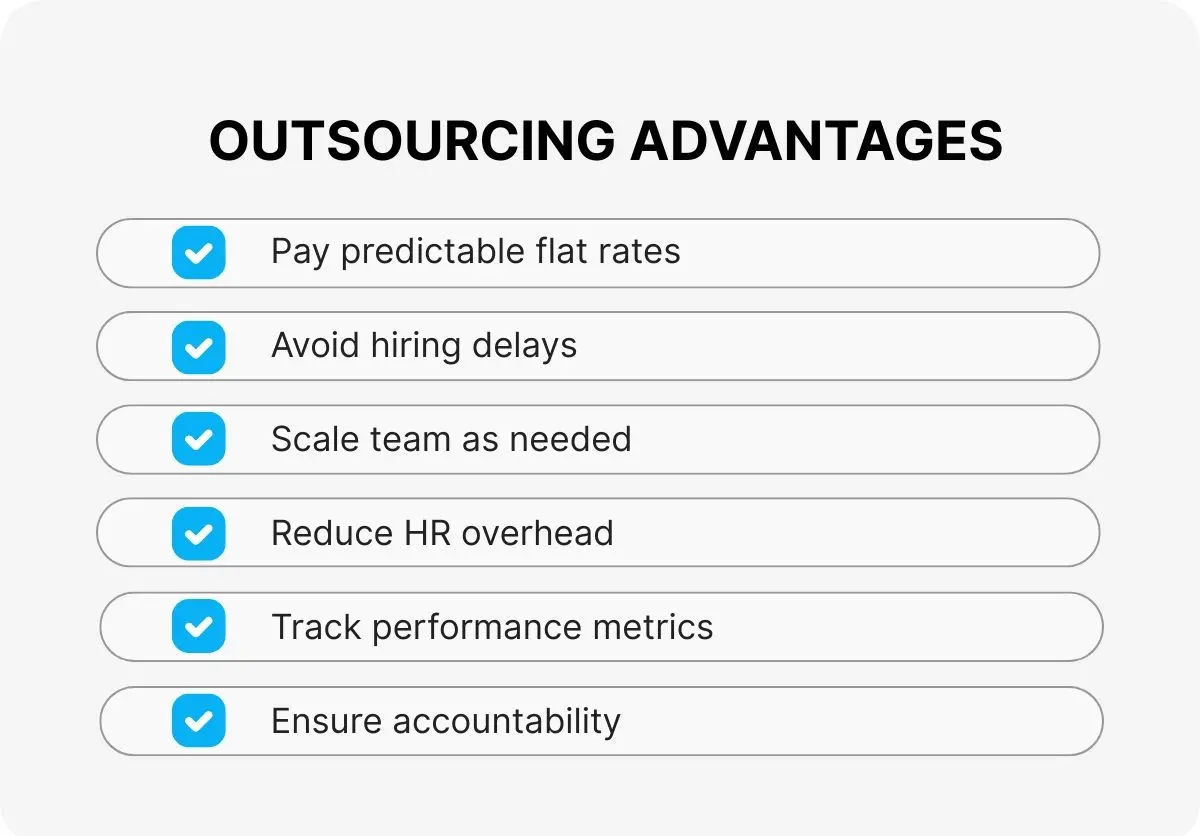
Outsourced or virtual setters are more cost-effective for agencies that want coverage without full-time headcount. Remote setters through staffing providers typically cost $1,200–$2,500/month for full-time support, depending on experience level and geography.
Cost Benchmarks for 2026
| Engagement type | Monthly cost range | Notes |
|---|---|---|
| U.S.-based freelancer | $2,500–$4,500 | Variable hours, higher per-call cost |
| U.S.-based in-house employee | $3,200–$5,500 | Includes salary, benefits, overhead |
| Offshore virtual setter (Philippines) | $800–$1,600 | Lower cost; strong English, time zone coordination needed |
| Managed VA provider | $1,200–$2,500 | Includes management layer, training, and replacement coverage |
The most common choice for independent agents and small agencies is a managed virtual provider: lower overhead than in-house hiring, more consistent than freelance, and already trained on insurance-adjacent workflows.
What to Include in Onboarding
Even experienced setters need agency-specific onboarding. Plan for:
- Script review and practice - your qualification questions, objection responses, and call-back language
- CRM walkthrough - how to log calls, update lead status, and book appointments
- Compliance briefing - DNC process, what topics are out of scope, and how to handle requests for product information
- Calendar access and scheduling rules - your availability, buffer time preferences, and how to handle double-booking conflicts
- Escalation protocol - when and how to transfer a live call to the agent, and how to flag high-priority or time-sensitive leads
Why Stealth Agents for Insurance Appointment Setting
Stealth Agents places appointment setters with prior insurance or financial services exposure. Each setter is pre-vetted through skills testing and background screening, and can be matched to your CRM and script within a few days.
We also offer insurance virtual assistant services for agencies that need broader support beyond appointment setting - including policy follow-up, client communication, and administrative tasks.
Book a free consultation to discuss your appointment volume, lead sources, and scheduling requirements.
Frequently Asked Questions
How does a life insurance appointment setter integrate with my existing workflow?
Setters can work inside your current CRM (AgencyBloc, Salesforce, HubSpot, or others), use your existing scripts, and book directly into your calendar tool. Most remote setters are operational within one to two weeks of onboarding.
How much can an insurance agency save by outsourcing appointment setting?
Compared to a full-time in-house employee, outsourced appointment setters typically cost 50–70% less when accounting for salary, benefits, payroll taxes, and overhead. For a solo or small-team agency, the savings often exceed $2,000–$3,000 per month.
Do appointment setters need an insurance license?
In most states, appointment setters who only qualify leads and schedule meetings - without quoting premiums or recommending products - do not need a license. However, they must be trained on the boundary between permitted and licensed activities. Consult your state's Department of Insurance if you are uncertain about the rules in your jurisdiction.
Why choose Stealth Agents for life insurance appointment setting?
Stealth Agents has placed thousands of assistants across industries since 2014. Appointment setters are pre-vetted through rigorous skills testing and background screening, and each placement includes a dedicated account manager and satisfaction guarantee. Book a discovery call to get matched with your ideal setter.