Updated Apr 7, 2026
If you have been researching Why Ceos Need an Executive Assistant Not a VA, you already know the options can get overwhelming.
Business owners get back 20 hours per week when they delegate administrative work to the right person.
Here is why top executives choose executive assistants over regular virtual assistants. If your role needs calendar ownership, inbox judgment, and follow-through for leadership decisions, compare a dedicated executive virtual assistant model before hiring.
Quick Overview: Why CEOs Need an Executive Assistant Not a VA
| Factor | Details |
|---|---|
| Monthly Investment | $1,600/month (full-time, dedicated) |
| In-House Equivalent Cost | Executive Assistant salary + benefits = $84,500/year |
| Your Annual Savings | $65,300 back in your business |
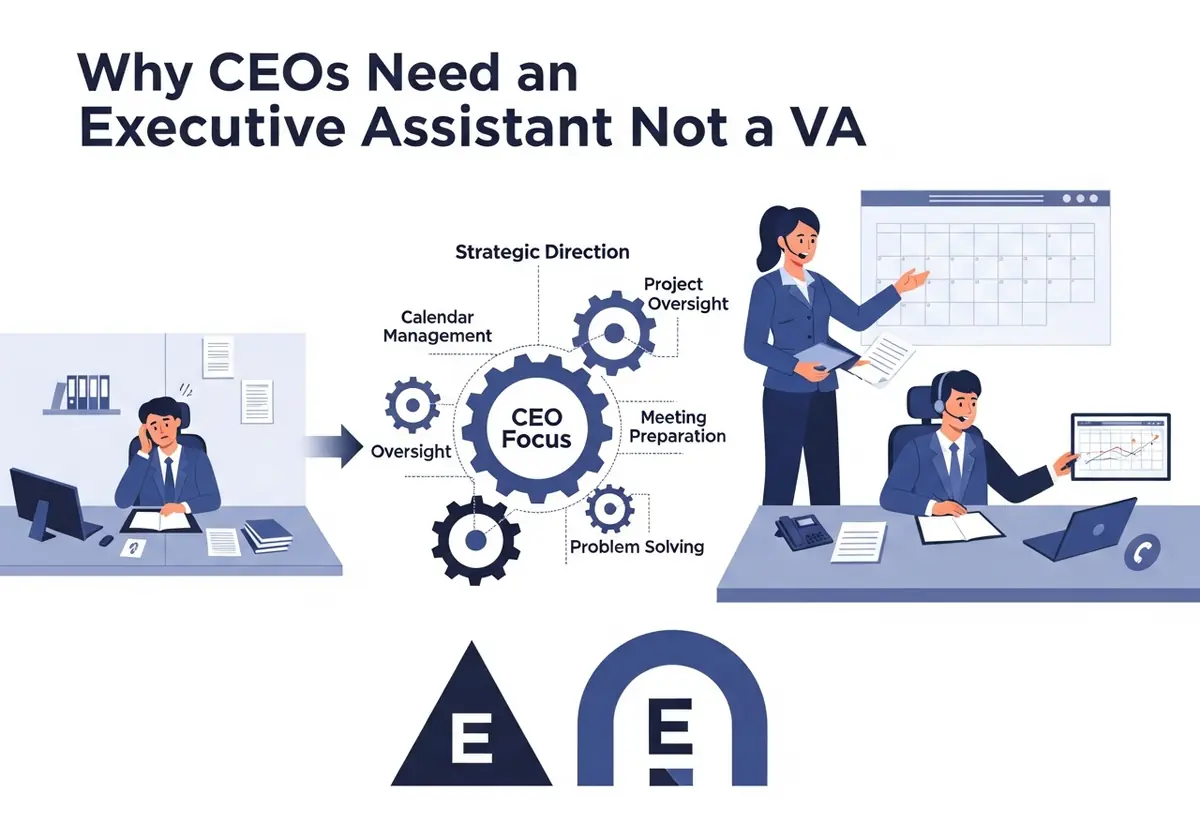
| Executive-Level Tasks | Calendar management, meeting prep, project coordination |
| Strategic Support | High-level thinking, not just basic admin |
| Decision-Making Help | Research, analysis, and recommendations |
| Backup Coverage | Included at no extra cost |
Executive assistants handle complex business tasks that regular virtual assistants cannot manage.
The Hidden Cost Of Managing Everything Yourself
CEOs spend 16 hours per week on tasks that an executive assistant should handle.
This time costs your business $2,000 every single week in lost opportunities.
You miss important meetings because you are stuck doing .
Your deals fall through because follow-ups get forgotten in the chaos.
Tasks Your Executive Assistant Can Handle For You
| Category | Specific Tasks | Time Saved |
|---|---|---|
| Calendar Management | Meeting scheduling, conflict resolution, time blocking | 8 hours/week |
| Communication | Email filtering, call screening, message prioritizing | 6 hours/week |
| Travel Planning | Flight booking, hotel reservations, itinerary creation | 4 hours/week |
| Project Coordination | Timeline tracking, team updates, deadline management | 5 hours/week |
| Research & Analysis | Market research, competitor analysis, data collection | 7 hours/week |
| Meeting Support | Agenda prep, note taking, action item follow-up | 5 hours/week |
Your executive assistant handles strategic tasks that move your business forward.
They think like a business partner, not just someone who follows orders.
This level of support lets you focus on growing your company instead of managing details.
💡
Did You Know?
Fortune 500 CEOs have executive assistants who make decisions without asking permission first. They know the business well enough to act on behalf of their CEO.
The True Cost Comparison
| Cost Factor | In-House Executive Assistant | Stealth Agents Executive Assistant |
|---|---|---|
| Base Salary | $65,000/year | $19,200/year |
| Benefits & Taxes (30%) | $19,500/year | $0 |
| Office Space & Equipment | $5,000/year | $0 |
| Training & Onboarding | $3,000/year | $0 |
| Total Annual Cost | $92,500 | $19,200 |
| Your Annual Savings | - | $73,300 |
| Backup Coverage | None | Included |
| Management Support | You handle everything | Campaign Manager helps |
You save over $73,000 every year with an executive assistant from Stealth Agents.
That money goes straight back into growing your business instead of overhead costs.
How An Executive Assistant Transforms Your Leadership
Your executive assistant becomes an extension of your brain and thinking.
They learn your preferences, priorities, and decision-making style.
You stop being the bottleneck that slows down your entire team.
Suddenly you have time to think about strategy instead of just reacting to problems.
-
Your meetings run smoother because someone prepared everything in advance
-
Important emails get answered even when you are busy with other priorities
-
Projects move forward without you having to check every single detail
-
You sleep better knowing someone reliable has your back
-
Your team respects you more because you seem more organized and in control
-
Business opportunities stop falling through the cracks
A Day In The Life Of Your Executive Assistant
Your executive assistant starts each day by reviewing your calendar and priorities.
They handle all the prep work for your meetings so you walk in ready to lead.
While you focus on big decisions, they manage the follow-up and implementation.
By the end of the day, your inbox is clean and tomorrow is already planned.
💡
Executive Assistant Pro Tip
Set up a daily 15-minute check-in with your executive assistant. This keeps you both aligned on priorities and prevents small issues from becoming big problems.
What Makes A Great Executive Assistant
A great executive assistant thinks like a business owner, not just an admin.
They spot problems before they happen and suggest solutions instead of waiting for instructions.
They understand your industry well enough to have smart conversations with your clients and partners.
Most importantly, they protect your time like it is their own money.
Keys To Success With Your Executive Assistant
| Success Factor | Implementation | Results |
|---|---|---|
| Clear Expectations | Write down your preferences and decision criteria | Fewer questions, faster decisions |
| Regular Communication | Daily 15-minute check-ins | Better alignment, fewer mistakes |
| Trust Building | Start with small decisions, grow from there | More independence, better outcomes |
| Process Documentation | Record how you like things done | Consistent results every time |
| Feedback Loop | Weekly reviews of what worked and what didn't | Continuous improvement |
Success happens when you treat your executive assistant like a business partner, not just hired help.
Industries We Support
Real estate executives use our assistants to manage multiple property deals at once.
Technology CEOs rely on them to coordinate product launches and investor meetings.
Healthcare administrators trust them with patient scheduling and insurance coordination.
Professional service firms depend on them for client communication and project management.
Common Mistakes To Avoid
Do not micromanage every single task or you will waste time instead of saving it.
Avoid giving unclear instructions and then getting frustrated when results are not perfect.
Never treat your executive assistant like they are just there to answer phones.
Stop trying to do everything yourself just because you think you can do it faster.
The Stealth Agents Difference
Our executive assistants have real business experience, not just administrative training.
You get a Campaign Manager who helps train your assistant and solve any problems.
We provide backup coverage so your business never stops running if someone gets sick.
Our matching process finds you someone who already understands your industry and challenges.
Common Questions Answered
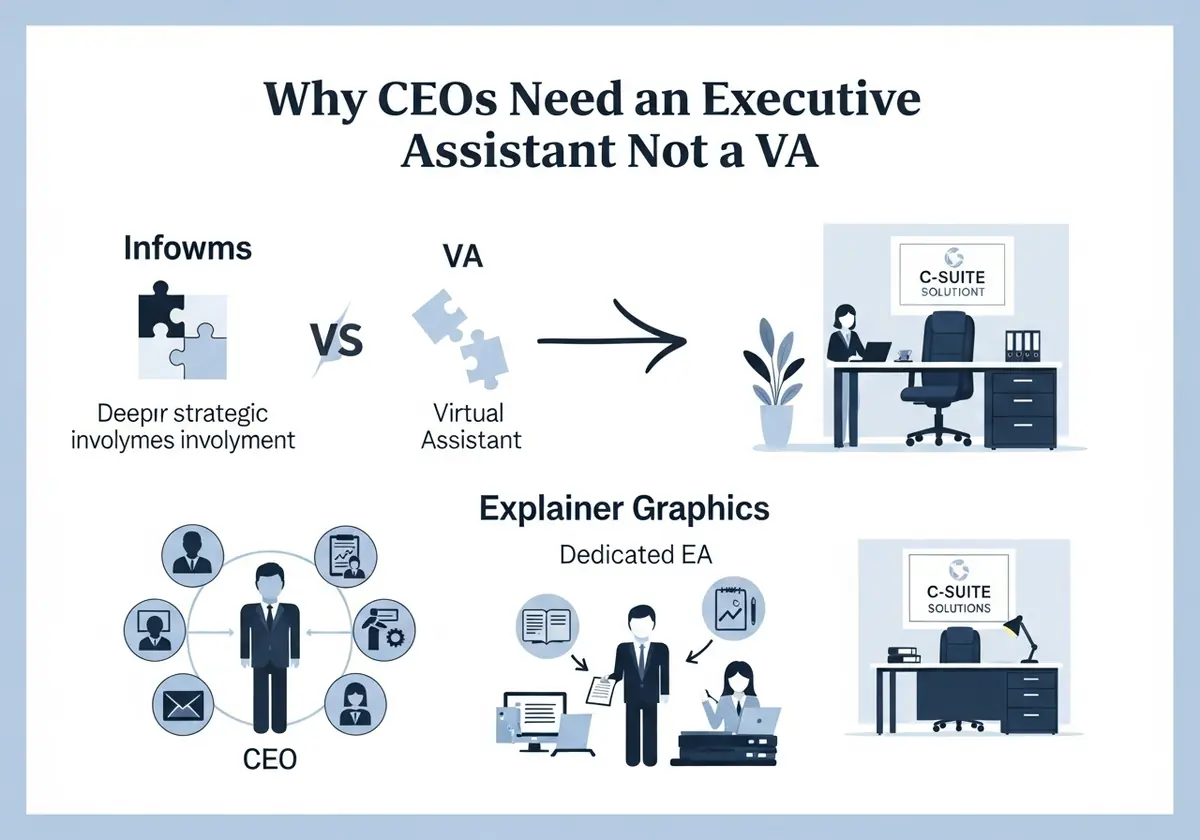
How Is An Executive Assistant Different From A Regular Virtual Assistant?
Executive assistants handle complex business decisions and strategic planning.
Regular virtual assistants usually focus on basic tasks like data entry and appointment setting.
What Happens During The Onboarding Process?
We spend two weeks learning your business, preferences, and working style.
Your Campaign Manager helps set up systems and processes that work for your specific needs.
Can My Executive Assistant Work In My Time Zone?
Yes, we match you with someone who works during your business hours.
This means real-time collaboration instead of waiting for responses the next day.
What If My Business Needs Change Over Time?
Your executive assistant grows with your business and learns new skills as needed.
We can also adjust their responsibilities or find additional support if you expand quickly.
🎯
Key Takeaway
CEOs who invest in executive assistants instead of basic virtual assistants see 40% faster business growth. The strategic thinking and decision-making support creates compound returns over time.
Ready To Transform Your Leadership Style?
Stop managing every detail and start leading your company toward bigger goals.
Your executive assistant is waiting to take the burden off your shoulders so you can focus on what really matters.
Book a free consultation with Stealth Agents today and discover how an executive assistant can change your business forever.