Virtual Assistant vs Administrative Assistant- Which to Hire

Virtual Assistant vs Administrative Assistant
Summarize This Article With AI :

Virtual assistant vs. administrative assistant, if you’re looking to save costs, stay flexible, and scale fast, a virtual assistant is the smarter choice. Stealth Agents connects you with skilled VAs who handle your tasks remotely so you can focus on growing your business. Learn more here.

The salary gap between a Virtual Assistant (VA) and a traditional Administrative Assistant (AA) is real: on average, VAs earn about US$39,915/year, while VAs typically bring in around US$34,945/year; this reflects differences in role, scope, and the remote vs in-office environments.

VAs also offer far greater cost-efficiency; businesses report saving 40-70%+ on operational costs by hiring remote VAs instead of in-house assistants, because you avoid expenses like office space, utilities, benefits, and equipment. Real-world ROI is strong: for example, a business saving 20 hours per week via a VA can recoup their cost within a few weeks and begin seeing 2-3× returns over a 90-day period.  If speed, flexibility, and lower overhead matter to you more than hands-on, local presence, a VA often is the better match.

Stealth Agents makes that choice simple: offering VAs with deep experience, predictable pricing (starting from ~$18.75/hr or $3,000/month for full-time coverage), and a matching process to align with your business needs so you get the most value.

Feel overwhelmed by the task of managing administrative responsibilities while keeping your business running smoothly? Choosing between hiring a virtual assistant vs administrative assistant can feel like a big decision, especially if efficiency and affordability are your priorities. Picture how much easier your day could be with expert assistance handling your to-do list.


Virtual assistants offer flexible solutions without the overhead of in-house employees, while administrative assistants can provide full-time, localized support. To make the decision even smarter, explore virtual assistant pricing options that fit your budget.


Stealth Agents is a trusted leader in outsourcing, providing top-tier virtual assistants known for their reliability and professionalism. Whether you need assistance with email management, scheduling, or data entry, there’s a perfect solution waiting. Discover which assistant is the right fit for your needs today and connect with Stealth Agents to simplify your hiring process. Don’t wait to find reliable support that helps your business thrive, reach out now.


administrative assistant


What Are The Key Differences Between Virtual Assistants And Administrative Assistants?

1.   Equipment

Virtual assistant administrators are responsible for a reliable computer, the necessary software, such as virtual assistant tools, for the tasks they’ll be handling, and a solid internet connection. However, administrative assistants (VAs), who often use equipment provided by their employers, are in charge of maintaining and updating their tech tools. This setup allows VAs the flexibility to work from anywhere, but it also means they need to be a bit tech-savvy to manage any issues on their own.


2. Location

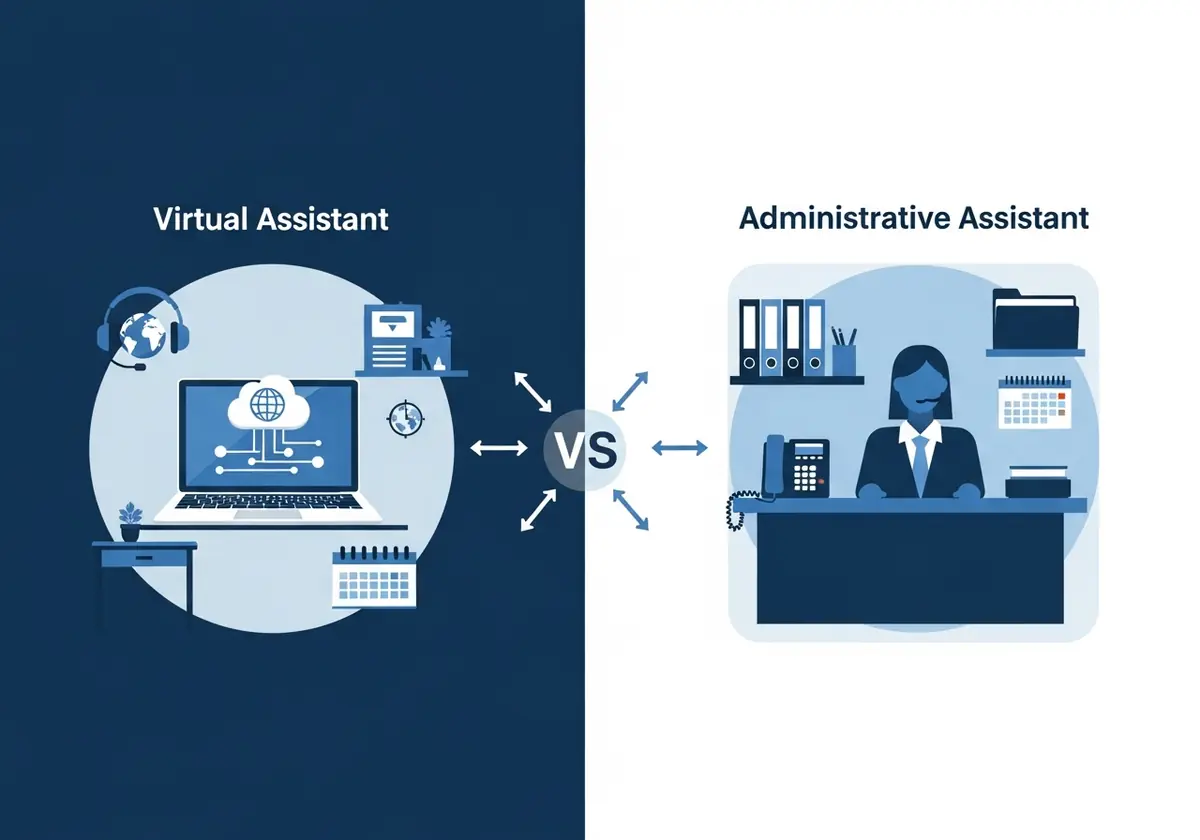
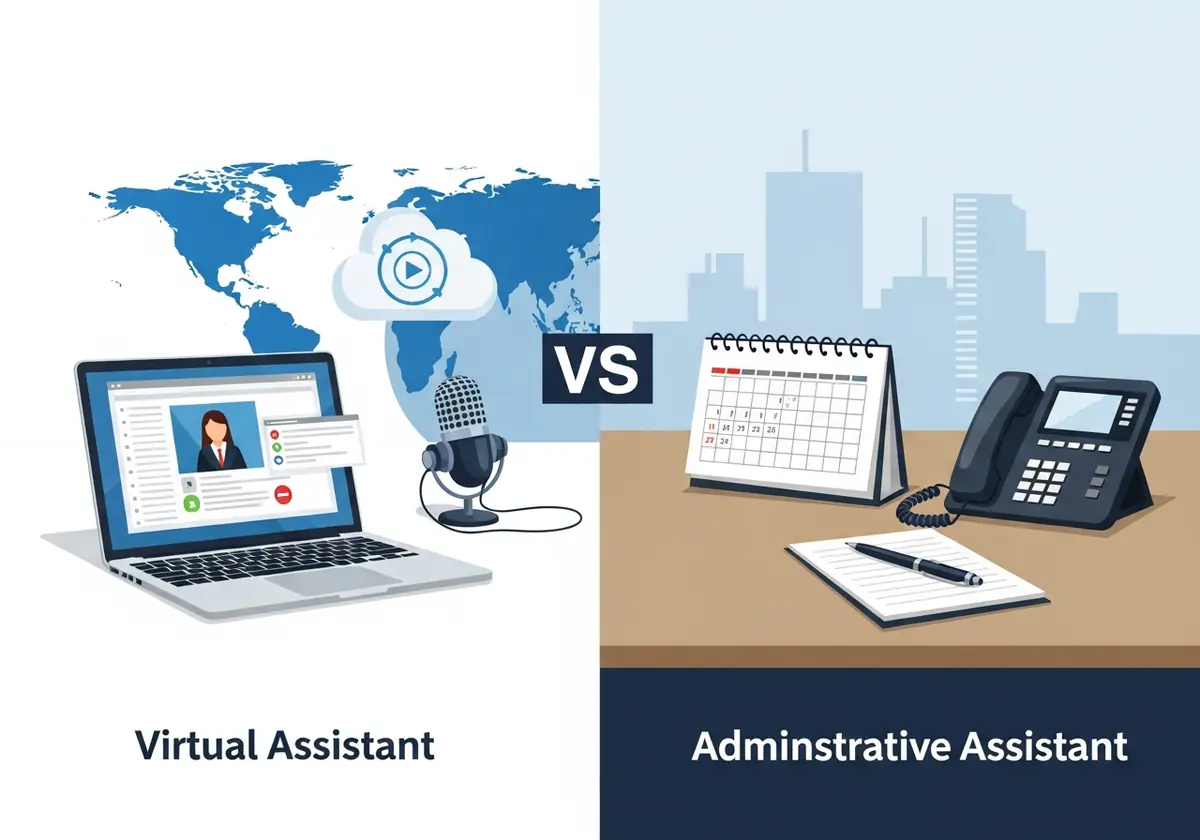
Virtual assistants work remotely, which means they can help you or any successful entrepreneur from anywhere in the world. This setup with a dedicated virtual assistant is perfect if your work requires flexibility and you don’t have a physical office. On the other hand, administrative assistants typically work in an office setting, directly where you are. This can be beneficial if you need someone on-site to manage tasks or handle in-person duties.

3. Benefits

There’s a notable difference between businesses’ benefits and financial obligations.  With VAs, companies must offer the same benefits or pay the same taxes as they would for an administrative assistant. This can lead to significant savings and greater cost flexibility.  However, businesses are expected to provide certain benefits and comply with tax obligations for administrative assistants. This creates a more traditional employment relationship, which includes additional financial and administrative responsibilities for the company.


4. Salary

There’s a noticeable difference in salary between the two, primarily due to their working environments and job scopes. On average, a virtual assistant earns around $39,915 every year. On the other hand, an administrative assistant usually earns a little less, with an average annual salary of about $34,945.     So, if salary is a significant factor for you, this could be something to consider when deciding between these two roles.


5. Skills

VAs often excel in digital communication tools, time management software, and remote collaboration platforms because they work from different locations. They need to be tech-savvy, able to manage projects independently, and proficient in online research. On the other hand, AAs might focus more on in-person communication skills, managing physical files, and efficiently conducting office management tasks. Both roles require strong organizational abilities, attention to detail, and excellent communication skills.


administrative virtual assistant


Benefits of a Virtual Administrative Assistant for Work-Life Balance

When your task list never seems to shrink, a virtual administrative assistant can make a world of difference for your work-life balance.


Instead of letting routine responsibilities eat up your evenings and weekends, a VA can step in and handle the day-to-day workload behind the scenes.


Here’s how they help you achieve that elusive balance:

  • Less clutter, more calm: By taking over repetitive and time-consuming tasks, like inbox sorting, scheduling, and document organization, a virtual assistant frees up hours in your week. That means more time for family, hobbies, or just enjoying some well-deserved downtime.


  • No need for overtime: Without administrative distractions pulling you in every direction, you can focus on meaningful projects during work hours, and truly “clock out” after hours, rather than catching up late into the night.


  • Lower stress levels: Handing off projects to a reliable VA helps reduce anxiety and burnout. With someone else handling the details, you’re less likely to feel overwhelmed and stretched too thin.


  • Greater flexibility: A virtual assistant can support you across time zones, whether you need early morning follow-ups or after-hours calendar coordination. That added flexibility makes it easier to build your workday around what fits your life best.


For busy professionals, teaming up with a virtual administrative assistant is more than a smart business decision, it’s a step toward better boundaries, greater efficiency, and a healthier work-life blend.


virtual administrative assistant


What Services Do Virtual Assistants Provide?

1. Email Management

A primary duty of a virtual assistant in email management is organizing your inbox so that it is tidy and manageable. So, they’ll sort incoming messages, flag essential emails for your attention, and reply to others on your behalf when appropriate. A VA can also unsubscribe from unwanted newsletters and manage spam, ensuring you only see what’s relevant to your work. Virtual personal assistants ensure your email communication stays efficient and stress-free.


2. Schedule Coordination

They handle scheduling, set up meetings, and make calls on your behalf, ensuring your calendar runs smoothly. By preventing double bookings and reminding you of your commitments, they help you stay on top of your schedule. This allows you to stay organized and concentrate on your priorities without the stress of missed or overlapping appointments.


3. Social Media Management

Social media management involves creating and sharing posts across various platforms, such as Facebook, Twitter, and Instagram, to keep the audience engaged and informed. They also monitor comments and messages, responding swiftly to queries and interacting with followers to build strength. Lastly, they analyze performance metrics to understand what content resonates best with the audience. Businesses looking to enhance their online presence often choose to hire virtual assistant professionals for their expertise.


4. Administrative Tasks

Virtual assistants are essential for keeping your business operations on track by managing a variety of tasks. They handle data entry, maintain records, and organize contacts to keep everything streamlined. By taking care of these daily, time-intensive responsibilities, VAs free up valuable time for business owners to focus on bigger priorities. Businesses can also outsource administrative tasks to virtual assistants, ensuring efficiency and cost-effectiveness.


5. Customer Service

Customer service includes answering emails promptly, handling inquiries on social media, and managing live chat interactions. Virtual assistants ensure that every customer feels heard, valued, and satisfied with the service they receive. This role is crucial in building and maintaining customers’ trust and loyalty toward a brand or business. A virtual assistant for female entrepreneurs can also provide personalized support to help grow their businesses effectively. By utilizing a customer service virtual assistant, businesses can deliver exceptional support while focusing on their core goals.


What is the Role of an Administrative Assistant?

1. Calendar Management

An essential duty of an administrative assistant is keeping track of schedules and managing calendars. They schedule meetings, ensure no conflicts between appointments, and remind others about upcoming events or deadlines. They ensure everything runs smoothly and efficiently, helping everyone stay organized and on track with their responsibilities. Comparing a virtual assistant vs. an administrative assistant, both roles excel in managing administrative tasks; virtual assistant services can also be handled remotely.


2. Communication Handling

Administrative assistants also play a crucial role in managing communications within an office.  They handle incoming calls and emails, promptly ensuring that messages reach the right people. Their ability to listen carefully and respond effectively is key to smooth and efficient office operations.  They also draft and send out correspondence on behalf of the company, ensuring every piece of communication is clear, professional, and on-brand.


3. Document Preparation

This job involves creating, formatting, and editing documents to ensure they are clear, correct, and ready for use. These documents often range from reports, presentations, newsletters, and emails to letters and memos. However, AAs need to know how to efficiently use various word processing, spreadsheet, and presentation software.  Accuracy, attention to detail, and the ability to organize information to make sense to others are crucial skills for this role.


4. Meeting Coordination

Meeting coordination involves scheduling suitable times, booking locations, and preparing necessary equipment for a seamless experience. It also includes managing RSVPs, facilitating meetings, and distributing agendas and minutes for effective communication. These virtual assistant administrative tasks are vital, making it important to understand the differences when choosing a virtual assistant vs. an administrative assistant for your business.


5. Office supply management

An essential duty of an AA involves managing office supplies and ensuring everyone has what they need for their work without any hitches. This includes ordering new supplies, from paper and pens to printer ink and snacks, before anything runs out.  It’s about keeping the office running smoothly by tracking inventory, finding the best deals to save money, and organizing the supplies.

Who to Choose? VA or AA

Choosing between virtual assistants (VA) and administrative assistants (AA) depends on your needs. Outsourcing a virtual assistant is an excellent choice if you have an e-business or a big company like a B2B company and need someone to handle tasks online. They can manage email, appointment settings, and social media from anywhere.

On the other hand, if your job requires someone to be physically present, manage paperwork, or handle in-person duties, an AA is better. They work in your office, assisting with day-to-day operations and face-to-face interactions.

By leveraging administrative outsourcing services, businesses can access skilled support remotely, gaining flexibility without the overhead of full-time in-office staff. Lastly, you should consider your daily tasks and decide which assistant suits your work style and requirements best. Virtual administrative assistants are ideal for businesses seeking flexibility, while understanding the virtual assistant vs. administrative assistant differences ensures you make the right choice.


Stealth agents review

Where to Hire a Virtual Assistant vs. an Administrative Assistant?


If you’re looking to hire a VA or an administrative assistant to streamline your workload, Stealth Agents might be a fantastic place to start.


They offer a wide range of VA services tailored to meet the needs of businesses, entrepreneurs, and busy professionals. Their VAs are skilled in various tasks, including email management, scheduling, and customer service.


They have a user-friendly superteam to help you find the perfect assistant. With Stealth Agents, you can explore the benefits of hiring a virtual assistant vs. an administrative assistant or opt for a virtual administrative assistant to suit your unique needs.


Key Differences Between Virtual Assistants and Executive Assistants


Understanding the distinctions between a virtual assistant and an executive assistant is vital, especially with more businesses shifting to remote models. Both roles streamline operations, but their differences lie in responsibilities, skills, and work environments. Below are the top five key differences, broken down for clarity.


Understanding the differences between a virtual assistant and an executive assistant is crucial for finding the right support for your needs. Each role comes with unique strengths tailored to specific requirements.

1. Work Environment

Virtual assistants work remotely, offering services via online communication tools.


This allows companies to access a global talent pool and reduce in-office costs.


Executive assistants typically work in a physical office and collaborate closely with executives daily. This proximity allows them to manage tasks that require direct interaction, such as organizing local events.


For businesses hiring remotely, a virtual assistant vs. administrative assistant setup offers cost and flexibility advantages.


About 59% of companies globally use remote teams for back-end tasks, showing the growing demand for the best virtual assistant model.


2. Task Diversity

Admin virtual assistants often handle a wider array of responsibilities for multiple clients. From email management to social media support, they juggle varied tasks seamlessly.


Executive assistants focus primarily on one manager or executive, maintaining a narrower scope.


This concentrated support often includes calendar management, meeting preparations, and high-level communication.


An administrative virtual assistant setup suits businesses with leaner budgets and diverse support needs.


The rise of freelance marketplaces has made it easier to hire skilled VAs, reflecting changing workforce trends. An executive administrative assistant provides high-level support tailored to leadership roles.


3. Cost Efficiency

Virtual assistants are more affordable since they work remotely, without requiring office expenses. Flexible hourly or project-based rates also reduce long-term costs.


Executive assistants, working on-site, demand higher salaries and benefits, adding to operational expenses.


For smaller firms, this might be less feasible compared to hiring virtual support.


A report found businesses save up to 78% on operating costs by hiring remote admin virtual assistants.


This makes virtual roles appealing to startups and companies seeking financial efficiency.


4. Skill Set and Training

Administrative virtual assistants often specialize in tech tools, like CRM management and online marketing platforms. They quickly adapt to changing projects, offering diverse skills.


Executive assistants bring expertise in corporate protocols and high-level communication.


Their focus remains on providing seamless support to top-level executives.


Employers using a mix of virtual assistant vs. administrative assistant roles can balance modern tech proficiency with traditional executive aid.


With 44% of companies needing tech-savvy hires, training-focused VAs are a smart choice.


5. Flexibility and Scalability

Virtual assistants allow employers to scale support quickly based on workload changes.


Their remote nature ensures businesses can adjust without major logistical challenges.


Executive assistants provide consistent support, but scaling usually involves additional hiring processes.


Their fixed roles might also limit adaptability in high-demand seasons.


Choosing a flexible virtual assistant vs. administrative assistant model can better suit fluctuating workloads. With remote work becoming central, over 36% of companies prioritize flexibility in professional hires.


administrative duties


What is the Onboarding Process for Stealth Agents

The onboarding process at Stealth Agents is designed to set you up for success while providing a seamless experience. It ensures that each virtual assistant is prepared to meet your specific requirements efficiently.


  • ✅ After the initial call, we gather detailed information about your needs and preferences to ensure the best VA match.
  • 🕒 7 business hours to train and evaluate the VA’s skills to align perfectly with your tasks.
  • 🗂️ A campaign manager is assigned to oversee the VA’s work, offering continued supervision and support.
  • 🔄 Monthly reviews are conducted for the VA. Changes or feedback can be directly communicated to the campaign manager for immediate adjustments.


Unlike managing a virtual assistant vs. an administrative assistant setup, this process guarantees personalized and adaptable service. According to a study, detailed onboarding increases employee productivity by up to 70%, reflecting the importance of tailoring the process to client needs.


virtual admin


Stealth agents review

Takeaways

Choosing between a virtual assistant and an administrative assistant depends on the specific needs of your business. Both roles are integral to maintaining efficiency, but a virtual assistant offers the advantage of flexibility and cost-effectiveness while working remotely.


Administrative assistants excel in hands-on support, while virtual assistants bring expertise in handling administrative tasks remotely. This balance allows businesses to choose support tailored to their goals and workflow requirements. With remote work becoming the norm, virtual assistants are a versatile solution for companies seeking reliable, skilled, and adaptable talent. They ensure that essential administrative functions are completed without being tied to office space or geographical limits.


duties of an admin assistant


Frequently Asked Questions

What security measures should I consider when hiring a virtual assistant vs administrative assistant?

Virtual assistants need stronger online security since they work remotely. This includes using secure file-sharing tools, VPNs, and signing confidentiality agreements. Administrative assistants, who work on-site, rely more on office security but may need extra training for handling digital tools if they work in a hybrid setup.


How do time zone differences affect virtual assistant vs administrative assistant productivity?

Virtual assistants can work in different time zones, which can help with 24/7 coverage or finishing tasks overnight. Administrative assistants usually work during local office hours. For global businesses, VAs can extend customer service hours or complete tasks while you sleep.


What contract terms differ between virtual assistant vs administrative assistant employment?

Virtual assistants are usually hired as independent contractors with flexible, project-based, or hourly agreements. Administrative assistants are employees, requiring traditional contracts that include benefits, paid time off, and compliance with labor laws. VA contracts often focus on deliverables, while AA contracts include set work hours.


Which industries benefit most from virtual assistant vs administrative assistant hiring?

Industries like tech startups, e-commerce, and digital marketing often prefer virtual assistants because they work well in remote setups. On the other hand, industries like healthcare, legal services, and manufacturing may prefer administrative assistants for tasks like handling physical documents, meeting clients, or following strict regulations.


How do training requirements compare between virtual assistant vs administrative assistant roles?

Virtual assistants usually come with experience in digital tools and need less training, as they specialize in remote work software. Administrative assistants may need more training on company-specific tasks, office procedures, and in-person protocols. VAs tend to adapt faster to new online tools.


What happens when virtual assistant vs administrative assistant availability conflicts arise?

Virtual assistants often have backup support through their agencies or flexible schedules to handle urgent tasks. If an administrative assistant is unavailable, businesses may need to rely on temporary staff or redistribute tasks, which can disrupt office operations more.


How do performance monitoring methods differ between virtual assistant vs administrative assistant management?

Virtual assistants are monitored using tools like time trackers, project management software, and task-based evaluations. Administrative assistants are supervised directly in the office, allowing for immediate feedback. VAs rely on communication tools and digital systems for performance checks.


What tax implications exist when choosing virtual assistant vs administrative assistant hiring?

Virtual assistants are independent contractors, so businesses don’t have to pay taxes like Social Security, Medicare, or unemployment. Administrative assistants are employees, meaning employers must handle tax withholdings, workers’ compensation, and benefits, which increases costs.


How do confidentiality and non-disclosure requirements change between virtual assistant vs administrative assistant arrangements?

Virtual assistants need detailed agreements to protect digital data, covering cloud storage, online communication, and remote access. Administrative assistants focus more on physical document security and in-office confidentiality. Remote work makes stricter digital privacy rules essential for VAs.


What emergency backup plans work best for virtual assistant vs administrative assistant support?

Virtual assistant services often include backup systems, like replacement VAs or team support, to handle emergencies. For administrative assistants, businesses may need to cross-train other staff or hire temporary help. VA providers usually ensure uninterrupted service, while AA absences may require quick adjustments in the office.

Summarize This Article With AI :

Table of Contents

Receive Virtual Assistants insights delivered weekly
Hire Top 1% Virtual Assistants
Hire 10+ Year Experienced Virtual Assistants
  • Hire Full Time Executive Assistants
  • 160 Working Hours Per Month
  • Includes Fully Dedicated Account Manager
  • Cloud Management + Mobile App
  • Industry Specific To Your Needs
  • Stealth Agent’s 100% Next Best Hire Guarantee
  • All Assistants Have 10+ Years Of Experience
  • 100% Money Back Guarantee If We Don’t Bring You The Next Best Hire In Your Company