Running a company as an executive means juggling countless responsibilities, from strategic decision-making to managing teams and stakeholders.
The demands can be overwhelming, and many successful executives have discovered a game-changing solution: hiring a virtual assistant specifically trained to support executive-level needs.
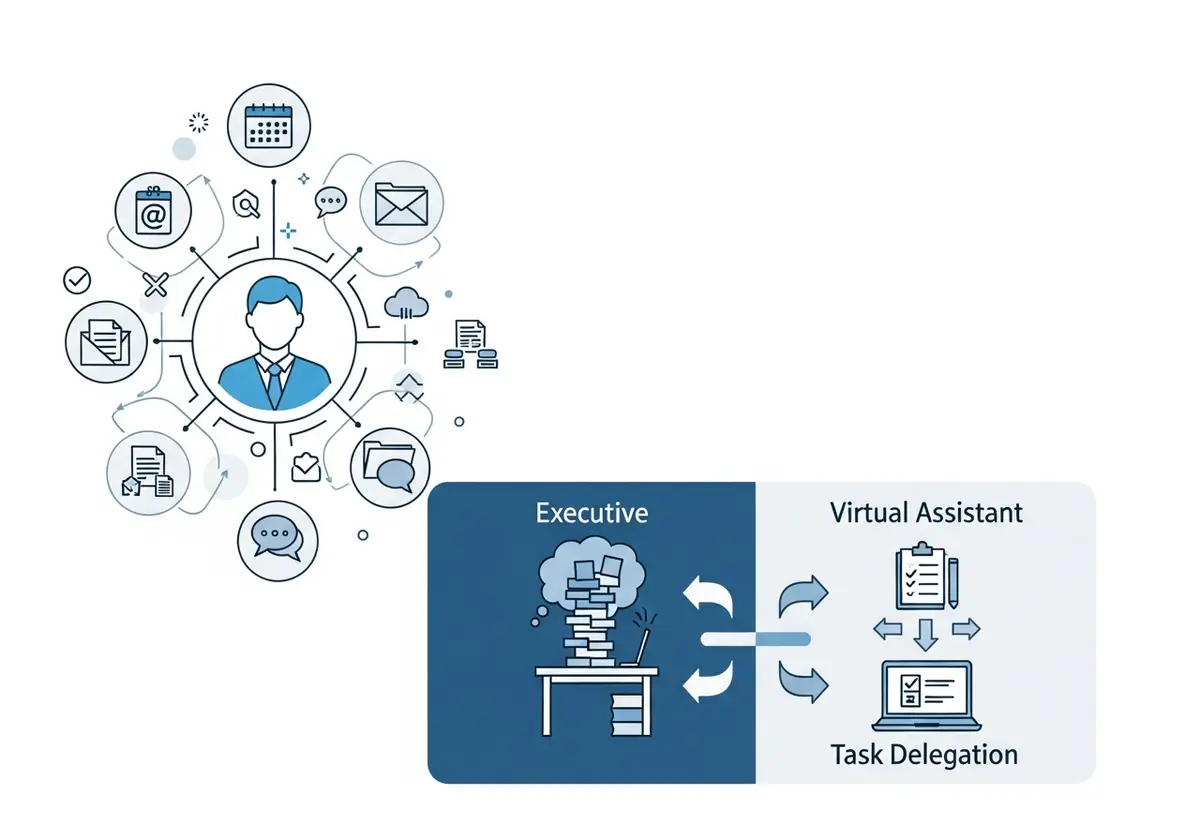
A virtual assistant for executives isn’t just another administrative helper. They’re skilled professionals who understand the unique challenges facing C-suite leaders and can provide strategic support that directly impacts your bottom line.
Whether you’re drowning in emails, struggling to manage your calendar, or need someone to handle high-level research projects, the right virtual assistant can transform how you work.
The executive landscape has evolved dramatically over the past decade.
Remote work has normalized virtual collaboration, and the pool of talented professionals willing to work remotely has expanded globally.
This shift means you can now access top-tier executive support without geographical limitations or the overhead costs of traditional in-house assistants.
Smart executives recognize that their time is their most valuable asset.
When you’re billing $500+ per hour or making decisions that affect millions in revenue, spending time on tasks that could be delegated isn’t just inefficient—it’s costly.
A skilled virtual assistant allows you to focus on what only you can do while ensuring nothing falls through the cracks.
What Makes Executive Virtual Assistants Different
Executive virtual assistants operate at a completely different level than general administrative support.
They’re strategic partners who understand business operations, can communicate with high-level stakeholders, and possess the judgment needed to represent your interests professionally.
The skill set required goes far beyond basic administrative tasks.
These professionals typically have experience working with senior leadership, understand corporate protocols, and can handle sensitive information with absolute discretion.
Many have backgrounds in project management or business analysis or have previously worked as executive assistants in traditional corporate environments.
Communication skills are paramount. Your virtual assistant will likely interact with board members, key clients, investors, and other executives.
They need to write professionally, speak confidently, and represent your brand with the same level of sophistication you would expect from any member of your leadership team.
Technology proficiency is another crucial differentiator.
Executive virtual assistants are typically well-versed in CRM systems, project management platforms, video conferencing tools, and specialized software relevant to your industry.
They can hit the ground running without extensive training on basic business tools.
What is the difference between General VA and Executive VA?
The difference between a General Virtual Assistant (VA) and an Executive Virtual Assistant (EVA) lies in their roles, responsibilities, and the level of expertise they bring to the table.
General Virtual Assistant (VA)
A General VA handles a wide range of basic administrative and operational tasks to support a business.
These tasks often include managing emails, scheduling appointments, data entry, social media posting, and customer service.
They are typically focused on day-to-day activities and require general skills rather than specialized expertise.
General VAs are ideal for small businesses or entrepreneurs who need help with routine tasks to free up their time.
Executive Virtual Assistant (EVA)
An Executive VA provides high-level support to executives, business owners, or senior managers, focusing on strategic and complex tasks.
Their responsibilities may include managing calendars for C-level executives, coordinating meetings, preparing reports, handling confidential information, and acting as a liaison between the executive and other stakeholders.
EVAs often have advanced skills, such as project management, excellent communication, and the ability to make decisions on behalf of the executive.
They are best suited for professionals who need a trusted partner to manage critical aspects of their work.
Where to Find Executive Virtual Assistants: Key Platforms and Networks
When you’re ready to find the right executive virtual assistant for your needs, there are several primary sources you’ll want to consider.
Each offers unique advantages depending on your preferences for quality, speed, and budget.
1. Specialized EVA Agencies and Recruiters:
These firms focus exclusively on executive-level virtual support. They typically pre-vet candidates for skills, professionalism, and cultural fit, streamlining your search process and raising the bar on quality.
While this route often comes at a higher price point, it’s ideal if you value reliability and want to bypass the hassle of extensive candidate screenings.
2. Freelance Marketplaces:
Platforms like Upwork and Fiverr provide access to a global talent pool, making it easy to review portfolios, experience levels, and rates at a glance.
These marketplaces are well-suited for those seeking flexibility—whether you prefer short-term or longer-term support, or want to experiment with different skill sets before committing.
3. Professional Networks and LinkedIn:
Tapping into LinkedIn and your own professional networks opens the door to vetted, experienced EVAs recommended by peers or industry colleagues.
Searching relevant job titles and leveraging mutual connections can lead to candidates with proven track records and backgrounds directly aligned with your business context.
4. Referrals from Peers:
Sometimes, the best candidates come through word-of-mouth.
Asking trusted colleagues, industry associations, or mentors for recommendations can surface high-performing EVAs who may not be active on traditional job boards but are already delivering results in circles similar to your own.
Core Services Executive Virtual Assistants Provide
1. Strategic Calendar Management
Beyond simple scheduling, executive VAs understand the strategic importance of how you spend your time.
They can prioritize meetings based on business objectives, block time for deep work, and ensure your calendar aligns with your goals.
They handle complex scheduling scenarios involving multiple time zones, stakeholder availability, and conflicting priorities.
What scheduling tools do EVAs often use to manage appointments and meetings?
An executive virtual assistant’s toolkit includes a range of robust scheduling platforms designed to keep your calendar running like a well-oiled machine.
Rather than relying on endless email chains, EVAs leverage online scheduling solutions to streamline the process.
Platforms such as Calendly and Acuity Scheduling make it easy for attendees to book time based on your real-time availability, without requiring you to lift a finger.
Mastery of tools like Google Calendar and Microsoft Outlook Calendar allows your EVA to coordinate meetings, set reminders, prevent double-bookings, and juggle time zones when working with international teams.
This tech-savvy approach not only reduces friction but also ensures your schedule stays tightly aligned with your priorities.
2. Email and Communication Management
A skilled executive VA can manage your inbox like a personal chief of staff.
They filter important communications, draft responses in your voice, follow up on action items, and ensure nothing critical gets buried.
This level of email management can save executives 10-15 hours per week.
3. Research and Analysis
Executive decisions require solid data.
Your virtual assistant can conduct market research, compile competitive analyses, prepare briefing documents for important meetings, and gather information needed for strategic planning.
They know how to find reliable sources and present information in formats that support decision-making.
4. Travel Planning and Logistics
Executive travel involves complex coordination.
Virtual assistants handle everything from flights and accommodations to ground transportation, restaurant reservations, and meeting logistics.
They create detailed itineraries, prepare backup plans, and manage changes in real-time.
But travel planning is just the beginning—executive VAs also excel at event planning and logistics for business functions, conferences, or offsite meetings.
Their support covers the entire event lifecycle:
1. Pre-Event Planning:
Budgeting, venue research and booking, vendor coordination, scheduling, and crafting professional invitations.
2. Logistics Management:
Arranging travel for speakers and guests, booking accommodations, managing transportation, and ensuring all equipment and technology needs are met.
3. Communication:
Liaising with clients, vendors, and attendees; managing RSVPs and guest lists; and addressing inquiries so nothing falls through the cracks.
4. On-site Support (Remote Coordination):
Overseeing event setup and teardown, managing staff and volunteers, and troubleshooting last-minute issues, even from afar.
5. Post-Event Tasks:
Gathering feedback, reconciling expenses, finalizing budgets, and preparing post-event reports to ensure every detail is accounted for.
5. Project Coordination
Many executives oversee multiple initiatives simultaneously. A virtual assistant can serve as a project coordinator, tracking deliverables, following up with team members, scheduling check-ins, and ensuring projects stay on track without requiring constant oversight from you.
6. Stakeholder Relationship Management
Your VA can help maintain important relationships by tracking communication history, remembering personal details about key contacts, scheduling regular check-ins, and ensuring follow-through on commitments made to stakeholders.
Common Pricing Models for Executive Virtual Assistants
When it’s time to bring on an executive virtual assistant, understanding how they structure their fees is crucial for selecting the right fit for your workflow and budget.
Just as you’d choose between a freelance consultant, a full-time employee, or a legal retainer, there are several billing structures you’re likely to encounter.
Here’s a quick breakdown:
1. Hourly Billing:
This is the pay-as-you-go model. You’re billed for the precise amount of time your VA spends on your tasks—ideal for sporadic projects, variable workloads, or when you’re kicking the tires on a new partnership.
Hourly rates typically appeal to executives who need occasional, on-demand assistance without a long-term commitment.
2. Monthly Retainer:
Think of this as a set subscription for a consistent block of the VA’s time each month—say, 30 hours at a discounted rate.
If your support needs are steady and you value predictable budgeting, retainers provide reliability without surprises at the end of the month.
It’s similar to having legal counsel “on call” for a fixed monthly fee.
3. Project-Based Flat Fee:
For defined projects—organizing a conference, conducting a deep-dive market analysis, developing an onboarding manual—you might agree on a one-time, all-inclusive fee.
This model removes uncertainty for both parties: you know the total investment up front, and your VA has clear deliverables and timelines.
How to Identify Your Executive Virtual Assistant Needs
Start by conducting a time audit. For one week, track how you spend your time in 30-minute increments.
Note which activities energize you and contribute directly to business growth versus those that drain your energy or could be handled by someone else.
This exercise often reveals surprising patterns and clear opportunities for delegation.
Consider your pain points. What administrative tasks cause you the most stress? What deadlines do you consistently struggle to meet? Which aspects of your role do you find yourself procrastinating on because they’re not in your zone of genius? These pain points often represent the best opportunities for virtual assistant support.
Think about your growth goals.
As your business expands, what additional support will you need? A strategic virtual assistant can grow with you, taking on increasingly complex responsibilities as they become familiar with your business and working style.
Evaluate your communication preferences.
Some executives prefer detailed daily updates, while others want minimal communication unless there’s a problem.
Some like to maintain control over certain types of communications, while others are comfortable giving their VA broad authority to act on their behalf.
Understanding your preferences upfront helps ensure a good match.
Understanding the Difference: Virtual Assistant vs. Executive Virtual Assistant
Before you start your search, it’s important to distinguish between a general virtual assistant (VA) and an executive virtual assistant (EVA).
While both can handle remote support tasks, the scope and complexity of their roles differ significantly:
1.General Virtual Assistants
typically manage routine administrative duties such as scheduling, inbox management, and data entry.
Their focus tends to be on supporting day-to-day operations.
2.Executive Virtual Assistants
bring a higher level of expertise, often handling complex calendar management, project coordination, stakeholder communications, and assisting with strategic initiatives.
They’re experienced in working with senior leaders and can operate with a greater degree of autonomy and discretion.
Essential Skills to Look for in Executive Virtual Assistants
Business Acumen
Your virtual assistant should understand business fundamentals, including basic financial concepts, project management principles, and how different departments within organizations typically function.
This knowledge allows them to make better decisions when acting on your behalf and communicate more effectively with your team.
Discretion and Professionalism
Executive VAs often have access to sensitive information including financial data, strategic plans, and confidential communications.
Look for candidates who understand confidentiality requirements and have experience handling sensitive materials.
Professional references should specifically address trustworthiness and discretion.
Adaptability
Executive needs change rapidly.
Your VA should be comfortable with ambiguity, able to shift priorities quickly, and capable of learning new systems or processes efficiently.
Look for evidence of adaptability in their work history and ask specific questions about how they handle changing priorities.
Proactive Problem-Solving
The best executive VAs anticipate needs and solve problems before they reach you.
They should be able to think several steps ahead, identify potential issues, and propose solutions rather than simply flagging problems.
Look for examples of proactive behavior in their previous roles.
Cultural Fit
Your virtual assistant will represent you in various contexts. They need to understand and reflect your company’s values, communication style, and professional standards.
Spend time during the interview process assessing cultural alignment, not just technical skills.
Incorporate behavioral interview questions to evaluate soft skills such as adaptability, initiative, and communication style, ensuring your VA will represent you authentically.
Consider implementing practical skills tests to verify their proficiency with the actual tools and scenarios they’ll encounter on the job.
Conduct a thorough background check to confirm their experience and reliability.
Be transparent about your management style, business needs, and expectations from the outset—this helps both parties determine if there’s a strong fit.
Finally, consider setting up a trial service period (typically 30 to 90 days) to establish clear performance goals and regular check-ins.
This approach allows you to observe their abilities in real-world situations while providing both sides an opportunity to adjust and confirm the match is right before committing long term.
Security Practices for Safe Data Handling
When trusting an executive virtual assistant with sensitive company information, building robust data security into your working relationship is essential—think of it as equipping your digital home with a solid lock, a security alarm, and leaving no spare keys under the mat.
Non-Disclosure Agreements (NDAs)
Begin with a legally binding NDA.
This sets the ground rules for confidentiality and establishes clear consequences if sensitive information is mishandled.
Make sure both parties understand and agree to the terms before any data is exchanged.
Password Management Tools
Instead of emailing or messaging login details, opt for reputable password managers such as 1Password or LastPass.
These tools allow you to share access securely, keeping credentials encrypted and out of plain sight.
Whenever possible, turn on multi-factor authentication to add another layer of protection.
Secure Connections via VPN
If your executive virtual assistant is logging into internal systems from various locations, using a Virtual Private Network (VPN) helps safeguard data by encrypting all traffic.
This is especially important when accessing information over public or unsecured Wi-Fi networks.
Clear Data Access and Handling Policies
Establish guidelines about what information your VA can access, where data should be stored (preferably company-approved cloud platforms with robust security), and how files should be disposed of when no longer needed.
Outline these practices in your onboarding documentation, and review them periodically to ensure they stay current as your business evolves.
Security Concerns and How to Address Them
When you entrust an Executive Virtual Assistant (EVA) with access to sensitive information—such as client data, financial records, or strategic plans—security should be top of mind.
Fortunately, there are straightforward safeguards you can put in place to protect your interests without adding unnecessary complexity.
Start by putting a solid Non-Disclosure Agreement (NDA) in place before any confidential information is shared.
This not only sets clear expectations but also provides a legal backbone if issues ever arise.
For sharing login credentials or granting account access, never rely on email or casual chat tools.
Instead, use a reputable password manager like LastPass or 1Password.
These tools let you share access securely without exposing raw passwords and add multi-factor authentication for an additional layer of protection.
If your assistant needs to access company systems remotely, it’s wise to set them up with a Virtual Private Network (VPN).
A VPN restricts access to approved users and helps prevent unauthorized entry, particularly from unfamiliar networks or countries.
Finally, establish clear data handling protocols.
Set boundaries on what information your EVA can access, specify secure storage options (like company-approved cloud drives), and outline proper procedures for deleting sensitive files when they are no longer needed.
Clarify these expectations in writing to avoid any ambiguity and protect your organization’s reputation and assets.
Behavioral Interview Questions to Consider
Once you’ve confirmed that an executive virtual assistant has the right technical skills and cultural alignment, dig deeper with behavioral questions.
These help you evaluate how the candidate reacts in real-world situations—especially under pressure or amidst shifting priorities.
A few impactful behavioral questions include:
1.“Can you share an example of how you handled a situation where you were trusted with highly sensitive information?”
2.“Describe a time when you were faced with competing deadlines. How did you prioritize your tasks?”
3.“Tell me about a scenario where you had to adapt quickly due to a sudden change in direction from your executive or team.”
4.“Have you ever identified a problem before your manager noticed it? Walk me through how you handled it.”
5.“Describe a situation where you had to communicate on behalf of someone else. How did you ensure you matched their tone and expectations?”
Reviewing Portfolios and Resumes
When narrowing down your executive virtual assistant options, take a close, critical look at their portfolios and resumes—not just for technical proficiency, but for depth and relevance of experience.
Look for concrete examples of projects similar to your needs, ideally across a range of tools and platforms (think Asana for project management, QuickBooks for finance, or Salesforce for CRM).
Seek out evidence that they’ve tackled complex or high-stakes assignments, especially those requiring discretion and independent judgment.
Pay attention to employer feedback and testimonials within their portfolio. Positive references that highlight reliability, adaptability, and initiative are strong indicators of future performance.
Don’t hesitate to ask probing questions about specific resume entries: What results did they achieve? How did they navigate challenges? Were they trusted with increasing levels of responsibility over time?
Digging beneath the surface during this step helps ensure you’re selecting an EVA who not only checks the right technical boxes, but can also handle the demanding, rapidly shifting environment you operate in.
Credential and Password Security
In today’s digital landscape, password and credential security isn’t just a convenience—it’s a necessity.
A skilled executive virtual assistant employs trusted password managers like LastPass or 1Password to organize, store, and share access details without exposing sensitive information through unsecured channels.
These tools allow your assistant to:
1.Maintain up-to-date credentials and revoke access when needed.
2.Share logins for essential platforms without ever transmitting raw passwords.
3.Ensure all data remains encrypted and protected, reducing the risk of unauthorized access.
Seamlessly Integrating Your Executive Virtual Assistant Into Company Culture
A virtual assistant who feels like an outsider won’t be nearly as effective as one who’s truly part of the team.
While remote work can sometimes create distance, there are deliberate steps you can take to help your executive VA feel connected and empowered.
Facilitate Familiarity From Day One
Start by including your VA in relevant channels—think Slack groups, Microsoft Teams threads, or any platform your team uses for daily banter, updates, and wins.
Make formal introductions during team meetings, and don’t just rattle off their job description; highlight how they’ll support the team’s success and invite colleagues to reach out directly.
Bring Them Into Key Conversations
Involve your VA in virtual meetings that cover not just their assigned tasks, but broader business goals and team brainstorming sessions.
This helps them understand company priorities and gives them valuable context. Regular check-ins with both leadership and peers—whether via Zoom or a quick Friday recap email—foster a sense of inclusion.
Share the “Why,” Not Just the “What”
Beyond task lists, provide insight into your company’s mission, values, and long-term vision.
Encourage the VA to ask questions about decision-making processes, internal workflows, and cultural touchstones unique to your organization.
When sharing business updates, include background information and the rationale behind decisions so your VA understands the bigger picture.
Invite Participation in Social Rituals
If your team has virtual coffee hours, celebrates birthdays with silly e-cards, or runs quarterly trivia contests—bring your assistant in.
Small gestures, like adding them to the company Spotify playlist or sharing a favorite TED Talk, can make a big difference in how quickly they feel at home.
Encourage Feedback Loops
Finally, create open channels for your VA to share their perspective. As someone with fresh eyes, they may spot opportunities to improve processes or address cultural wrinkles you’ve overlooked.
Invite their input regularly, and you’ll strengthen their sense of agency while continually improving your working relationship.adjustments to better serve your evolving needs.
Setting Up Your Executive Virtual Assistant for Success
Create Comprehensive Documentation
Invest time upfront in documenting your preferences, processes, and standards.
Create templates for common communications, detailed contact lists with relationship context, and clear guidelines for decision-making authority.
This documentation becomes increasingly valuable as your working relationship develops.
Establish Communication Protocols
Define how and when you’ll communicate.
Will you have daily check-ins, weekly planning sessions, or communicate primarily through project management tools? Establish response time expectations and preferred communication channels for different types of issues.
Start with Lower-Stakes Projects
Begin by delegating tasks that are important but not critical to test your VA’s capabilities and your comfort level.
Gradually increase the complexity and importance of delegated tasks as trust builds and you better understand their strengths.
Provide Context, Not Just Tasks
Help your VA understand the bigger picture behind their assignments.
When they understand your goals and the strategic importance of different activities, they can make better decisions and often suggest improvements or alternatives you hadn’t considered.
Create Feedback Loops
Establish regular opportunities to provide feedback and discuss what’s working well and what could be improved.
This ongoing dialogue helps optimize your working relationship and ensures small issues don’t become bigger problems.
Managing the Virtual Working Relationship
Set Clear Boundaries and Expectations
Define what decisions your VA can make independently versus what requires your approval.
Create clear guidelines around communication with your team, clients, and other stakeholders.
The clearer your boundaries upfront, the smoother your working relationship will be.
Invest in the Right Technology
Ensure your VA has access to necessary tools and systems.
This might include project management software, shared calendars, CRM access, or communication platforms.
The small cost of additional software licenses is usually far outweighed by increased efficiency.
Regular Performance Reviews
Schedule monthly or quarterly reviews to assess performance, discuss development opportunities, and adjust responsibilities as needed.
Treat your virtual assistant like any other key team member in terms of professional development and performance management.
Build Personal Connection
While the relationship is professional, taking time to build personal rapport improves communication and collaboration.
Learn about your VA’s career goals, acknowledge good work publicly, and invest in the relationship like you would with any valuable team member.
Measuring Success and ROI
Time Savings Metrics
Track how much time you’re saving on previously time-consuming tasks. Most executives find they reclaim 10-20 hours per week when working with a skilled virtual assistant.
Multiply this by your effective hourly rate to calculate direct time savings value.
Quality Improvements
Monitor improvements in areas like meeting preparation, follow-through on commitments, and responsiveness to important communications.
These qualitative improvements often have significant business impact even if they’re harder to quantify.
Business Impact Metrics
Look for correlation between hiring virtual assistant support and business outcomes like revenue growth, client satisfaction, or team productivity.
While multiple factors influence these metrics, executive virtual assistants often contribute indirectly by freeing you to focus on high-impact activities.
Stress and Work-Life Balance
Consider improvements in your stress levels, work-life balance, and overall job satisfaction.
These benefits, while intangible, often represent significant value and contribute to long-term career sustainability.
Common Mistakes to Avoid
Micromanaging
The biggest mistake executives make is hiring a virtual assistant but continuing to do everything themselves.
Trust building takes time, but you need to actually delegate meaningful work for the relationship to provide value.
Unclear Communication
Assuming your VA can read your mind or understand context they haven’t been given leads to frustration on both sides.
Invest time in clear communication upfront to avoid misunderstandings later.
Treating VAs Like Traditional Employees
Virtual assistants are typically independent contractors with other clients and different working arrangements.
Respect their professional autonomy while maintaining clear expectations about deliverables and communication.
Not Investing in Onboarding
Rushing through the setup process often leads to ongoing inefficiencies.
Spend adequate time on training, documentation, and relationship building during the first month.
Future Trends in Executive Virtual Assistance
The virtual assistant industry continues evolving rapidly.
Artificial intelligence is augmenting human capabilities, allowing VAs to handle more complex tasks and provide deeper insights.
However, the human elements—judgment, relationship management, and strategic thinking—remain crucial for executive-level support.
Specialization is increasing.
Many virtual assistants now focus specifically on executive support, developing deep expertise in areas like investor relations, board meeting preparation, or crisis communication management.
This specialization often provides better value than generalist administrative support.
Integration capabilities are expanding.
Modern virtual assistants often have access to sophisticated tools for project management, communication, and data analysis.
They can provide insights and automation that go far beyond traditional administrative support.
The global talent pool continues growing. As remote work becomes more normalized, you have access to exceptional talent regardless of geography.
This expanded talent pool often means better matches and more competitive pricing.
Why Choose Stealth Agents
When you’re ready to hire an executive virtual assistant, choosing the right agency makes all the difference.
Stealth Agents specializes in matching executives with highly skilled virtual assistants who understand the unique demands of leadership roles.
Our virtual assistants aren’t just administrative helpers—they’re strategic partners who have been carefully vetted and trained to support executive-level responsibilities.
We understand that your reputation and business success depend on having support you can trust completely.
What sets Stealth Agents apart is our commitment to finding the perfect match for your specific needs.
We don’t believe in one-size-fits-all solutions. Instead, we take time to understand your business, working style, and objectives before recommending candidates.
Our virtual assistants have experience working with C-suite executives across various industries.
They understand corporate protocols, can communicate professionally with stakeholders at all levels, and possess the discretion required for handling sensitive information.
The support doesn’t end once you’re matched with a virtual assistant.
We provide ongoing support to ensure your working relationship remains productive and aligned with your evolving needs.
Our dedicated campaign managers supervise your virtual assistant relationship, providing an additional layer of quality assurance.
What is the Onboarding Process for Stealth Agents?
The onboarding process at Stealth Agents is designed to be straightforward and client-focused.
It ensures a smooth start to providing support, whether you need a virtual assistant to manage your blog or assistance with other executive-level tasks. Key steps in the process include:
✅ After the initial call, we gather all necessary information about your specific requirements and working preferences with your designated VA.
🕐 We use 7 business hours to train and match you with a VA who has the right skills, experience, and personality fit for your executive needs.
👩💼 A dedicated campaign manager will supervise your virtual assistant relationship, ensuring seamless collaboration and addressing any issues that arise.
🔄 Each month, we conduct performance reviews with both you and your VA, providing an easy way to request changes, improvements, or adjustments to better serve your evolving needs.
Frequently Asked Questions
What is the primary role of an executive virtual assistant?
An executive virtual assistant provides remote administrative and operational support, helping executives manage their workload and stay organized.
How can an executive virtual assistant save me time?
They handle repetitive and time-consuming tasks like scheduling, email management, and travel arrangements, freeing you to focus on strategic priorities.
Can an executive virtual assistant help with team coordination?
Yes, they can act as a liaison between you and your team, ensuring smooth communication, task delegation, and project updates.
How do executive virtual assistants handle multiple priorities?
They are skilled in prioritization and time management, ensuring urgent tasks are addressed while maintaining focus on long-term goals.
What tools do executive virtual assistants use to stay efficient?
They commonly use tools like Asana, Trello, Slack, Zoom, Google Workspace, and Microsoft Office to streamline workflows and communication.
Can an executive virtual assistant help with strategic planning?
While they primarily handle administrative tasks, many can assist with research, data analysis, and preparing materials for strategic planning.
How do I ensure my executive virtual assistant understands my business?
Provide clear onboarding, share your business goals, and maintain regular communication to align their work with your objectives.
Are executive virtual assistants available outside regular business hours?
Many offer flexible schedules and can accommodate after-hours or weekend support, depending on your needs.
How do executive virtual assistants handle confidential information?
They follow strict confidentiality protocols, including secure file sharing, password management, and signing NDAs.
What are the benefits of hiring an executive virtual assistant?
You gain more time for high-level decision-making, improved organization, reduced stress, and a reliable partner to manage your day-to-day operations.