Third-party customer service outsourcing is the easiest way to deliver 24/7 expert support without the cost and hassle of managing an in-house team. Stealth Agents helps you scale fast, save money, and keep your customers happy, with trained virtual agents ready to handle every inquiry professionally. Get started today with Stealth Agents and watch your customer satisfaction grow.
Third-party customer service outsourcing offers quick and reliable support that enhances customer satisfaction while allowing businesses to focus on core operations. As companies strive to meet increasing customer expectations, outsourcing customer service to trusted third-party providers ensures that inquiries, complaints, and technical issues are handled efficiently and professionally.
By outsourcing customer service, businesses can reduce operational costs by up to 60% while maintaining high-quality service standards. Third-party customer service providers offer 24/7 support, multilingual assistance, and expertise in multiple communication channels, ensuring seamless customer interactions across various platforms.
Stealth Agents connects businesses with highly trained virtual assistants who specialize in third-party customer service outsourcing. These assistants provide prompt and reliable assistance that improves customer retention and satisfaction. Book a free consultation today to explore virtual assistant pricing and discover how outsourcing customer service can elevate your customer experience and boost brand loyalty.

What the Stealth Agents Process Looks Like
Working with Stealth Agents means every step is planned to help you succeed:
-
Set Clear Goals
Together, we agree on service expectations, key performance goals, and quality standards. We also plan work hours, team size, and IT or compliance needs upfront to avoid surprises later.
-
Build the Right Team
We help you create the perfect agent profile and recruit the best people for the job. Whether you need extra help during busy seasons or long-term support, we make sure your team fits your business needs.
-
Training and Onboarding
Our team creates custom training materials, sets up the needed tools, and teaches agents about your products and processes. We use a “train the trainer” method to make learning easy and guide agents through a practice period to get them ready.
-
Smooth Start and Ongoing Support
When your team starts, they’re ready to work right away. We provide regular check-ins, performance reviews, coaching, and business updates to keep everything running smoothly.
-
Always Improving
We regularly review how things are going, gather feedback, and adjust processes as needed. We also set up clear steps for handling any issues and suggest ways to make things better.
-
Staying Ahead
We don’t settle for “good enough.” We check performance, compare results, and look for ways to improve. By using data and solving problems early, we make sure your service stays strong and ready for the future.
Which Industries Benefit Most from Outsourced Customer Support?
Outsourced customer support helps many industries by improving response times, solving problems quickly, and keeping customers happy. Here’s how it works in different fields:
-
Ecommerce & Retail
Outsourced teams handle buyer questions, manage orders, and solve problems quickly. This leads to happier customers and more repeat purchases.
-
Healthcare & Healthtech
Patients need quick and caring help with health-related questions. Trained support teams provide accurate and kind assistance for things like telemedicine or scheduling.
-
Automotive & Logistics
From tracking shipments to roadside help, outsourced agents offer 24/7 support to keep customers and drivers moving.
-
SaaS & Software
Support teams help users with technical issues, answer “how do I?” questions, and make sure customers feel confident using the software.
-
Public Sector
Outsourced teams help citizens with questions and services while keeping sensitive information private. This builds trust and ensures professionalism.
-
Fintech
In finance, accuracy and security are key. Outsourced agents are trained to follow rules and protect customer information while providing reliable support.
-
Gaming & Entertainment
Quick help with account, billing, or technical issues keeps players happy and in the game. Outsourced teams handle busy times and daily needs with ease.
Projected Growth of the Global Outsourced Customer Experience Market
The global demand for outsourced customer experience solutions continues to rise steadily. Industry analysts predict the market will climb from approximately $73.5 billion in 2024 to around $77.3 billion by 2025. This robust growth reflects a compound annual growth rate (CAGR) of 5.1%, demonstrating that more and more companies are embracing third-party providers to meet evolving customer expectations. By turning to outsourcing, businesses worldwide are not only improving service quality but also keeping pace with a rapidly expanding global trend.
How much does it cost to outsource customer service?
The cost of outsourcing customer service isn’t one-size-fits-all. It depends on several factors, including the location of your outsourcing company Philippines, the complexity and scope of the services required, the level of expertise needed, and the volume of customer interactions. For example, basic customer support may start at just a few dollars per hour, while more specialized technical support or multilingual services may command higher rates. By tailoring the level of support to your business needs, you can optimize both your budget and customer satisfaction.
What Is Third-Party Customer Service Outsourcing?
Third-party customer service outsourcing involves delegating your functions to an external organization or third-party companies.
These outsourced teams handle various customer interactions, including inquiries, complaints, technical support, and more, across multiple phone, email, live chat, and social media channels.
Should Your Business Choose In-House or Outsourced Customer Service?
Deciding between in-house and outsourced customer service depends on your business goals, resources, and growth plans. Outsourcing to specialists like Stealth Agents enables fast scalability and flexibility, it’s ideal for businesses that want to ramp up support quickly, manage fluctuating demand, or tap into expertise without significant upfront investment.
By contrast, building an in-house team can give you greater control over training, company culture, and day-to-day communication. This path may suit companies with the bandwidth to oversee hiring, onboarding, and ongoing management, as well as those who prioritize a deeply integrated team experience.
Ultimately, the best solution comes down to your needs:
- Choose outsourced customer service for rapid growth, cost efficiency, and around-the-clock support.
- Opt for in-house if hands-on management and tight alignment with your brand’s values are essential.
What’s the Difference Between Customer Service Outsourcing and Offshore Customer Service?
It’s easy to get these two terms mixed up, but there’s a clear distinction:
- Customer service outsourcing simply means partnering with a third-party provider, whether they’re right next door or halfway around the globe, to handle your customer support tasks.
- Offshore customer service, however, refers specifically to outsourcing your support operations to a provider based in another country, typically to tap into cost savings or unique expertise offered abroad.
Why Should a Business Consider Third-Party Customer Service Outsourcing?
1. Cost Savings
Outsourcing can significantly reduce the costs associated with hiring, training, and maintaining an in-house customer service team.
Third-party service providers already have trained staff and established processes, which can save businesses time and money.
Additionally, outsourcing allows for flexible staffing, so businesses can scale their customer service support up or down as needed without the fixed costs of maintaining an internal team.
How to Evaluate the ROI of Outsourcing vs. In-House Customer Support
Assessing the return on investment (ROI) between outsourcing customer support and maintaining an in-house team starts by looking at both the immediate savings and the long-term impact on your business.
With outsourcing, the financial benefits often show up right away, lower hiring and training expenses, reduced overhead, and the ability to flex your support team as your business needs change. Since third-party providers like Stealth Agents bring trained agents and proven systems, you bypass much of the up-front investment required for building an in-house team. This flexibility and cost efficiency become especially valuable for businesses experiencing growth or seasonal demand spikes.
However, ROI isn’t just about crunching the numbers. Consider the level of control, quality assurance, and cultural alignment you require. An in-house team offers more direct oversight and can immerse itself in your company’s values and communication style. This can make a difference if your brand voice and responsiveness are top priorities.
What Services Do Third-Party Customer Service Providers Offer?
- Upfront and ongoing costs for both options (salaries, benefits, tech, office space vs. service fees)
- The scalability each model offers
- Potential effects on customer satisfaction and retention
- The risk of quality fluctuations or training gaps
2. Access to Expertise
Outsourcing your customer service connects you with expert talent who excel in providing top-tier support.
These professionals are well-trained, experienced, and up-to-date with the latest trends, ensuring stellar customer experiences without the hassle of managing them directly.
It’s like having an all-star team without worrying about recruitment.
3. 24/7 Availability
Outsourcing customer service, like an Online Customer Service Representative, offers round-the-clock availability, meeting customer expectations for assistance anytime.
This 24/7 third-party support enhances satisfaction, builds loyalty, and portrays your brand as reliable and responsive.
With a team always ready to assist, even overnight, you can convert inquiries into sales while you rest. This is perfect for companies that provide 24/7 customer service.
4. Focus on Core Business
Outsourcing customer service allows you to focus on your core business strengths, empowering innovation and value creation.
With a dedicated team handling customer interactions, you can excel in your niche while ensuring exceptional service round-the-clock.
It’s a tailored strategy that enhances efficiency and drives success.
5. Scalability
Outsourcing customer service offers remarkable scalability for your business.
Whether facing seasonal demand spikes or market expansions, it adjusts effortlessly.
This flexibility allows adaptation without the hassle of staffing changes, providing control over service levels.
It ensures your business stays agile and responsive, meeting customer needs promptly.
Industry-Specific Knowledge and Compliance
One common worry about outsourcing customer support is whether outside agents can truly understand your industry’s needs and rules. In reality, trusted outsourcing companies are skilled at learning and following industry-specific requirements, offering knowledgeable and compliant service across many fields.
-
Ecommerce & Retail
Outsourced teams handle tasks like returns and order tracking with ease, using experience from platforms like Shopify and Amazon. They also follow strict rules to protect buyer data, such as PCI DSS standards.
-
Healthcare & Healthtech
Support teams working with hospitals or telehealth companies are trained in HIPAA rules to keep patient information private. They also provide clear and caring communication, which is important for patient satisfaction.
-
Automotive & Logistics
From scheduling service appointments to giving delivery updates, agents understand the fast-paced needs of this industry. They also follow rules like FMCSA standards for logistics.
-
SaaS & Software
Tech-savvy agents learn the details of each platform to answer technical questions, guide users through fixes, and report bigger issues. They often use methods inspired by companies like Salesforce or Zendesk.
-
Public Sector
For government services, support teams are trained to handle public data carefully and follow rules like FedRAMP or NIST for security. They focus on being clear and transparent with citizens.
-
Fintech
In finance, agents follow strict privacy rules like GDPR and KYC/AML guidelines to keep transactions and customer data safe.
-
Gaming & Entertainment
Support specialists learn how to fix console issues, manage in-game accounts, and calm upset players, helping them get back to enjoying their games.
The Power of Combining AI with Human Expertise
Using both artificial intelligence (AI) and skilled customer service agents creates a better experience for customers, one that’s fast and personal.
What AI Does Best:
- Handles repetitive tasks, like answering common questions, so customers get quick solutions without waiting.
- Predicts busy times and adjusts support levels automatically, so you’re never short-staffed.
- Summarizes calls and updates your CRM, saving time on manual data entry.
What People Do Best:
- Show empathy and adapt to unique situations, like calming an upset customer or finding a creative solution.
- Handle complex or emotional issues that go beyond what AI can manage.
- Adjust their tone and approach to match the customer’s background or mood.
How They Work Together:
- AI provides real-time information and context, so agents can focus on understanding the customer’s feelings.
- Agents use their human touch to solve problems that require flexibility and care.
- Together, they help prevent problems from escalating by spotting unhappy customers early and stepping in to help.
What Services Do Third-Party Customer Service Providers Offer?
1. Inquiry Handling
Third-party customer service providers offer round-the-clock support, ensuring every inquiry receives prompt and knowledgeable assistance.
They act as your brand’s friendly voice, addressing a wide range of customer questions and issues, such as those of a Virtual Assistant Customer Experience specialist.
It’s like having a superhero team ready to build lasting relationships with every interaction.
2. Complaint Resolution
Complaint resolution services provided by third-party providers are experts at turning customer complaints into satisfaction stories.
They specialize in resolving even the most challenging issues with empathy and efficiency, transforming detractors into loyal advocates.
It’s about demonstrating trust and commitment, ensuring customers feel heard and valued.
3. Technical Support
Your third-party customer service technical support team acts as the cavalry for customers grappling with your latest gadget.
They’re not just troubleshooters; they’re peace-of-mind providers. With expertise in software and hardware, they guide customers through issues step by step.
Leveraging customer support outsourcing ensures that your business benefits from specialized expertise and scalable solutions, enhancing the overall customer experience.
It’s about empowering customers and boosting your brand’s reputation through positive experiences. In a tech-overwhelming world, they make technology approachable and user-friendly.
4. Multi-Channel Support
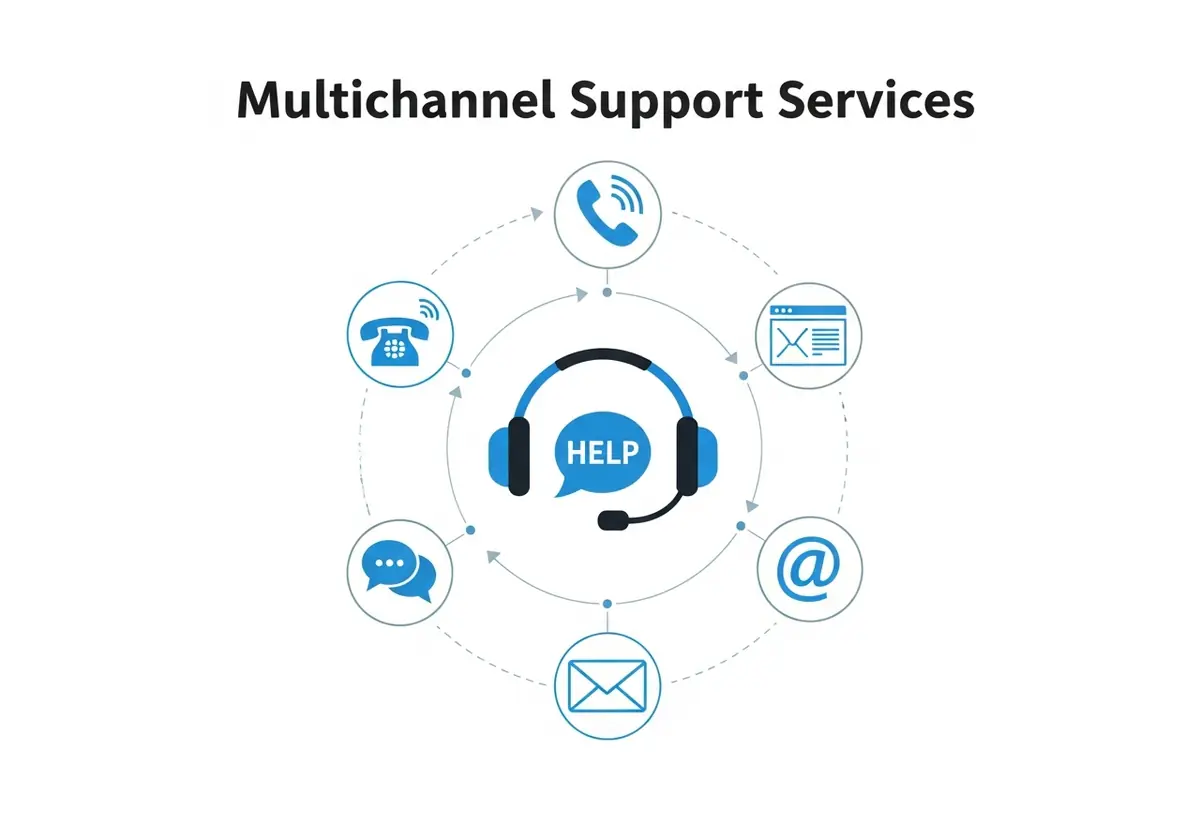
Multi-channel support from third-party customer service teams allows customers to reach out in their preferred way.
Whether it’s a call, email, chat, or social media message, every channel leads to the same friendly destination.
This convenience and consistency elevate the customer experience and strengthen brand loyalty.
Implementing inbound call center solutions ensures that each customer interaction is handled efficiently and professionally, providing timely assistance and fostering trust.
Additionally, technical support outsourcing offers access to specialized expertise, enabling businesses to resolve complex issues swiftly and maintain high service standards.
By leveraging these services, companies can enhance customer satisfaction, improve operational efficiency, and focus on their core competencies.
De-escalation and Conflict Resolution Techniques
Great customer service teams know that not every problem has a simple answer. Sometimes, calming down a heated situation takes skill and patience. Here are some ways they handle it:
-
Active Listening
Let the customer share their frustration and really listen to what they’re saying. It’s not just about nodding, it’s about understanding the real issue and addressing it.
-
Show Empathy
Let the customer know you care. Acknowledge their feelings and any trouble they’ve gone through.
-
Be Flexible
Sticking to strict rules doesn’t always help. Offering a small gesture, like a discount or replacement, can quickly calm things down.
-
Clear Communication
Use simple words, avoid confusing terms, and explain what will happen next.
-
Stay Calm and Professional
Don’t react emotionally. Staying calm, even during silence, can help bring the conversation back to a peaceful place.
How AI Technologies Improve Customer Support
Artificial intelligence (AI) is making customer support faster and smarter. Think of it as a helpful assistant that makes everything run smoother. Here’s how:
-
Guessing What Customers Need
AI can predict what a customer might ask based on their past actions, like what they’ve bought before. This helps support teams prepare answers before the customer even asks.
-
Managing Busy Times
AI can predict when call volumes will spike and help adjust staffing to handle the extra load. This keeps things running smoothly, even during busy periods.
-
Quick Call Summaries
Instead of writing long notes after a call, AI can summarize the conversation and save it in tools like Salesforce or Zendesk. This saves time and lets the team focus on helping customers.
-
Spotting Unhappy Customers
AI analyzes customer interactions to find signs of dissatisfaction. If a customer seems unhappy, the system can suggest actions like offering a discount or follow-up to keep them from leaving.
How Do I Choose the Right Customer Service Outsourcing Partner?
Choosing an outsourcing partner can significantly impact the quality of your business’s customer service.
1. Experience and Reputation
Choosing the right customer service outsourcing partner is akin to adding a new team member.
Look for a partner with an impressive resume and a proven track record in the industry.
Experience and a solid reputation bring reliability and assurance.
Check client testimonials and case studies, and even speak with current or past clients to ensure their definition of “stellar service” aligns with yours.
2. Agent Skill and Training
When selecting a customer service partner, you’re choosing your brand’s frontline representatives, such as Brandnt Virtual Assistant.
Like assembling a basketball team, you need skilled players who can perform under pressure and adapt to challenges.
Assess potential partners’ training programs. Are they comprehensive and tailored to your industry? Look for problem-solving skills, empathy, and effective communication.
A well-trained team ensures your customers receive top-notch service, building trust and loyalty.
3. Technology and Infrastructure
Technology and infrastructure are vital in customer service outsourcing. Partnering with a provider that offers multilingual customer support ensures you can effectively communicate with a diverse customer base, enhancing satisfaction and loyalty.
Additionally, leveraging help desk outsourcing allows your business to access advanced tools like state-of-the-art CRM systems and omnichannel communication capabilities without the overhead of maintaining them in-house.
Ensure your outsourcing partner prioritizes data security and can engage customers across various channels, including phone, social media, and live chat. Flexibility for remote work is essential, too.
Your customer service must be agile and resilient. Choosing a partner equipped with cutting-edge technology and comprehensive support services will provide a memorable customer experience and position your business for sustained success.
What Do Clients Say About Their Experiences with Outsourced Customer Service Providers?
-
Caring and Motivated Teams
Outsourced agents are often praised for their enthusiasm and genuine care for customers. They stay focused and deliver great results, even under pressure.
-
Consistent Performance
Many clients report that these teams meet or even exceed expectations, leading to happier customers and better retention rates.
-
Clear Communication and Flexibility
Outsourcing partners are known for being open, providing regular updates, and adjusting to changes as needed, especially during busy times.
-
Strong Leadership and Teamwork
Clients appreciate good project management and leaders who listen to feedback, helping improve service over time.
-
Scaling with Ease
Whether it’s handling large projects with many agents or smoothly onboarding new customers, these providers manage it all with professionalism and care.
Steps to Starting an Outsourced Customer Support Partnership
Starting an outsourced customer support partnership is a step-by-step process designed to ensure everything runs smoothly.
-
Set Clear Goals
Begin by agreeing on what success looks like. Define service expectations (SLAs), performance goals (KPIs), and quality standards. Discuss work hours, coverage needs, and data security upfront to avoid surprises later.
-
Find the Right Team
Work with your partner to recruit agents who match your needs. Whether you need help during busy seasons or a permanent team, make sure the agents are skilled in the channels your customers use, like phone, email, or chat.
-
Train and Prepare
Create training programs that teach agents about your products and processes. Some partners use a “train the trainer” method, where your in-house experts share their knowledge. This ensures everyone is ready before going live.
-
Go Live and Monitor
Once the team starts, keep a close eye on performance. Regular check-ins, coaching, and reviews (like weekly or quarterly updates) help keep everything on track.
-
Keep Improving
Use feedback and data to adjust processes and make things better. Set up clear steps for handling issues and hold regular sessions to share ideas and improve service.
-
Review and Grow
Compare results to your goals and look for ways to improve further. Use data and reviews to plan for the future and make sure your support grows with your business.
SLAs, KPIs, and Quality Assurance: Setting the Gold Standard
-
Define Goals Together
Both you and your partner agree on specific metrics, like how quickly issues are resolved (first-contact resolution), how long calls take (average handling time), and how happy customers are (CSAT scores).
-
Plan Coverage
Decide when and how support will be available, whether it’s 24/7, after-hours, or during busy seasons.
-
Prepare for Growth
Plan ahead for future staffing needs to make sure your support can grow with your business.
-
Address Security Needs
Discuss data protection, compliance (like GDPR), and secure platforms upfront to ensure every customer interaction is safe.
.
Where to outsource Third-party Customer Service?
For superior Third-Party Customer Service Outsourcing, choose Stealth Agents.
They offer expert customer support solutions, ensuring your customers’ needs are handled professionally and promptly.
StealthAgents allows you to focus on your core business while they manage your customer interactions, delivering cost savings and improved customer satisfaction.
Benefit from their expertise, round-the-clock availability, and scalable services designed to enhance your business’s customer service experience.
With Stealth Agents, transform your customer service into a strategic asset for your business.
What Are the Potential Risks of Third-Party Customer Service Outsourcing?
- Quality Control: Maintaining consistent quality of service can be challenging when outsourced.
- Data Security: Sharing customer data with a third party involves some risk.
- Cultural Differences: If the outsourcing company is in a different country, cultural or language differences might affect the quality of customer interactions.
How Can I Mitigate These Risks?
- Performance Monitoring: Regularly monitor the performance of the customer service provider and provide feedback to maintain service quality.
- Data Protection Measures: Choose a provider that adheres to international data protection standards and has robust security measures, such as Cybersecurity Outsourcing Services.
- Cultural Training: If necessary, provide cultural training to the customer service agents to ensure they can effectively communicate with your customers.
Conclusion
Third-party customer service outsourcing can deliver significant benefits, including cost savings, access to expertise, and improved customer satisfaction.
However, it’s essential to carefully select an outsourcing partner and maintain regular oversight to ensure the quality of service.
By asking the right questions and making an informed decision, you can leverage third-party customer service outsourcing, like a Filipino Customer Service Representative, to enhance your business’s customer service and drive growth.
Frequently Asked Questions
What should be included in a third-party customer service SLA agreement?
An SLA (Service Level Agreement) should include response time goals (e.g., 24 hours for emails, 30 seconds for calls), how quickly issues should be resolved, quality targets (like keeping customer satisfaction scores above 90%), and uptime guarantees (e.g., 99.5%). It should also outline how problems are escalated, reporting requirements, penalties for poor performance, communication rules, data security standards, and how the agreement can be ended if needed.
How do I ensure data security when outsourcing customer service to third-party providers?
Make sure the provider follows strict security rules like SOC 2 compliance, GDPR standards, and any industry-specific rules (e.g., HIPAA for healthcare or PCI DSS for payments). They should use encrypted data sharing, secure access controls, regular security checks, and signed NDAs. Ask for their incident response plan and regular security reports to stay informed.
What metrics should I track to measure third-party customer service performance?
Track key metrics like how often issues are solved on the first try (First Call Resolution), how long agents take to handle each case (Average Handle Time), customer satisfaction scores (CSAT), and Net Promoter Scores (NPS). Also, monitor how often tickets are escalated, how well agents stick to their schedules, and response times across all channels.
How long does it typically take to implement third-party customer service outsourcing?
It usually takes 2-6 weeks to set up. This includes 3-5 days to finalize the contract, 1-2 weeks to hire and train agents, and 1 week to test systems. If your setup is more complex, like integrating with custom CRM systems, it could take 8-12 weeks.
What happens if my outsourced customer service team doesn’t meet performance standards?
Most providers offer ways to fix issues, like extra training or replacing agents, at no extra cost. Check your contract for options like service credits, penalties, or the ability to end the agreement early. Regular reviews and clear escalation steps can help solve problems quickly.
Can third-party customer service providers integrate with my existing CRM and helpdesk systems?
Yes, most providers can work with popular tools like Salesforce, Zendesk, HubSpot, ServiceNow, and Freshdesk. They can also connect with custom systems using APIs. Talk about your integration needs during the selection process to make sure everything works smoothly.
What’s the typical contract length for third-party customer service outsourcing?
Contracts usually last 12-36 months, but some providers offer shorter 6-month trials. Avoid long-term commitments at first and look for contracts with 30-90 day cancellation options. Annual contracts with auto-renewals can provide stability while keeping some flexibility.
How do third-party providers handle seasonal fluctuations in customer service volume?
Providers use tools to predict busy times and adjust team sizes. They keep flexible pools of agents, train staff to handle different tasks, and add extra agents during peak seasons. Discuss how they plan for busy periods and ensure they can handle your needs during contract talks.
What languages and time zones can third-party customer service providers cover?
Top providers offer support in over 20 languages, including Spanish, French, German, Mandarin, and Portuguese. They also provide 24/7 coverage across time zones with teams in places like the Philippines, India, Mexico, and Eastern Europe. Be clear about your language and time zone needs when choosing a provider.
How much notice is required to scale up or down third-party customer service teams?
For big changes (like adding 10+ agents), most providers need 2-4 weeks’ notice. Smaller changes (1-5 agents) can often be done in 1-2 weeks. In emergencies, some providers can scale up within 48-72 hours, but this may cost extra. Discuss these policies upfront to avoid delays.