
Updated May 4, 2026
Service Provider vs Outsourcing is a practical solution for businesses that want to scale without adding overhead.
About 73% of companies mix up the difference between hiring a service provider and outsourcing. The two models look similar on the surface, but they work very differently in practice.
Most business owners reach this decision after "it's just faster if I do it myself" stops being true. It works until you're the bottleneck on everything and growth stalls because there's only one of you. Figuring out which model fits your situation is how you start getting out of that loop.
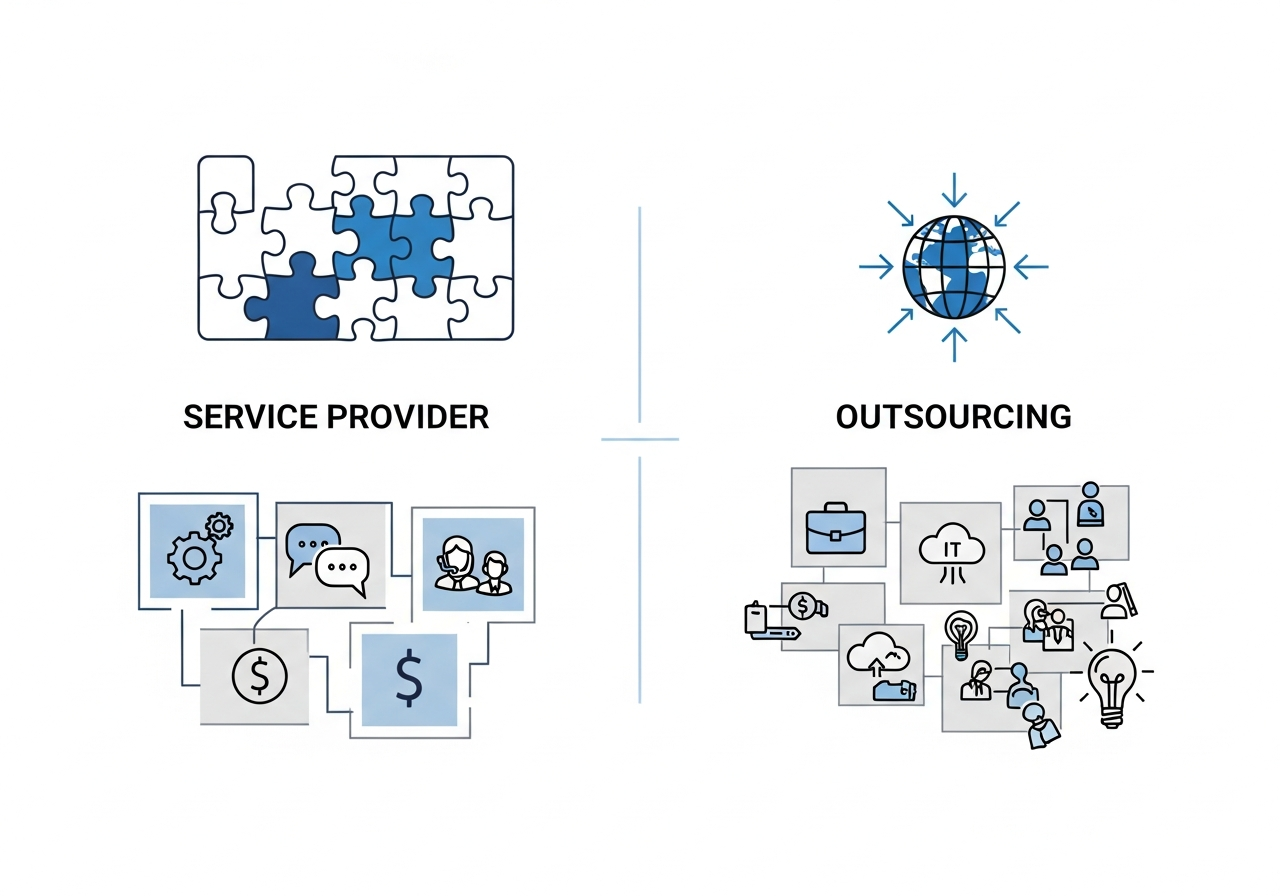
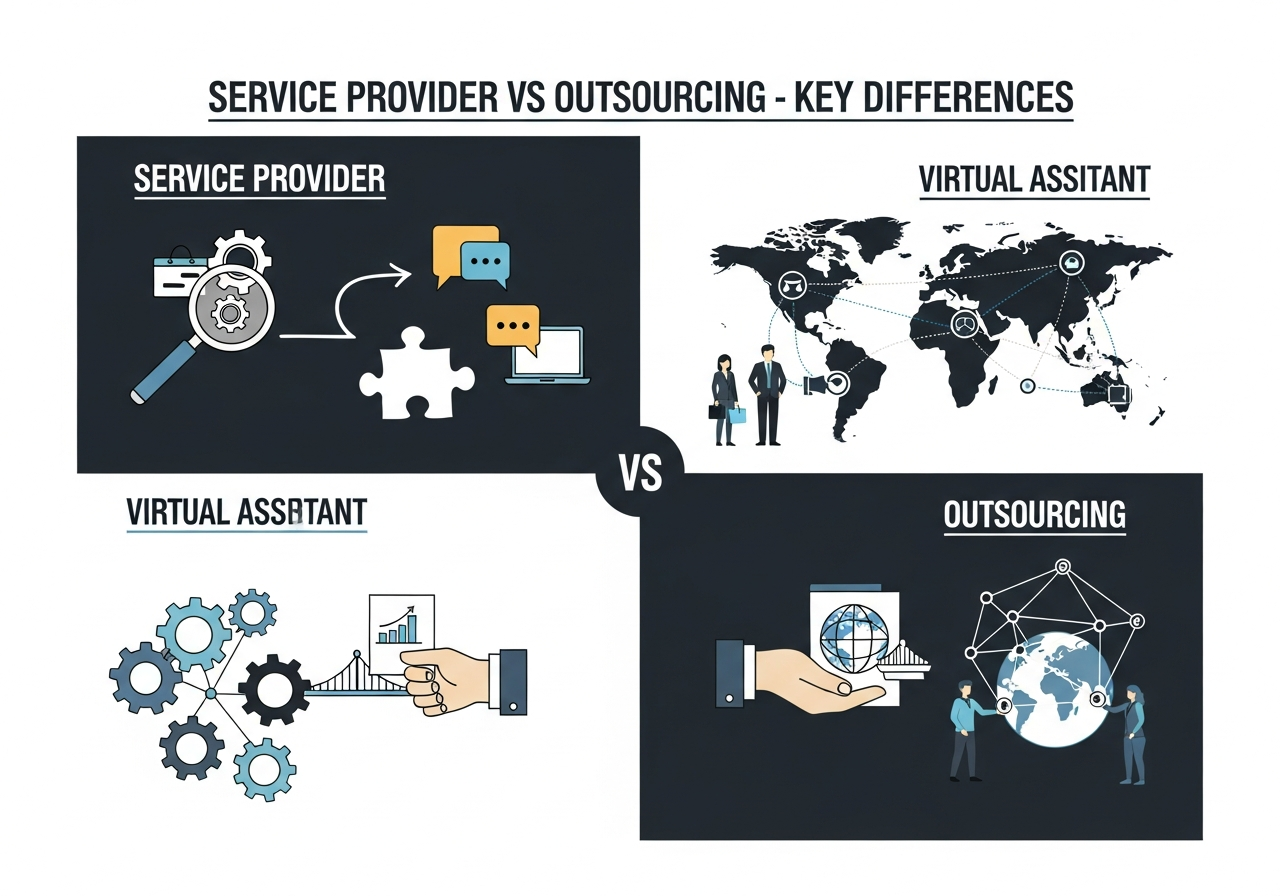
Service Provider vs Outsourcing Services Explained
| Feature | Details |
|---|---|
| Main Focus | Direct service vs business process transfer |
| Control Level | High control vs shared control |
| Cost Structure | Pay per service vs contract rates |
| Relationship | Direct partnership vs third-party management |
| Flexibility | Easy changes vs formal process changes |
What's the actual difference?
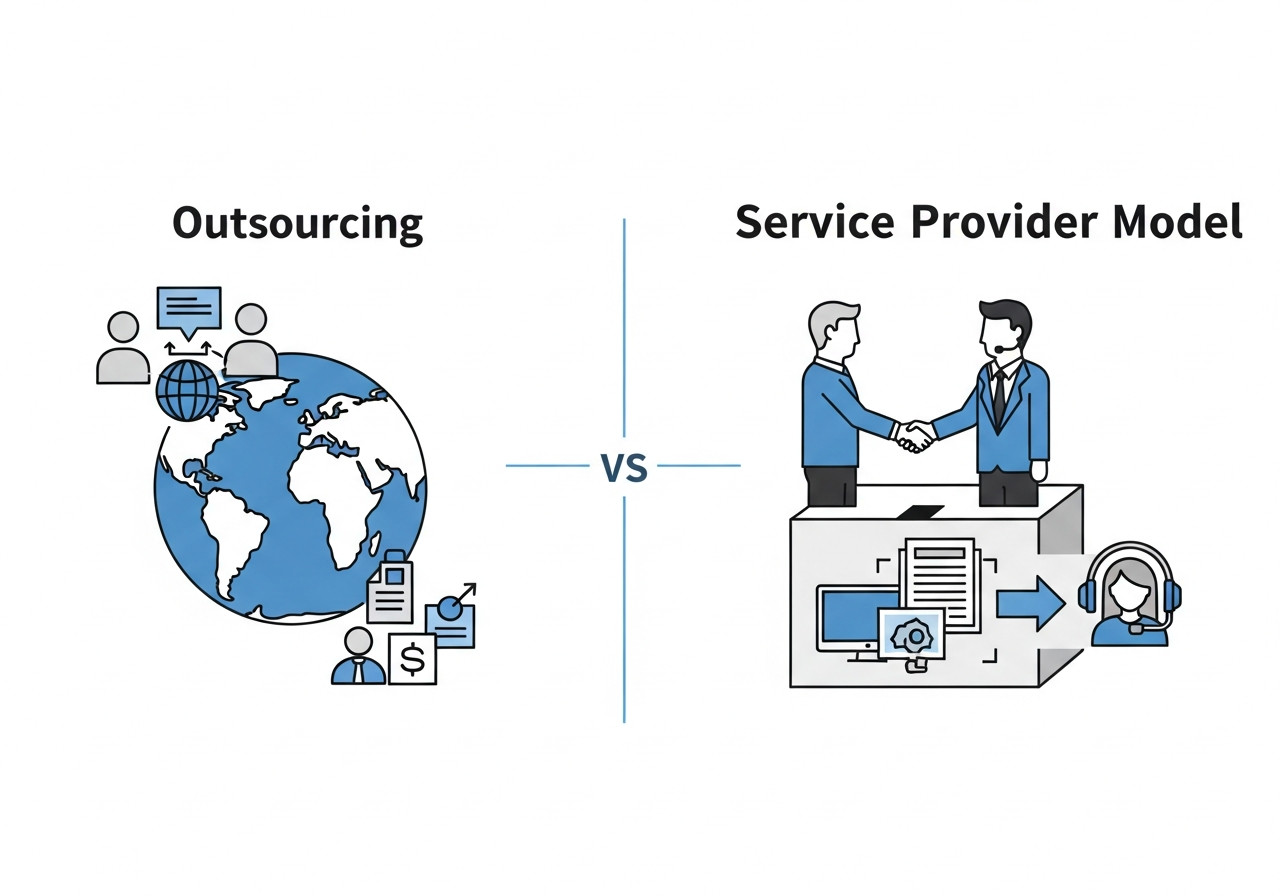
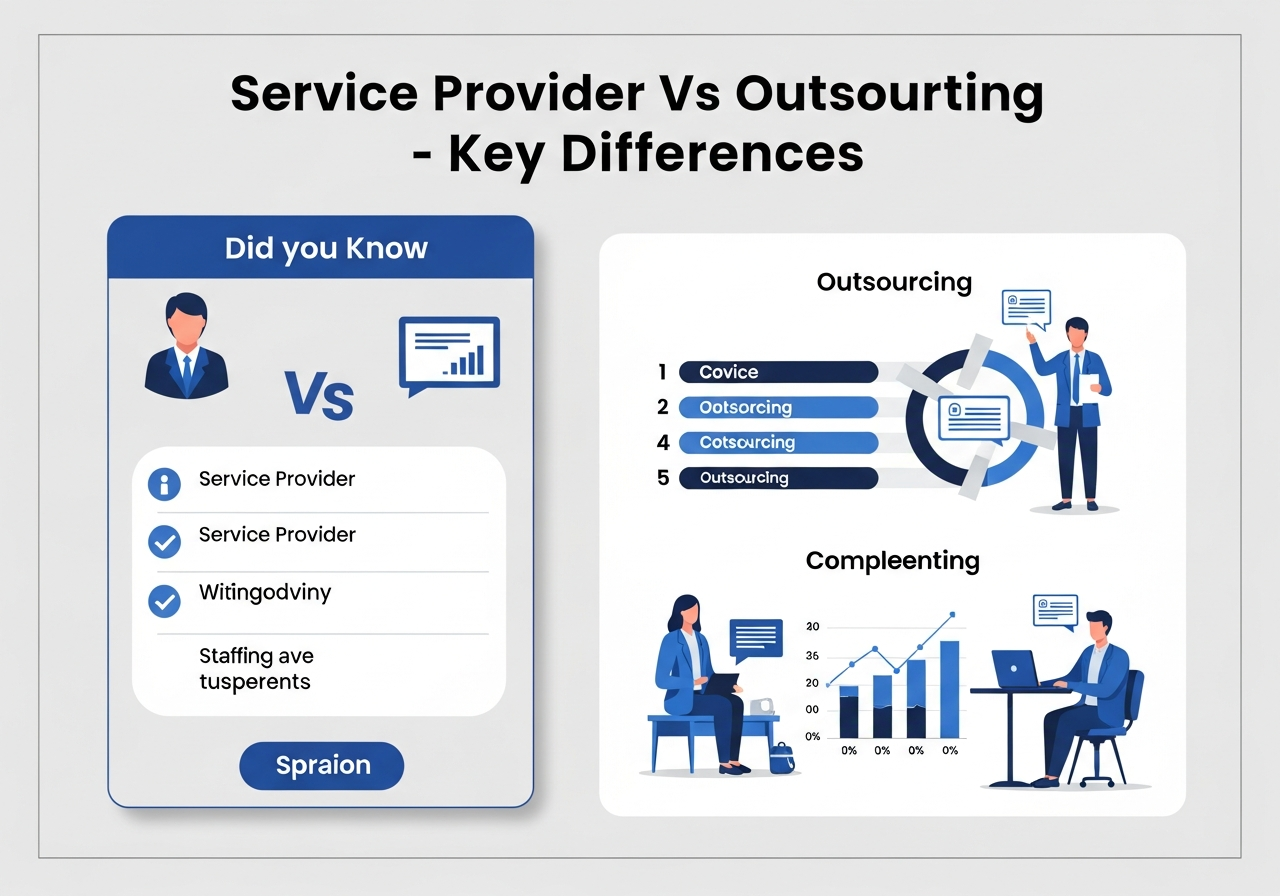
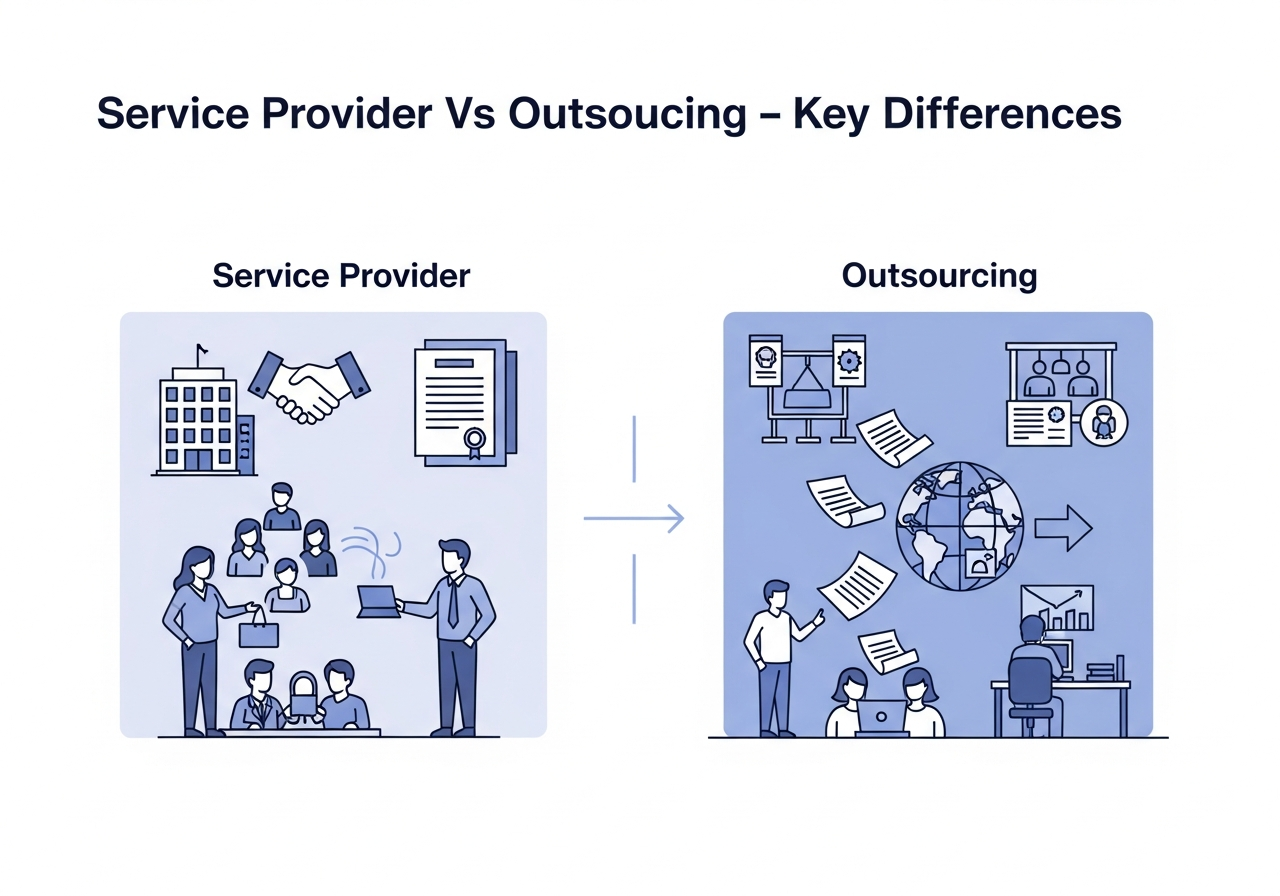
A service provider handles specific tasks while working directly alongside your team. Outsourcing is broader - you hand off an entire business process to another company that runs it independently.
- Service providers specialize in particular skills (marketing, bookkeeping, etc.); outsourcing companies take over whole departments
- You keep direct control with a service provider; an outsourcing firm manages its own people separately
- Service providers can pivot quickly when your needs change; outsourcing runs on fixed contracts and formal change processes
- With a service provider you have direct oversight of work quality
Virtual assistants that can support local service providers offer another angle on this - they save time and money without the overhead of either model.
Companies that understand these differences tend to make better hiring decisions and save roughly 35% more on operational costs.
Why this distinction matters
The choice affects your budget, your control, and how fast you can change direction.
With a service provider, you pay only for what you need when you need it. You get experienced help without hiring full time staff, and there's no lengthy training period - they already know their field.
- Specialists start producing right away
- You can scale up or down without renegotiating a contract
- Trying a new provider is lower risk than signing a long outsourcing agreement
- Specialists tend to outperform generalists in their domain
Comparing service agencies vs outsourcing companies is worth the effort whether you run a small business or a larger operation.
Provider models vs outsourcing contracts
| Factor | Service Provider | Outsourcing Company |
|---|---|---|
| Cost Control | Pay per project/hour | Fixed contract amounts |
| Quality Control | Direct oversight | Vendor manages quality |
| Communication | Direct with worker | Through account managers |
| Changes | Easy to make quickly | Formal change requests |
| Commitment | Project by project | Long-term contracts |
| Expertise | Specialist skills | Process management |
There's a lot to consider when outsourcing virtual assistants, and the contract structure matters more than most business owners realize.
What to look for when choosing
What you prioritize depends on which model you go with.
For service providers, communication speed is everything. If they take three days to answer a simple question, the whole arrangement falls apart. You also want someone organized enough to juggle multiple projects and hit deadlines without constant reminders.
Industry experience helps too. A provider who already understands your business won't need weeks of hand-holding before they become useful.
Stealth Agents providers bring communication skills, organization, and years of hands-on experience. We only hire candidates who pass our testing and interview process.
Pro tip: Try a service provider for a few specific tasks before committing to a larger outsourcing contract. It's a low cost way to test the working relationship.
Getting started
A lot of owners reach this decision when things feel scattered. "We don't really have systems yet" is something we hear often, and that's fine. You don't need a documented operation to get outside help. A good provider helps you build structure while doing the work. And if the money feels like a risk, the service provider model lets you test it on a few tasks before going bigger.
It's simpler than you'd expect.
Book a free discovery call with Stealth Agents, and we'll match you with a provider who has experience in your industry - usually within a few days. Share your project goals, give them access to your tools, and your dedicated Campaign Manager handles the onboarding.
Most clients have expert help working on their business within a week.
Making the partnership work
Write down step by step instructions for each task. It feels tedious upfront, but it prevents confusion later.
Give your provider room to work without micromanaging, then review results at the end of each day. A short weekly call keeps everything on track and surfaces problems early.
Start small. Add more work as you both figure out how to collaborate. If the fit isn't right, Stealth Agents offers a replacement guarantee at no extra cost.
Why Stealth Agents
Our virtual assistants bring 10+ years of experience in their specialized fields, and we hire from thetop 1% of applicants.
- A dedicated Campaign Manager supports the engagement
- Backup VA included at no extra cost
- Replacement guarantee if you're not satisfied
- Communication through whatever platform works for you
Book a free call to talk through your needs.
Frequently asked questions
How do I hire a service provider from Stealth Agents?
Book a free discovery call. We'll discuss what you need and match you with the right virtual assistant.
What tasks can a service provider handle?
Marketing, customer service, data entry, research, social media management, and a wide range of other business tasks.
How much experience do your providers have?
All Stealth Agents virtual assistants have 10+ years of experience in their specialty before they join our team.
How will I communicate with my provider?
Email, Slack, Zoom, or whatever platform you prefer. There's no locked-in system.
What if my provider isn't a good fit?
We'll replace them at no extra cost.
Get started
Service providers give you more control and flexibility than traditional outsourcing, and they typically cost less than hiring in-house.
Book a free discovery call with Stealth Agents to find the right match for your business.