Sales Outsourcing Alternative – Close More Deals for Less

Sales Outsourcing Alternative – Close More Deals for Less
Summarize This Article With AI :

Sales outsourcing alternative solutions don’t have to be rigid or costly; Stealth Agents provides dedicated, top-tier virtual assistants with 10+ years of experience to help you close more deals and scale faster. Let Stealth Agents handle your sales tasks so you can stay laser-focused on growth without the overhead.


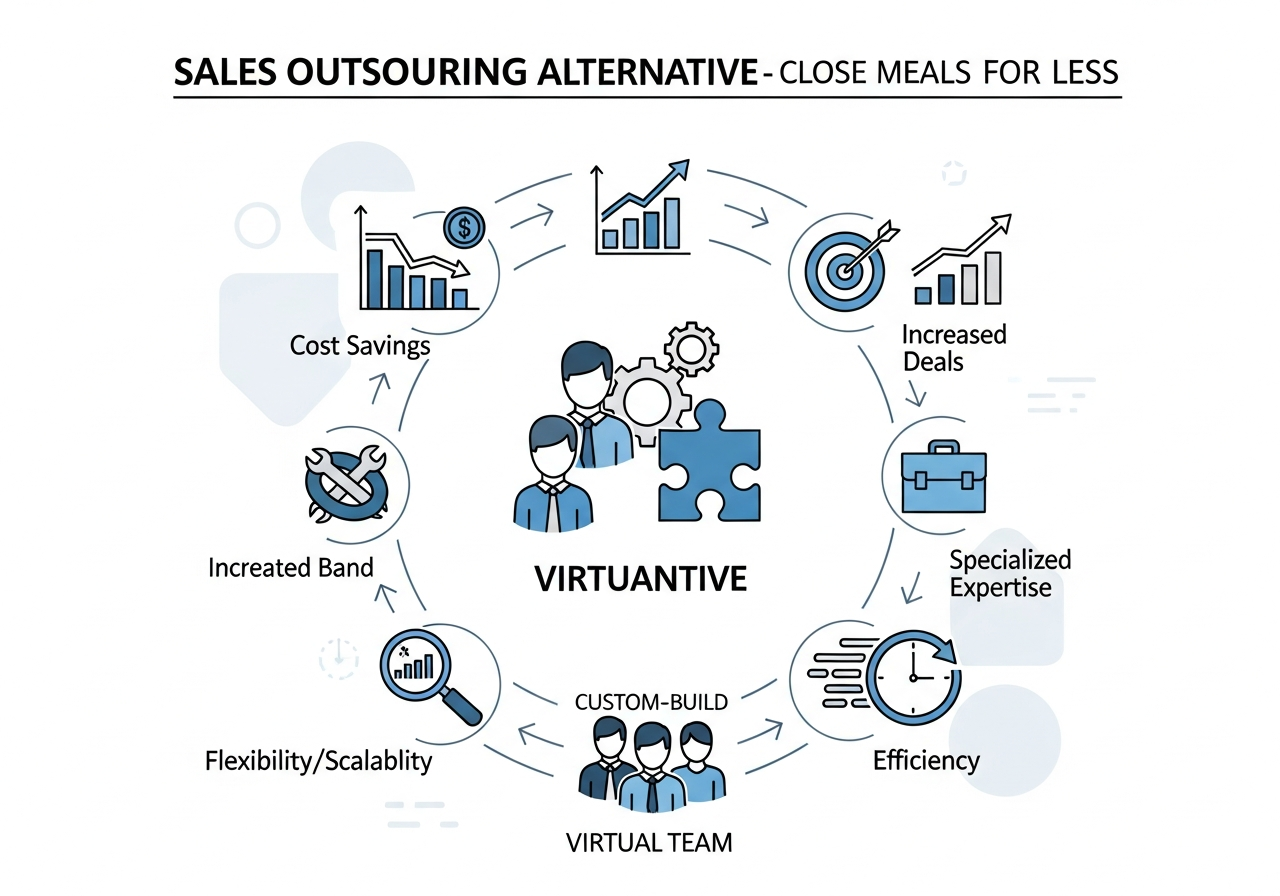
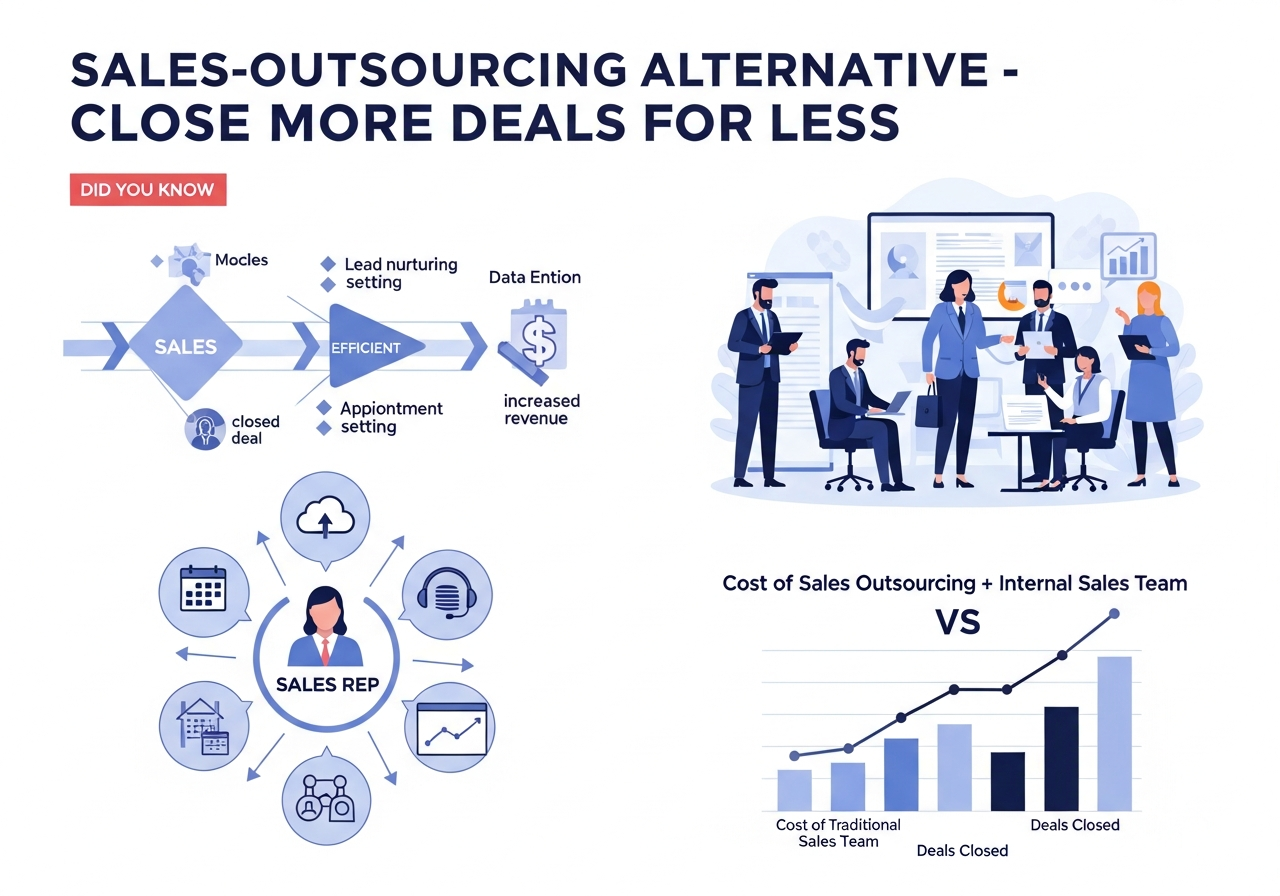
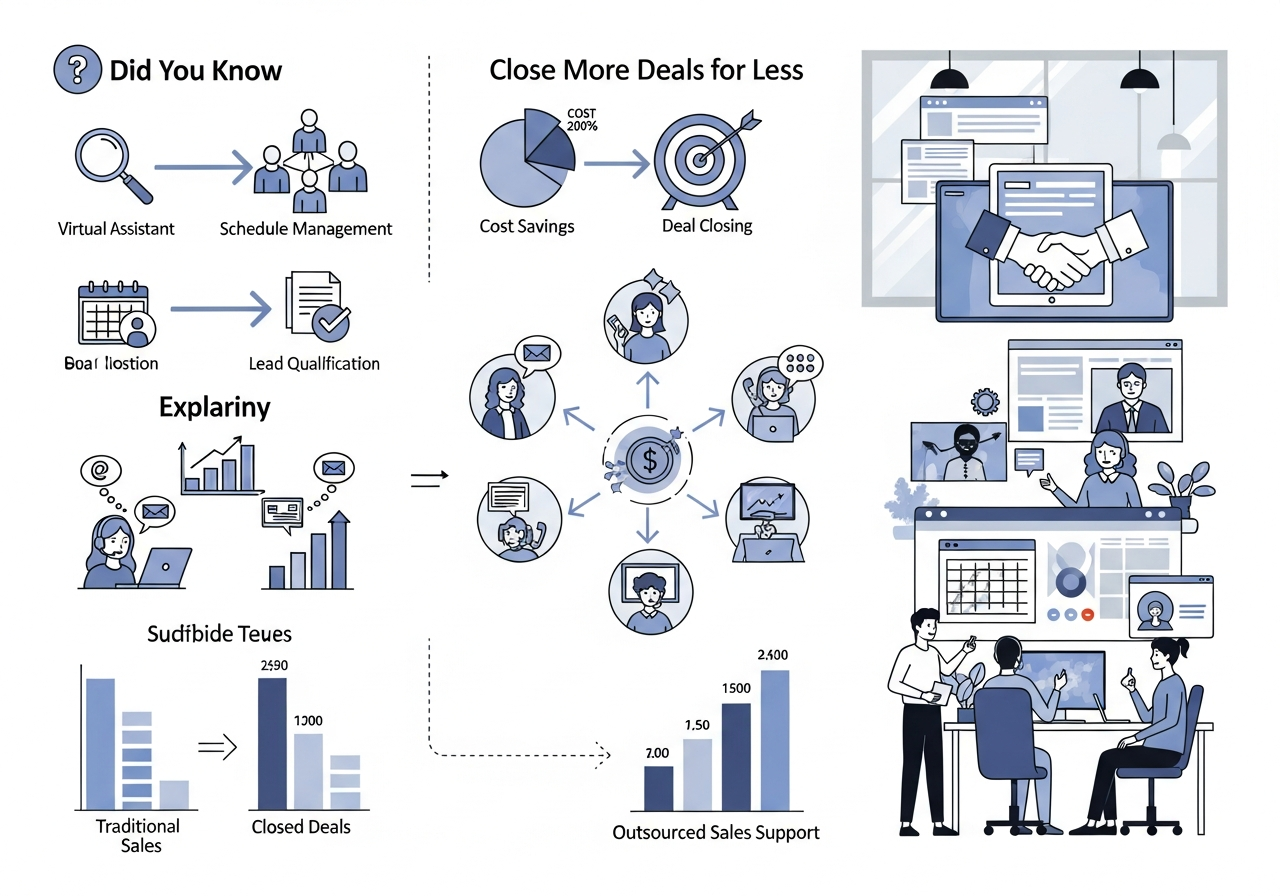
Outsourcing your sales function can be a game-changer when you’re aiming to close more deals for less. In fact, companies that delegate sales operations report savings of 30–50% on operational costs and achieve 63% faster lead response times, driving stronger performance across the board.


With a trusted partner like Stealth Agents, you gain an outsourced sales team that’s experienced, scalable, and aligned with your growth goals, so you can focus on high-value closes instead of managing reps.


Traditional sales outsourcing can come with a hefty price tag—and not always the ROI to match. Between slow onboarding, bloated agency fees, and a lack of control, many businesses find themselves stuck with underperforming reps and inconsistent results.


If you’re looking to streamline your sales process without sacrificing quality, Stealth Agents offers a smarter approach. Our trained virtual sales assistants handle everything from lead generation to follow-ups, giving you high-impact support at flexible, transparent rates.


Virtual assistant pricing allows you to hire an expert in sales outreach, CRM management, and pipeline tracking without the cost of a full-time executive assistant or sales team. Achieve impactful results quickly and affordably.


The Hidden Pitfalls of Outsourced Sales

Even in the best of times, hitting revenue targets can feel like chasing a moving target. Sales reps today are up against tough market conditions, but the real culprit often lies within the sales process itself. When agencies fail to master the nuances at each step, you end up with what seasoned leaders call a “leaky sales funnel”—a pipeline crowded with prospects that go nowhere.


One of the biggest headaches is pipeline quality. As Dini Mehta, who helped Lattice achieve a 75x valuation, points out: many organizations don’t clearly define what makes a ‘quality’ opportunity. The result? Sales teams waste time on long-shot leads, and conversions suffer.


Data integrity is another landmine. Bad sales data can send your strategy off the rails, skewing analytics and leading to wasted resources. Mark Kosoglow, a sales enablement expert, warns that when reps go rogue and processes aren’t standardized, your data quickly becomes meaningless.


Overcomplicated Processes, Overwhelmed Teams

A complex sales process can be just as damaging. Mehta recommends simplicity: keep your pipeline stages to six or fewer, with clear, objective criteria for moving deals forward. Otherwise, confusion reigns, and performance tanks.


Sales enablement, too, shouldn’t be an afterthought. A reactive approach leaves teams scrambling and unprepared. As Kosoglow suggests, enablement activities should align with core business goals and be prioritized based on cognitive load and impact. The goal? Build mastery in the areas that matter most, without overwhelming your team.


By understanding these pitfalls and knowing what to avoid you’re in a much stronger position to close more deals for less.


Simplify Your Sales Process for Better Results

One of the keys to boosting conversions is reducing complexity in your sales process. Instead of getting lost in endless stages and confusing criteria, consider streamlining your pipeline to just a handful of clear steps—ideally no more than six. Each stage should have straightforward, objective exit criteria. This keeps your team aligned and ensures leads never get stuck due to vague requirements or miscommunication.


For example, after a sales call, your exit criteria could be as simple as “client agreed to receive a proposal” or “not a good fit—close the lead.” The exit criteria from one stage naturally become the entry requirements for the next, keeping things moving and eliminating unnecessary bottlenecks.


By combining the flexibility and expertise of virtual sales assistants with a simplified, transparent sales process, you position your team to close more deals with less hassle.


The Hidden Pitfalls of Outsourced Sales

Even in the best of times, hitting revenue targets can feel like chasing a moving target. Sales reps today are up against tough market conditions, but the real culprit often lies within the sales process itself. When agencies fail to master the nuances at each step, you end up with what seasoned leaders call a “leaky sales funnel”—a pipeline crowded with prospects that go nowhere.


One of the biggest headaches is pipeline quality. Without proper lead qualification processes, businesses waste countless hours pursuing unqualified prospects. Virtual sales assistants solve this by implementing consistent lead scoring, qualification calls, and pipeline management to ensure your team focuses only on high-probability opportunities.


Data integrity is another landmine. Bad sales data can send your strategy off the rails, skewing analytics and leading to wasted resources. When sales processes aren’t standardized, data integrity suffers and revenue forecasting becomes impossible. Stealth Agents’ virtual assistants follow documented SOPs for every client interaction, ensuring consistent data entry, follow-up timing, and pipeline management across your entire sales operation.


Overcomplicated Processes, Overwhelmed Teams

A complex sales process can be just as damaging. Mehta recommends simplicity: keep your pipeline stages to six or fewer, with clear, objective criteria for moving deals forward. Otherwise, confusion reigns, and performance tanks.


Sales enablement, too, shouldn’t be an afterthought. A reactive approach leaves teams scrambling and unprepared. As Kosoglow suggests, enablement activities should align with core business goals and be prioritized based on cognitive load and impact. The goal? Build mastery in the areas that matter most, without overwhelming your team.


By understanding these pitfalls—and knowing what to avoid—you’re in a much stronger position to close more deals for less.


Simplify Your Sales Process for Better Results

One of the keys to boosting conversions is reducing complexity in your sales process. Instead of getting lost in endless stages and confusing criteria, consider streamlining your pipeline to just a handful of clear steps—ideally no more than six. Each stage should have straightforward, objective exit criteria. This keeps your team aligned and ensures leads never get stuck due to vague requirements or miscommunication.


For example, after a sales call, your exit criteria could be as simple as “client agreed to receive a proposal” or “not a good fit—close the lead.” The exit criteria from one stage naturally become the entry requirements for the next, keeping things moving and eliminating unnecessary bottlenecks.


By combining the flexibility and expertise of virtual sales assistants with a simplified, transparent sales process, you position your team to close more deals with less hassle.


What are Alternatives to Outsourcing?

One great alternative to outsourcing is hiring in-house staff who can work closely with your team and fully understand your business needs. This gives you direct control over projects and allows you to communicate quickly without relying on external teams. Another option is using freelancers for specific tasks, as they can provide flexibility without the long-term commitment of full-time employees.


You could also look into using software tools that automate repetitive tasks, saving both time and money while keeping everything managed internally. Collaborating with local agencies can be an effective middle ground, offering professional services while keeping operations nearby and easy to oversee. If cost is a concern, consider cross-training your current employees to handle additional responsibilities instead of outsourcing the work.


Finally, forming partnerships with other businesses in your industry can help you exchange resources or skills without needing to go outside your immediate network.

For more information, see our guide on outsourced digital marketing services.


Why Stealth Agents vs Smarter Alternative

Sales outsourcing companies often promise results but deliver generic scripts, high costs, and limited visibility into your pipeline. You’re left chasing updates, wondering if leads are being followed up, and paying for bloated teams that don’t feel like part of your business.


Stealth Agents changes that. We give you trained virtual assistants who plug into your systems, adopt your brand voice, and execute with precision. Whether it’s prospecting, qualifying leads, or setting appointments, our team acts like an extension of yours.


You get full transparency, flexible hours, and a hands-off onboarding experience. It’s everything you want from sales outsourcing—minus the bloated cost and loss of control.


Why Ongoing Sales Training Matters and How to Make It Work for Your Team

Continuous learning is the backbone of any high-performing sales operation. It’s not enough to hold a few “rah-rah” workshops and hope for the best—true impact comes from weaving training into your team’s daily rhythm.


By reinforcing new skills through regular practice, you ensure your reps actually retain knowledge and adapt as the market changes.


But before you start scheduling back-to-back seminars, a quick reality check: nobody can master five complex topics at once.


The best approach is to set clear priorities with leadership, then introduce focused training one step at a time—think of it as “training with intention.”

Here’s how to keep sales training effective (and sane):


  • Integrate, don’t isolate: Embed new techniques into real sales calls, scripts, and CRM tasks. Make learning a habit, not a hurdle.


  • Space it out: Schedule bite-sized sessions that align with your team’s workload. Focus on one core competency per quarter to build true expertise—think “quality over quantity.”


  • Reinforce regularly: Use weekly huddles or peer-to-peer reviews to revisit key lessons, celebrate wins, and troubleshoot challenges as a group.


  • Tie it to real results: Measure progress by tracking both practice and outcomes in your pipeline—not just participation in training.


Why Ongoing Sales Training Matters and How to Make It Work for Your Team

Continuous learning is the backbone of any high-performing sales operation. It’s not enough to hold a few “rah-rah” workshops and hope for the best—true impact comes from weaving training into your team’s daily rhythm. By reinforcing new skills through regular practice, you ensure your reps actually retain knowledge and adapt as the market changes.


But before you start scheduling back-to-back seminars, a quick reality check: nobody can master five complex topics at once. The best approach is to set clear priorities with leadership, then introduce focused training one step at a time think of it as “training with intention.”


Here’s how to keep sales training effective (and sane):


  • Integrate, don’t isolate: Embed new techniques into real sales calls, scripts, and CRM tasks. Make learning a habit, not a hurdle.
  • Space it out: Schedule bite-sized sessions that align with your team’s workload. Focus on one core competency per quarter to build true expertise—think “quality over quantity.”
  • Reinforce regularly: Use weekly huddles or peer-to-peer reviews to revisit key lessons, celebrate wins, and troubleshoot challenges as a group.
  • Tie it to real results: Measure progress by tracking both practice and outcomes in your pipeline not just participation in training.


By operationalizing training this way, you keep your team sharp and motivated equipped to close more deals, with every lesson actually driving results.


Who Benefits Most from Stealth Agents?

Whether you’re building a sales engine from scratch or need to boost your pipeline without hiring in-house, Stealth Agents gives you the support you need—minus the friction.

1. Startups & Small Businesses

You need leads, not overhead. Our VAs help you grow your pipeline fast, without tying up your budget in full-time salaries.

2. B2B Companies

We understand the importance of personalized outreach and long-term relationship-building. Our VAs qualify leads, nurture prospects, and keep your CRM clean and up-to-date.

3. Sales Managers & Teams

Offload repetitive outreach, follow-ups, and list building. Your in-house reps stay focused on closing while we handle the groundwork.

4. SaaS & Tech Companies

Whether you’re booking demos or managing outbound campaigns, our assistants are trained to support fast-paced sales environments.

5. Coaches, Consultants & Agencies

Consistent lead generation is key, but it doesn’t have to eat up your day. We help you stay visible, responsive, and top-of-mind with prospects.

6. Real Estate, Insurance & Financial Pros

Our sales VAs support high-touch industries with lead nurturing, appointment setting, and follow-ups that drive conversions.

Services Offered by Stealth Agents

Our sales virtual assistants are trained to handle every stage of your funnel—from cold outreach to qualified lead handoff. Here’s how we help you close more deals without adding headcount:

1. Lead Generation & Prospecting

We research and build targeted lead lists tailored to your ideal client profile. Whether it’s LinkedIn, email, or CRM scraping, our VAs deliver high-quality prospects.

2. Cold Outreach & Follow-Ups

Our VAs send personalized emails and DMs to initiate conversations and keep your name in front of prospects. We manage multi-step sequences and ensure no lead goes cold.

3. Appointment Setting

We handle calendar coordination, send reminders, and follow up to lock in meetings with qualified leads. No more back-and-forth scheduling headaches.

4. CRM Management

From logging notes to tagging leads and updating deal stages, we keep your CRM organized and up to date. Better data equals better decisions.

5. Inbound Lead Qualification

Not all leads are worth your time. We vet and score inbound inquiries so your team spends time only on high-potential opportunities.

6. Proposal & Quote Support

Need help drafting and sending quotes or proposal docs? We ensure your offers go out fast, are formatted right, and are followed up on promptly.

7. Sales Funnel Reporting

We track key metrics—calls booked, responses received, and conversions—to keep you informed and in control of your pipeline performance.

Tackling Leaks and Bottlenecks in Your Sales Funnel

Every sales funnel has its soft spots—those pesky stages where deals stall, prospects disengage, or opportunities vanish into thin air. The trick? Treating your pipeline like a living, breathing ecosystem that deserves regular check-ups.


Here’s how savvy teams zero in on trouble spots (and patch them fast):


  • Map Your Stages Clearly: Start by laying out every step, from first touch to closed deal. If you can’t name the stages, you can’t find the leaks.


  • Audit Your Pipeline Regularly: Dive into each stage and look for patterns—Are deals piling up in “Needs Analysis” or stalling at “Proposal Sent”? Time to pull out the magnifying glass.


  • Set Crystal-Clear Criteria: Use checklists or rubrics for each stage, so reps know exactly what “qualified” or “ready to demo” really means. Ambiguity is the enemy of progress.


  • Track the Metrics That Matter: Monitor conversion rates, average time stalled per stage, and drop-off points. If 60% of leads never move past the initial call, there’s your smoking gun.


  • Apply Targeted Fixes: For every bottleneck, try a surgical intervention—whether it’s better follow-up scripts, improved qualification questions, or tighter handoffs between sales and marketing.

8. LinkedIn & Email Campaign Support

Our VAs help run outbound campaigns through platforms like LinkedIn, Lemlist, or Mailshake—boosting reach without burning hours.

9. Post-Sale Handoff Coordination

Once a deal is closed, we help coordinate the transition to fulfillment, onboarding, or client success—so nothing falls through the cracks.

10. Sales Admin & Documentation

From call notes to contract management, we handle the small but critical details that keep your sales ops running smoothly.

sales outsourcing

Proven Strategies for Supercharging Sales in Competitive Markets

Wondering which tactics actually move the needle in the modern sales landscape? It’s not about piling on more tools or chasing every lead—it’s about building a system that’s focused, streamlined, and always improving.


Here’s what sets top sales teams apart:


  • Quality-First Pipeline Development:
    Building a strong, targeted pipeline is step one. Rather than mass prospecting, zero in on ideal clients by leveraging platforms like LinkedIn, Crunchbase, or Apollo.io for precise lead lists. This means you’re starting with prospects who actually fit, so your time (and theirs) isn’t wasted.
  • Simplicity in the Sales Process:
    Overcomplicating your sales flow just creates bottlenecks. High-performing organizations like HubSpot and Salesforce keep their processes clear: clean stages, simple qualification criteria, and automation wherever possible. This makes it easy for reps to focus on conversations that convert, not busywork.
  • Plugging Funnel Leaks:
    Every sales funnel has weak points—leads that drop off, follow-ups that slip through the cracks, deals that stall for no clear reason. Regularly audit your process. Use tools like Pipedrive or Salesloft to track each step and set up triggers and reminders to ensure nothing goes missing.
  • Continuous Process Improvement:
    Sales isn’t “set and forget.” Schedule regular reviews to analyze conversion rates, spot trends, and gather feedback from both customers and your team. Tiny tweaks—like tightening an email sequence or revising qualification questions—can drive big improvements over time.


Bottom line: The smartest sales organizations invest in building a high-quality pipeline, maintaining a smooth and transparent process, and never stop optimizing. It’s this mix of laser focus and adaptability that keeps your team ahead—no matter how crowded the market gets.


The Role of Sales Enablement in Achieving Sales Success

Sales enablement isn’t just a “nice to have”—it’s the backbone for driving sales productivity, consistency, and results. When positioned as a strategic partner, not just a support function, sales enablement has the power to supercharge your team’s effectiveness and tie directly to bottom-line goals.


So, what does true alignment look like?


  • Focused Training, Not Fire Drills
    Sales enablement shouldn’t swoop in after the fact or play catch-up. The magic happens when enablement is woven into the DNA of your sales process. That means anticipating skill gaps, proactively rolling out resources, and ensuring your salespeople are always a step ahead.
  • Prioritizing What Moves the Needle
    Instead of throwing every new playbook or course at your team, start by mapping enablement efforts to the sales outcomes that matter most. For example, if closing rates are lagging, double down on objection handling and negotiation workshops. Using frameworks like cognitive load prioritization helps your reps stay focused rather than bogged down by “info overload.”
  • Tying Initiatives to Business Objectives
    Sales enablement makes the biggest impact when tied to core business goals—think pipeline growth, shorter sales cycles, or higher win rates. Tools like HubSpotSalesforce, and Gong help you track which activities drive performance, so every enablement project gets the credit (and results) it deserves.
  • Ensuring Skill Mastery, Not Just Participation
    It’s not enough to run training—true enablement measures skill adoption and mastery. That might mean role-plays, peer feedback, or real-time call coaching using platforms like Chorus. This way, reps don’t just “check the box”—they build confidence and competence where it counts.


Bottom line: when sales enablement is prioritized, planned, and closely aligned with your revenue goals, your sales team isn’t just busy—they’re effective. Enablement stops being support in the background and becomes a strategic lever for sustainable growth.


Prioritizing Sales Enablement Activities: Frameworks That Keep Your Team Focused

If you’ve ever felt overwhelmed trying to juggle training topics, content launches, and tool rollouts—not to mention keeping reps engaged—here’s the secret: you need a proven framework that helps you score and prioritize every enablement initiative before it hits anyone’s calendar.


Let’s break down a practical approach you can use today:


  • Cognitive Load Assessment: Not all enablement content is created equal. Assign a score to each activity based on how much mental energy it demands from your team. For example, simple resource guides might score low, while a new CRM rollout lands higher.
  • Mastery Impact Evaluation: Identify which activities are non-negotiable for driving sales results. Focus your energy where true skill mastery moves the revenue needle—think buyer persona training before objection handling scripts.
  • Prioritization Matrix: Tools like the Eisenhower Matrix (urgent vs. important) or a weighted scoring model (as used by sales orgs at HubSpot and Salesforce) help you sort initiatives by business value and ease of adoption.
  • Feedback Loops and Iteration: Build in regular checkpoints—a quick survey or Slack poll—to ensure that what’s being rolled out is hitting the mark. Adjust as you go to avoid enablement overload.


When you use these frameworks, you take the guesswork out of enablement and keep your sales team laser-focused on mastering the skills that actually close deals.


Tackling Leaks and Bottlenecks in Your Sales Funnel

Every sales funnel has its soft spots—those pesky stages where deals stall, prospects disengage, or opportunities vanish into thin air. The trick? Treating your pipeline like a living, breathing ecosystem that deserves regular check-ups.


Here’s how savvy teams zero in on trouble spots (and patch them fast):


  • Map Your Stages Clearly: Start by laying out every step, from first touch to closed deal. If you can’t name the stages, you can’t find the leaks.
  • Audit Your Pipeline Regularly: Dive into each stage and look for patterns—Are deals piling up in “Needs Analysis” or stalling at “Proposal Sent”? Time to pull out the magnifying glass.
  • Set Crystal-Clear Criteria: Use checklists or rubrics for each stage, so reps know exactly what “qualified” or “ready to demo” really means. Ambiguity is the enemy of progress.
  • Track the Metrics That Matter: Monitor conversion rates, average time stalled per stage, and drop-off points. If 60% of leads never move past the initial call, there’s your smoking gun.
  • Apply Targeted Fixes: For every bottleneck, try a surgical intervention—whether it’s better follow-up scripts, improved qualification questions, or tighter handoffs between sales and marketing.


The goal isn’t perfection—just a pipeline that gives you predictable, measurable progress (instead of surprise dry spells). With the right process, those leaks don’t stand a chance.


Breaking Goals Into Actionable Plays

Achieving big sales targets isn’t simply about eyeing the finish line—it’s about breaking things down into winnable chunks, just like a good coach on game day. Top sales leaders know that you don’t win the championship with one giant play; you move the ball forward yard by yard.


Here’s how to translate that mentality into revenue results:


  • Set Short-Term Wins: Focus on smaller, immediate milestones—book the meeting, get a reply, secure a demo. Celebrate the “first downs,” not just the touchdown.
  • Track Progress at Each Stage: Make each phase of your sales funnel its own mini-goal. Whether it’s qualifying leads or progressing a deal to the proposal stage, treat every step as a victory in itself.
  • Rally the Team Around the Process: Encourage your sales team to concentrate on the quality of the drive, not just the outcome. Consistency and momentum make closing deals feel less overwhelming and a lot more achievable.


By concentrating on incremental gains—whether it’s updating your CRM daily or sending that extra follow-up—your team builds habits that lead to more closed deals over time.


Optimizing Your Sales Stages for Clarity

When it comes to building a high-converting sales process, less really is more. The sweet spot? Aim for no more than six distinct stages, whether your deals are bite-sized or enterprise-level. Why? Too many steps create bottlenecks and confusion—slowing your team down and making it tough to spot what’s working.


To keep your operation humming, every stage should come with its own crystal-clear set of entry and exit criteria. Think of these as “gates”: simple, objective checkpoints that tell your team when it’s time to move a lead forward—or leave them behind. No guesswork, no gray areas.


Here’s a proven way to keep things smooth:


  • Limit stages (ideally, six or fewer).
  • Define specific exit criteria for each stage.
  • Entry criteria for one stage should be the exit criteria from the previous.


This streamlined approach keeps everyone on the same page, cuts out busywork, and transforms your pipeline from cluttered to crystal clear.


Proven Strategies for Supercharging Sales in Competitive Markets

Wondering which tactics actually move the needle in the modern sales landscape? It’s not about piling on more tools or chasing every lead—it’s about building a system that’s focused, streamlined, and always improving.


Here’s what sets top sales teams apart:


  • Quality-First Pipeline Development:
    Building a strong, targeted pipeline is step one. Rather than mass prospecting, zero in on ideal clients by leveraging platforms like LinkedIn, Crunchbase, or Apollo.io for precise lead lists. This means you’re starting with prospects who actually fit, so your time (and theirs) isn’t wasted.
  • Simplicity in the Sales Process:
    Overcomplicating your sales flow just creates bottlenecks. High-performing organizations like HubSpot and Salesforce keep their processes clear: clean stages, simple qualification criteria, and automation wherever possible. This makes it easy for reps to focus on conversations that convert, not busywork.
  • Plugging Funnel Leaks:
    Every sales funnel has weak points—leads that drop off, follow-ups that slip through the cracks, deals that stall for no clear reason. Regularly audit your process. Use tools like Pipedrive or Salesloft to track each step and set up triggers and reminders to ensure nothing goes missing.
  • Continuous Process Improvement:
    Sales isn’t “set and forget.” Schedule regular reviews to analyze conversion rates, spot trends, and gather feedback from both customers and your team. Tiny tweaks—like tightening an email sequence or revising qualification questions—can drive big improvements over time.


Bottom line: The smartest sales organizations invest in building a high-quality pipeline, maintaining a smooth and transparent process, and never stop optimizing. It’s this mix of laser focus and adaptability that keeps your team ahead—no matter how crowded the market gets.


The Role of Sales Enablement in Achieving Sales Success

Sales enablement isn’t just a “nice to have”—it’s the backbone for driving sales productivity, consistency, and results. When positioned as a strategic partner, not just a support function, sales enablement has the power to supercharge your team’s effectiveness and tie directly to bottom-line goals.


So, what does true alignment look like?


  • Focused Training, Not Fire Drills
    Sales enablement shouldn’t swoop in after the fact or play catch-up. The magic happens when enablement is woven into the DNA of your sales process. That means anticipating skill gaps, proactively rolling out resources, and ensuring your salespeople are always a step ahead.
  • Prioritizing What Moves the Needle
    Instead of throwing every new playbook or course at your team, start by mapping enablement efforts to the sales outcomes that matter most. For example, if closing rates are lagging, double down on objection handling and negotiation workshops. Using frameworks like cognitive load prioritization helps your reps stay focused rather than bogged down by “info overload.”
  • Tying Initiatives to Business Objectives
    Sales enablement makes the biggest impact when tied to core business goals—think pipeline growth, shorter sales cycles, or higher win rates. Tools like HubSpotSalesforce, and Gong help you track which activities drive performance, so every enablement project gets the credit (and results) it deserves.
  • Ensuring Skill Mastery, Not Just Participation
    It’s not enough to run training—true enablement measures skill adoption and mastery. That might mean role-plays, peer feedback, or real-time call coaching using platforms like Chorus. This way, reps don’t just “check the box”—they build confidence and competence where it counts.


Bottom line: when sales enablement is prioritized, planned, and closely aligned with your revenue goals, your sales team isn’t just busy—they’re effective. Enablement stops being support in the background and becomes a strategic lever for sustainable growth.


Prioritizing Sales Enablement Activities: Frameworks That Keep Your Team Focused

If you’ve ever felt overwhelmed trying to juggle training topics, content launches, and tool rollouts—not to mention keeping reps engaged—here’s the secret: you need a proven framework that helps you score and prioritize every enablement initiative before it hits anyone’s calendar.


Let’s break down a practical approach you can use today:


  • Cognitive Load Assessment: Not all enablement content is created equal. Assign a score to each activity based on how much mental energy it demands from your team. For example, simple resource guides might score low, while a new CRM rollout lands higher.
  • Mastery Impact Evaluation: Identify which activities are non-negotiable for driving sales results. Focus your energy where true skill mastery moves the revenue needle—think buyer persona training before objection handling scripts.
  • Prioritization Matrix: Tools like the Eisenhower Matrix (urgent vs. important) or a weighted scoring model (as used by sales orgs at HubSpot and Salesforce) help you sort initiatives by business value and ease of adoption.
  • Feedback Loops and Iteration: Build in regular checkpoints—a quick survey or Slack poll—to ensure that what’s being rolled out is hitting the mark. Adjust as you go to avoid enablement overload.


When you use these frameworks, you take the guesswork out of enablement and keep your sales team laser-focused on mastering the skills that actually close deals.


Why Stealth Agents Beat Traditional Sales Outsourcing

Traditional B2B sales outsourcing agencies often come with long contracts, high retainers, and little day-to-day visibility. You’re expected to trust an outside team to represent your brand—without truly knowing who’s doing the work or how leads are being managed.

At Stealth Agents, we take a different approach. You get a dedicated Salesforce virtual assistant who learns your tone, tools, and goals—just like an in-house teammate, but without the overhead. We plug into your CRM, follow your workflows, and give you full visibility into what’s happening at every stage.

There’s no hidden team or hand-off delays. Just one reliable point of contact working consistently to build your pipeline, nurture your leads, and drive conversions—on your terms, not theirs.

Role of Sales Enablement in Achieving Sales Success

Sales enablement isn’t just a “nice to have”—it’s the backbone for driving sales productivity, consistency, and results.


When positioned as a strategic partner, not just a support function, sales enablement has the power to supercharge your team’s effectiveness and tie directly to bottom-line goals.


So, what does true alignment look like?


  • Focused Training, Not Fire Drills

Sales enablement shouldn’t swoop in after the fact or play catch-up. The magic happens when enablement is woven into the DNA of your sales process. That means anticipating skill gaps, proactively rolling out resources, and ensuring your salespeople are always a step ahead.


  • Prioritizing What Moves the Needle

Instead of throwing every new playbook or course at your team, start by mapping enablement efforts to the sales outcomes that matter most. For example, if closing rates are lagging, double down on objection handling and negotiation workshops. Using frameworks like cognitive load prioritization helps your reps stay focused rather than bogged down by “info overload.”


  • Tying Initiatives to Business Objectives

Sales enablement makes the biggest impact when tied to core business goals—think pipeline growth, shorter sales cycles, or higher win rates. Tools like HubSpot, Salesforce, and Gong help you track which activities drive performance, so every enablement project gets the credit (and results) it deserves.


  • Ensuring Skill Mastery, Not Just Participation

It’s not enough to run training—true enablement measures skill adoption and mastery. That might mean role-plays, peer feedback, or real-time call coaching using platforms like Chorus. This way, reps don’t just “check the box”—they build confidence and competence where it counts.


Prioritizing Sales Enablement Activities: Frameworks That Keep Your Team Focused

If you’ve ever felt overwhelmed trying to juggle training topics, content launches, and tool rollouts—not to mention keeping reps engaged—here’s the secret: you need a proven framework that helps you score and prioritize every enablement initiative before it hits anyone’s calendar.


Let’s break down a practical approach you can use today:


  • Cognitive Load Assessment: Not all enablement content is created equal. Assign a score to each activity based on how much mental energy it demands from your team. For example, simple resource guides might score low, while a new CRM rollout lands higher.


  • Mastery Impact Evaluation: Identify which activities are non-negotiable for driving sales results. Focus your energy where true skill mastery moves the revenue needle—think buyer persona training before objection handling scripts.


  • Prioritization Matrix: Tools like the Eisenhower Matrix (urgent vs. important) or a weighted scoring model (as used by sales orgs at HubSpot and Salesforce) help you sort initiatives by business value and ease of adoption.


  • Feedback Loops and Iteration: Build in regular checkpoints—a quick survey or Slack poll—to ensure that what’s being rolled out is hitting the mark. Adjust as you go to avoid enablement overload.


Other Alternatives (And Why Stealth Agents Win)

There are plenty of ways to outsource sales, but few deliver the perfect mix of cost, control, and conversion power. Here’s how other options compare:

1. Sales Outsourcing Agencies

Sales outsourcing agencies often lock you into long-term contracts with high monthly retainers—and minimal transparency. You may not know who’s actually doing the work or how qualified your reps really are. With Stealth Agents, you get dedicated, trained VAs and full visibility into every touchpoint, making it a trusted option for online sales outsourcing.

2. Freelance SDRs & Cold Callers

Freelancers are affordable, but quality varies widely. You could spend weeks testing reps only to end up back at square one. Stealth Agents saves you the trial and error by assigning pre-vetted, sales-ready assistants from day one, making it a smart outsourcing alternative.

3. Commission-Only Sales Contractors

Commission-only sales contractors may seem cost-effective, but they often lead to inconsistent effort, low commitment, and weak follow-up. Without guaranteed compensation, many contractors won’t prioritize your brand. Stealth Agents provides pre- and post-sales outsourcing solutions with fully committed and performance-monitored VAs.

4. In-House Sales Hires

Hiring a full-time sales rep means salary, training, tools, and benefits—and risk if they don’t perform. That’s a big cost upfront for a small business. Stealth Agents offers contracted energy sales outsourcing for small business owners, delivering pro-level sales support at a fraction of the cost with no long-term risk.

5. General VA Platforms

Most virtual assistant platforms offer generalists with little to no sales experience. You end up training from scratch or settling for mediocre results. Stealth Agents specializes in virtual sales outsourcing, connecting you with sales-trained VAs who can generate leads, follow up, and close.

6. Sales Agencies

Sales outsourcing agencies might not always align with your business needs. If you’re looking for a versatile sales-closer alternative, Stealth Agents delivers tailored solutions with dedicated VAs.

7. B2B Sales Outsourcing Companies

B2B sales outsourcing companies often prioritize larger accounts, leaving small businesses underserved. Stealth Agents bridges the gap, offering scalable and specialized support tailored for businesses of every size.


Stealth agents review


What are the Pros and Cons of Sales Outsourcing?

Struggling to hit your sales targets? Or maybe you’re just tired of the headaches that come with managing a sales team. Sales outsourcing might be the solution you’ve been searching for. But, like anything, it has its ups and downs. Below, we break down the pros and cons of sales outsourcing so you can decide if it’s the right fit for your business.


We’ll also cover how options like online sales outsourcing, virtual sales outsourcing, and working with sales outsourcing agencies could make a difference for you.

Pros of Sales Outsourcing

Outsourcing sales saves you time to focus on core business activities like improving products or services. It gives you access to experienced professionals who specialize in closing deals and lead generation, ensuring effective strategies from day one. Compared to hiring a full-time team, outsourcing is more cost-effective, reducing overhead expenses while delivering high-quality results. It also provides scalable solutions, allowing businesses to easily adapt to changing sales needs without the hassle of hiring or firing.


With outsourcing, you can expand into new markets as agencies bring the tools and expertise to target untapped audiences. Many outsourcing companies use advanced tools like CRM platforms and AI analytics to achieve faster, smarter results. Finally, outsourcing removes guesswork by leveraging proven strategies, ensuring consistent and reliable sales performance.


Cons of Sales Outsourcing

Outsourcing sales can come with challenges. You lose some control over the process since outsourced teams may not align perfectly with your preferences. They might also lack the personal connection your in-house team has with clients, though a reliable agency can bridge this gap by learning your brand. Hidden costs are another risk, so always clarify all fees upfront.


Security concerns arise when sharing sensitive client data, so choose agencies with strong data protection practices. Outsourcing may also fall short for highly specialized sales needs, where an in-house team might be better. Assess your goals carefully to determine if outsourcing is the right fit.

outsourcing

Virtual Assistant Hire Now

How to Choose the Right Sales Outsourcing Companies for Your Business

When evaluating sales outsourcing companies, the key differentiator isn’t just cost—it’s the quality of talent and management oversight they provide. Most sales outsourcing companies offer generic solutions with B and C-level talent that require constant supervision, essentially creating another management job for you. The smartest approach is partnering with a company that provides dedicated, experienced professionals who can operate independently while delivering consistent results.


Unlike traditional sales outsourcing companies that focus on volume over quality, Stealth Agents specializes in providing the top 1% of sales professionals with 10+ years of executive-level experience. Our virtual sales assistants handle everything from cold calling and appointment setting to CRM management and lead nurturing, without requiring you to micromanage the process. Each client receives dedicated campaign management oversight, ensuring your sales operations run smoothly while you focus on closing high-value deals.


The real advantage comes from having access to experienced sales professionals who understand complex sales processes, can handle objections professionally, and maintain the same level of dedication as an in-house team member. With transparent reporting, performance tracking, and the flexibility to scale up or down based on your needs, you get all the benefits of a full sales team without the overhead costs typically associated with traditional sales outsourcing companies.


Why Outsourced Sales Development Beats Traditional Hiring

Outsourced sales development has evolved beyond basic lead generation it’s now a strategic approach that delivers specialized expertise without the overhead of building an in-house team. Unlike traditional sales outsourcing models that rely on junior reps with limited experience, modern outsourced sales development focuses on seasoned professionals who understand the nuances of complex sales cycles and buyer psychology.


The key advantage of outsourced sales development lies in immediate access to proven systems and methodologies. Stealth Agents’ virtual sales assistants bring 10+ years of experience across industries like insurance, solar, real estate, and SaaS meaning they’ve already navigated the challenges your business faces. They’re equipped with advanced CRM management skills, lead qualification frameworks, and objection-handling techniques that typically take months to develop internally.


Smart businesses are choosing outsourced sales development because it eliminates the costly trial-and-error phase of hiring and training. Instead of spending 3-6 months onboarding new sales reps who may not deliver results, you get immediate access to top-tier sales development professionals who can start generating qualified opportunities from day one. This approach typically reduces sales development costs by 40-60% while improving lead quality and conversion rates through proven, data-driven processes.


Why Virtual Sales Assistant Services Outperform Traditional Outsourcing

When traditional sales outsourcing falls short, virtual sales assistant services offer a more flexible and cost-effective solution. Unlike rigid agency models that lock you into lengthy contracts with mixed results, virtual sales assistants provide dedicated support tailored to your specific sales processes and goals. These experienced professionals handle everything from lead qualification and CRM management to appointment setting and follow-up sequences, ensuring no opportunity slips through the cracks.


The key advantage of professional virtual sales assistant services lies in their scalability and specialization. With Stealth Agents’ top 1% talent pool, you gain access to sales professionals with 10+ years of experience who understand complex sales cycles, objection handling, and relationship building. Whether you need support with cold calling, pipeline management, or sales reporting, these assistants integrate seamlessly into your existing workflow while maintaining the high standards your business demands.


What sets quality virtual sales assistant services apart is the comprehensive management and oversight included. Unlike freelance platforms where you’re left to manage performance yourself, established providers offer campaign managers, performance tracking, and instant replacement guarantees. This means you get the expertise of a dedicated sales professional without the overhead costs of hiring, training, and managing an in-house team—typically saving 30-50% compared to traditional sales outsourcing while delivering faster response times and better conversion rates.


Finding the Best Sales Outsourcing Alternatives for Your Business

When evaluating the best sales outsourcing alternatives, most businesses find themselves choosing between expensive agencies, unreliable freelancers, or the daunting task of building an in-house team from scratch. However, there’s a fourth option that’s gaining traction among growth-focused companies: dedicated virtual sales assistants who combine the expertise of seasoned professionals with the flexibility and cost-effectiveness of remote work.


The best sales outsourcing alternatives share several key characteristics: they offer transparent pricing without hidden agency fees, provide experienced professionals rather than entry-level talent, and maintain consistent communication throughout your sales cycle. Unlike traditional outsourcing firms that may assign different reps to your account, a dedicated virtual assistant becomes an extension of your team, learning your processes, understanding your ideal customer profile, and developing long-term relationships with your prospects.


What sets top-tier alternatives apart is their ability to handle the full spectrum of sales activities from initial lead research and outreach to CRM management and deal closure support. With Stealth Agents’ executive-level virtual assistants, you’re not just getting someone to make cold calls; you’re gaining access to professionals with 10+ years of sales experience who can strategically nurture your pipeline while you focus on closing high-value deals and scaling your business.


Sales Lead Generation Outsourcing: Your Path to Scalable Growth

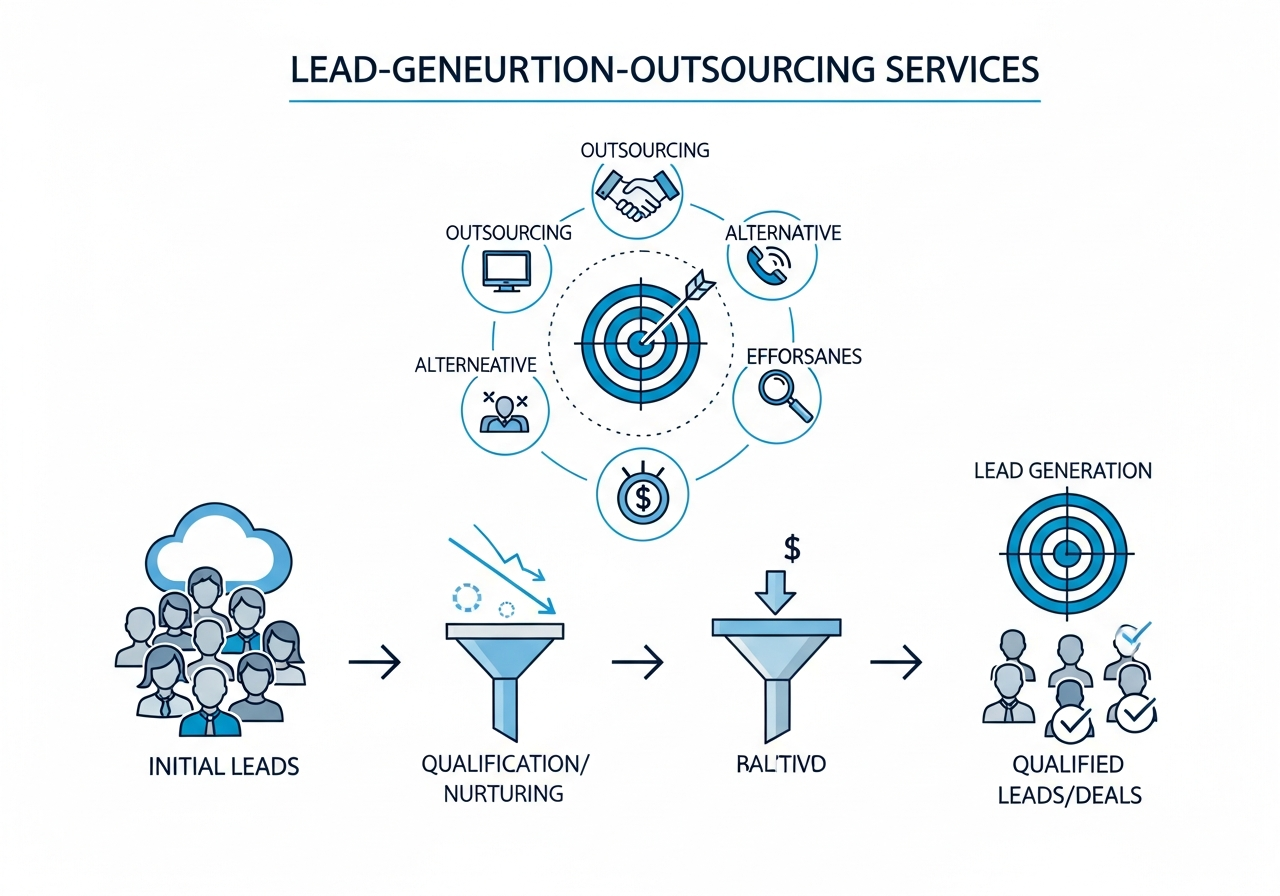
When it comes to sales lead generation outsourcing, the key is finding a partner that combines expertise with cost-effectiveness. Traditional agencies often charge premium rates while delivering inconsistent results, leaving businesses frustrated with their investment. Smart companies are turning to specialized virtual assistant services that offer dedicated lead generation professionals at a fraction of the cost.


Effective sales lead generation outsourcing requires more than just cold calling—it demands strategic prospecting, CRM expertise, and seamless pipeline management. Stealth Agents’ executive virtual assistants bring 10+ years of experience in lead qualification, appointment setting, and follow-up sequences that convert. Unlike generic outsourcing firms, our VAs are trained in industry-specific approaches, whether you’re in insurance, real estate, or SaaS.


The advantage of choosing sales lead generation outsourcing through virtual assistants is the flexibility to scale up or down based on your needs. You get dedicated support without long-term agency contracts or setup fees. Our VAs handle everything from initial prospect research to nurturing leads through your sales funnel, giving you qualified opportunities ready for closing while you focus on high-value strategic activities.


Why an Appointment Setting Virtual Assistant is Your Sales Secret Weapon

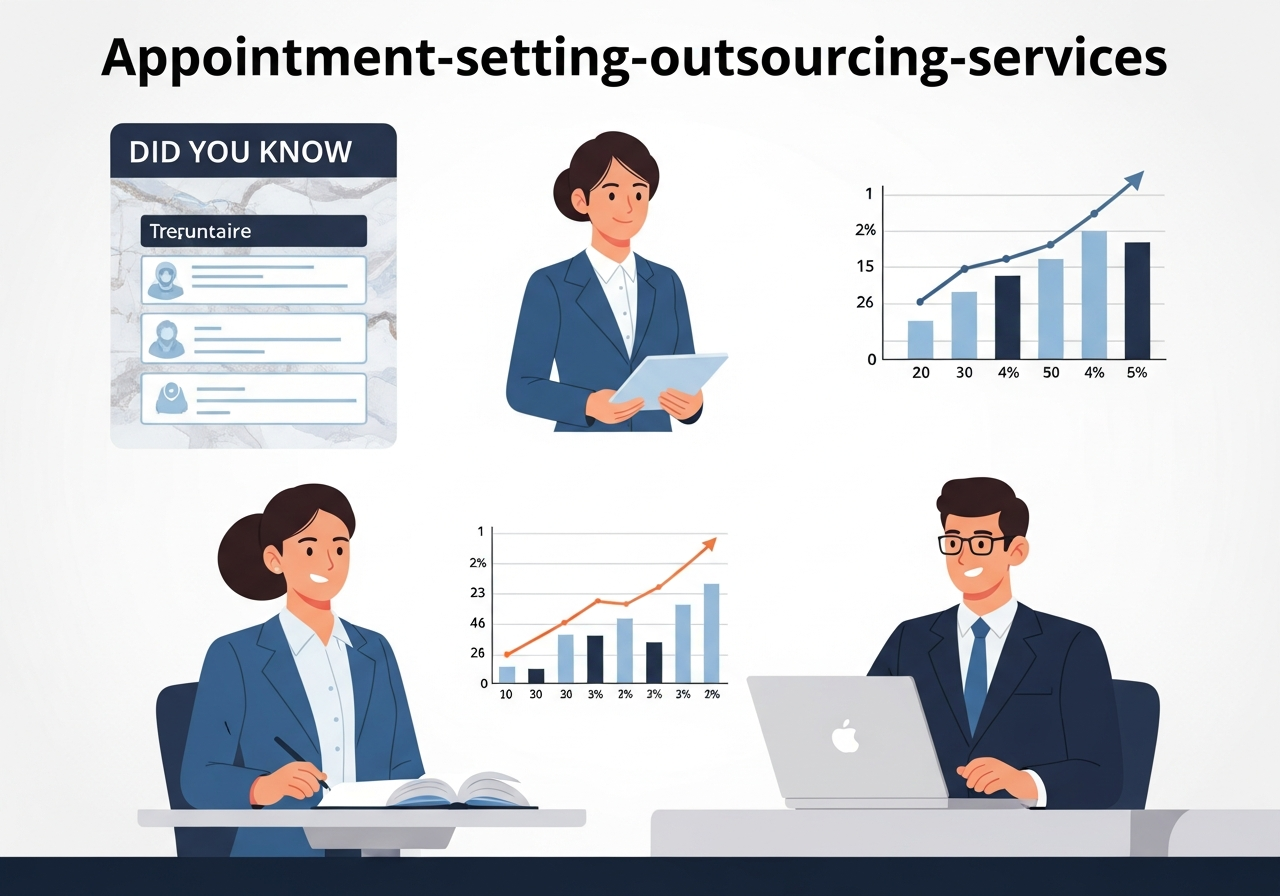
The most successful sales teams understand that appointment setting virtual assistant services can dramatically transform their pipeline efficiency. While your internal team focuses on closing high-value deals, a dedicated appointment setter handles the time-intensive process of qualifying prospects, scheduling meetings, and maintaining consistent follow-up sequences. This strategic division of labor ensures that your top performers spend their time where it matters most—in front of qualified buyers ready to make decisions.


Unlike traditional sales outsourcing models that can feel disconnected from your brand, an appointment setting virtual assistant from Stealth Agents integrates seamlessly into your existing sales process. Our executive-level VAs bring 10+ years of experience in lead qualification, CRM management, and professional communication. They understand the nuances of B2B relationship building and can represent your company with the same professionalism as your in-house team.


The measurable impact is immediate: businesses using a skilled appointment setting virtual assistant typically see a 40% increase in qualified meetings scheduled and a 25% improvement in show-up rates. This happens because dedicated appointment setters develop specialized expertise in prospect research, timing optimization, and objection handling skills that take years to master. With Stealth Agents managing your appointment setting function, you eliminate the overhead of hiring and training while gaining access to proven systems and processes that drive consistent results.


Executive VA Sales Specialization: Premium Support for Complex Sales Processes

When your sales process demands sophistication and precision, standard virtual assistants simply won’t cut it. Executive virtual assistant sales support from Stealth Agents brings 10+ years of specialized experience to handle your most complex B2B sales operations with the expertise of senior sales professionals.


Our Executive VAs excel in high-level sales enablement tasks that directly impact your bottom line. They manage Salesforce pipelines with advanced segmentation strategies, conduct warm outreach calls with polished professionalism, and handle objection responses using proven frameworks that convert prospects into qualified leads. This isn’t basic administrative support—it’s strategic CRM management virtual assistant work that drives revenue growth.


The difference becomes clear when you need an appointment setting virtual assistant who can navigate complex decision-maker hierarchies, qualify C-suite prospects, and coordinate multi-stakeholder sales meetings. Our Executive VAs understand the nuances of enterprise sales cycles, from initial discovery calls to contract negotiations, ensuring every touchpoint reflects your brand’s premium positioning.


With dedicated sales enablement virtual assistant support, you’re not just outsourcing tasks you’re gaining a strategic partner who optimizes your entire sales funnel. From advanced lead scoring and competitive analysis to crafting personalized proposal presentations, Executive VAs handle the sophisticated sales operations that directly correlate with higher close rates and larger deal sizes.


Industry-Specific Sales Support That Drives Real Results

Different industries require specialized sales approaches, and Stealth Agents’ executive virtual assistants bring 10+ years of experience across key verticals. Our insurance sales virtual assistants handle policy renewals, claims follow-ups, and prospect qualification calls, helping agencies maintain consistent client communication while identifying upselling opportunities. They’re trained in insurance CRM systems and compliance requirements, ensuring every interaction meets industry standards.


For real estate sales support, our VAs manage MLS listings, conduct buyer qualification calls, and coordinate property showings. They handle lead nurturing campaigns and follow up with prospects who’ve shown interest in specific properties, allowing agents to focus on high-value negotiations and closings. Our real estate VAs understand market dynamics and can effectively communicate property values and neighborhood benefits to potential buyers.


SaaS sales outsourcing requires technical knowledge and consultative selling skills. Our virtual assistants conduct product demos, manage trial follow-ups, and guide prospects through complex software evaluations. They’re trained to identify pain points and position your solution effectively, shortening sales cycles and improving conversion rates from trial to paid subscriptions.


In the renewable energy sector, solar sales virtual assistants excel at scheduling site assessments, handling permit documentation, and following up on installation timelines. They understand financing options, tax incentives, and technical specifications, enabling them to address customer concerns and move prospects through the lengthy solar sales process. Whether it’s coordinating with installation teams or explaining ROI calculations, our solar VAs keep deals moving toward closure.


Advanced Lead Generation Process: From Cold Prospects to Qualified Opportunities

Our sales lead generation outsourcing approach goes far beyond basic list building. Stealth Agents’ virtual assistants execute comprehensive multi-channel prospecting strategies that systematically fill your pipeline with high-quality leads. Each lead generation virtual assistant is trained in advanced methodologies including LinkedIn outreach sequences, targeted email drip campaigns, and strategic cold calling with proven objection handling scripts.


Your dedicated prospecting virtual assistant leverages premium tools like ZoomInfo, Apollo, and Sales Navigator to conduct deep database research, ensuring every outreach effort targets decision-makers who match your ideal customer profile. This systematic approach eliminates the guesswork from lead qualification and dramatically improves conversion rates throughout your sales funnel.


Our cold calling services combine traditional phone prospecting with modern CRM integration, allowing for seamless lead nurturing across multiple touchpoints. Each interaction is carefully tracked and optimized based on response rates and conversion data. The average Stealth Agents client experiences a 40% increase in qualified leads within the first 60 days, with many seeing pipeline growth that directly translates to closed revenue.


Unlike generic outsourcing firms that rely on volume-based tactics, our virtual sales assistants focus on quality engagement that builds genuine relationships with prospects. This personalized approach ensures higher response rates, shorter sales cycles, and ultimately more closed deals for your investment.


Frequently Asked Questions

What is a sales outsourcing alternative?

A sales outsourcing alternative is a flexible approach to delegating sales tasks without traditional agency constraints. Virtual assistants with specialized sales experience handle lead generation, CRM management, and follow-ups at 30-50% lower costs than full outsourcing. This solution provides dedicated support while maintaining control over your sales process and achieving 63% faster lead response times.

How much can businesses save with sales outsourcing alternatives?

Companies using sales outsourcing alternatives typically save 30-50% on operational costs compared to traditional sales outsourcing or hiring full-time teams. Virtual sales assistants eliminate overhead expenses like benefits, office space, and agency fees while providing specialized expertise in lead generation, pipeline management, and customer follow-up at transparent, flexible rates.

What sales tasks can virtual assistants handle?

Virtual sales assistants can manage lead generation, cold calling, CRM management, pipeline tracking, appointment setting, follow-up communications, and sales data analysis. With 10+ years of experience, they handle everything from initial prospect research to nurturing leads through the sales funnel, allowing business owners to focus on closing high-value deals.

Why do traditional sales outsourcing approaches fail?

Traditional sales outsourcing often fails due to poor pipeline quality, bad data integrity, and overcomplicated processes. Many agencies don’t clearly define quality opportunities, leading to wasted time on long-shot leads. Additionally, lack of standardized processes creates inconsistent results, while bloated agency fees and slow onboarding reduce ROI and control.

How do virtual sales assistants improve lead response times?

Virtual sales assistants improve lead response times by providing dedicated, immediate attention to incoming prospects without the delays of traditional sales teams. Companies report 63% faster lead response times because virtual assistants can focus exclusively on your pipeline, quickly qualifying leads and scheduling follow-ups without competing priorities or bureaucratic delays.

What makes sales outsourcing alternatives more flexible than traditional outsourcing?

Sales outsourcing alternatives offer greater flexibility through transparent pricing, scalable support, and direct control over processes. Unlike rigid agency contracts, virtual assistants adapt to your specific needs, tools, and workflows. You can scale up or down based on demand while maintaining consistent quality and avoiding long-term commitments or hidden fees.

How quickly can businesses implement a sales outsourcing alternative?

Businesses can typically implement a sales outsourcing alternative within 5-10 days. This includes initial consultation, virtual assistant selection and matching, and onboarding to your specific sales processes and tools. The streamlined approach eliminates lengthy agency negotiations and complex integration periods, allowing you to start seeing results almost immediately.

Summarize This Article With AI :

Table of Contents

Receive Virtual Assistants insights delivered weekly
Hire Top 1% Virtual Assistants
Hire 10+ Year Experienced Virtual Assistants
  • Hire Full Time Executive Assistants
  • 160 Working Hours Per Month
  • Includes Fully Dedicated Account Manager
  • Cloud Management + Mobile App
  • Industry Specific To Your Needs
  • Stealth Agent’s 100% Next Best Hire Guarantee
  • All Assistants Have 10+ Years Of Experience
  • 100% Money Back Guarantee If We Don’t Bring You The Next Best Hire In Your Company