
Updated Jul 21, 2026
Outsourced Payroll Processing Services is a practical solution for businesses that want to scale without adding overhead.
Managing employee compensation and related compliance internally is often a time-consuming and error-prone task. Businesses report spending an average of 20 hours monthly on these financial processes, and a concerning 40% incur IRS penalties due to mistakes. Outsourced processing services offer a solution to alleviate these burdens.
Outsourcing payroll processing offers numerous advantages, including compliance, enhanced security, and access to advanced technology. A 2023 Deloitte survey found that 73% of businesses experienced higher efficiency and reduced costs through outsourcing.
Stealth Agents can help you find the perfect outsourced payroll processing service tailored to your needs. Schedule a free discussion today to learn more about our virtual assistant pricing and simplify your employee compensation processes.
How Outsourced Payroll Processing Services Works
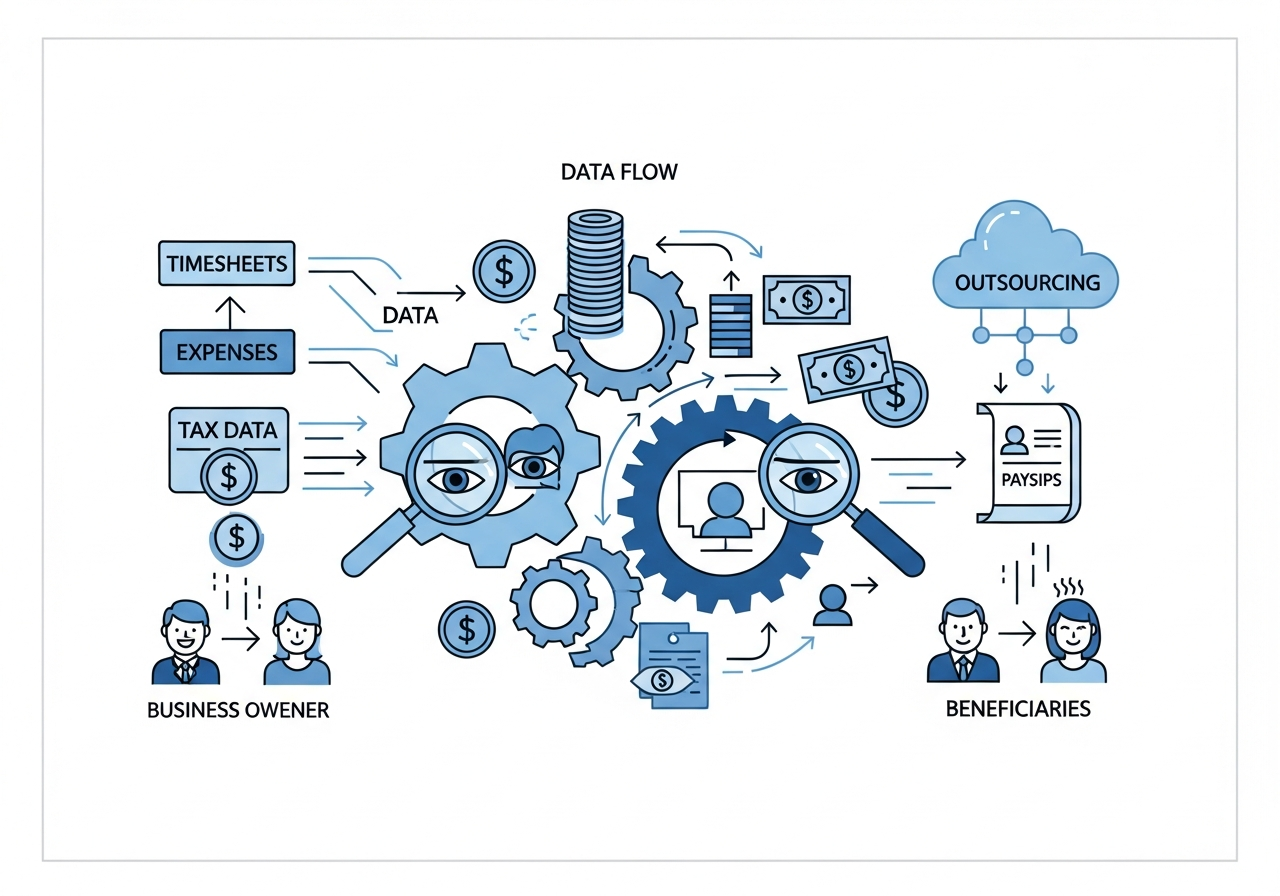
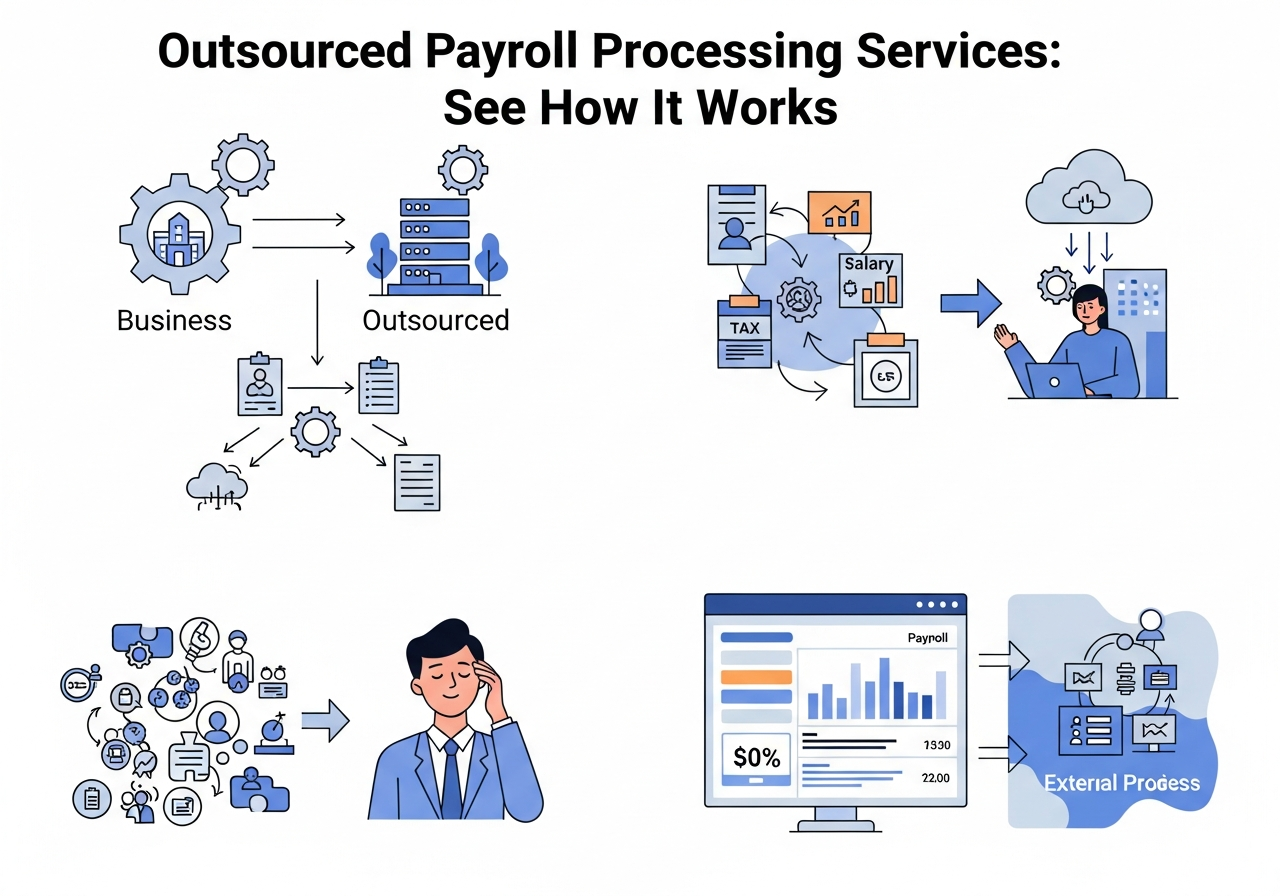
When you partner with an external provider for your company's compensation management, you're essentially enlisting a team of specialists to handle the nitty-gritty details. From crunching the numbers to managing compliance, they take care of it all behind the scenes, a practical example of how construction outsourcing services streamline business operations efficiently.
Accurate Wage Calculation
First, the service securely gathers your team's work hours, overtime, bonuses, and deductions such as taxes or insurance premiums. Advanced platforms, like ADP or Paychex, automate these calculations, guaranteeing accuracy even for complex part-time schedules and fluctuating pay rates.
Processing & Timely Payments
After all calculations, the service initiates payments, via direct deposit, check, or digital wallet, ensuring everyone is paid promptly. For businesses, this avoids last-minute rushes and fosters employee trust, as staff expect their earnings on time.
Compliance Without Headaches
Outsourcing your company's payment processing is about more than just numbers; it's about compliance with local, state, and federal laws. A specialized provider stays current on changing regulations to ensure your business adheres to minimum wage standards, tax filing deadlines, and benefits reporting. This safeguards your company from costly errors and unexpected audits.
Clear Reports and Recordkeeping
Outsourcing these services provides detailed financial summaries and tax reports, making it easier for businesses to budget, spot trends, and plan for growth. Whether you're prepping for tax season or tracking your expansion, these documents offer valuable clarity.
Tax Filing and Year-End Tasks
From calculating withholdings to submitting W-2s and 1099s, payroll outsourcing eliminates the annual scramble and the risk of missing important deadlines. The provider takes over the end-of-year process, ensuring all paperwork is submitted accurately and on time.
Benefits and Deductions Management
Enrolling employees in health plans or retirement programs? Your payroll service will handle the calculations, forms, and ongoing deductions, freeing you up from wrestling with benefits paperwork.
Time and Attendance Tracking
Many services integrate with digital time clocks or apps, logging every shift down to the minute for precise paychecks. This is especially useful for businesses juggling a mix of full-timers, part-timers, and temp staff.
Secure Handling of Sensitive Data
Data security is paramount. Reputable providers encrypt sensitive details, like Social Security numbers and bank info, so your team's information remains protected, no more endless worrying over spreadsheets or internal breaches.
Support for Employee Questions
Outsourcing often includes a helpline or support channel for employee queries about pay, deductions, or benefits, keeping your HR team focused on bigger projects.
Scalable Solutions as You Grow
Whether you're running a boutique with four employees or a tech startup expanding rapidly, outsourced payroll can scale seamlessly. The system grows with you, so pay runs are just as smooth with 100 employees as with 10.
Choose Your Payroll Processing Partner
1. Experience and Expertise
-
Look for partners with a proven track record in payroll processing.
-
Ensure they are knowledgeable about current tax laws and regulations.
-
Experienced partners can anticipate potential issues and proactively address them.
-
Verify the years they have been in the business and their client portfolio.
2. Technology and Security
-
Assess their technological capabilities, including software used for payroll processing.
-
Verify their data security measures to protect sensitive employee information.
-
Advanced technologies can automate complex calculations and reduce errors.
-
Check for compliance with data protection regulations like GDPR or CCPA.
3. Customization and Flexibility
-
Determine if they offer customizable solutions tailored to your business needs.
-
Check their ability to scale services as your business grows.
-
Flexible partners can adapt to seasonal changes in your workforce.
-
Ensure they can integrate seamlessly with your existing systems and processes.
4. Reputation and References
-
Research reviews and testimonials from other businesses.
-
Ask for references and follow up to gauge client satisfaction.
-
A reputable partner will have positive feedback and case studies to share.
-
Look for industry awards or recognitions as indicators of their credibility.
5. Cost and Value
-
Compare pricing structures and ensure there are no hidden fees.
-
Evaluate the overall value provided, including additional reporting and compliance support services.
-
Consider the long-term ROI rather than just the initial cost.
-
Transparent pricing structures help avoid unexpected expenses down the line.
6. Customer Support
-
Ensure they offer robust customer support, including dedicated account managers.
-
Verify their response times and availability for resolving issues.
-
Reliable customer support can significantly reduce downtime and disruptions.
-
Look for 24/7 support options if your business operates across different time zones.
Key Things to Think About When Choosing Payroll Outsourcing
Before picking a payroll partner, it’s important to figure out what your business really needs. Not every service works for every company, so consider these points to find the right fit:
-
Payroll Details and Employee Types: Write down how often you pay employees (weekly, bi-weekly, monthly), the types of workers you have (full-time, part-time, contractors), and any special pay situations (like bonuses or shift pay). The more complex your payroll, the more advanced the service you’ll need.
-
Compliance with Rules: If your business operates in different states or countries, your provider should know the tax laws, wage rules, and reporting requirements for those areas. Ask about their experience with laws like FLSA, ACA, or GDPR.
-
Tech Connections: Think about the tools you already use, like HR software or time-tracking apps. Make sure the payroll service can connect with systems like QuickBooks, Xero, or BambooHR to avoid extra work.
-
Room to Grow: Choose a provider that can handle more employees, new locations, or changes in benefits as your business grows. This will save you from switching providers later.
-
Proven Experience: Look for a provider with a good track record. Check reviews on sites like Trustpilot or G2, and ask for references to see how they perform in real-world situations.
-
Team Input: Get feedback from your team, especially department heads, to make sure the service meets everyone’s needs. This will help make the switch to a new payroll system easier.
Helpful Tools for Picking a Payroll Provider
If you’re not sure where to start, these resources can help you find the right payroll service:
-
Guides and Checklists: Organizations like NAPEO and business websites offer free checklists to compare providers.
-
Reviews and Ratings: Websites like G2, Capterra, and TechRadar have reviews from real users. You can filter results by industry, business size, and features.
-
Webinars and Articles: Platforms like SCORE and the U.S. Small Business Administration provide free webinars and articles with tips for choosing payroll services. They also share red flags to watch for.
-
Ask Your Network: Talk to other business owners in your industry for recommendations. They might know a service that works well for your needs.
Main Challenges of Payroll Outsourcing
While payroll outsourcing brings clear advantages, it's important to also consider the potential challenges before making the leap. Here's what to keep on your radar as you evaluate your options:
Reduced Control
Handing payroll over to an external partner means you're giving up some direct oversight. Some business owners find it hard to make quick adjustments or closely monitor the process, which can introduce uncertainty, especially when fast changes are needed.
Potential for Errors
Even with experts at the helm, mistakes can happen. Whether it's a miscalculated deduction or an incorrect tax filing, the business is ultimately on the hook to fix any errors, which can strain both morale and legal standing. No outsourced partner is immune to a slip-up, so diligent oversight is still required.
Data Security Concerns
Payroll processing involves sharing sensitive data, think Social Security numbers, bank accounts, and salary info. Without rock-solid security protocols (like those required by GDPR or CCPA), you risk exposing employee information to breaches. The fallout from a leak can be damaging for both trust and compliance.
Ongoing Responsibility
Even with a third-party provider managing payroll, your business remains legally responsible for accurate and timely tax payments. Outsourcing doesn't shift liability if forms are filed late or incorrectly; the buck ultimately stops with you.
Cost Considerations
While outsourcing is touted as a cost-saver, fees can add up, particularly for small businesses. Itemized charges for "add-ons", like tax filings or year-end reports, can complicate budgeting and make the overall value less obvious.
Communication Barriers
Coordinating with an external provider, especially one operating in a different time zone, can cause delays when urgent action is needed. Miscommunications can slow down issue resolution and disrupt payroll accuracy.
Dependency on the Vendor
You become reliant on your provider's stability and performance. If they raise prices, deliver lackluster service, or suddenly exit the market, scrambling to switch or adapt can be stressful and disruptive.
Limited Customization
Outsourced payroll solutions often use standardized platforms. If your business has unique requirements, like project-based payments or unusual benefit structures, these "one-size-fits-all" models can lack the needed flexibility.
Employee Confidence
Some employees may be uneasy about sharing their personal details with an outside company or getting assistance from unfamiliar contacts. A sense of distance can affect trust, particularly if payroll issues aren't resolved promptly.
Transition and Onboarding Challenges
Shifting your in-house payroll processes to an external provider isn't always seamless. Data migration, employee training, and adapting to new systems may briefly disrupt operations and frustrate staff.
Hidden Fees and Surprises
Unexpected charges for "extra" services may pop up, from end-of-year filings to special employee queries. Scrutinizing contracts carefully can prevent unpleasant budget surprises down the line.
Loss of Personal Touch
Managing payroll internally often means familiar faces and quicker, more empathetic resolution of issues. Outsourcing can create a sense of disconnect, making employees feel less valued or heard when it comes to pay matters.
Benefits of Outsourcing Payroll Processing Services
** Cost Savings**
Outsourcing to a virtual assistant tax specialist reduces the need for in-house payroll staff, thus lowering labor costs. It also eliminates expenses related to payroll software and updates. Businesses can avoid costly penalties for payroll errors and compliance issues. By outsourcing, companies often access bulk pricing or other discounts that wouldn't be available with in-house processing. Overall, this contributes to a healthier bottom line.
Time Efficiency
It frees up valuable time for business owners and HR personnel to focus on core activities. It automates complex calculations and reduces administrative tasks. It streamlines payroll processes, resulting in quicker payroll cycles. With more time, HR teams can dedicate efforts to strategic planning and employee development. Time efficiency also translates into faster issue resolution and improved service delivery.
** Expertise and Compliance**
Access to payroll experts who stay updated with ever-changing tax laws and regulations. Ensures compliance with federal, state, and local payroll requirements. Reduces the risk of penalties from regulatory bodies such as the IRS. This expertise not only ensures accuracy but also provides peace of mind for business owners. Expert advice can also help with optimizing payroll strategies for better financial outcomes.
** Enhanced Security**
Professional payroll services use advanced security measures to protect data, minimizing the risk of fraud and data breaches. Secure handling of sensitive employee information ensures confidentiality. These services often include regular audits and compliance checks to maintain high-security standards. Enhanced security can also foster trust among employees, who know that their personal information is handled with care.
** Scalability**
Easily adjusts to changes in workforce size without requiring additional resources. Offers scalable solutions that grow with your business. Flexible options to manage seasonal or temporary workforce changes. This adaptability ensures that payroll operations remain smooth during rapid expansion or contraction periods. Scalable solutions can also be cost-efficient, avoiding the expenses associated with overstaffing or understaffing.
** Access to Advanced Technology**
Utilizes cutting-edge payroll software and systems. Provides real-time access to payroll data and reports. Integration with other HR management systems enhances overall efficiency. This technology often includes mobile accessibility and user-friendly interfaces, making it easier for employees to access their information. Advanced analytics from these systems can also offer valuable insights into labor costs and productivity.
** Improved Accuracy**
Reduces errors associated with manual payroll processing. Automated systems ensure precise calculations and timely payments. Consistent accuracy helps maintain employee satisfaction and trust. Accurate payroll processing minimizes employee grievances related to pay discrepancies. It also ensures compliance with statutory obligations, preventing legal complications.
** Focus on Core Business Functions**
It allows businesses to concentrate on strategic goals and growth initiatives, enhances overall productivity by reducing administrative burdens, and enables HR teams to focus on talent management and employee engagement. Focusing on core functions can lead to innovation and competitive advantage in the market. It also helps build a strong organizational culture by prioritizing employee development and well-being.
How Payroll Outsourcing Helps Small Businesses
Outsourcing payroll can be a big help for small businesses by saving time, reducing stress, and avoiding mistakes.
-
Staying on Top of Tax Rules: Payroll providers keep up with changing tax laws, both locally and globally (if needed). This means you don’t have to worry about breaking rules or facing penalties.
-
Saving Time and Money: Instead of spending hours on payroll tasks like calculations and paperwork, you can focus on growing your business and helping customers. Outsourcing takes the load off your team so they can work on more important things.
-
Fewer Errors: With experts handling payroll, mistakes are less likely to happen. Employees get paid on time and correctly, which keeps them happy and builds trust. Plus, accurate payroll reduces the risk of costly compliance issues.
Why Companies Outsource Their Payroll Processing Services?
1. Cost Savings
Outsourcing reduces the need for in-house payroll staff, lowering labor costs and eliminating expenses related to payroll software and updates. Businesses can avoid costly penalties for payroll errors and compliance issues. Additionally, outsourcing often provides access to bulk pricing or discounts unavailable with in-house processing, contributing to a healthier bottom line.
2. Time Efficiency
Handling payroll in-house can be incredibly time-consuming. Outsourcing frees up valuable time for business owners and HR personnel to focus on core activities. Automated processes reduce administrative tasks, streamlining payroll cycles and resulting in quicker payroll operations. This additional time can be allocated to strategic planning and employee development, leading to faster issue resolution and improved service delivery.
3. Expertise and Compliance
Payroll regulations and tax laws are continuously changing. Outsourcing gives businesses access to payroll experts who stay updated with these changes, ensuring compliance with federal, state, and local requirements. This reduces the risk of penalties from regulatory bodies such as the IRS. Expert advice also helps optimize payroll strategies for better financial outcomes and provides peace of mind for business owners.
4. Enhanced Security
Outsourced payroll services use advanced security measures to protect sensitive employee data, minimizing the risk of fraud and data breaches. Secure handling of information ensures confidentiality, and these services often include regular audits and compliance checks to maintain high-security standards. Enhanced security fosters trust among employees, knowing their personal information is safeguarded.
5. Scalability
As businesses grow or experience workforce fluctuations, outsourcing offers scalable solutions that adjust without requiring additional internal resources. This flexibility ensures smooth payroll operations during rapid expansion or contraction and efficiently manages seasonal or temporary workforce changes. Scalable solutions can also be cost-effective, avoiding overstaffing or understaffing expenses.
6. Access to Advanced Technology
Outsourced payroll providers utilize cutting-edge payroll software and systems, offering real-time access to payroll data and reports. These technologies often integrate with other HR management systems, enhancing overall efficiency. Mobile accessibility and user-friendly interfaces make it easier for employees to access information, while advanced analytics provide valuable insights into labor costs and productivity.
7. Improved Accuracy
Manual payroll processing is prone to errors, leading to employee dissatisfaction and legal complications. Outsourced payroll services use automated systems to ensure precise calculations and timely payments, maintaining consistent accuracy. This minimizes employee grievances related to pay discrepancies and ensures compliance with statutory obligations.
However, it's important to note that while outsourcing significantly reduces mistakes, no system is entirely foolproof. Errors can still occur, such as incorrect overtime calculations or misapplied tax rates, which may result in underpaid employees or compliance issues. In these cases, businesses remain responsible for rectifying the mistake, even when it originated with the outsourcing provider. For example, if a restaurant experiences payroll errors that lead to staff receiving less pay than they're owed, the resulting frustration can damage employee morale and trust. That's why it's essential to maintain open communication with your payroll provider and have processes in place for quickly identifying and resolving any discrepancies.
8. Focus on Core Business Functions
By outsourcing payroll, businesses can concentrate on strategic goals and growth initiatives, enhancing overall productivity by reducing administrative burdens. HR teams can focus on talent management and employee engagement, fostering innovation and competitive advantage in the market. Prioritizing core functions also helps build a strong organizational culture by emphasizing employee development and well-being.
How Does Payroll Outsourcing Compare to Employer of Record (EOR) Services?
When deciding between payroll outsourcing and engaging an Employer of Record (EOR), it's important to understand the core differences and which aligns with your business needs.
-
Payroll outsourcing is an excellent option if your primary goal is to manage payroll processes more efficiently while still retaining direct control over your hiring and daily employee management. This approach works best for organizations that have already established their workforce but want to streamline payroll calculations, tax filings, and compliance without investing in additional internal resources. It's a cost-effective way to minimize administrative burdens while ensuring accuracy and up-to-date compliance.
-
Employer of Record (EOR) services, on the other hand, go further than just payroll management. An EOR acts as the legal employer on behalf of your business, making it especially valuable for companies seeking to hire talent in other countries without setting up local legal entities. With an EOR, all aspects, payroll, benefits administration, compliance with local labor laws, and even onboarding, are managed externally. This solution is ideal for businesses expanding internationally or those wanting to reduce the complexities of cross-border employment.
Why Choose Stealth Agents for Outsourced Payroll Processing Services?
Stealth Agents is a top choice for outsourced payroll processing due to its proven expertise, cost-effective solutions, and advanced technology. They ensure compliance with ever-changing tax laws, saving you from potential penalties. By streamlining payroll processes, your team can free up valuable time to focus on strategic goals.
Their services offer significant cost savings by eliminating the need for in-house payroll staff and related expenses. Additionally, Stealth Agents employs advanced security measures to protect sensitive data, provides scalable solutions that adapt to your business needs, and delivers exceptional customer support.
Positive client feedback further underscores their reliability and effectiveness as a trusted payroll partner. Schedule a free discussion today to explore how Stealth Agents can simplify payroll management and boost business efficiency.
Payroll Packages for Every Business Size
No matter how big or small your team is, there’s a payroll package that fits your needs:
For Small Businesses (1-49 Employees):
-
Essential Payroll: Handles the basics like payroll processing, tax calculations, and compliance. It’s a simple and reliable option to make sure paychecks are always correct.
-
Enhanced Payroll: Includes everything in the Essential package, plus extras like hiring tools (e.g., job postings), help with state unemployment insurance, and basic background checks. Great for growing teams.
-
Complete Payroll & HR: Adds basic HR support to the Enhanced package. Perfect for small businesses that want help with both payroll and early HR tasks.
-
HR Pro Payroll & HR: Offers more advanced HR support and employee perks. Ideal for businesses that want to take extra care of their team.
-
**For Mid-Size to Larger Teams (50+ Employees):**Packages for bigger teams include advanced HR tools, custom compliance options, and features for managing employees across multiple locations or handling complex benefits.
Getting Everyone on Board with Payroll Outsourcing
Making sure your team supports the switch to payroll outsourcing is important for a smooth transition. Here’s why:
-
Building Trust: Talking openly with your team about the change helps address concerns early and makes the process easier.
-
Teamwork Reduces Problems: When everyone is on the same page, there’s less resistance, and the handoff to the payroll provider goes more smoothly.
-
Boosting Morale: Asking for input and keeping communication open shows your team that their opinions matter, which helps create a positive work environment.
Help with Unemployment Insurance Claims
Dealing with unemployment insurance claims can be time-consuming, but virtual payroll assistants can handle it for you.
-
They take care of filing claims, managing paperwork, and working with state agencies.
-
This keeps your business compliant and ensures former employees get the help they need.
Comprehensive Payroll & Operations Support
Seamless Payroll & Timekeeping Integration
Effortlessly connect your timekeeping systems, whether it's a mobile app or a classic punch clock, to payroll software, ensuring everyone is paid accurately and on time. Perfect for industries with ever-changing schedules like construction or logistics.
Dedicated Human Payroll & HR Support
No more fielding endless payroll questions. Our assistants take charge, answering employee concerns and saving you time, ideal for busy retail environments or fast-paced startups.
Wage Garnishment Processing
From child support to court-ordered payments, our experts handle garnishments to ensure compliance and minimize paperwork headaches.
Clear Pay Stub Distribution
We generate and deliver detailed pay stubs so your team always knows their earnings, deductions, and taxes, building transparency and trust, just like your favorite local bakery.
Tax Filing & Compliance
Avoid costly mistakes. Our VAs handle tax calculations, filings (like those pesky year-end W-2s), and deadlines, so you can focus on growth instead of government forms.
Direct Deposit Setup
Enable fast, secure direct deposit payments, no more lost checks or bank runs. Whether on the road or in the office, employees get paid quickly.
Employee Benefits Administration
From health insurance to 401(k) deductions, benefit management is streamlined, ensuring your staff receives every perk they deserve without extra hassle on your end.
- Payroll & Financial Reporting
Receive clear, actionable reports on payroll, taxes, and benefits to guide budgeting and strategic decisions, just like leading tech startups do.
New Hire Reporting
Stay compliant by letting our team handle mandatory new hire reporting, making onboarding smooth for everyone from new chefs to seasoned managers.
Custom Solutions for Unique Needs
Whether you're operating across borders or juggling complex workforce requirements, our virtual assistants develop tailored solutions to handle different currencies, locations, and regulations.
Takeaways
Outsourced payroll virtual assistant and processing is a strategic move for businesses looking to streamline payroll management and ensure accuracy.
By outsourcing a virtual assistant, companies can guarantee timely, precise payroll processing, freeing up internal resources to focus on growth and core activities.
This approach enhances operational efficiency and reduces compliance risks and overhead costs. Embrace outsourced payroll processing to optimize payroll operations, maintain a competitive edge, and drive business success.
Invest in this solution to elevate your payroll management and achieve long-term growth.
Frequently Asked Questions
What tasks can I outsource with Outsourced Payroll Processing Services?
Outsourced Payroll Processing Services typically covers administrative work, scheduling, email management, data entry, customer support, research, and specialized tasks depending on your industry. Stealth Agents matches you with assistants experienced in your specific area to maximize ROI from day one.
How much can businesses save with Outsourced Payroll Processing Services?
Businesses typically save 60-80% compared to hiring in-house when using outsourced payroll processing services. You eliminate payroll taxes, benefits, office space, and recruitment costs. Stealth Agents clients report recovering 15-25 hours per week on average, which translates to thousands in recovered productivity monthly.
Why choose Stealth Agents for Outsourced Payroll Processing Services?
Stealth Agents has placed thousands of assistants across industries since 2014. Every assistant is pre-vetted through rigorous skills testing and background screening. You get a dedicated account manager, a satisfaction guarantee, and the flexibility to scale up or replace your assistant if your needs change. Book a discovery call to get matched with your ideal assistant.