

Outsource patent filings to streamline complex paperwork, reduce errors, and easily meet critical deadlines. Stealth Agents provides expert virtual assistants who handle every step of the process—so you can protect your innovations while focusing on growing your business.
Here’s a quick fact: Filing patents can be a time-consuming and complex process, especially for businesses juggling multiple priorities. If you’ve ever felt overwhelmed by the paperwork, deadlines, and legal intricacies, you’re not alone.
Many businesses struggle to keep up, risking missed opportunities and costly mistakes. But there’s a more innovative way to handle it. By outsourcing patent filings to experts like Stealth Agents, you can save time, reduce stress, and focus on growing your business.
Our virtual assistants are trained to handle the nitty-gritty details, ensuring accuracy and efficiency every step of the way. Imagine having a dedicated team to simplify the process, allowing you to stay ahead of the competition. Ready to make patent filing hassle-free?
Book a free consultation now to explore our virtual assistant pricing and see how we can help your business thrive.
What are Patent Filings?
Patent filings refer to applying to a patent office to secure legal protection for an invention.
This process involves documenting the details of the invention, including its functionalities, uniqueness, and potential applications, to demonstrate that it meets the criteria for patentability (e.g., novelty, usefulness, and non-obviousness).
Once a patent is granted, the inventor has exclusive rights to make, use, sell, or license the invention for a specific period (usually 20 years from the filing date).
This protection prevents others from using or profiting from the invention without the inventor’s permission.
Patentors’ insights are crucial for businesses, researchers, and inventors seeking to protect intellectual property and maintain a competitive edge in the marketplace.
In a rapidly evolving innovation landscape, efficiently managing intellectual property (IP) is more crucial than ever.
One major consideration is whether to handle patent drafting in-house or outsource the process to experienced patent professionals.
This choice can shape your IP strategy, cost structure, and ability to safeguard new ideas effectively.
Understanding the pros and cons of each approach can help you make informed decisions that align with your business goals, ensuring your inventions are protected, your resources are optimized, and your competitive edge remains sharp.
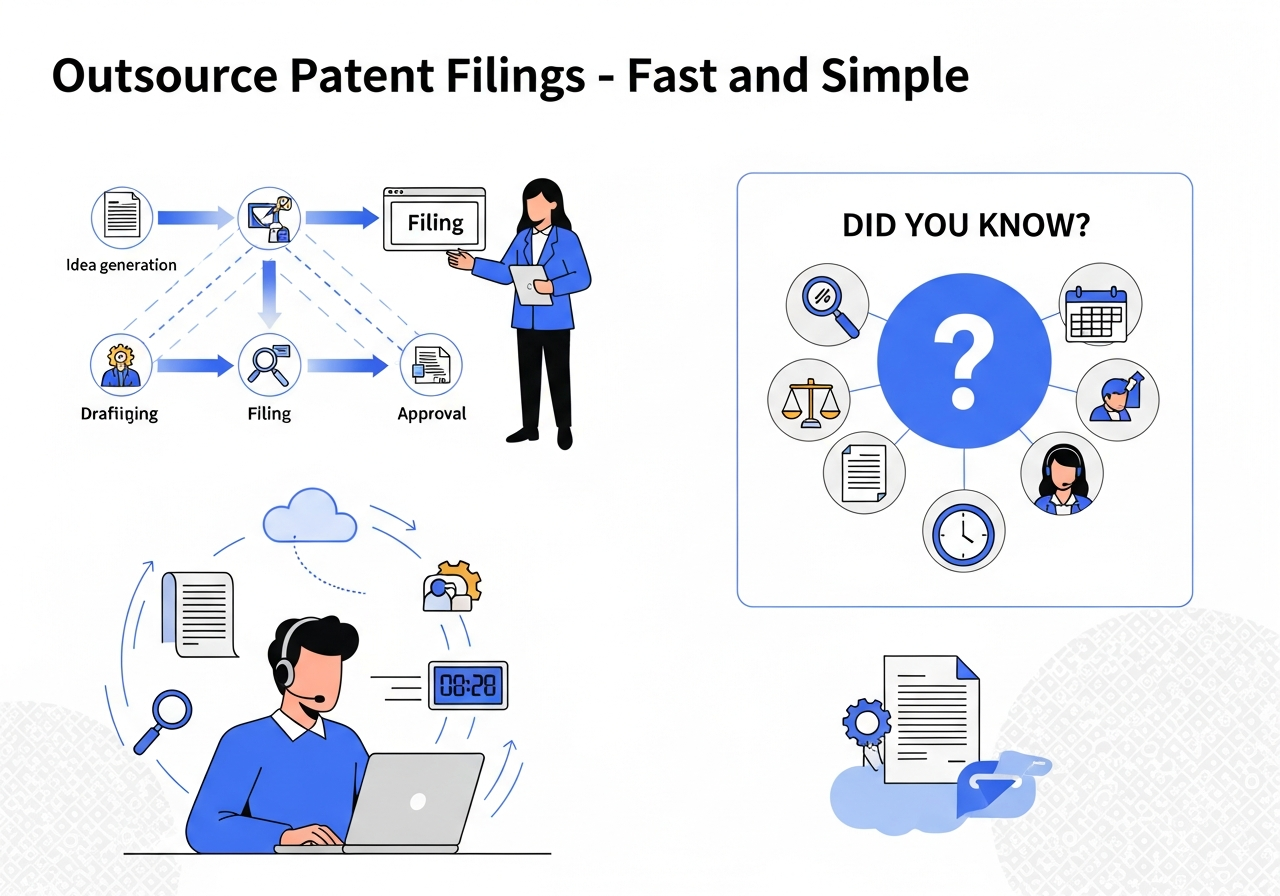
How Do Advances in Technology Influence Patent Outsourcing Decisions?
Today’s landscape is shaped by rapid technological change, and it’s no surprise that innovation is transforming how businesses approach patent drafting and management. One notable shift? The integration of AI-powered patent tools—think platforms like Dolcera, Turbopatent, and LexisNexis PatentOptimizer—which help streamline everything from drafting to prosecution.
These advancements can tip the scales in the classic “in-house versus outsourcing” debate. On one hand, smarter software allows internal teams to handle greater patent workloads with improved accuracy and speed, potentially reducing their reliance on third-party support. An in-house team armed with the right tech can automate repetitive tasks, minimize errors, and keep sensitive IP matters under tight control.
On the other hand, outsourcing partners are leveraging these same tools to deliver faster, more cost-efficient services than ever before. When you outsource to a provider using advanced AI platforms, you benefit from quick turnarounds, reduced errors, and savings that might otherwise be out of reach if you’re building an internal tech stack from scratch.
In a nutshell, the latest technology empowers both sides:
- In-house teams: Handle more with fewer resources, retain control, and respond quickly to evolving business needs.
- Outsourced providers: Offer competitive pricing and deadlines thanks to AI-driven efficiencies.
Ultimately, whether you keep patent tasks in-house or outsource them, the proliferation of smart patent tech means you have more options—and less hassle—than ever before. The key is to weigh your resources, existing expertise, and strategic priorities, then choose the model that delivers both protection and peace of mind as your business grows.
How do you know it’s time to outsource your marketing?
Here are some signs you might recognize:
- Lack of Expertise: If your team struggles to keep up with the latest marketing trends or doesn’t have the specialized skills needed for high-impact campaigns.
- Juggling Freelancers: Managing a patchwork of freelance designers and copywriters is eating up your time—and sanity.
- ROI Confusion: You have a marketing budget but can’t measure where it’s going or what you’re getting back.
- Inconsistent Results: Past experiences with marketing firms overpromised and underdelivered, leaving you wary.
- Industry Disconnect: Previous marketers didn’t “get” your niche or audience.
- Overwhelmed Team: Your in-house team is stretched too thin, barely meeting daily demands.
- No Dedicated Team: Marketing falls to whoever has a spare moment, and there’s no focused plan.
- Difficulty Scaling: You want to grow, but the “how” is a mystery.
- Endless Experimenting: You’ve tried every “shiny new thing” in marketing, but nothing sticks.
- No Strategy: You’re operating without a clear roadmap or plan.
- Time Crunch: Marketing keeps getting pushed to the bottom of the to-do list because there aren’t enough hours in the day.
- Tool Overload: Costly, confusing marketing tools are draining your budget, not your competition.
- Need a Fresh Perspective: Your marketing feels stuck in the past and needs new energy.
- Scalability Issue: You can’t ramp up your efforts fast enough during busy seasons.
How Can Companies Safeguard Sensitive Information When Working with Outsourced Patent Professionals?
Regarding protecting your game-changing inventions, security is just as important as filing accuracy.
Sharing your ideas with external patent experts can open doors, but it’s also natural to worry about confidentiality, especially if your technology gives you a unique edge over competitors.
Here are a few smart steps to lock down your intellectual property while still enjoying the benefits of outsourcing:
- Choose trusted partners: Only work with patent service providers with a strong reputation for security and discretion. Look for firms that serve leading brands or hold certifications in information security.
- Use airtight agreements: Always sign non-disclosure agreements (NDAs) before sharing any invention. Don’t just stop there—clarify data handling terms in writing.
- Insist on security protocols: Ask your provider how they protect sensitive files. Do they use encrypted email or secure portals for document exchange? How do they store and dispose of confidential materials?
- Limit information sharing: Consider adopting a “to-know” approach. Keep the most critical details in-house and outsource only specific tasks (like technical writing or illustrations). This hybrid method is popular among companies with trade secrets or state-of-the-art breakthroughs.
- Stay involved: Regular check-ins and clear communication help keep everyone aligned and accouDon’te. Don’t hesitate to request proof provider’s internal security measures or ask for references.
Key Marketing Trends and Tips for Service Firms in 2025
As 2025 approaches, service firms face a dynamic marketing environment, but a few consistent trends are shaping the future.
1. Embracing AI and Automation
Rapid advancements in artificial intelligence and automation tools, like HubSpot and Salesforce, are changing how service firms manage campaigns and nurture leads. Leveraging these technologies can streamline marketing workflows, personalize client communications, and enhance data-driven decision-making.
2. Content That Builds Trust
Original, authoritative content remains essential for positioning your firm as a leader. Focus on producing in-depth blog posts, white papers, and case studies that address specific client pain points. Video content and interactive webinars also have high engagement. Don’t be afraid to experiment with new formats.
3. Personalization and Account-Based Marketing
Clients now expect more than generic outreach. Tailored messaging through account-based marketing (ABM) strategies helps your brand foster deeper relationships with high-value prospects. Tools like LinkedIn Campaign Manager make targeting and customization easier than ever.
4. Leveraging Social Proof and Reviews
Clients increasingly rely on peer insights before engaging with a new service provider. Encourage satisfied clients to leave reviews on platforms like Clutch, G2, or Google. Case studies featuring real client outcomes build credibility and can be powerful social proof.
5. Staying Ahead of Digital Privacy Changes
With evolving data privacy regulations (think GDPR, CCPA), it is important to stay compliant and transparent in your data practices. By clearly communicating your commitment to privacy and security, you can build trust with your audience.
Pro Tip:
Regularly audit your firm’s web presence to ensure your SEO strategies align with Google’s latest best practices. Do n’ts. Don’t overlook the power of mobile optimization—most research now starts on a smartphone.
By keeping pace with these trends, service firms can elevate their marketing efforts and create lasting connections with their ideal clients.
How Patent Scope Shapes Value and Enforceability
The scope of a patent is critical—it essentially defines how much protection your invention has and how easily you can defend it. Think of patent claims as the borders of your innovation. Draw those borders too tightly, and you leave room for competitors to design around your patent with minor tweaks. Go too broad, and you risk facing pushback or outright rejections from the patent office, not to mention headaches if competitors challenge the patent’s validity in court.
Striking the right balance is key. A well-drafted patent claim offers enough coverage to block rivals while maintaining legal strength if anyone tries to poke holes in it.
This sweet spot strengthens your hand for negotiating licensing deals and can add real market value; after all, a patent that effectively blocks competitors turns your intellectual property into a real business asset.
The scope of a patent shapes its impact on your competitive advantage, potential revenue streams, and the kind of protection it can realistically provide. Getting this right means your innovation stays yours—and your business stays a step ahead.
How Much Does a Patent Service Cost?
The cost for patent services varies widely depending on the type of patent, its complexity, and whether you need legal assistance. Filing fees charged by patent offices, such as the USPTO, typically range from $75 to $640, depending on whether you’re an individual, small business, or larger entity.
Hiring a utility patent law firm or professional help for drafting and prosecuting a patent can cost between $2,000 and $10,000 or more, particularly for highly technical inventions.
Additional expenses like patent search outsourcing often range from $300 to $1,000, ensuring your invention is unique before applying.
Maintenance fees are ongoing costs, starting at $400 and increasing over time to retain your rights. Geographic scope also influences costs, with international filings requiring translations and higher fees of around $3,000 to $5,000.
To get a clear estimate tailored to your needs, consult with patent filing companies or experts in handling your patent paperwork to avoid mistakes and streamline the process. Book a consultation today to safeguard your innovation with precise and hassle-free patent filing assistance!
Why Cost Transparency Matters in Patent Outsourcing
When outsourcing your patent filings, understanding the full scope of costs upfront is crucial. Transparent pricing eliminates surprises later on, helping you plan your budget more effectively and avoiding” those hden fee” headaches that no business owner enjoys.
A reputable outsourcing partner will lay out all charges, from application fees to hourly rates and service add-ons, so you know exactly what to expect at each stage. This clarity builds trust and helps you compare options—you’re making the smartest investment for your intellectual property.
With cost transparency, you can prioritize filings, allocate resources wisely, and prevent overspending, all while staying focused on your core business objectives.
Services You Can Outsource to a Patent Filing Assistant
Outsourcing patent work can save you time, reduce costs, and ensure every detail is handled properly. Here’s a detailed list of services you can outsource to a patent filing assistant, designed to meet your business needs:
1. Patent Search Outsourcing
Patent intelligence and research are pivotal in building a smart IP strategy, especially when you outsource this work to specialists. By lraging patent research outsourcing, you uncover existing patents and potential overlaps , andvyou’lluuncoverwhat your competitors are doing.
A skgainatent filing assistaicompetitors’nactivitiessevitiesse the competitive landscape, and spot gaps or fresh opportunities for innovation. This proactive approach helps you make informed decisions about filing, designing around existing patents, or even identifying markets ripe for expansion.
By outsourcing patent intelligence, you tap into expertise that keeps your business a step ahead—arming you with information that maximizes invention’s potential and minimizes risk. Whether you’re a startup or an established business, staying updated with the latest research ensures your patent strategy always aligns with the market’s pulse.
2. Outsource Patent Drafting
Drafting a patent application requires a deep understanding of technical details and legal requirements, which is why outsourcing patent drafting to experts is a practical solution. A patent filing assistant can create clear, detailed, and legally compliant applications that meet the standards of patent offices. This service is particularly valuable for businesses without in-house legal teams, as it ensures accuracy and reduces the risk of rejections. You’re working with a utility patent law firm or patent filing companies, outsourcing patent drafting simplifies the process and allows you to focus on your core business activities.
3. Outsourcing Patent Prosecution
The patent prosecution process involves responding to office actions, amendments, and other communications with patent offices, which can be time-consuming and complex. By outsourcing patent prosecution to a skilled assistant, you can ensure that all deadlines are met and that your responses are accurate and professional. This service is ideal for businesses looking to outsource IP legal services without compromising quality, as it helps streamline the process and reduces the risk of delays or errors. Hiring IP patent finance experts can also help you effectively manage the cost of patent filings, nsuring your budget stays on track.
4. Outsource Legal Trademark Response
Responding to legal notices or objections related to trademarks can be daunting, but outsourcing legal trademark response services can make it much easier. A patent filing assistant can draft and submit responses that comply with legal requirements, helping you protect your brand without the stress of navigating complex legal language. This service is especially useful for businesses expanding their brand presence, as it ensures timely and accurate handling of trademark issues. Outsourcing legal filings allows you to focus on growing your business while leaving the legal details to the experts.
5. Patent Filing for Manufacturers
Manufacturers often deal with multiple product patents, making the patent filing process even more challenging. A patent filing assistant can manage the entire process, from drafting applications to filing and follow-ups, ensuring your intellectual property is protected at every stage. Patent filing for manufacturers is a specialized service offered by many patent filing companies, designed to meet the unique needs of the manufacturing industry. By outsourcing patent work, you can save time and resources while ensuring your innovations are safeguarded.
6. Outsource Patent Research for Cost Efficiency
Researching patents can be time-consuming and expensive if done in-house, which is why outsourcing patent research is a cost-effective solution. A patent filing assistant can provide detailed research reports that help you understand the patent landscape and identify opportunities for your business. This service particularly benefits startups and small businesses looking to manage patent costs effectively, allowing you to allocate resources more efficiently. Hiring IP and patent experts on demand ensures that your research is thorough and reliable, giving you a competitive edge in the market.
7. Outsourced Phone Answering Service for Patent Queries
Managing client inquiries about patents can be overwhelming, especially for businesses with limited staff, so an outsourced phone answering service can be a game-changer. A patent filing assistant can handle these calls professionally, providing accurate and timely information to your clients. This service enhances your customer service and allows you to focus on other important aspects of your business. By outsourcing marketing solutions like this, you can improve your business reputation and ensure that clients receive the support they need.
8. Patent Paperwork and Filing Management
Filing patents involves a significant amount of paperwork, from forms to legal documents, which can be tedious and prone to errors. A patent filing assistant can manage all the paperwork, ensuring everything is completed accurately and submitted on time. This service reduces the risk of rejections and delays, saving you time and money in the long run. Whether filing for a utility patent or responding to legal notices, outsourcing patent work simplifies the process and ensures that your applications are handled carefully.
How AI Is Revolutionizing Patent Outsourcing
As technology marches forward, AI tools are becoming trusted partners for businesses and law firms looking to streamline patent outsourcing. Think of it as upgrading from a bicycle to a bullet train—with legwork and errors minimized, and efficiency ramped up a notch.
Smarter, Speedier Patent Drafting
Patent outsourcing providers now harness AI-powered platforms like LexisNexis PatentOptimizer and Specifio to help draft and review patent applications faster than ever. These tools analyze prior art, flag inconsistencies, and even auto-generate sections, slashing the hours needed for manual review and revision. The result? Fewer bottlenecks, reduced delays, and a filing process that races ahead of traditional timelines.
Better Accuracy, Fewer Headaches
Let’s face it: Patent paperwork is a detail-driven minefield, and even seasoned pros can miss a comma or legal nuance. AI doesn’t get tired or distracted—it checks and rechecks every line, catching errors before they trip you up. This means greater peace of mind when deadlines loom and, ultimately, fewer rejections or costly amendments from patent offices.
Cost Savings Add Up
The beauty of pairing AI with patent outsourcing is the cost efficiency it unlocks. By automating some of the most tedious and error-prone parts of the process, these platforms help outsourcing partners deliver quality work at a fraction of the price associated with a full in-house team. Businesses, especially startups and firms watching the bottom line, can reap these savings without sacrificing expertise.
Flexibility for Firms of Every Size
Whether you’re a nimble startup or an established manufacturer, AI-driven patent outsourcing can scale with your needs. Firms can adjust to surges or lulls—letting the robots handle the grunt work while you focus on protecting your next big idea.
AI isn’t here to replace human experts, but it’s certainly changing the game for outsourcing patent work, making processes smoother, quicker, and more reliable than ever before.
The Impact of Technology and AI in Patent Outsourcing
Technology has become a game-changer in the world of patent outsourcing, transforming how legal teams and service providers manage intellectual property workflows. The introduction of AI-driven tools, for instance, is streamlining everything from patent drafting to prior art searches, ultimately enhancing both speed and accuracy.
Here’s how tech innovations like AI are making a difference:
- Streamlined Processes: AI-powered platforms assist patent filing assistants by automating routine tasks—such as generating initial drafts and checking for common errors—which means your applications can be completed faster and with fewer mistakes.
- Greater Efficiency: By leveraging machine learning, outsourcing partners can sift through vast databases of prior patents, making research quicker and more thorough. This allows businesses to identify potential obstacles or opportunities at an early stage.
- Cost Savings: With AI handling much of the heavy lifting, outsourcing patent work no longer requires a large team or endless hours of manual labor. This translates to reduced costs, making professional IP management more affordable for businesses of all sizes.
- Enhanced Accuracy: Technological tools catch inconsistencies and compliance issues early in the process, reducing the likelihood of rejections and lengthy revisions.
Whether you’re a startup keen on protecting a new invention or an established manufacturer managing a diverse portfolio, technology in patent outsourcing lets you focus on big-picture strategy while experts and smart tools handle the details. This seamless integration of human expertise and digital precision helps you stay ahead in today’s fast-paced IP landscape.
Why Do In-House Legal Teams and Law Firms Choose to Outsource Patent Work?
Outsourcing partnership isn’t just for manufacturers or tech startups—the practice is common among in-house legal departments and large law firms. But why make thiLet’se? Let’s break it down:
- Adapt to Shifting Workloads
Patent filings tend to ebb and flow. Outsourcing allows teams to adjust on the fly instead of scrambling to hire more staff during peak times or being overstaffed during slow periods. You get the help you need when you need it—no long-term commitments required.
- Tap Into Specialized Expertise
Some inventions require deep knowledge in biotech, AI, or renewable energy. By outsourcing, legal teams can bring on patent experts with the exact technical background needed for those complex cases, whether a CRISPR breakthrough or the latest software algorithm.
- Maximise Budget Efficiency
Keeping a full-time, highly credentialed patent staff on isn, especially with unpredictable patent volumes, isn’t always practical. Outsourcing reduces overhead spending on recruitment, onboarding, and benefits, letting firms save money and direct those resources where they matter most.
What Are the Benefits of Outsourcing Patent Filings?
Filing patents is essential for protecting your intellectual property, but it can often feel like a complicated process. The good news is that filings can solve many of the challenges businesses face.
Outsourcing delivers meaningful benefits, whether you’re navigating legal procedures, managing tight deadlines, or trying to control the rising cost of patent applications. Below, we’ve outlined 7we’vegamseven game-changing ways to help you understand why hiring experts can transform your process. Thisis li Thislains everything you need to know, from reducing stress to improving efficiency. Specialists Without Long-Term Commitment
When you hire IP and patent experts on demand, you get high-level expertise without needing full-time staff. Patent outsourcing allows you to work with professionals experienced in every aspect of intellectual property law. Whether you need assistance with outsourced IP legal services, patent drafting, or legal trademark response, you’ll gain access to tthyoutalent available.
This arrangement offers flexibility, so you pay only for the services you need. With a team of skilled experts handling your patent paperwork, you avoid unnecessary risks. Gaining the knowledge you need without training employees makes outsourcing a smart choice. From patent search outsourcing to outsourcing patent research, this strategy ensures your intellectual property is managed efficiently.
2. Improve Patent Filing Accuracy
Errors in patent filing can lead to rejections, delays, or even loss of intellectual property rights. By working with patent filing companies, patent outsourcing professionals, or a utility patent law firm, you significantly improve accuracy in the process. Experts managing tasks like patent filing for manufacturers or outsourcing patent prosecution use their skills to prepare bulletproof applications.
Every detail is checked to meet rigorous standards, minimizing errors and saving you from costly revisions. Trusting professionals with patent cost management and the technicalities of outsourcing legal filings helps ensure your filing is flawless, reducing stress for your business and helping you protect valuable innovations.
3. Free Up Resources for Other Business Needs
Outsourcing tasks like patent work, marketing solutions, or phone answering services allows your business to focus on core operations. Similarly, outsourcing patent prosecution ensures your team can concentrate on innovation instead of tedious paperwork. Transferring tasks like patent drafting or patent research to experts allows you to leverage tools and networks not commonly available in-house.
This approach helps you maintain a competitive edge while allocating resources effectively. Outsourcing creates balance, allowing your team to focus on operations that directly generate revenue.
4. Reduce Stress and Avoid Legal Complications
The legal process tied to patents can be overwhelming. Outsourcing solutions, such as outsourcing, to experienced professionals, can help handle compliance with government regulations. Mistakes during critical filing phases can be expensive, but experts in patent filing companies or patent search outsourcing ensure everything is in order.
This eliminates the hassle businesses often face when managing patent applications internally. With meticulous handling of patent paperwork and filings, you gain confidence that your intellectual property is fully protected. Outsourcing legal filings and related services helps reduce downtime, minimize stress, and allow your team to focus on what they do best—all while controlling the cost of patents.
5. Handle Large-Scale Projects Effectively
Filing multiple patents simultaneously or managing patent filing for manufacturers often requires significant capacity that not every team has. With patent outsourcing, you can scale operations to meet demand without hiring additional staff.
Professionals offering patent search outsourcing or outsourced patent research have the tools and experience to work efficiently on larger volumes. This flexibility ensures you don’t miss opportunities due to resource constraints. By relying on patedontperts, businesses can meet tight timelines without compromising quality.
Why Choose Stealth Agents for Outsourced Patent Filings?
Choosing Stealth Agents for outsourcing legal filing ensures expert, cost-effective, and timely service.
Our seasoned professionals handle everything from initial searches to maintenance, providing strategic guidance and global reach.
We tailor our services to meet your unique needs, proactively managing risks to enhance your IP protection.
With exceptional customer service, we ensure smooth communication and robust support throughout the patent lifecycle.
Schedule a free discussion today to see how Stealth Agents can efficiently protect your innovations.
Frequently Asked Questions
What does it mean to outsource patent filings?
Outsourcing patent filings means hiring outside experts or assistants to handle the paperwork, legal documents, and steps needed to apply for a patent. This includes tasks like researching existing patents, drafting applications, managing filings, and following up with patent offices. Companies like Stealth Agents offer trained assistants to manage the entire process so you can focus on your business.
How can outsourcing patent filings make the process fast and simple?
Outsourcing speeds up the process by using skilled professionals and tools to handle tasks like research, drafting, and managing deadlines. These experts know the rules and can avoid common mistakes, saving time and effort. It also removes the need for your team to learn the complex steps involved in patent filing.
Why should companies outsource patent filings instead of handling them internally?
Outsourcing saves time, reduces costs, and avoids errors in complicated legal paperwork. In-house teams may not have the expertise or time to handle tight deadlines, which can lead to missed opportunities. By outsourcing, you get access to trained professionals and tools that ensure accuracy and compliance, letting your team focus on innovation.
What are the main benefits of outsourcing patent filings to virtual assistants?
The benefits include saving time, reducing stress, cutting costs compared to hiring full-time staff, and improving accuracy. Virtual assistants are trained to handle deadlines, manage paperwork, and ensure all legal requirements are met. This allows you to focus on growing your business while they take care of the details.
How much does it cost to outsource patent filings compared to doing it in-house?
Outsourcing patent filings usually costs between $2,000-$10,000, plus filing fees of $75-$640 depending on your business size. This is often cheaper than hiring in-house experts, which involves salaries, training, and tools. Outsourcing removes these extra costs while providing professional help and advanced tools for better results.
What specific patent filing services can be outsourced to virtual assistants?
Virtual assistants can handle tasks like patent searches, drafting applications, managing filings, responding to patent office communications, and tracking deadlines. They can also assist with trademark responses, research, and answering patent-related queries, offering full support throughout the process.
How do virtual assistants ensure accuracy when handling outsourced patent filings?
They ensure accuracy through training, using advanced tools to catch errors, and following strict review processes. Virtual assistants also have managers who oversee their work and use systems to check for mistakes, ensuring your application is correct and meets all requirements.
What makes outsourcing patent filings fast compared to traditional methods?
Outsourcing is faster because professionals use tools to automate research and drafting, follow efficient workflows, and focus only on patent tasks. These tools can quickly analyze existing patents, draft sections, and flag issues, cutting down the time needed for manual work.
How can small businesses benefit from outsourcing patent filings?
Small businesses save money by outsourcing instead of hiring full-time staff. They get expert help, faster processing, and fewer errors, which helps protect their ideas without spending too much time or money. This allows them to focus on developing products and growing their business.
What should companies look for when choosing a service to outsource patent filings?
Look for services with experience in patent filings, clear pricing, strong security for your information, and good communication. Check their track record, tools they use, and whether they can handle your industry’s needs. Make sure they offer trained assistants, manage deadlines well, and keep your information confidential.
Takeaways
Outsourcing patent filings can streamline intellectual property processes, reduce costs, and enhance accuracy.
By leveraging specialized expertise, you can ensure timely and efficient management of patent applications.
To further optimize your operations, consider outsourcing a virtual assistant.
A virtual assistant can handle administrative tasks related to patent filings, allowing your team to focus on strategic activities.
Embrace the benefits of outsourcing patent filings and virtual assistance to stay ahead in the competitive field of intellectual property.


