
Managing the complex tasks of mergers and acquisitions can feel overwhelming, especially when deadlines and details start piling up.
Researching potential companies, organizing intricate documentation, and ensuring everything stays on track takes time and energy that many business owners don’t have.
A mergers and acquisitions virtual assistant can transform your workflow. By taking on administrative tasks, they free you to focus on strategy, streamline processes, and help you avoid costly errors.
Businesses that use virtual assistants, like those provided by Stealth Agents, often save significant time and reduce stress throughout the process. If you’re ready to work smarter and simplify your M&A workflows, this service is your next step.
Book a free consultation with Stealth Agents today to explore pricing and find the perfect assistant to meet your goals!
What Are Mergers and Acquisitions?
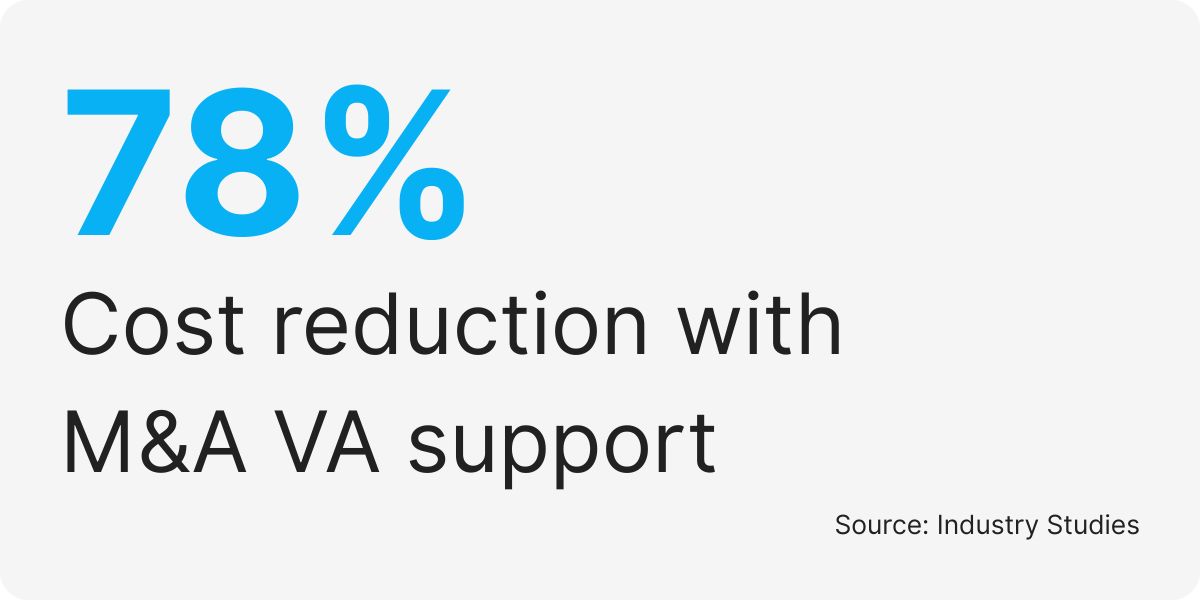
If you’re new to the world of M&A , let’s quickly clear up the basics. Mergers and acquisitions both shake up a company’s structure, but in notably different ways:
- Mergers are when two companies join forces and blend into a single, new organization. Think of it as two teammates choosing to play on the same side, combining strengths and resources for a fresh start.
- Acquisitions happen when one company purchases or absorbs another. In this case, one business takes the reins, and the acquired company becomes part of the buyer’s operation—usually under its management and brand.
Key Phases of the M&A Journey
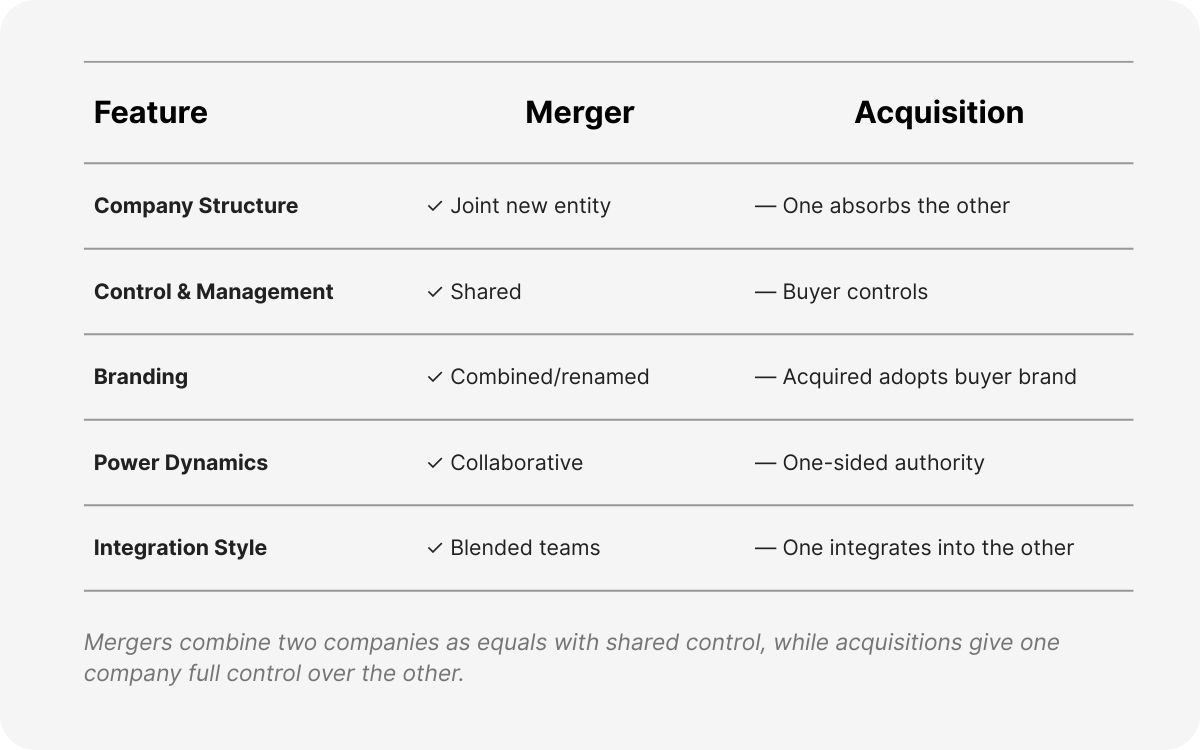
So, what does the path to a successful merger or acquisition really look like? While every deal is unique, most journeys follow a well-trodden roadmap made up of several crucial steps that keep everything organized, transparent, and on track for long-term success.
1. Defining Strategy and Identifying Potential Partners
It all starts with a strategy. Before jumping in, you’ll want to clarify your organization’s goals and outline what you actually hope to achieve—whether it’s expanding into new markets, strengthening your current offerings, or boosting your competitive advantage.
This phase involves a reality check on your business plan to see how a partnership fits into your big-picture vision.
Once the groundwork is set, it’s time to scout for the right partners. Think of this as a mix between matchmaking and detective work—you’ll develop a profile of your ideal target, assess cultural and operational alignment, and then begin reaching out to see who’s interested.
The goal? Narrow the field to a shortlist of best-fit candidates for deeper evaluation.
2. Due Diligence and Planning Integration
With a few serious contenders identified, the due diligence process begins. Here, teams on both sides dig into the financials, operations, and legal affairs—making sure there aren’t any surprises hiding under the hood.
During this deep dive, all parties outline the details of how the combined organization could function, from leadership structures to resource allocation.
This phase also includes building an actionable integration plan. That means creating timelines, assigning responsibilities, and forecasting how to blend people, systems, and cultures for a seamless transition.
3. Implementation and Optimization
After the ink is dry, the real work begins: bringing two organizations together smoothly.
This phase covers everything from rolling out new processes and systems to managing change among employees.
It’s a hands-on process, involving regular check-ins, troubleshooting challenges, and fine-tuning the approach to capture promised synergies like cost savings or new capabilities.
As the new organization takes shape, there’s ongoing analysis to make sure the initial goals are being met.
Continuous optimization helps teams adapt, keeping a close eye on the market to ensure the partnership is delivering real value—just like when Disney integrated Marvel to supercharge its content portfolio and market reach.
Whether you’re eyeing your first acquisition or preparing for a major merger, moving through these phases with a clear game plan can make the complex feel a whole lot more manageable.
What Deliverables Should You Expect During the M&A Process?
Now that you have a sense of how mergers and acquisitions work, let’s break down the most important deliverables you can expect at each major stage.
Whether you’re eyeing a market-shifting merger or preparing to acquire a niche competitor, each phase comes with its own checklist of must-haves.
1. Strategic Assessment & Alignment
Before anything else, your team needs to get crystal clear on why you’re considering a merger or acquisition.
At this stage, you’ll typically pull together:
- A detailed strategy report or presentation—outlining the objectives, anticipated synergies, and alignment with your company’s long-term vision
- Documentation ready for leadership or board review to secure buy-in from key stakeholders
2. Identifying and Approaching Potential Partners
Once your strategy is set, it’s time to scout for ideal matches—companies that will truly complement your goals.
Expect to prepare:
- A polished prospectus or pitch deck to share with prospects, highlighting the value of working together
- A shortlist of viable partners, complete with research-backed rationale
- Early-stage plans for how collaboration or integration could happen if the match is successful
3. Due Diligence and Planning for Integration
Here’s where your homework gets serious.
Due diligence is all about laying everything on the table—financials, operations, culture, and risks.
Deliverables at this step include:
- Comprehensive due diligence reports detailing findings, red flags, and recommendations
- A go/no-go recommendation based on evidence—not just gut feeling
- A draft integration plan with clear timelines, responsibilities, and priorities, so everyone knows what success looks like if you move forward
Key Factors to Consider Before Pursuing M&A or Collaboration
Before diving into an M&A or exploring alternative forms of collaboration, it’s crucial to size up a few essential factors.
Not every deal—or partnership—fits every business, so keeping your eyes open to potential pitfalls and opportunities can make all the difference.
Here’s what smart organizations look at:
- Strategic Fit: Does the other company align with your long-term goals? For instance, will joining forces help you break into new markets, boost your portfolio (like Disney snapping up Marvel), or deliver operational synergies?
- Thorough Market Research: Before shaking hands, dig deep into market trends, competitive positioning, and customer bases. Solid research can reveal both golden opportunities and hidden red flags.
- Risk and Reward Balance: Weigh the potential upsides—greater market share, cost savings, access to talent—against common risks such as integration challenges, culture clashes, or financial exposure.
- Cultural Compatibility: It’s not just about numbers—successful mergers and collaborations hinge on how well the teams mesh. Think of it like blending two company cultures; what works at Google might not fly at a small creative agency.
- Integration Planning: Consider how you’ll unite operations, technology, and people after the deal closes. A thoughtful integration plan helps avoid disruption and ensures a smoother transition.
Exploring Alternative Partnership Models
Mergers and acquisitions aren’t the only paths available when businesses seek to join forces or enhance resilience—especially during turbulent times.
In fact, several collaborative models exist that can deliver strategic benefits without the complexity of full integration.
Here are a few options to consider:
- Joint Ventures: Two or more companies can come together to launch a new business entity, pooling resources, expertise, or technologies for a shared goal. For instance, Sony Ericsson was a joint venture combining Sony’s electronics know-how with Ericsson’s telecommunications expertise.
- Strategic Alliances: Organizations may enter formal partnerships to achieve common objectives without combining operations. These alliances often revolve around sharing technologies, marketing efforts, or distribution channels. Think about how Starbucks partnered with Nestlé to expand into global grocery aisles.
- Licensing Agreements: A company may grant another the rights to produce or sell its products—in return for royalties or fees—expanding reach without heavy overhead or organizational change.
- Consortiums: Multiple businesses can unite under a temporary arrangement to work on large-scale projects or pool research and development resources, especially in industries such as construction or tech.
- Franchising: Businesses may opt to expand through franchising, sharing their brand, processes, and business model with independent operators.
Why Mergers and Acquisitions Matter
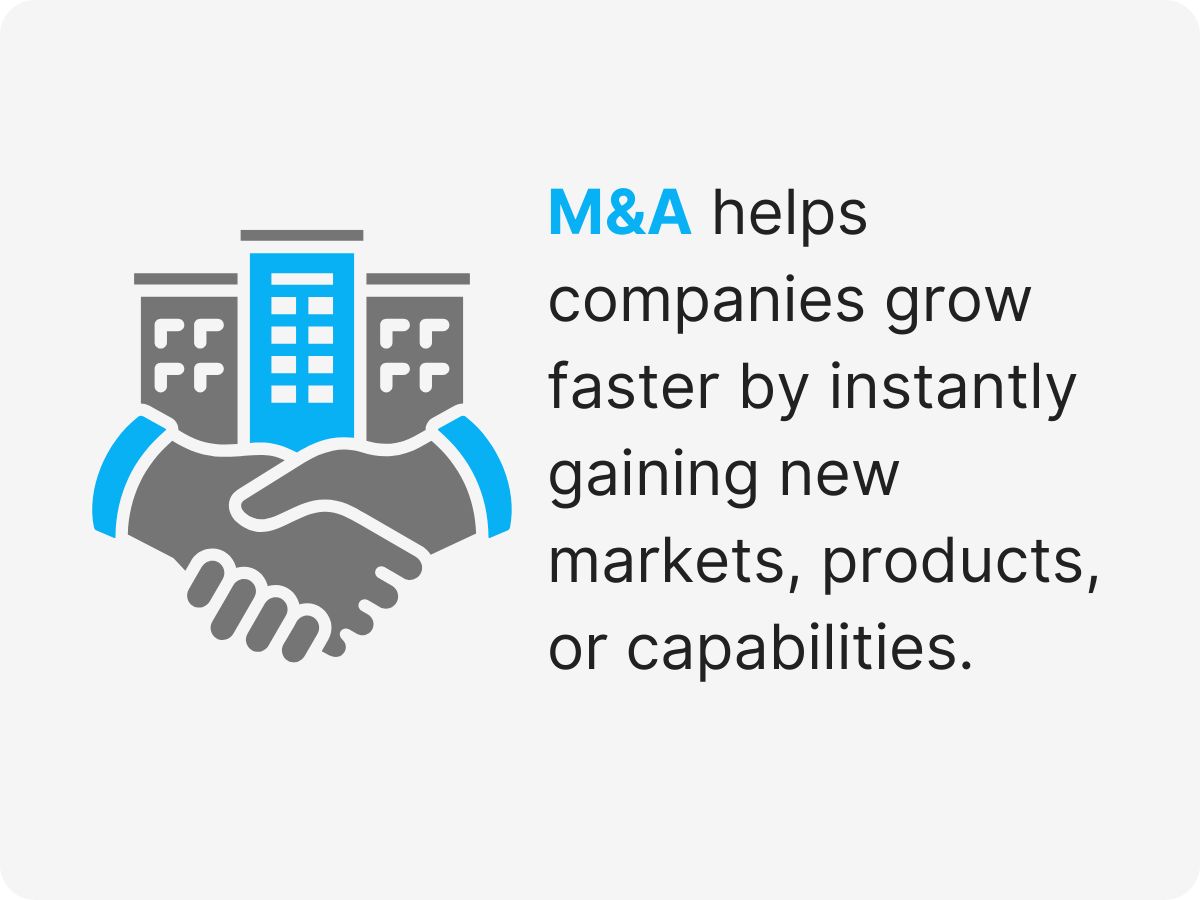
So, why all the fuss around mergers and acquisitions? Simply put, they’re powerful tools that help companies grow, survive, and stay ahead of the competition.
Instead of starting from scratch, businesses can join forces to instantly access new markets, add innovative products to their lineup, or streamline existing operations.
For example, when Facebook acquired Instagram, it wasn’t just buying a photo app—it was eliminating a rising competitor and tapping into a massive, engaged audience. Likewise, when Disney picked up Marvel, it brought a trove of beloved characters under one roof, fueling blockbuster hits for years.
In a constantly shifting marketplace, these kinds of deals are often the quickest route to boost market share, spur innovation, and increase overall value. In short, mergers and acquisitions can be game-changers, allowing companies to adapt quickly and seize fresh opportunities that solo efforts might otherwise miss.
Executive Leadership and Operational Analysis: Cornerstones of M&A Success
When it comes to merging two companies—or acquiring one—it isn’t just about flashy headlines or big numbers. Behind the scenes, a lot rides on two unsung heroes: operational analysis and building a united executive leadership team.
Operational analysis is your navigation system. By carefully examining the combined operations, companies can spot overlapping functions, identify areas to streamline, and harness economies of scale.
This means you can trim unnecessary costs, boost efficiency, and make sure resources are being used where they’ll drive the most impact.
Meanwhile, crafting a strong executive leadership team is like assembling the ultimate all-star roster.
Uniting experienced leaders from both organizations helps ensure a shared vision, cohesive strategy, and swift decision-making. It also smooths out cultural bumps and ensures everyone is rowing in the same direction.
Together, these efforts lay the groundwork for a smoother transition, minimize disruptions, and set the stage for long-term growth. In successful M&A deals, operational clarity and a harmonious leadership team make all the difference between just surviving and truly thriving in the post-deal world.
Strategies to Optimize Economies of Scale and Organizational Structure
When two companies come together, making the most of your new size is key.
But how do you actually unlock those promised efficiencies and build an organization ready for growth?
Here are some practical strategies to ensure the newly merged company thrives:
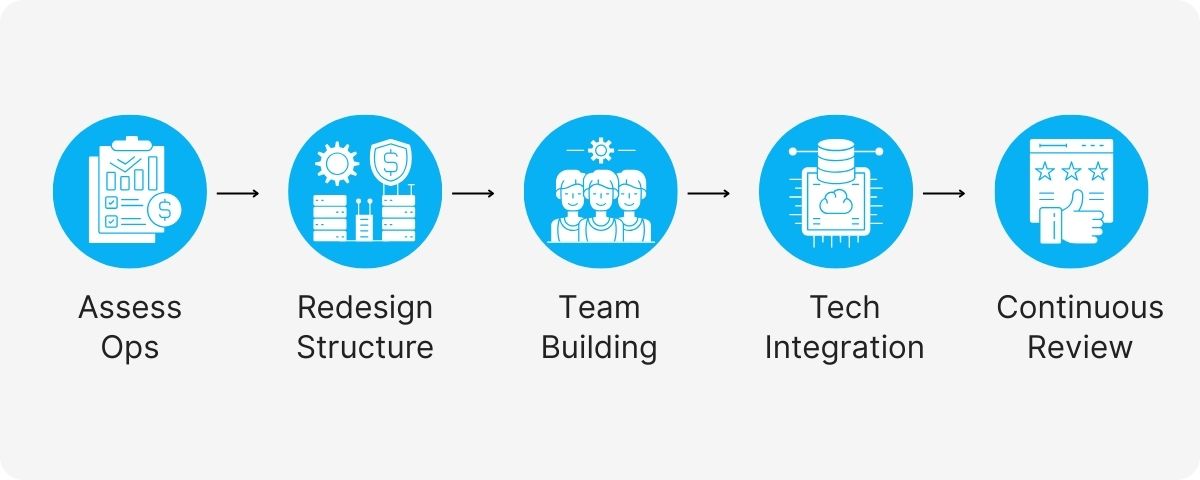
- Assess and Align Core Operations: Start by reviewing existing workflows, resources, and supply chains across both businesses. Look for overlaps in departments, technology platforms, or vendor contracts. By consolidating similar functions and renegotiating with suppliers, you can minimize redundancies and benefit from bulk purchasing power, much like how Walmart leverages its scale.
- Redesign the Organizational Structure: To avoid confusion and turf wars, create a clear structure that defines roles, reporting lines, and decision-making authority. Consider adopting a flatter hierarchy or matrix-style organization to encourage collaboration and agility. Bringing together the best leaders from both sides—think Disney and Marvel’s integration—sets the stage for innovation and unified direction.
- Invest in Team Building: Cultural integration often makes or breaks a merger. Host workshops, team-building events, or leadership retreats to foster relationships and align everyone with the new company’s vision. Align company values and communication styles to ensure everyone—whether they started with your team or joined through the merger—feels like they’re on the same page.
- Leverage Technology: Unify IT systems and digital tools to create smoother workflows and improve access to data. Move toward one CRM or project management platform rather than juggling multiple legacy systems, just like Salesforce did post-acquisition sprees.
- Monitor and Optimize Continuously: The first org chart shouldn’t be the last. Regularly gather feedback, track key performance indicators, and be ready to pivot. Successful companies like Procter & Gamble are known for constantly optimizing their structure to stay ahead.
Benefits of Outsourcing M&A Tasks
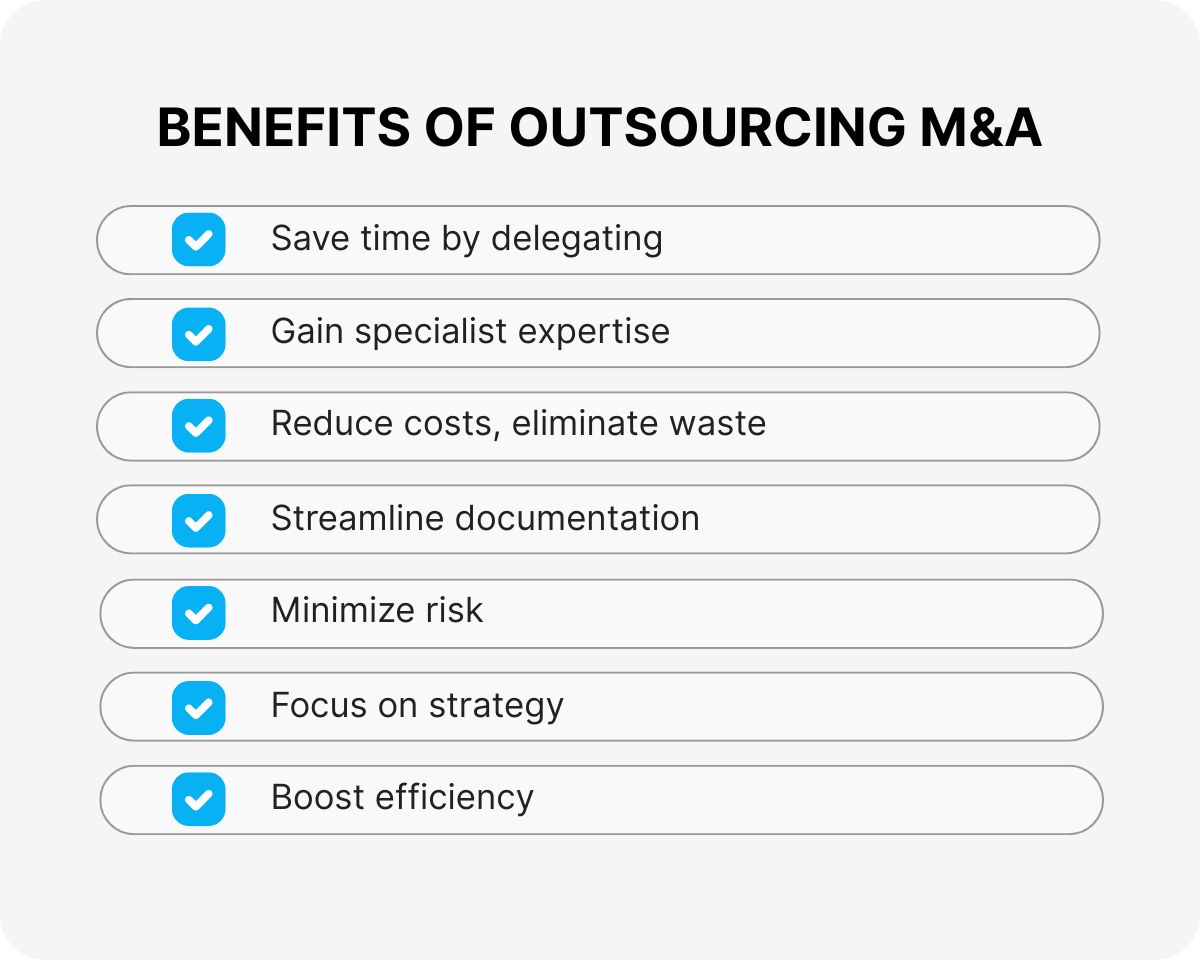
Managing mergers and acquisitions (M&A) tasks can be daunting, especially when you’re juggling dozens of responsibilities.
Outsourcing these tasks, including talent recruitment solutions, isn’t just a way to lighten the load—it’s a smart strategy to ensure everything runs smoothly, efficiently, and with expertise.
Here are the key benefits of outsourcing M&A tasks and how it can help your business thrive.
1. Save Time by Delegating Complex Work
Outsourcing M&A tasks to a professional, like a merger and acquisition specialist or an M&A specialist, gives you more time to focus on decision-making. Rather than being buried in research, tedious paperwork, and managing logistics, you can spend your energy on growing your business. Professionals such as merger and acquisition consultants or corporate merger specialists handle technical details with accuracy and speed, which eliminates unnecessary delays.
Time is money, especially during mergers, where timing can impact the success of your acquisition. By delegating, you prevent burnout while ensuring deadlines are consistently met. Delegation to experts ensures the process stays organized and seamless, allowing you to operate more strategically.
Outsourcing allows you to achieve more by freeing yourself from the burden of countless small tasks.
2. Gain Access to Specialist Expertise
M&A projects require people who know the industry inside out, like mergers and acquisitions specialists or acquisition specialists for real estate. These professionals bring specialized knowledge and years of experience that many in-house teams may lack.
Using the expertise of a real estate acquisition specialist or an acquisitions specialist ensures compliance with legal rules, financial regulations, and valuation standards.
Specialists identify opportunities, reduce risks, and help secure better deals by leveraging market insights and data. They also catch potential red flags before they delay or derail the process.
This expertise provides confidence that every decision is informed and every step is handled correctly.
With experts onboard, you gain a competitive advantage in meeting your business goals efficiently.
3. Reduce Costs and Eliminate Wasteful Spending
While hiring in-house staff for M&A may seem ideal, it can be much costlier than outsourcing to a qualified client acquisition specialist or customer acquisition specialist.
Outsourcing eliminates the expense of salaries, benefits, and ongoing training for an internal team. Specialists charge based on services, meaning you only pay for what you need, reducing financial waste.
They handle operations efficiently, helping avoid costly errors or delays that can arise from inexperienced handling of complex M&A processes. Additionally, outsourcing opens access to tools and technology without extra investment, as providers often come equipped with software and systems.
When aligned with your budget, these services deliver exceptional value without straining company finances.
Lower costs coupled with higher expertise make outsourcing a financially sound choice.
4. Streamline Documentation and Organization
Managing documents is one of the most time-consuming aspects of any corporate merger or real estate acquisition.
When you outsource to experts, such as property acquisition specialists, they handle everything from keeping files in order to preparing reports. These professionals ensure that contracts, agreements, and key details are filed correctly, preventing headaches from missing or outdated paperwork.
Proper documentation enhances transparency between stakeholders and keeps everyone informed throughout the process. Specialists also use technology to organize files digitally and make them accessible whenever needed.
With everything handled seamlessly, your business runs smoother, saving you both time and effort. By outsourcing this task, you eliminate stress and maintain control while professionals ensure your documents are secure and accurate.
5. Minimize Risk with Expert Oversight
Mergers and acquisitions come with risks, but outsourcing to merger and acquisition consultants minimizes the chances of costly mistakes.
Experienced acquisition specialists know how to evaluate targets properly and find the best opportunities for growth. They assess financial health, legal obligations, and any hidden issues that could impact your success. By identifying pitfalls early, specialists protect you from unnecessary setbacks or liabilities.
Their objective perspective brings clarity and confidence to what would otherwise be an overwhelming process. Trusting professionals reduces exposure to risk while ensuring every aspect of the deal is thoroughly reviewed.
Your business becomes stronger and less vulnerable when you rely on experts who have managed these challenges before.
6. Focus on Strategy and Big-Picture Decisions
When repetitive tasks like research and scheduling are outsourced to an outsourcing customer acquisition firm or an outsourced executive assistant, you free up time to focus on critical decisions.
Instead of being distracted by small details, you can plan strategies that will grow your business in the long term.
Assistants ensure meetings are scheduled, timelines are met, and communication is streamlined, keeping you on track. Removing administrative stress allows you to fully concentrate on decisions that require your personal insight as a business leader.
Having extra time to analyze opportunities or develop partnerships gives your company a strategic edge. Outsourcing lets you stay focused while experts manage the groundwork.
7. Boost Efficiency with Experienced Teams
Working with an external team, such as a trusted acquisition specialist or a real estate or mergers and acquisitions specialist, means completing tasks faster and more efficiently.
These professionals have refined workflows for managing M&A tasks, making processes smoother and eliminating delays. Their expertise allows them to anticipate potential challenges and solve issues proactively.
With specialists tackling hurdles, your projects naturally move forward with fewer disruptions. Efficient handling also builds confidence among stakeholders and strengthens relationships, which is crucial during mergers.
The result is a faster, stress-free overall experience that keeps your business operating at full speed. Whether it’s data analysis, negotiations, or compliance, outsourcing improves every aspect of efficiency.
8. Access Scalable Support That Grows with You
No matter how large or small your merger or acquisition goals are, outsourcing offers flexible support through teams like those at Stealth Agents or an outsourcing customer acquisition firm.
Outsourced specialists scale their services to fit your project’s unique needs, whether it’s a simple acquisition or a complex international deal. This flexibility helps you control costs while receiving targeted support exactly when needed. If your demands increase, professionals can easily adapt to provide more resources or expertise.
From client acquisition specialists to M&A specialists, businesses have access to a range of skills under one roof.
By choosing outsourcing, you won’t outgrow your team’s capacity, ensuring consistent results for years to come.
Essential Skills for Mergers and Acquisitions Specialists
Excelling as a mergers and acquisitions (M&A) specialist takes more than just an interest in business deals. To navigate each stage successfully, these professionals draw on a toolkit of specialized skills:
- Financial Expertise: An M&A specialist must be able to dig deep into financial statements, assess company valuations, and understand the economic impact of each deal. Spotting risks and opportunities in the numbers is second nature to them.
- Market Insight: Keeping a finger on the pulse of evolving market trends, industry shifts, and competitor movements helps guide smart decision-making throughout the process.
- Negotiation Savvy: The art of negotiation is critical—these specialists advocate for their client’s interests, secure the best possible terms, and resolve sticking points without derailing the deal.
- Legal and Compliance Knowledge: Familiarity with relevant laws, regulations, and tax considerations ensures every aspect of the transaction aligns with local and international standards. Teaming up with legal and tax advisors is all in a day’s work.
- Communication and Coordination: Acting as the glue between buyers, sellers, legal teams, and tax professionals, they keep everyone on the same page—clarifying details, ironing out miscommunications, and pushing the process forward.
Developing and Implementing a Detailed Integration Plan
Creating a successful merger doesn’t stop once a deal is signed; the real work begins as organizations blend their operations, teams, and cultures. Here’s how M&A specialists approach this critical phase:
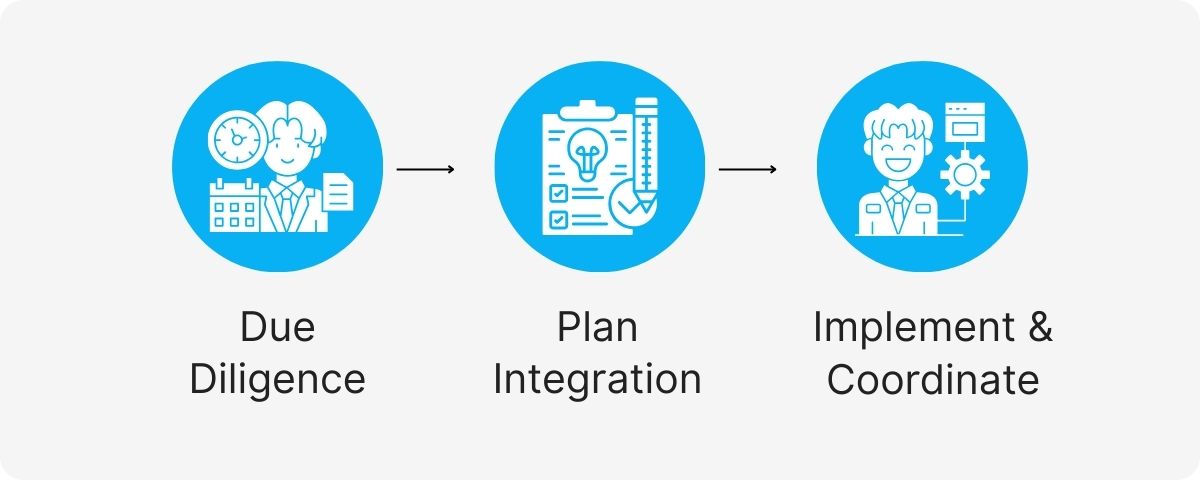
Step 1: Structured Due Diligence
The process often kicks off with a comprehensive review of the chosen partner. Specialists dig into financial records, operational workflows, and company culture to uncover any hidden risks or synergies.
They compile findings and offer clear, data-driven recommendations on whether to move forward with the merger.
Step 2: Collaborative Integration Planning
Once both parties agree to proceed, M&A professionals work closely with stakeholders from both organizations to develop a tailored integration plan.
This plan outlines priorities, assigns responsibilities, and sets realistic timeframes for each step—be it blending IT systems, unifying HR practices, or consolidating financial reporting.
Step 3: Implementation and Ongoing Coordination
With the plan in place, specialists facilitate the rollout—coordinating regular progress updates, troubleshooting unexpected issues, and adjusting strategies as necessary.
This steady hand ensures both teams stay aligned and any roadblocks are resolved quickly, keeping the integration on course and reducing the chance for miscommunication or delays.
By combining rigorous due diligence with a thoughtfully crafted integration plan and strong project management, M&A specialists guide organizations through a complex process—laying the foundation for a unified, high-performing company.
How M&A Specialists Make a Difference
Let’s bring the expertise of M&A specialists to life with real-world scenarios:
- Technology Industry: Picture a rising tech startup catching the eye of a Fortune 500 powerhouse—think Salesforce acquiring Slack. The M&A specialist steps in to evaluate the startup’s worth, negotiate terms, and ensure everything aligns with the larger company’s strategy. Their holistic approach ensures a seamless handover and sets the stage for successful collaboration and future innovation.
- Healthcare Expansion: When a major healthcare provider wanted to strengthen its pharmaceutical division, it brought in M&A experts to manage the process. These specialists performed thorough due diligence, uncovering potential regulatory hurdles and financial risks long before they could become roadblocks. Their foresight empowered the company to handle challenges proactively, leading to a smooth expansion and minimizing risk.
- Speed and Precision: Timing is everything in M&A, especially in fast-moving sectors like tech and finance. For example, when Disney acquired Marvel, their M&A team worked swiftly to identify and address possible integration issues before they could stall the project. By staying ahead of the curve, these specialists kept the merger on track and preserved momentum—crucial for capitalizing on new opportunities.
Types of Tasks Can M&A Virtual Assistants Manage
Outsourcing tasks to a mergers and acquisitions (M&A) virtual assistant is a game-changing solution for many businesses.
From managing mundane administrative work to handling specific M&A processes, these professionals can free up your time and keep you focused on big-picture goals.
Here’s a detailed look at the types of tasks an M&A virtual assistant can manage to keep your projects running smoothly.
1. Researching Potential Acquisition Targets
An M&A virtual assistant can help you research and identify potential companies for mergers or acquisitions. They dig deep into industries, markets, and financial reports to provide you with a clear list of options that align with your business goals.
This eliminates the need for you to comb through endless data to find the right companies. Hiring specialists, like an M&A specialist or a client acquisition specialist, ensures thorough research and detailed prospects.
But it doesn’t stop at just basic research. A skilled virtual assistant can:
- Develop a detailed description of your ideal acquisition: This includes outlining your organization’s structure, key roles, operational and strategic plans, your timeline, and unique selling points (USP). Think of it as building a compelling prospectus—something you can confidently share with potential partners.
- Identify and prioritize potential partners: By creating a decision-making framework, they help you determine which candidates best fit your strategic objectives.
- Facilitate introductions and discussions: No more chasing down elusive contacts or juggling calendars; your assistant can handle outreach, set up initial conversations, and smooth the path for meaningful dialogue.
- Manage the selection and invitation process: From narrowing down the shortlist to inviting chosen partners to take the next step, every detail is tracked and managed.
- Coordinate deliverables: You’ll get a curated list of partner(s) to proceed with, a detailed due diligence plan (with specific timeframes and assignments), and even an initial integration roadmap.
2. Organizing and Managing Due Diligence
A mergers and acquisitions process involves significant due diligence, and keeping everything in order can feel overwhelming. An M&A virtual assistant manages all aspects of due diligence, from gathering documents to maintaining compliance checks.
Whether you’re working with a corporate merger specialist or a merger and acquisition specialist, they’ll ensure every critical document is verified and accessible.
They coordinate between teams, track timelines, and ensure nothing is overlooked during this crucial phase. With a professional taking care of the details, you can focus on evaluating the findings instead of worrying about disorganized paperwork.
This type of support is a lifesaver for business owners tackling complex acquisitions. Not only does it reduce stress, but it also minimizes delays that could jeopardize a deal.
Keeping the M&A Process on Track
A virtual assistant’s role doesn’t stop at just wrangling paperwork. They actively facilitate the entire due diligence process—organizing meetings, tracking outstanding items, and communicating updates to all stakeholders.
You’ll get a comprehensive due diligence report and clear recommendations regarding potential merger partners, eliminating guesswork from your decision-making.
To make sure nothing falls through the cracks, your assistant helps finalize integration plans, detailing timeframes, responsibilities, and next steps.
They coordinate the implementation—monitoring progress, flagging issues, and making necessary adjustments along the way.
With regular updates and real-time problem solving, you stay several steps ahead, maintaining momentum and confidence as the deal moves forward.
3. Administrative Support and Meeting Coordination
If you’ve struggled to stay on top of emails, meetings, and schedules during a merger or acquisition, it’s time to outsource.
Virtual assistants handle scheduling, sending reminders, and ensuring key players are always in the loop. A reliable outsourced executive assistant also ensures smooth communication across all teams.
They can prepare agendas, take notes during critical meetings, and manage follow-ups so you don’t miss a beat.
By outsourcing these tasks, you can stay organized without spending time on repetitive, behind-the-scenes work.
Their efficiency keeps the process running like clockwork. With someone managing your day-to-day tasks, you’ll feel less pressured and better prepared for critical discussions.
4. Financial Analysis and Data Tracking
Tracking financial data is one area where M&A virtual assistants truly shine. These professionals, including mergers and acquisitions specialists or acquisition specialists, analyze financial statements, forecasts, and performance metrics.
But their role goes even deeper. Mergers and acquisitions specialists are seasoned experts who guide companies through the entire M&A process—offering strategic advice, dissecting complex financial data, and helping to negotiate the terms of the deal. They often step into the shoes of a financial analyst, carefully evaluating a company’s valuable assets and liabilities to ensure every transaction is in your best interest.
They create easy-to-read reports that help decision-makers weigh investment risks and potential gains. Trusting this work to a pro ensures that no critical detail is missed, giving you a complete picture of your ROI expectations. They track and update numbers in real time, boosting transparency and keeping everyone on the same page.
Whether you’re evaluating a property acquisition specialist for a deal or finalizing terms for a corporate merger, having well-organized data at your fingertips is invaluable.
Outsourcing this task takes the burden off your shoulders while helping you make financially sound decisions.
5. Preparing Contracts and Legal Documentation
Legal work is another time-consuming but essential part of mergers and acquisitions. A trained M&A virtual assistant specializes in drafting, organizing, and reviewing contracts with precision.
These specialists must be proficient in financial analysis, have a keen understanding of market trends, and possess excellent negotiation skills. They often need to work closely with legal and tax professionals to address all aspects of a transaction, ensuring compliance with regulations.
They work with merger and acquisition consultants or your legal partners to ensure that every document is accurate and adheres to compliance standards. From non-disclosure agreements to financial disclosures, they handle it all with care and attention.
By outsourcing this task, you reduce the chance of errors that can lead to disputes or delays.
These professionals also keep track of filing deadlines and ensure that your legal documents are always up-to-date. When you outsource such tasks to a real estate acquisition specialist or others, you can focus more on negotiation rather than paperwork.
It’s a reliable way to safeguard your company’s interests while saving valuable time.
6. Market Research and Competitive Analysis
An M&A virtual assistant can provide customized market research to help you understand both competitive landscapes and potential gaps in the market.
This includes studying industry trends, analyzing competitors, and gathering insights to support your decision-making process. Working with a skilled customer acquisition specialist ensures in-depth research tailored to your business needs.
But it doesn’t stop there—these professionals take a strategic approach from the very beginning of a potential deal. They’re involved in meticulous planning and analysis, assessing the feasibility of each merger or acquisition to ensure it aligns with your long-term objectives. By weighing up industry shifts and evaluating the strengths and weaknesses of both your business and your rivals, they help you make informed, targeted decisions that maximize benefits.
Market Positioning and Service Line Assessment
A comprehensive analysis of your market positioning and service offerings is key during the implementation phase of any merger or acquisition.
Your virtual assistant can dive deep into your new or combined organization’s service lines, helping you pinpoint not just where you stand, but also where you can stand out.
This includes mapping current market share, evaluating the brand reputation of both entities, and determining which service lines are ripe for growth or consolidation.
They also prepare reports comparing your competitors to help you anticipate market changes and position your business effectively.
This might involve benchmarking against industry leaders like CBRE in real estate or Deloitte in consulting, giving you context and actionable next steps.
They also prepare reports comparing your competitors to help you anticipate market changes and position your business effectively.
This task is perfect for busy business owners who don’t have spare hours to study reports in detail.
By outsourcing market research, you gain actionable insights without taking time away from key responsibilities.
With such valuable data in hand, your next merger or acquisition becomes a well-informed step forward.
7. Tracking Project Timelines and Progress
Keeping up with deadlines can be tough during a merger or acquisition process.
An experienced virtual assistant specializes in project management, ensuring that your timeline remains intact and tasks are efficiently tracked.
Whether you’re working on a corporate or real estate acquisition specialist deal, they help align all moving pieces. They use project management tools to keep your team updated and track milestones from start to finish.
If there are any delays or bottlenecks, they will notify you immediately so you can resolve the issue without wasting time.
Having an expert manage timelines ensures the entire process stays organized and avoids unnecessary setbacks.
For business owners juggling multiple projects, this level of support is priceless. With their help, you’ll always stay ahead of schedule.
8. Ensuring Communication Between Stakeholders
Clear communication between all stakeholders is critical to a successful merger or acquisition.
Virtual assistants act as a liaison, ensuring everyone—legal teams, financial advisors, and executives—receives the information they need.
They relay updates, clarify agendas, and even help draft communications for stakeholders to make decision-making seamless.
A merger and acquisition specialist, or m&a specialist knows how to handle varying priorities while ensuring no one feels left out.
Assigning this responsibility to someone experienced saves you from communication breakdowns and reduces confusion between parties.
Their proactive approach ensures that every stakeholder stays aligned on goals and actions. For busy entrepreneurs, it’s the perfect way to maintain focus without getting lost in endless email threads.

Why Choose Stealth Agents for M&A Virtual Assistants?
Stealth Agents is your trusted partner when it comes to handling the complex tasks involved in mergers and acquisitions.
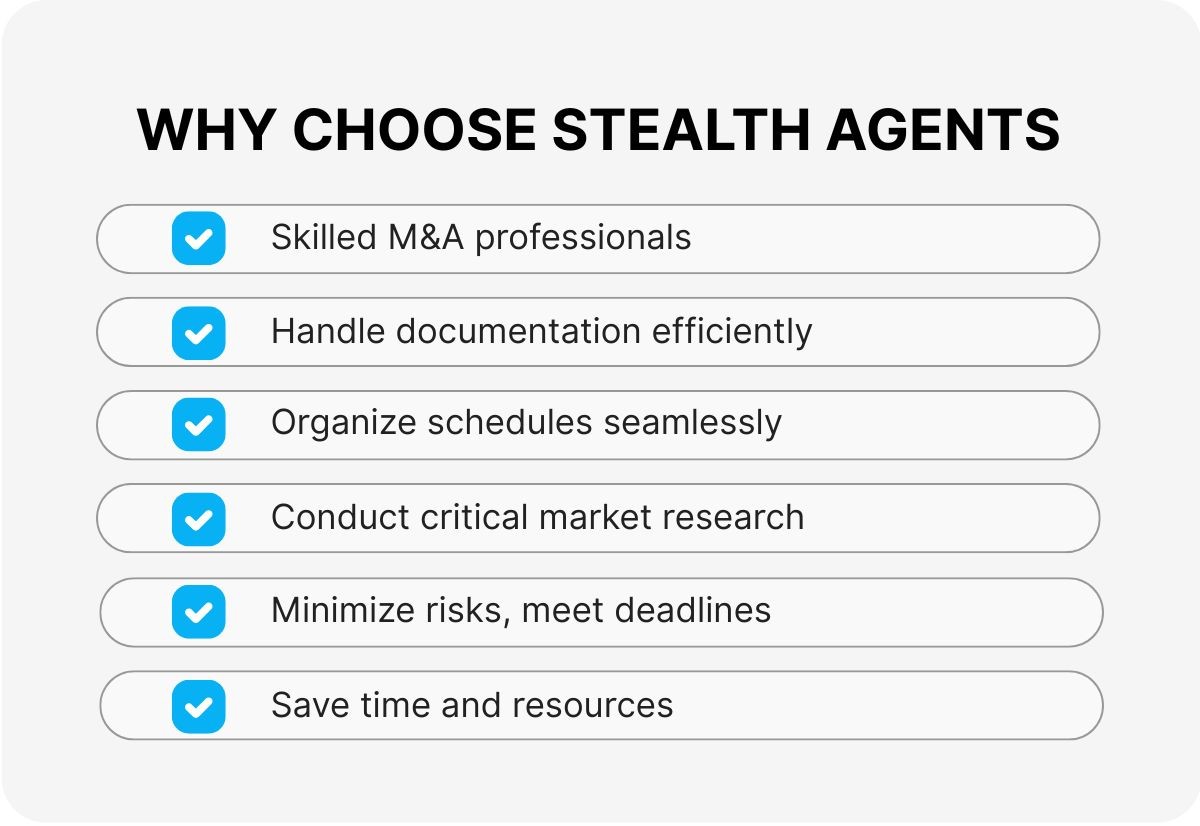
Our M&A virtual assistants are skilled professionals, including mergers and acquisitions specialists, acquisition specialists, and even real estate acquisition specialists, who take on the heavy lifting so you can focus on high-level strategies.
They can manage everything from meticulous documentation to organizing schedules and performing critical market research, ensuring accuracy and efficiency at every step.
By outsourcing to Stealth Agents, you gain access to a knowledgeable team that minimizes risks and ensures deadlines are met without the stress of micromanaging details. Whether you need a merger and acquisition consultant or a client acquisition specialist, our team ensures each task is tailored to your unique needs.
Choosing us means saving valuable time and resources without compromising on precision or reliability. Book a free consultation today to learn more about how Stealth Agents can simplify your M&A processes while driving your success forward!
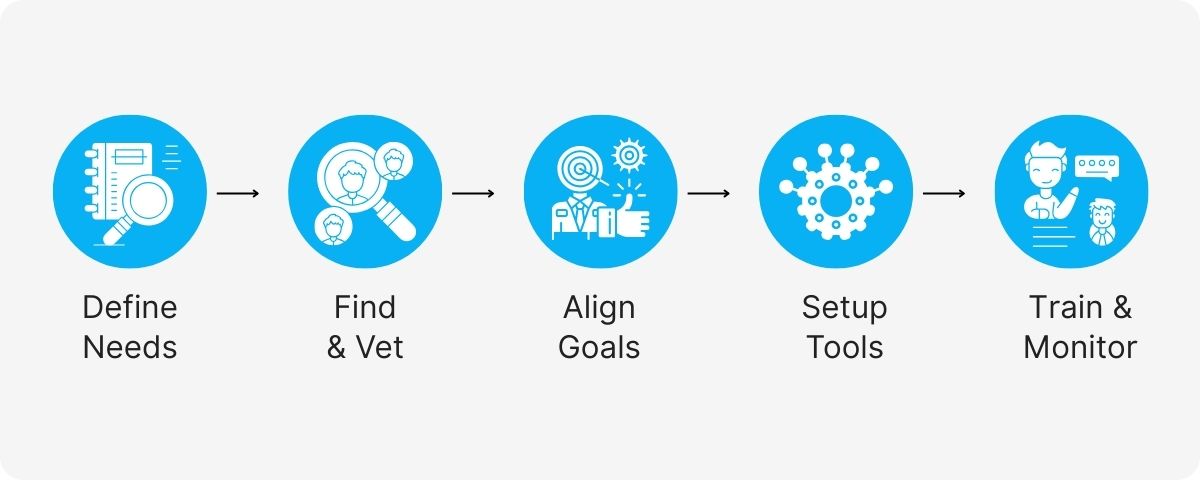
What is the Process to Onboard an M&A Virtual Assistant?
If you’re a business owner juggling multiple priorities, hiring an M&A virtual assistant could be the game-changer you need.
Whether you’re managing mergers and acquisitions, expanding into new markets, or optimizing operational efficiency, the right assistant can save you time, reduce stress, and enhance productivity.
Here’s a simple, step-by-step guide to get you started on onboarding an M&A virtual assistant seamlessly.
1. Identify Your Specific Needs
The first step is knowing exactly what tasks you need help with. Are you looking for support in deal research, client acquisition, or communication with other mergers and acquisitions specialists? Think about your challenges, such as data-heavy workloads, and list the duties you want to delegate.
For instance, maybe you run a corporate merger specialist firm and need someone to sort through property acquisition reports or liaise with acquisition specialists.
Remember, being clear with your expectations avoids miscommunication later. A thorough understanding of what you need will make it much easier to find an assistant with the right skills.
It’s also a good time to define whether your assistant will focus on real estate acquisition, customer service tasks, or more technical deal assistance.
2. Research Trustworthy Outsourcing Firms
Working with an outsourcing customer acquisition firm simplifies the hiring process.
These firms understand what it takes to find qualified professionals experienced in areas like acquisitions or mergers. Look for agencies that specialize in matching you with an M&A virtual assistant or outsourcing an executive assistant who meets your specific needs.
Outsourcing is highly beneficial when you want access to skilled acquisition specialists without going through a lengthy recruitment process.
Browse reviews, testimonials, and case studies to verify their expertise. Make sure the firm has experience in handling responsibilities like property acquisition or client acquisition for M&A professionals.
A reliable firm ensures your assistant starts on the right foot.
3. Conduct a Thorough Screening Process
Once you connect with a potential assistant, take the time to interview them carefully. Ask about their previous experience working with mergers and acquisitions specialists or as an acquisition specialist.
Your aim is to check if they understand the specific tasks related to mergers, client acquisition, or executive-level assistance.
During the interview, gauge whether they’re detail-oriented and capable of handling complex tasks, such as financial assessments or market analysis.
Ask how they’ve supported business owners like you in the past, especially for real estate acquisitions or corporate merger projects.
Simple skill assessments or trial tasks can also give you a sense of their efficiency. Taking this step ensures you hire someone you trust completely.
4. Clarify Goals and Expectations Early
Think of this as a blueprint for success—you need clear rules to guarantee the assistant performs well. Share your company’s goals, timelines, and preferred way of working.
For instance, if you need specific help with property acquisition or customer acquisition, detail these needs.
Explain what kind of communication and reporting you require; do you prefer daily updates, weekly check-ins, or task-based reporting?
Make sure your M&A specialist understands their role in assisting your team or your projects, whether it’s helping with research for a merger and acquisition specialist or assisting client acquisition specialists.
The clearer you are, the better the assistant can align with your business vision.
Written guidelines help minimize confusion throughout the partnership.
5. Set Up Tools for Collaboration
With virtual assistants, technology makes all the difference. Tools like project management platforms, communication apps, and cloud-based systems help you stay connected.
For example, if you’re outsourcing an executive assistant for tasks like calendar management, a shared platform ensures nothing falls through the cracks.
Platforms like Slack or Microsoft Teams are great for instant communication, while Google Drive allows real-time collaboration on files like customer acquisition data or property reports.
Make sure the assistant is trained on tools you regularly use. This helps them stay efficient as they assist with projects or strategies related to mergers, acquisitions, or corporate mergers.
An organized system creates a smooth workflow for both of you.
6. Offer Training and Gradual Onboarding
Even the most experienced merger and acquisition consultant needs time to adapt to your unique business.
Providing a clear training process can speed up the assistant’s learning curve. Start by familiarizing them with your clients, ongoing projects, and strategic goals, especially those related to mergers and acquisitions or client acquisition.
You might also need to explain specific processes, like how you handle real estate acquisition deals.
Train them on terminology or practices unique to your business, like how you create proposals for corporate mergers.
Gradual onboarding allows the assistant to feel more confident in their work. Remember, the better the training, the smoother the integration.
7. Monitor Progress and Provide Feedback
After onboarding, keep an eye on performance to ensure everything runs smoothly. Regular check-ins help your assistant stay aligned with your expectations.
For example, if they’re assisting as part of a customer acquisition specialist team, you can review their contribution to client outreach or data management.
Feedback sessions should focus on areas for improvement, such as time management when handling high-pressure tasks like real estate acquisitions or corporate merger communications.
If things are going well, don’t hesitate to acknowledge their effort.
Positive feedback motivates assistants and often leads to a stronger, long-term partnership.
When adjustments are needed, open communication resolves issues quickly.
Conclusion
Establishing a rhythm of regular check-ins and feedback sessions with your assistant is fundamental to ensuring operational excellence and alignment with your business goals, especially in dynamic roles like customer acquisition or high-stakes projects such as real estate acquisitions.
By focusing feedback on both areas for improvement and acknowledging successes, you foster an environment of continuous growth and mutual respect. Positive reinforcement not only boosts morale but also cements a foundation for a durable partnership.
When challenges arise, addressing them promptly through open communication prevents misunderstandings and builds trust. This approach guarantees that your assistant remains an integral part of your team, fully engaged and motivated to contribute to the success of the business.
Ultimately, the synergy between clear expectations, constructive feedback, and recognition of hard work underpins the efficiency and productivity of your collaboration. Adopting these practices ensures that both you and your assistant navigate towards common objectives with confidence and clarity.