Summarize This Article With AI :

Manage virtual assistants easily and effectively with Stealth Agents’ proven systems that streamline hiring, communication, and productivity tracking. Whether you’re scaling a startup or offloading daily tasks, Stealth Agents helps you get more done with less stress.

A business owner needs to be able to overcome obstacles and solve problems.


Whether it’s an operational, technical, or communication challenge, having solutions to overcome difficulties is crucial.


At Stealth Agents, we recognize the value of finding answers and offering virtual assistance to get you through these difficulties.


Our team of professionals is committed to helping you triumph over any challenges that come your way.


Please make an appointment with Stealth Agents right now, and let us help you overcome your business difficulties.


Book a free discussion to discuss your preferences and get pricing information.

Understanding the role of virtual assistants

Virtual assistants can provide you with any service that you seek. Here’s how a virtual assistant works and the perks they can offer.


Defining virtual assistants

Virtual assistants are essential to the way our businesses operate. They are experts who offer assistance and guidance remotely to help us manage our workload effectively. By delegating jobs to virtual assistants, we can focus on more crucial business areas and expand them.


Benefits of hiring virtual assistants

Hiring virtual assistants can bring numerous benefits to our business, making them ideal for companies that need virtual assistants.

Managing appointment-setting tasks and repetitive work can help us save time and increase productivity. With their assistance, we can concentrate on more high-value and strategic tasks.

Virtual assistants also provide flexibility because they may operate remotely and adjust to our changing demands. They are less expensive than hiring full-time employees, as we pay only for the work or hours they accomplish.

Additionally, virtual assistants bring specialized knowledge and skills that enhance the capabilities of our team members.


Offshore vs. Local and Freelance Virtual Assistants: Pros and Cons

When considering virtual assistants, it’s important to weigh the benefits and drawbacks of hiring offshore, freelance, or local professionals.

Offshore virtual assistants, often based in countries with a lower cost of living, typically offer more affordable rates than their local counterparts.


This can be a great way to stretch your budget—particularly for tasks such as data entry, calendar management, or repetitive administrative work. The downside? Sometimes there may be time zone differences or communication hurdles to overcome. However, many offshore assistants are highly skilled in working around these challenges.


Freelance virtual assistants can also be a cost-effective option. They provide flexibility and often have specialized skill sets, but hiring a freelancer may require you to invest extra time into training and onboarding. There’s also a need to vet candidates yourself, which can be time-consuming.


Local virtual assistants may cost more, but they offer advantages such as working within your time zone and potentially understanding local business practices or regulations better. This can be especially important for businesses that need frequent real-time communication or industry-specific expertise.


For those looking to minimize the hiring hassle, full-service virtual staffing agencies (like Belay, Time, etc., or MyOutDesk) offer pre-screened and trained offshore assistants. This saves you the time and effort of recruiting and onboarding while still providing cost savings.


In short, the best choice depends on your budget, the complexity of your needs, and how involved you want to be in the hiring process.


Types of tasks virtual assistants can handle

Virtual assistants may help your business by managing various tasks. Their services include everything from customer service and marketing to administrative tasks, allowing you to manage your workload effectively. 

Understanding the role of virtual assistants

Finding and hiring virtual assistants

Check out the strategies you need to learn to find and manage the perfect virtual assistant for your team.


Determining your needs

We must first assess the specific responsibilities and tasks we need help with before deciding whether or not we need virtual assistants. This involves determining the amount of work we currently have, identifying where tasks can be allocated, and understanding the skills and expertise required for each job. We can ensure that we find virtual assistants who are qualified to fulfill our specifications and make valuable contributions to our team by conducting an in-depth assessment.


Where to find virtual assistants

Several choices are available for finding virtual assistants. The options, which range from specialist agencies to online platforms, may be somewhat intimidating. When choosing where to search, it’s crucial to consider your budget and specific needs. 


Staying within your budget when hiring a virtual assistant

Budget is undoubtedly top of mind when considering a virtual assistant—but getting the most value goes beyond picking the lowest rate you see.

First, shop around. Compare options across platforms like Upwork, Fiverr, and specialized agencies such as Belay or Time Etc.


Pay close attention to different service categories, hourly rates, and levels of experience before making your decision. You might discover that an experienced, full-time assistant from an international market can cost a fraction of what a local hire would—and still deliver excellent results.


Consider the type of provider, too:

  • Freelance platforms: Often less expensive upfront, but may require you to invest time in training and onboarding.


  • Staffing agencies: These often supply pre-vetted and trained virtual assistants, saving you ramp-up time—sometimes justifying a slightly higher initial investment.


  • Local vs. offshore talent: Virtual assistants based abroad typically charge lower rates, offering an affordable alternative without sacrificing quality—provided you choose candidates with proven communication skills.


Evaluating and interviewing candidates

Evaluating and interviewing potential virtual assistants using a structured procedure is critical to ensure you find the best candidate for your needs. Here are some essential things to think about:


– Clearly state the abilities and credentials you seek in a virtual assistant.


Create a list of interview questions that assess the candidate’s background and job suitability.


– To assess the candidate’s competency, consider asking for work examples or holding a skills test.


-Seek applicants with much communication experience; good communication is essential in remote work.


Always remember that the objective is to find a virtual assistant who acquires the necessary skills and fits your company’s work culture and values. Investing enough time to assess and interview individuals carefully may ensure a productive working relationship.


Hire for attitude, train for skill

While it’s tempting to focus solely on skills, certifications, and credentials when reviewing candidates, it’s important to look beyond the résumé. In fact, studies show that nearly half of new hires fail within 18 months—and, in most cases, it’s due to attitudinal mismatches rather than lack of ability. If the position you’re hiring for doesn’t require highly specialized technical expertise, consider prioritizing candidates who demonstrate a strong work ethic, adaptability, and alignment with your company’s values.


Technical skills can often be taught, but qualities like emotional intelligence, positive disposition, and the ability to collaborate remotely are harder to instill. A virtual assistant with the right attitude is more likely to integrate smoothly into your workflow, communicate effectively with your team, and grow alongside your business.


By balancing both skill and attitude during the hiring process, you’ll set the stage for a successful, long-term partnership.


The importance of a strong hiring and onboarding process

Bringing a virtual assistant onto your team is more than just ticking off another item from your to-do list—it’s an investment in your business’s future success. Having a well-organized hiring and onboarding process in place makes all the difference.


A structured approach ensures you identify candidates who align with your needs and company culture, rather than just filling a seat. Clear vetting and onboarding steps help set expectations, provide essential training, and foster a sense of belonging from day one.


This not only minimizes confusion and miscommunication later but also speeds up the time it takes for your new assistant to fully contribute.

By prioritizing these processes, you pave the way for smoother collaboration, higher productivity, and long-term working relationships everyone can count on.

How to onboard a virtual assistant effectively

Welcoming a new virtual assistant to your team takes intention and structure. Here’s a process you can follow to create a smooth and successful onboarding experience—whether your VA is across the hall or across the globe.

Welcome and connect

First impressions count. Take the time to introduce your virtual assistant to your team and share a bit about your company culture. Even though they’re working remotely, a warm welcome helps them feel included and confident from day one. Encourage a short video call or chat to build rapport and open the door for future communication.


Share important information and resources

Before assigning any tasks, equip your VA with everything they’ll need to get started. This means:


  • Granting access to company resources like the employee handbook, team directories, and workflow guides.


  • Providing key documentation, such as standard operating procedures (SOPs), templates, and project guidelines.


  • Laying out clear instructions and expectations for each process your VA will handle.


Start with smaller tasks

Begin by assigning manageable tasks or small projects. This allows your virtual assistant to get comfortable with your processes and gives you a chance to see where their strengths and preferences lie.


It also lets you offer feedback and make any necessary adjustments early in the relationship.


Encourage open communication

Let your VA know when and how they can ask questions, seek clarification, or request help. Make use of team chats, emails, or regular check-ins—whatever fits your workflow. Active communication ensures quick problem resolution and creates a sense of partnership.


By following these onboarding steps, you set your virtual assistant up for success and lay the foundation for a productive, long-term working relationship.


Assessing a Virtual Assistant’s Skills and Fit for Your Business

Identifying the right virtual assistant is more than a quick scan of resumesit’s about ensuring the person you bring on board can truly complement your team. Here’s how you can assess a virtual assistant’s expertise and determine if they’re the best fit for your business needs.

Clarify Your Job Requirements

Start by creating a detailed job description. List out the specific tasks you need help with, the skills required (such as familiarity with Zoom, Google Workspace, or Photoshop), and any technical necessities—like a reliable internet connection or particular software. The clearer you are, the easier it will be to find a match who understands your expectations from the outset.

Implement a Multi-Step Vetting Process

Relying solely on a resume or a short chat isn’t enough. Consider developing a structured screening process to evaluate candidates thoroughly:

  • Resume and application review: Examine their experience and qualifications for relevant skills.
  • Initial interview: Gauge their communication style and cultural fit.
  • Systems check: Ensure they have the necessary equipment and a stable internet connection.
  • Skills assessment: Test their capabilities in tasks relevant to your business (think calendar management, email handling, or customer support).
  • Behavioral profiling: Understand their work ethic, reliability, and adaptability through scenario-based questions.
  • Paid test task: Assign a small, real-world task to see how they handle it—this is one of the most revealing steps.


Check References and Online Presence

Just as you would for an in-house role, verify references to confirm your candidate’s reliability and past performance.


Reach out to former employers or clients, and spend a few minutes checking their testimonials or reviews online. If you’re hiring through a platform or agency, ask for feedback from other clients who’ve worked with them before.


Prepare for Insightful Interviews

When interviews move online, preparation pays off. Prepare a thoughtful list of open-ended and situational questions, such as how they’ve handled urgent requests or overcome communication obstacles while working remotely.


Invite them to share how they organize their work, their availability, and any challenges they’ve solved for previous clients. Aim for a friendly but focused conversation so you both can judge compatibility.


By investing time in a thorough assessment process, you’ll increase your chances of finding a virtual assistant who not only possesses the right technical chops but who also aligns with your company’s culture and values.


Choosing the Right Virtual Assistant for Your Needs

After evaluating and interviewing applicants, the next step is deciding which virtual assistant is the best fit for your team. Here’s how you can make a confident choice:


1. Build a strong shortlist.

Instead of selecting the first candidate who catches your attention, try to narrow down your options to at least three promising applicants. This allows you to compare different skill sets, experiences, and personalities, so you can make a more informed decision and increase the chance of finding someone who aligns well with your team.


2. Prioritize attitude and fit.

While technical skills and experience matter, it’s just as important—if not more so—to consider a candidate’s attitude, work ethic, and alignment with your values. A virtual assistant who is proactive, adaptable, and eager to learn can often be trained on specific tools or tasks. Look for someone whose approach to work matches your company culture, as they’ll integrate more smoothly and contribute longer term.


3. Keep your budget in mind in the long run, savings are a key advantage of hiring a virtual assistant. Compare candidates by both their rates and what they offer—years of experience, areas of expertise, and service level.


Sometimes you’ll find that experienced offshore virtual assistants or freelancers can offer excellent support at a fraction of the local rates. Also weigh the benefits of hiring through a reputable agency, as they often pre-vet and train VAs, saving you time and ensuring quality.


By considering these factors—shortlisting carefully, valuing the right attitude, and balancing your budget—you can confidently choose a virtual assistant who will help your business run smoothly and efficiently.


Best practices for screening and vetting virtual assistant applicants

Finding the right virtual assistant goes beyond simply reviewing a resume. To ensure a seamless addition to your team, you need to adopt a thorough screening and vetting process. Here’s what works best:

Clarify your job requirements

Start by clearly outlining the tasks you want to delegate and estimating the hours required. Draft a detailed job description that covers specific responsibilities, required skills, and any technical or equipment needs (such as a reliable internet connection or experience using tools like Slack or Canva).


Structure your evaluation process

Instead of making quick decisions based on a resume or a first impression, develop a step-by-step approach to narrow down applicants. Consider including:


  • Careful resume and application review


  • Background checks (search for their online presence and request references)


  • Initial screening interview


  • Technical checks (internet speed, available hardware, and software familiarity)


  • Communication and skills tests relevant to your needs


  • Behavioral or personality assessments


  • A short, paid task to evaluate real-world ability


  • Final interview to confirm fit and expectations

Finding and hiring virtual assistants


Setting clear expectations and communication

Virtual assistants work remotely, so they need to foster clear communication strategies to work efficiently. 


Defining roles and responsibilities

Understanding virtual assistants and their function in a business requires a definition. They are qualified experts who help people or organizations remotely with administrative, technical, or creative needs. Companies can boost productivity and focus on their core activities by assigning tasks to virtual assistants.


Establishing communication channels

Ensuring that the communication channels we develop with our virtual assistants are efficient and consistent is crucial. Establishing trust and collaboration in a virtual workplace requires open and honest communication. Here are some techniques to ponder:


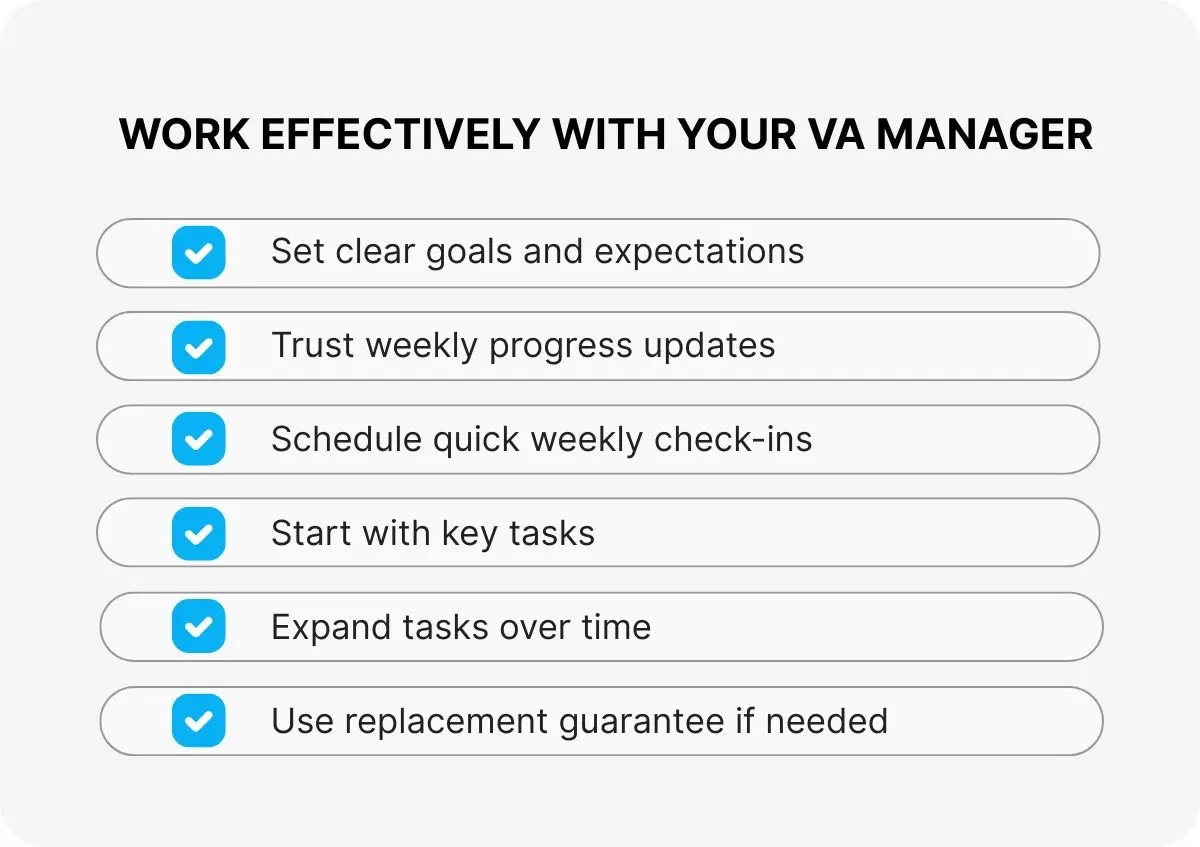
Schedule regular check-ins: Meet with your virtual assistants regularly to review ongoing assignments, address any queries or issues, and offer feedback.


Technology users:To enable real-time communication, use tools like email, instant messaging, and video conferencing.


Establishing guidelines: Clearly define the conditions required for communication, such as availability, preferred channels, and response times.


Setting up efficient communication routes may encourage a productive and cooperative working relationship with our virtual assistants.


Providing feedback and performance evaluation

Establishing clear goals and communication channels early on is essential when giving virtual assistants feedback and conducting performance reviews. Regular feedback meetings should ensure everyone is on the same page and working towards the same goals. When providing constructive criticism, one does it gracefully, emphasizing areas that need improvement and offering recommendations for future growth. Furthermore, praising and appreciating the virtual assistant’s efforts and accomplishments may boost their motivation and sense of fulfillment in their work.

Setting clear expectations and communication

Managing virtual assistants’ productivity

Here are a few ways to further manage your virtual assistant’s productivity and satisfaction


Setting clear goals and deadlines

Mastery of time management is essential when setting objectives and deadlines for our virtual assistants. If we manage our time and responsibilities satisfactorily, our virtual assistants may function smoothly and learn their priorities. 


Implementing time tracking and task management tools

Using task and time management tools is essential to managing the productivity of virtual assistants. With these tools, we can track how much time is spent on various activities and ensure that everyone is doing quality work. We can follow the development of projects and spot any bottlenecks or potential improvement areas by utilizing time-monitoring tools. On the other hand, task management solutions help us assign tasks, set deadlines, and track their completion. By putting these technologies in place, we can ensure that tasks are finished on time and optimize our workflow.


Motivating and engaging virtual assistants

Maintaining virtual assistants’ productivity and work satisfaction requires engaging and motivating them. We can foster a sense of enthusiasm and belonging among virtual assistants by creating a positive work environment, promoting open and honest communication, and encouraging cooperation and collaboration.

Managing virtual assistants' productivity

Building trust and collaboration

These are some of the traits essential when managing a virtual assistant. 


Creating a positive work environment

An enjoyable work atmosphere is essential for virtual assistants to be productive and satisfied. By creating a collaborative and friendly environment, we can ensure everyone on our team feels appreciated and inspired to work hard. 


Promoting open and transparent communication

Social networking platforms are crucial for encouraging truthful and open communication among a virtual assistant team. These solutions allow team members to communicate, collaborate, and exchange real-time information. Virtual assistants can easily interact, share updates and progress, and maintain connections even when they are in different locations, using social networking platforms. This improves team member participation and creates a feeling of community.


Encouraging teamwork and collaboration

It is essential to provide an ideal work atmosphere for virtual assistants that promotes cooperation and teamwork. This may be achieved by fostering candid and open communication, motivating team members to take initiative, and appreciating their contributions. A sense of community and shared goals allows virtual assistants to collaborate effectively and achieve their goals.

Building trust and collaboration

Overcoming challenges and troubleshooting

Challenges and barriers cannot be avoided in a remote setup, but these steps can help you overcome them. 


Addressing language and cultural barriers

Address language and cultural barriers when managing virtual assistants to promote efficient communication and teamwork. Language barriers might cause miscommunication and incorrect interpretation of instructions, which can lower the quality of the job. Cultural differences may also affect virtual assistants’ understanding and approach to tasks. 


Dealing with time zone differences

Dealing with time zone differences may be difficult when managing virtual assistants. Setting up clear lines of communication and defining expectations for availability and response times are crucial. Flexibility is essential when working across time zones, as it promotes effective communication and ensures that projects are completed on schedule. 

Using task management and time-tracking software can also help coordinate work and monitor progress. Regular virtual meetings might help discuss significant issues and resolve any problems. Managing virtual assistants across many time zones generally requires good time management and open communication.


Resolving conflicts and misunderstandings

Effective virtual assistant management requires resolving conflicts and misconceptions. It’s critical to resolve any disputes graciously and to take swift action. Having open and honest communication is essential for settling disagreements and ensuring everyone is on the same page. Understanding the points of view of all people involved requires empathy and active listening. The following techniques can be used to resolve disputes and clear up misunderstandings:


-Determine the root cause: Invest some time in comprehending the fundamental reasons for the disagreement or miscommunication.


Lead a productive discussion: Encourage candid communication and create an environment where all participants can share their concerns


-Seek common ground: Identify points of agreement and develop solutions that satisfy all parties’ requirements.


Document agreements:Record the agreed-upon activities and expectations after a settlement is reached. To prevent misunderstandings in the future


Remember that conflicts and misunderstandings are a given in any professional setting. However, you can maintain a positive and effective work atmosphere by proactively addressing issues and creating win-win solutions.

Overcoming challenges and troubleshooting

Takeaways

In conclusion, effective management of virtual assistants requires a deep understanding of their responsibilities. You can ensure productive cooperation by establishing clear expectations and communication channels and providing regular feedback. They can increase productivity by using task management software, setting specific goals, and motivating their virtual assistants. Overcoming language barriers, time zone differences, and conflicts is essential for effective virtual assistant management. Any business can significantly benefit from virtual assistants if it implements the right plans and strategies.

Virtual Assistant Hire Now

Frequently Asked Questions


How can I effectively communicate with my virtual assistant?

Provide clear communication channels, such as email or project management programs, to interact efficiently with your virtual assistant. To guarantee successful communication, lay out your expectations clearly and give regular feedback.


How do I find and hire a reliable virtual assistant?

Establish your wants and goals before hiring a trustworthy virtual assistant. You may also look for recommendations or credible sites. Assess individuals’ suitability for the position by conducting interviews and evaluating them based on their reviews, skills, and experience.


How can I set clear expectations for my virtual assistant?

Describe your virtual assistant’s tasks and responsibilities to ensure clarity and help them understand expectations. Ensure everyone knows your performance expectations, deadlines, and goals. Conduct performance reviews and provide regular feedback to ensure everyone meets your standards.


How do I ensure the productivity of my virtual assistant?

Establish clear assignment goals and deadlines to ensure your virtual assistant’s productivity. Use task management and time monitoring software to monitor your progress. Encourage and involve your virtual assistant by giving them opportunities for improvement, acknowledging their accomplishments, and giving regular feedback.


How can I build trust and collaboration with my virtual assistant?

Establish open and honest communication with your virtual assistant to foster trust and teamwork. You may promote cooperation and collaboration by including your virtual assistant in decision-making and allowing them to share their wisdom and thoughts.


What are the common challenges in managing virtual assistants?

Time zone differences, possible disagreements or misunderstandings, and language and cultural obstacles are common management issues with virtual assistants. However, proactive problem-solving, comprehension, and good communication can help us overcome such barriers.


How do I solve language and cultural barriers with my virtual assistant?

Ensure you and your virtual assistant communicate concisely to overcome language and cultural barriers. Avoid using slang and jargon, but provide context when necessary to improve understanding. Instead, speak. Encourage your virtual assistant to seek clarification by showing patience and understanding. 


What should I do if conflicts or misunderstandings arise with my virtual assistant?

If disagreements or miscommunications occur with your virtual assistant, swift action is needed to resolve the matter. Meet to discuss the issue, hear what they say, and develop a win-win solution. Throughout the process, keep lines of communication open and polite.

Frequently Asked Questions of Managing Virtual Assistants Effectively

Summarize This Article With AI :