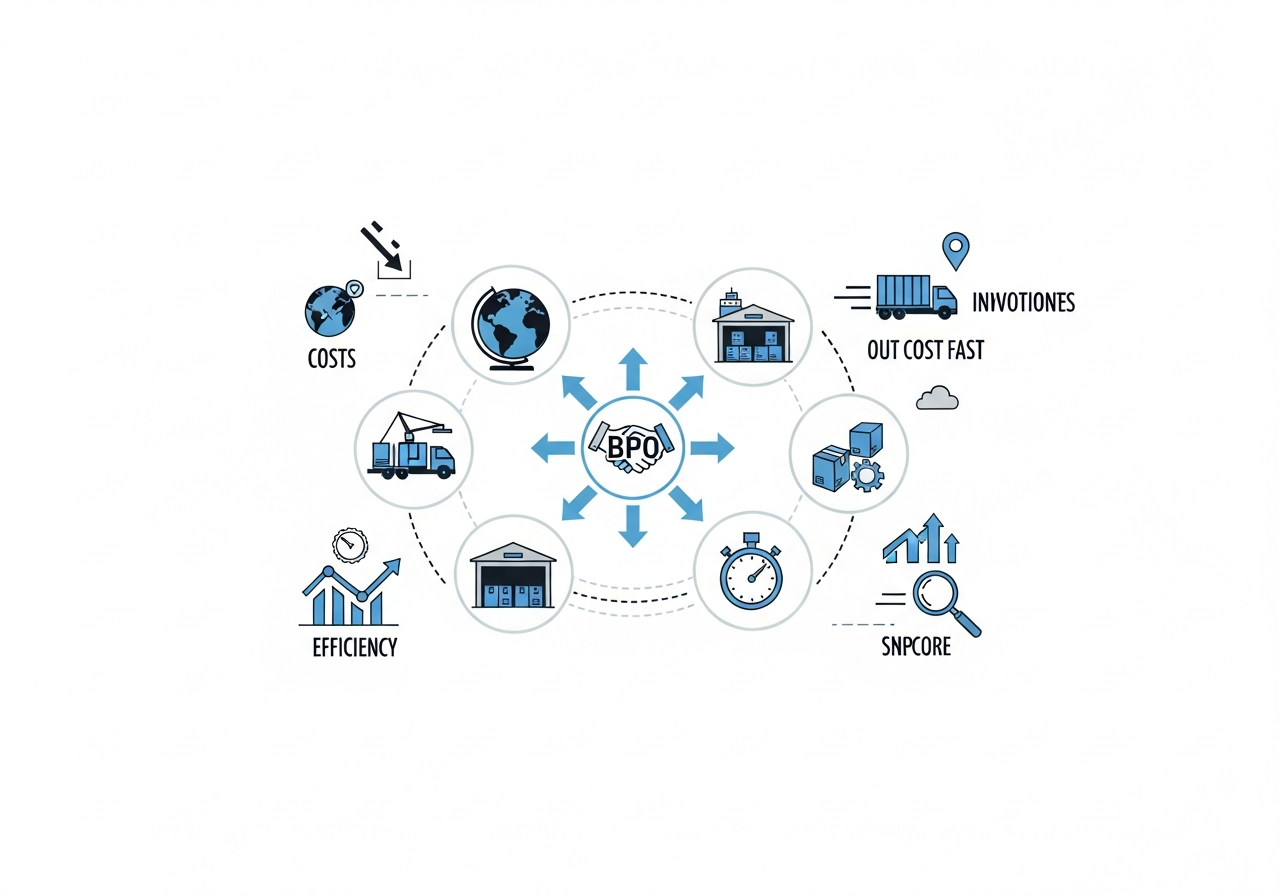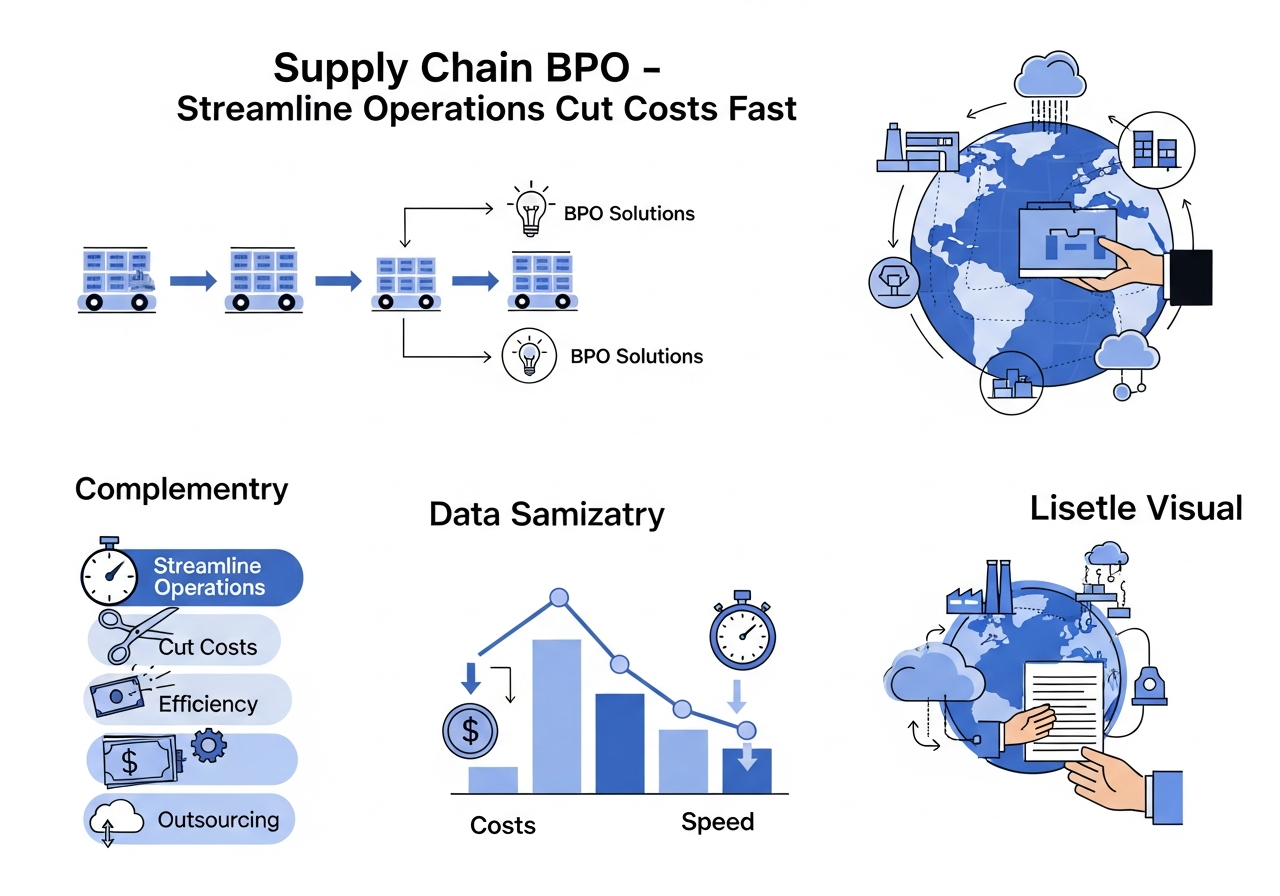
Logistics BPO services help businesses streamline operations, reduce costs, and improve supply chain efficiency. Stealth Agents provides skilled virtual assistants who handle everything from order processing to freight management, so you can focus on growing your business faster and smarter.
The global logistics BPO market is projected to exceed $470 billion by 2032, as companies increasingly outsource operations to cut costs and improve efficiency.
By partnering with logistics BPO providers, businesses can automate shipment tracking, inventory management, and customer support, reducing overhead by up to 50%. These services help streamline complex supply chains while ensuring faster delivery and better visibility.
With Stealth Agents, you can access expert logistics BPO solutions that simplify your supply chain, enhance coordination, and keep your business moving efficiently from warehouse to customer.
Managing your supply chain doesn’t have to be a headache. Many businesses struggle with rising operational costs, missed deadlines, and inefficiencies that disrupt growth. That’s where logistics BPO services can turn things around.
By outsourcing tasks like order management, inventory tracking, and customer support to experts like Stealth Agents, you can save time and cut costs while focusing on what matters.
Did you know that companies can save up to 70% on operational expenses by outsourcing? With skilled virtual assistants handling the logistics grind, you’ll simplify your processes and boost accuracy and efficiency.
Don’t struggle to keep everything on track when help is just a click away.
Book a free consultation today to learn about our virtual assistant pricing and how Stealth Agents can help your business thrive.
Why Outsource Supply Chain Management to Logistics BPO Services?
Outsourcing supply chain management to logistics BPO services can bring significant benefits, particularly for businesses aiming to streamline operations and reduce costs.
These services provide access to skilled professionals, including logistics officers trained to handle complex supply chain functions with expertise.
A recent study shows that more than 65% of companies outsourcing logistics report improved efficiency and faster problem resolution.
By delegating these responsibilities, businesses free up internal resources to focus on core priorities like product development and customer engagement.
Partnering with a logistics virtual assistant or BPO service also delivers advanced technology and analytics, strengthening inventory control and demand forecasting.
With remote work expanding the talent pool, companies can now collaborate with top logistics experts worldwide, unconstrained by geography.
This collaborative model drives timely deliveries, lowers operating costs, and gives businesses a sharper competitive edge in managing supply chain challenges.
Top 10 Services Offered by Logistics BPO Providers
Logistics BPO companies offer specialized services to assist companies to concentrate on their core competencies and streamline operations. Here are ten essential services they offer:
1. Order Processing and Fulfillment
Logistics BPO companies handle everything about order processing, from data input to shipping details.
Efficient fulfillment ensures consistent customer satisfaction and reduced operational delays. This service is crucial for meeting the high-volume demands of e-commerce businesses.
Around 96% of customers say prompt order handling impacts their loyalty to a brand.
By managing these tasks, companies save time while ensuring accuracy. Logistics solutions also seamlessly handle payment verifications and system updates.
Hiring specialized professionals can resolve gaps if your team struggles to process orders on time. Businesses often rely on logistics BPO services to deliver consistency even during peak seasons.
2. Customer Support Services
Providing round-the-clock customer service is essential in reducing complaints and resolving inquiries. Logistics BPO providers ensure you stay connected with your clients through various channels like email, calls, or live chat.
Over 65% of customers prefer quick, real-time assistance, making this service vital to ensuring loyalty.
These responsive services improve post-purchase experiences, especially when delivery issues arise.
Multiple industries benefit from tailored customer support built around their unique product requirements.
Hiring skilled agents ensures a company delivers satisfaction from start to finish. With their assistance, businesses can focus on building relationships while minimizing response delays.
3. Freight Management
Freight management allows companies to handle shipping logistics through thoughtful planning and execution.
This service ensures cargo is moved efficiently and at optimal costs. Global trade has hit record volumes, making these solutions critical for reducing expenses.
Logistics BPO providers evaluate shipment schedules, packaging, and transportation strategies.
Cost-effective freight services directly increase profit margins without compromising reliability.
Hiring logistics experts allows businesses to identify new opportunities to reduce transport fees. Better oversight also decreases shipping delays, allowing enterprises to align with deadlines consistently.
4. Inventory Management
Inventory control ensures companies maintain stock levels that meet demand without overstock. Logistics data specialists excel in tracking goods and predicting future needs.
From warehouses to storefronts, managing inventory efficiently reduces operational waste by up to 20%.
Companies struggling to balance supply often rely on logistic solutions to smooth operations. Precise monitoring helps businesses cope with seasonal rises and product recalls.
Hiring professionals improves scalability, especially for startups establishing their first inventory systems.
Comprehensive insights based on live data promote smarter purchasing decisions.
5. Returns Processing
Processing product returns flawlessly is vital for customer trust and reputation management.
Around 30% of online purchases get returned, underscoring its importance for online retail.
Logistics BPO services minimize operational hiccups by streamlining each step of the process. These solutions handle refunds, exchanges, and product retrievals with maximum efficiency.
Brands that offer hassle-free returns see increased customer loyalty and higher long-term revenue.
Hiring experts ensures each item reenters the supply chain quickly or is processed for disposal where required. Such services help businesses differentiate themselves in competitive markets.
6. Data Analytics and Reporting
Detailed analytics offer actionable insights to improve logistics strategies and operations. Logistics data specialists evaluate trends to identify challenges and optimize transport schedules effectively.
An analysis of logistics processes has shown that they reduce costs by 15% over time.
These evaluations allow businesses to address inefficiencies and improve worker productivity.
Reports assist in anticipating demand cycles or upcoming delays, especially for global markets.
Businesses hiring logistics experts receive clear recommendations based on reliable data. The integration of analytics platforms helps streamline workflow and track service improvements.
7. Transportation Management
Transportation services ensure goods can travel across supply chains efficiently while meeting customer expectations. Logistics BPO services optimize scheduling, vehicle allocations, and routing to minimize daily costs.
Almost 70% of logistics costs involve transportation, making strategic management critical.
Multiple factors like weather, fleet usage, and regulations are monitored during these efforts.
Hiring transport experts reduces last-mile delivery inefficiencies and increases on-time rates. The service’s automated tools enhance accountability for both transport teams and companies.
Effective transportation management also ensures environmentally responsible practices are adopted without missing targets.
8. Procurement Assistance
Procurement services help businesses secure contracts with reliable suppliers to achieve cost savings.
Costs associated with poor sourcing often reduce profits by as much as 10%.
Logistics providers negotiate favorable rates and identify vendors who deliver consistent quality.
This service includes contract evaluation, price benchmarking, and vendor relations monitoring. Hiring providers ensures businesses maintain trustworthy supplier relationships for long-term gains.
Timely purchases at optimal costs enable stable production and reliable inventory levels. Support in this area results in sustainable success as businesses focus resources on growth initiatives.
9. Document Handling and Compliance
Logistics requires managing documents like waybills, customs forms, and invoices to avoid legal errors. Logistics BPO providers take on such paperwork to streamline operations.
About 20% of global shipping delays occur yearly due to inadequate documentation. Accurate and timely document processing keeps a company ahead of compliance requirements.
This helps businesses handle international trade regulations or local taxes without unnecessary penalties.
Professionals hiring this service experience reduced risks while meeting deadlines. Managing these areas ensures products flow seamlessly across borders.
10. Supply Chain Visibility Solutions
BPO services for startups often emphasize improved supply chain transparency to help stakeholders track operations. Over half of logistics companies believe visibility is key to staying competitive in modern markets.
Providers utilize advanced tools to track shipments in real-time and notify customers of delays. Predictive tools also enable businesses to prevent disruptions caused by seasonal challenges.
Partnering with logistics professionals ensures informed decision-making across all supply chain stages. This service is essential for startups requiring precision to gain customer trust. Long-term adoption of visibility platforms supports faster, sustainable growth.
By hiring these services, businesses unlock countless opportunities to focus on what they do best. Efficient logistics operations directly impact customer trust and operational success.
Can a Logistics BPO Provider Integrate With My Existing Supply Chain Systems?
A logistics BPO provider can work with your current supply chain systems.
These providers, along with transportation and freight specialists, are skilled at adapting to businesses of all sizes. They use technology that helps connect with the systems you already rely on.
For example, 90% of companies say integrating logistics software improves efficiency and reduces errors.
Whether tracking shipments or managing warehouses, logistics BPO services ensure everything runs smoothly within your system.
What Is Logistics Backend Operations Outsourcing?
Logistics backend operations outsourcing refers to delegating the behind-the-scenes logistics tasks, such as transportation management, warehousing, and distribution, to specialized third-party providers.
Instead of handling every aspect in-house, businesses tap external experts to oversee the “nuts and bolts” of their supply chain, ensuring goods move efficiently from point A to B.
These providers utilize cutting-edge technologies like SAP and Oracle, along with proven industry processes, to optimize daily operations.
Outsourcing these backend logistics functions offers tangible benefits:
- Time Savings: Letting experts handle routine logistics tasks gives your team more freedom to innovate and focus on core business priorities.
- Cost Efficiency: Outsourcing can reduce the overhead associated with staffing, training, and technology investments.
- Scalability: Third-party partners flexibly adapt as your business grows or encounters seasonal spikes, keeping your logistics streamlined without extra headaches.
How Does Outsourcing Help Reduce Product Risk in Logistics and Distribution?
Outsourcing logistics operations goes a long way toward minimizing risk throughout the distribution process.
By handing over these responsibilities to specialized providers, businesses gain access to advanced monitoring systems, real-time tracking, and industry best practices for handling goods.
These experts leverage proactive risk management protocols, such as route optimization, temperature controls, and compliance checks, to reduce the chance of product loss, damage, or delays.
Their experience enables them to quickly identify potential threats and implement solutions before minor issues become costly setbacks.
Working with seasoned logistics partners also means companies can tap into robust insurance coverage and tailored contingency plans.
This added layer of protection ensures goods are handled safely from point A to B, boosting customer confidence and safeguarding a company’s reputation.
What Steps Should a Business Take to Outsource Its Logistics Operations?
Outsourcing logistics is a strategic move many businesses use to streamline their operations and sharpen their competitive edge.
If you’re considering working with a logistics BPO provider, here’s how you can set yourself up for success:
1. Assess Your Current Logistics Workflow
Begin by taking a close look at your present logistics operations. Are there recurring bottlenecks? Is inventory piling up, or are deliveries consistently delayed? Reviewing key pain points helps you pinpoint exactly where outside support can deliver the most value.
2. Identify the Right Services to Outsource
Determine which components, such as transportation management, warehousing, order fulfillment, or customs compliance, are prime candidates for outsourcing.
Clarifying these areas ensures you’re targeting solutions that will have the largest impact on efficiency and customer satisfaction.
3. Research and Vet Potential Partners
Not all logistics BPO providers offer the same expertise or technology. Compare options from established firms like DHL Supply Chain, FedEx Logistics, or smaller boutique agencies specializing in your industry.
Evaluate their track records, technology platforms, and case studies to ensure their capabilities match your business needs.
4. Define Clear Objectives and Expectations
Set measurable goals for your outsourcing initiative. These might include reducing costs by a fixed percentage, improving on-time delivery rates, or achieving higher supply chain visibility. Articulating these benchmarks up front keeps everyone aligned.
5. Establish Agreements and Communication Protocols
After selecting a provider, iron out the details in your service agreement. Cover critical factors like pricing, performance guarantees, dispute resolution, and scope of work.
Establish regular check-ins and reporting structures so you always know how operations are progressing.
6. Monitor Results and Adjust as Needed
Once outsourcing is underway, keep a close eye on performance data. Use dashboards or custom reports to review metrics like order accuracy, delivery speed, and cost savings.
Don’t hesitate to fine-tune processes as your partnership evolves, continuous improvement is key.
Following these steps turns the outsourcing journey into a well-organized strategy, helping businesses free up in-house resources while meeting supply chain challenges head-on.
Why Setting Clear Outsourcing Goals Matters
Before kicking off a logistics outsourcing project, it’s essential to define your objectives upfront.
Clear goals serve as a roadmap for both your company and your logistics BPO provider, helping everyone understand what success looks like from day one.
Here’s why setting specific goals is a game-changer:
- Alignment: It ensures your outsourcing partner’s efforts are in sync with your operational priorities, whether that’s cutting delivery times, reducing costs, or increasing order accuracy.
- Measurable Progress: With concrete goals, you can track key performance metrics and quickly spot areas for improvement.
- Accountability: Both your internal team and your provider know what’s expected, making it easier to assign responsibility and celebrate achievements.
- Maximized ROI: Focused targets help you avoid scope creep, ensuring resources are spent where they create the most value.
What Is the Process of Transport and Logistics Management?
Transport and logistics management covers everything involved in getting goods from point A to point B, efficiently and on time.
It’s more than just loading a truck and sending it down the highway, think of it as an ongoing balancing act that juggles demand forecasting, scheduling, routing, and inventory management to keep your operations humming.
Professionals in this field anticipate shifting demand patterns and adjust strategies accordingly.
They monitor changing consumer habits, adapt to new technology, and stay current with evolving regulations (much like the ever-shifting rules of Monopoly, but with higher stakes).
Key aspects of the process include:
- Planning Shipments: Deciding how, when, and where goods move to best match customer needs.
- Organizing Resources: Allocating fleets, drivers, and warehouse staff efficiently.
- Controlling Flow: Using digital tools like GPS tracking, route optimization software, and inventory platforms to ensure every shipment is accounted for and arrives as planned.
- Continuous Improvement: Analyzing performance data to make smarter decisions and boost reliability.
How to Assess Your Logistics Infrastructure Before Outsourcing
Before diving into logistics outsourcing, it’s essential to take stock of your existing operations. This self-assessment ensures you know where external expertise can make the greatest impact.
Start by mapping out your entire logistics process, from procurement and warehousing to order fulfillment and delivery. Identify bottlenecks, frequent delays, or recurring errors.
Are certain transportation routes consistently slow? Is inventory regularly out of sync with demand? Pinpoint areas where your current setup falls short of expectations.
Next, review the technology stack supporting your operations.
Are your systems integrated, or are you juggling spreadsheets and manual data entry? High-performing businesses often use solutions like SAP, Oracle, or cloud-based platforms like NetSuite to unify their supply chain data.
Don’t forget to assess compliance and documentation processes. Are you able to quickly retrieve customs documents, waybills, or supplier contracts? Organizations like FedEx and DHL set benchmarks for secure, seamless documentation flows, see how you compare.
Finally, solicit feedback from your team and stakeholders. Drivers, warehouse staff, and even customers offer real-world insights about what works, and what doesn’t.
What Qualifications Should I Look for in a Logistics BPO Provider?
✔ Expertise in Supply Chain Management
A reliable provider should deeply understand supply chain operations, from inventory tracking to distribution management.
With over $1.4 trillion spent annually on logistics in the U.S., expertise here is critical.
Their team should include professionals like logistics officers to ensure precision. Providers with experience managing transportation costs and optimizing delivery schedules bring immense value.
Look for proven case studies or client testimonials highlighting their real-world success.
These indicators show they can handle your third-party logistics support or demand forecasting needs. Such expertise reduces errors and boosts operational efficiency.
✔ Comprehensive Knowledge of Freight Operations
A strong player in logistics, BPO Services is well-versed in transportation and freight systems.
This knowledge is crucial, given that the need for freight is expected to increase by 50% worldwide by 2041.
Their ability to handle freight documentation and customs clearance without delays keeps your business moving smoothly. A transportation and freight specialist on their team is a clear advantage for navigating complex shipping regulations.
Skills in route planning and cost-effective carrier selection save businesses thousands every year.
Request a breakdown of their freight solutions to verify this capability. Their knowledge should translate directly into time and money savings for your company.
✔ Proficiency in Advanced Technology Tools
Reliable logistics BPO providers must use modern technology to manage and track operations.
Around 67% of logistics firms have adopted automation tools, showing its industry-wide importance.
Providers that use real-time tracking, warehouse management software, or analytics tools simplify operational complexity. This ensures transparency at every step, whether monitoring freight movement or coordinating warehouse stock levels.
Go for companies that align their tech with your supply chain goals, ensuring compatibility and scalability.
Their tools should enhance visibility and reduce downtime, streamlining processes. Access to technology reduces human errors and improves reliability.
✔ Strong Communication and Customer Service Skills
Clear communication at every stage of logistics is vital to avoid costly missteps.
A proactive customer support team is essential, as nearly 20% of logistics delays are tied to miscommunication. A company that fosters open dialogue with clients ensures your expectations are consistently met.
Their ability to provide 24/7 support makes them dependable, especially for urgent freight issues.
Look for a provider offering regular updates on I.T. visibility, shipment tracking, and performance reviews.
Team members with experience as logistics officers or freight specialists often excel in this area. Strong delivery here builds trust and ensures timely issue resolution.
✔ Flexible and Scalable Service Models
The best logistics BPO providers can adapt their services as your business evolves.
Small companies and e-commerce platforms experience annual growth rates of over 20%, demanding scalability.
A provider that offers tailored solutions during seasonal surges helps you stay competitive. Their flexibility to allocate resources dynamically ensures you never overpay for unused capacity.
They should seamlessly accommodate changes in freight volumes or storage needs without service quality dropping.
Ask about their network size and ability to scale globally if needed. Their adaptability means your business can keep up with market demands and avoid setbacks.
✔ Key Elements to Cover During Negotiation and Contracting
When you’re ready to move forward with a logistics BPO partner, the negotiation and contracting phase is where details truly matter.
A thorough agreement prevents surprises and protects your interests as your operations scale.
Focus on these essential aspects:
- Clear Pricing Structures: Define all costs upfront, fixed fees, variable per-shipment charges, and any additional surcharges. Transparency here helps avoid disputes and keeps budgets on track.
- Detailed Service Level Agreements (SLAs): Specify turnaround times, performance metrics (like on-time delivery rates), response times for customer inquiries, and error thresholds. SLAs should tie to measurable KPIs, such as the industry benchmarks tracked by DHL or FedEx.
- Defined Quality Assurance Processes: Outline quality control and escalation procedures in case of errors or service lapses. This ensures both sides know how corrections will be handled and who is responsible for what.
- Timeline and Milestones: Agree on project kickoff dates, implementation phases, and review checkpoints. Timelines should allow enough room for testing integrations, especially if you’ll use platforms like SAP or Oracle for supply chain management.
- Data Security and Compliance: Address how sensitive information will be handled, referencing standards like GDPR or SOC 2 where applicable. Confirm that your provider has controls in place to protect your data, particularly if your shipments cross borders.
- Flexibility Clauses: Include options for scaling services up or down to match seasonal demand, much like the flexibility offered by third-party warehousing giants.
- Exit and Renewal Terms: Make sure the contract clarifies how either party can terminate or renew agreements, including notice periods and transition support.
What Makes Stealth Agents a Trusted Name in Logistics BPO Services?
Stealth Agents has earned its reputation as a trusted partner in logistics BPO services by delivering consistent and efficient results tailored to client needs.
Known for its strong presence in the Philippines BPO market, the company stands out for its skilled workforce and commitment to top-notch service.
With the Philippines recognized as one of the leading hubs for outsourcing, employing over 1.5 million professionals in the industry, clients benefit from expertise and cost-effectiveness.
Stealth Agents combines proven processes with a customer-first approach, ensuring quality support for inventory management, order processing, and shipping logistics. The company stays ahead in addressing market demands by tapping into trending roles like virtual assistants and customer service specialists.
Businesses working with Stealth Agents often highlight its reliability, time-saving solutions, and seamless communication, which foster long-term partnerships. If you’re looking to simplify operations and focus on growth, their trusted services make them an ideal choice for logistics support.
Ongoing Oversight: Monitoring Your Logistics Outsourcing Project
Once your logistics BPO partnership is in motion, maintaining consistent oversight is key to maximizing its value.
Set Clear KPIs and Review Regularly
Start by establishing measurable key performance indicators (KPIs), such as on-time delivery rates, inventory accuracy, and incident response times.
Many businesses leverage tools like SAP, Oracle, or even dashboards from providers like ShipBob to track these metrics in real time. Schedule routine check-ins, whether weekly or monthly, to review progress against these benchmarks.
Embrace Transparent Communication
Keep communication lines open with your outsourcing partner. Ask for regular performance reports and encourage candid feedback. Data-driven reviews, like quarterly business assessments or monthly scorecards, help ensure all parties remain aligned on goals and spot issues early.
Harness Analytics for Continuous Improvement
Utilize analytics tools to pinpoint bottlenecks and highlight areas for improvement. By proactively monitoring metrics such as order cycle times or fulfillment error rates, you catch inefficiencies before they become costly disruptions.
Solicit Team and Customer Feedback
Don’t underestimate the value of ground-level insights. Engage your internal team and even your end customers for feedback on service quality. Real-world observations often reveal pain points dashboards might miss.
Takeaways
Simplify your supply chain management with dependable logistics BPO services that save you time and reduce stress.
By outsourcing your logistics processes, you can focus on growing your business while skilled professionals handle the complexities of operations.
Whether you need support with inventory management, shipment tracking, or order processing, these services are designed to improve the efficiency and reliability of your supply chain.
Choosing experienced logistics BPO providers mean smoother processes, fewer delays, and happier customers.
Hire a virtual assistant with Stealth Agents today. No part-time options, and professionals boasting 10+ years of expertise, your logistics needs will be in trusted hands.
Frequently Asked Questions
What is the average cost savings when outsourcing logistics BPO services compared to in-house operations?
Businesses can save 30-60% by outsourcing logistics BPO services instead of running in-house teams. Savings come from not needing to hire staff, buy equipment, or pay for office space. Companies also save on training, employee benefits, and technology while getting expert help at lower rates.
How long does it typically take to implement logistics BPO services for a new client?
It usually takes 2-6 weeks to set up logistics BPO services, depending on how complex the work is. Simple tasks like order processing can start in 5-10 days, while bigger projects like supply chain management may take 4-8 weeks. This time includes setting up systems, training staff, testing, and switching over smoothly.
Which industries benefit most from outsourcing logistics BPO services?
Industries like e-commerce, manufacturing, retail, healthcare, and automotive benefit the most. These businesses deal with lots of orders, complicated supply chains, and strict rules. Other industries like technology, fashion, and pharmaceuticals also use logistics BPO to handle busy seasons, international shipping, and special requirements.
What security measures do logistics BPO providers implement to protect sensitive supply chain data?
Top logistics BPO providers use strong security measures like data encryption, secure cloud storage, and access controls. They follow strict rules like ISO 27001, use VPNs, two-factor authentication, and limit access based on roles. They also sign confidentiality agreements, check employee backgrounds, and use secure ways to share data.
Can logistics BPO services handle international shipping and customs compliance requirements?
Yes, experienced logistics BPO providers are experts in international shipping and customs rules. They handle taxes, permits, and country-specific requirements. They also know about trade codes, restricted items, and work with global shipping companies to make sure everything runs smoothly and follows the rules.
What performance metrics should businesses track when working with logistics BPO providers?
Businesses should track things like how accurate orders are, how often deliveries are on time, shipping costs, inventory turnover, and how quickly returns are processed. Other important metrics include customer satisfaction, response times for problems, and cost savings. Regular reports and reviews help ensure the service meets expectations.
How do logistics BPO services handle seasonal demand fluctuations and peak periods?
Logistics BPO providers plan for busy times by using flexible staffing, extra technology, and backup plans. They keep extra workers and resources ready for peak times like holidays or big sales. This helps maintain good service without the need to keep extra resources year-round.
What training and certification requirements do logistics BPO staff typically have?
Logistics BPO staff often have certifications in supply chain management or freight operations. Many have degrees in business or logistics and are trained in warehouse systems, shipping rules, and customer service. They also stay updated on new software, rules, and best practices to keep their skills sharp.
How do logistics BPO providers ensure business continuity during emergencies or disruptions?
Logistics BPO providers prepare for emergencies with backup systems, extra facilities, and recovery plans. They have plans for natural disasters, system failures, or supply chain problems. They use multiple data centers, train staff for emergencies, and work with different carriers to keep things running smoothly.
What contract terms and service level agreements are standard in logistics BPO partnerships?
Contracts usually include details about service quality, pricing, and what happens if things go wrong. They often set minimum accuracy rates, response times, and penalties for poor performance. Contracts typically last 1-3 years with options to renew and adjust as business needs change.