Healthcare Administration Outsourcing for Better Care

Healthcare Administration Outsourcing - Better Admin, Better Care
Summarize This Article With AI :

Healthcare administration outsourcing helps medical practices save time, reduce costs, and improve patient care by letting experts handle the paperwork. Stealth Agents offers reliable, HIPAA-compliant support so your team can focus on what matters most—treating patients and growing your practice.


Healthcare administration outsourcing enables medical facilities to improve efficiency and patient care by delegating tasks such as billing and scheduling to specialized providers.


This approach helps streamline operations, reduce costs, and improve compliance, enabling healthcare organizations to focus more on clinical care and patient outcomes.


Understanding the benefits and considerations of outsourcing is crucial for optimizing administrative functions and improving service delivery in any healthcare setting.


What is Healthcare Administration Outsourcing?

Healthcare Administration Outsourcing involves hiring an external company to handle administrative tasks traditionally performed in-house just like outsourcing virtual assistant

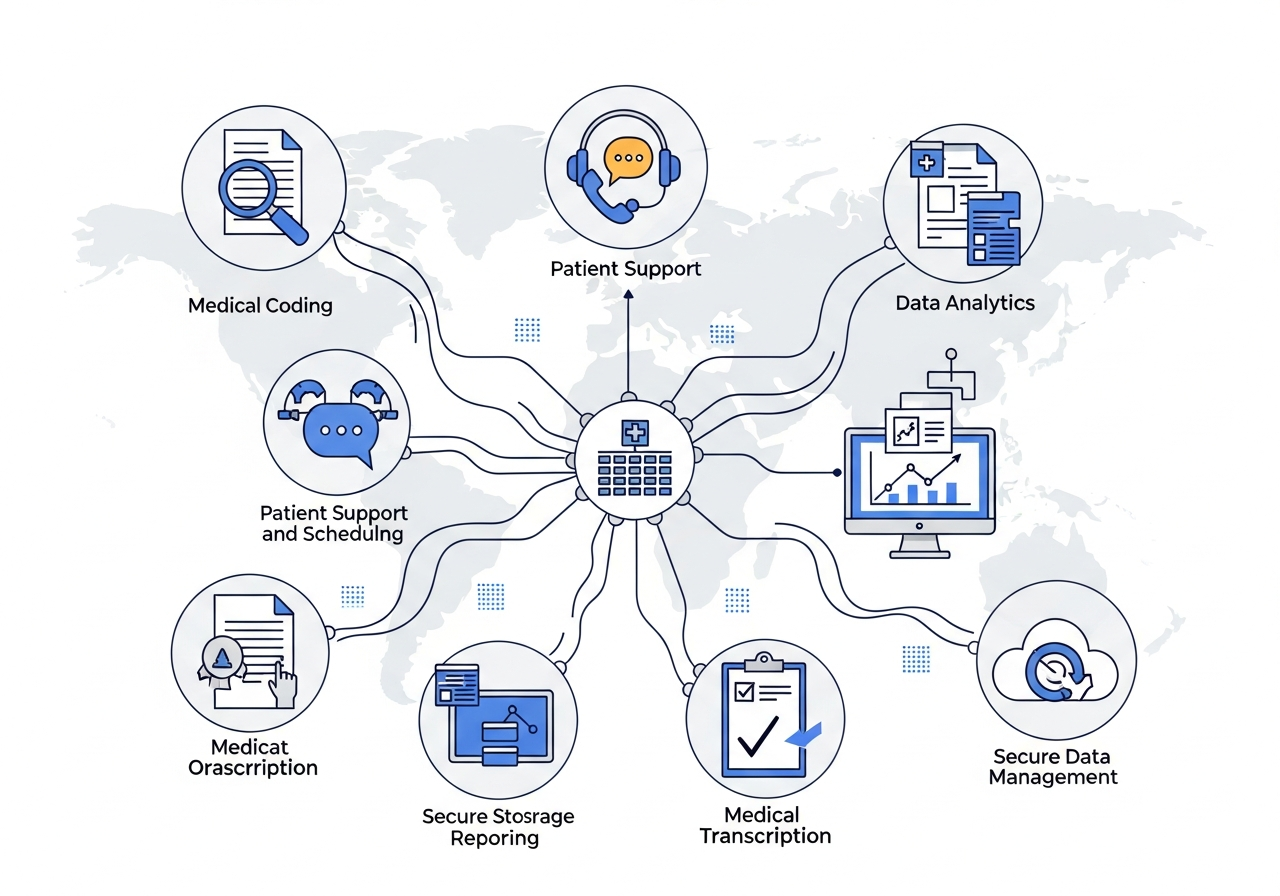
These tasks may include billing, scheduling, claims processing, regulatory compliance, human resources, etc.

This type of outsourcing is becoming increasingly popular in the healthcare industry. It allows healthcare organizations to focus on their core competencies, such as providing quality patient care.

 Virtual assistant healthcare can enhance efficiency by managing routine tasks and supporting administrative functions remotely.

Why are healthcare providers increasingly outsourcing utilization management in 2025?

With rising demands on healthcare organizations to deliver quality care while managing limited resources, more providers are choosing to outsource utilization management.


This shift comes down to several key advantages:


  • Reducing administrative costs: Outsourcing helps healthcare facilities manage utilization review and authorization processes without the overhead of building large in-house teams. Specialized partners can efficiently handle complex requirements—often for less than it would cost to maintain these operations internally.


  • Enhancing focus on patient care: By delegating time-consuming utilization management tasks, clinical staff and administrators can devote more attention to patient needs and overall outcomes, rather than getting bogged down in paperwork and compliance.


  • Gaining access to specialized knowledge: External experts—from companies like Optum and Change Healthcare—bring targeted know-how in claims management, regulatory guidelines, and payer requirements. This can be especially valuable as industry standards evolve and administrative complexity grows.


What types of tasks do virtual medical assistants handle for healthcare providers?

Virtual medical assistants (VMAs) step in to manage a variety of administrative duties that keep healthcare practices running smoothly—without the chaos that comes from juggling endless paperwork and phone calls.


By delegating these essential but time-consuming responsibilities, your team can focus more on patient care and less on managing the day-to-day logistics.


Key Tasks Handled by Virtual Medical Assistants

  • Appointment Scheduling & Patient Communication
  • VMAs take care of booking, rescheduling, and canceling appointments to keep your calendar organized and minimize no-shows. They also send reminders via phone, email, or text and respond to patient inquiries, helping ensure clear communication and a seamless experience for both patients and staff. Many VMAs offer support in multiple languages, reducing barriers to care.


  • Insurance Verification & Authorization
  • Confirming insurance coverage and managing pre-approvals can be a headache. Virtual medical assistants verify insurance details and secure prior authorizations for procedures, medications, or treatments, helping reduce claim denials and billing errors.


  • Medical Billing & Coding
  • Accurate billing and coding are crucial for a healthy cash flow. VMAs can support your team (or external billing partner) by entering billing information, assigning proper codes for services rendered, and checking claims for errors before submission.


  • EHR Management & Data Entry
  • Keeping electronic health records up to date is a major part of any practice. Virtual medical assistants handle data entry, update patient information, and maintain documentation within platforms such as eClinicalWorks, AthenaHealth, and Cerner. They also help ensure that your records stay HIPAA-compliant.


  • Patient Follow-Up & Care Coordination
  • VMAs can reach out to patients after visits, schedule follow-up appointments, organize lab tests or referrals, and assist in chronic disease management. This helps ensure patients stick to their care plans and makes follow-up a breeze.


  • Telemedicine Support
  • With virtual care becoming the new norm, VMAs assist in scheduling and prepping both providers and patients for telehealth appointments. They troubleshoot technical issues and guide patients through the onboarding process, ensuring everyone is ready and comfortable before a virtual visit.


Can Virtual Medical Assistants Replace or Support In-House Teams?

Absolutely—virtual medical assistants offer impressive flexibility for healthcare practices. Whether you’re looking to fully outsource your administrative tasks or just need a little extra help during peak times, virtual assistants can be tailored to fit your specific needs.


Some healthcare providers choose to supplement their in-house teams with virtual support, easing the workload during busy seasons or special projects. Others opt to delegate the majority, if not all, of their administrative operations to remote professionals.


This scalability makes it easy to adjust your level of support as your practice grows or your needs evolve—all while maintaining seamless, efficient service behind the scenes.


How Virtual Medical Assistants Support Medical Billing and Coding

Virtual medical assistants (VMAs) play a key role in helping medical practices maintain a smooth and accurate billing process. By working closely with your in-house or external billing teams, VMAs take on essential tasks such as coding procedures, verifying patient information, and preparing insurance claims.


A few ways VMAs can enhance your billing and coding efforts include:

  • Accurate Coding: They ensure that all procedures and services are correctly coded, reducing errors that could lead to claim denials or delays.


  • Claim Submission: VMAs streamline claim submission, making sure claims go out quickly and meet payer requirements.


  • Follow-Up and Appeals: When claims face issues, VMAs can help track them, provide additional documentation, or assist with appeals to keep your revenue cycle moving.


  • Compliance Checks: They keep billing processes up to date with the latest regulations, helping your practice avoid compliance pitfalls.


  • Patient Communication: VMAs can answer patient billing questions and clarify insurance coverage, freeing up your clinical staff to focus on care.


How Virtual Medical Assistants Manage Appointment Scheduling and Patient Communication

Virtual medical assistants play a pivotal role in keeping healthcare practices running smoothly by handling the entire appointment process with care and precision. They take charge of booking, rescheduling, and even managing cancellations, keeping patient flow steady and reducing administrative headaches for your in-house team.


To help minimize no-shows, these assistants send timely appointment reminders through the patient’s preferred method—whether it’s a phone call, email, or text message. This proactive communication ensures your calendar stays on track and patients feel supported.


Beyond scheduling, virtual medical assistants are often the friendly first point of contact for patients. They answer questions, provide clear information, and resolve basic concerns efficiently and professionally. Many are bilingual, offering support in both English and Spanish, so you can deliver great care without language barriers getting in the way.


By entrusting these communication tasks to experienced virtual assistants, your practice can maintain better organization, boost patient satisfaction, and free up valuable staff time to focus where it matters most.

How Do Virtual Medical Assistants Integrate Into Existing Healthcare Teams?


Virtual medical assistants (VMAs) are designed to blend effortlessly into your healthcare team’s daily operations. They adapt to the EHR systems and communication platforms you already use—think Epic, Cerner, or even Slack—so your staff won’t have to overhaul their routines.


These professionals are trained to follow your established workflows, ensuring that patient scheduling, billing, and records management continue without any bumps in the road. Integration support is available every step of the way, often including dedicated onboarding to get your team up to speed.


By fitting right into existing processes, VMAs help keep your workflows running smoothly, reduce disruptions, and support your team just like an on-site staff member—minus the extra overhead.


How Virtual Medical Assistants Adapt to Your Practice

Virtual medical assistant services aren’t one-size-fits-all. Instead, they can be tailored to mirror the unique workflows, patient volume, and specialty requirements of your healthcare practice.


  • Customizable Support: Whether your office needs help only during peak hours or consistent, full-time hands-on assistance, virtual assistants can adjust their schedules and responsibilities accordingly. For instance, a pediatric practice may prioritize appointment reminders and immunization tracking, while a surgical clinic might require meticulous management of preoperative checklists.


  • Flexible Scaling: As your practice grows, virtual assistant support can scale up or down with demand. This makes it easy to add more capacity during flu season or special health campaigns, such as partnering with organizations like the American Heart Association for awareness months.


  • Specialized Expertise: Virtual assistants often bring experience in various healthcare environments—from small clinics to multi-provider hospitals. They are trained in industry software like Epic, Cerner, or Kareo and keep up with the latest administrative best practices, ensuring efficient and compliant operations.


By leveraging adaptable virtual support, healthcare practices can stay agile, manage fluctuating workloads, and focus their in-house teams on delivering exceptional patient care.


How Virtual Medical Assistants Support Medical Data Entry and EHR Management

Virtual medical assistants play a vital role in handling the administrative side of patient care, especially when it comes to managing electronic health records (EHRs). Skilled in popular EHR systems—like eClinicalWorks, AthenaHealth, and Cerner—they work behind the scenes to make sure your patient records are always accurate, updated, and secure.


Here’s how they add value to your practice:

  • Efficient Data Entry: Virtual assistants enter and update patient information swiftly, reducing errors while keeping all records current.


  • Documentation Support: From uploading lab results to maintaining detailed visit notes, they take care of administrative details so providers can stay focused on clinical care.


  • Real-Time Scribing: During patient appointments, virtual assistants can listen in and document encounters as they happen. This helps physicians concentrate on their patients instead of toggling between screens.


  • Regulatory Compliance: By following HIPAA protocols and documentation best practices, virtual assistants help ensure your practice stays compliant and audit-ready.


How Do Virtual Medical Assistants Handle Insurance Verification and Prior Authorization?

Virtual medical assistants streamline insurance verification by confirming patients’ coverage details before appointments. This process involves reaching out to insurance providers, checking eligibility, and clarifying exactly what services are covered—reducing the risk of billing mistakes and unexpected claim denials that slow down your workflow.


They also manage prior authorization requests by gathering necessary documentation, coordinating with physicians, and submitting all required forms to insurance companies.


By tracking approvals and following up on pending requests, virtual assistants help ensure treatments, medications, and procedures are authorized promptly. As a result, healthcare teams spend less time tangled in red tape and more time caring for patients.


What is the process for onboarding and integrating a virtual medical assistant into a practice?

Onboarding a virtual medical assistant (VMA) is designed to be straightforward and minimally disruptive, allowing healthcare teams to maintain focus on patient care.


Here’s how practices typically add a VMA to their operations:


  • Assessment of Needs: It starts with a careful evaluation of your practice’s unique administrative challenges—think scheduling, billing, claims processing, or regulatory compliance. Pinpointing where a VMA can create the most value helps tailor the process to your goals.


  • Customizing the Support: Based on the initial assessment, you’ll receive a detailed plan outlining the VMA’s role, key responsibilities, and how they will plug into your current workflows.


  • Smooth Integration: The VMA then joins your team using secure, HIPAA-compliant systems, working alongside your in-house staff to ensure continuity. During this phase, they may receive specific training on your preferred processes, practice management software, and patient communication protocols.


  • Continuous Collaboration: Ongoing support, feedback loops, and regular check-ins ensure that the VMA remains aligned with your evolving needs. Adjustments can be made to maximize efficiency and maintain compliance as regulations change or as your practice grows.


How Does Patient Communication Work with a Virtual Medical Assistant?

Virtual medical assistants (VMAs) interact with patients just like your in-office team—professionally, warmly, and efficiently.


Whether it’s answering patient questions, providing appointment reminders, or handling day-to-day inquiries, VMAs ensure communication remains smooth and patient-centered.


Many VMAs can also communicate in multiple languages. For example, bilingual support for English and Spanish is common, helping practices serve diverse patient populations without missing a beat. This bridging of language gaps means your patients always feel heard and cared for, regardless of their preferred language.


VMAs typically use secure messaging platforms, phone calls, and email—adhering to HIPAA and other privacy standards—to maintain confidentiality while fostering trust. Plus, with consistent, friendly communication, virtual assistants help enhance the patient experience by addressing concerns promptly and providing clear, thorough information every step of the way.

How Virtual Medical Assistants Support Patient Follow-Up and Coordination


After a patient completes an appointment or receives treatment, seamless follow-up is essential to support recovery and maintain positive health outcomes. Virtual medical assistants (VMAs) play a valuable role in this process by managing essential tasks behind the scenes.


  • Coordinating Next Steps: VMAs reach out to patients to confirm that they understand their aftercare plans. They assist with scheduling future appointments, booking lab work, or arranging referrals to specialists as needed.


  • Chronic Disease Support: For patients managing ongoing conditions, VMAs help by sending medication reminders, coordinating regular check-ins, and tracking adherence to treatment protocols.


  • Patient Engagement: VMAs act as a bridge between the patient and provider, ensuring follow-up instructions are clear and that any questions or concerns are relayed back to the care team promptly.


Experience with Electronic Health Record (EHR) Systems

Virtual medical assistants bring hands-on experience with leading EHR platforms, including eClinicalWorks, AthenaHealth, and Cerner. They’re comfortable handling essential tasks such as entering patient data, updating records, managing documentation, and maintaining compliance with HIPAA regulations.


These assistants also provide real-time support during patient visits by scribing notes directly into the EHR. This keeps documentation accurate, up-to-date, and efficient—freeing healthcare providers to focus more on patient interaction and less on administrative overhead.


What training do virtual medical assistants receive?

Virtual medical assistants (VMAs) are carefully vetted for their backgrounds in the healthcare field. Many even hold advanced degrees in healthcare administration or medical management, giving them a strong foundation.


Their training includes:

  • In-depth medical terminology: VMAs receive instruction to ensure they’re fluent in the language of medicine, making communication seamless with both clinical staff and patients.


  • Patient care protocols: They’re equipped with knowledge of up-to-date patient care standards and best practices, so administrative processes never disrupt quality care.


  • EHR management: VMAs are trained to navigate and manage electronic health record (EHR) systems like Epic, Cerner, and Meditech. This allows them to securely handle scheduling, billing, and documentation, always with HIPAA compliance in mind.


How Virtual Medical Assistants Support Telemedicine

Virtual medical assistants play a key role in making telemedicine appointments run smoothly for both healthcare providers and patients. Their support begins with ensuring all technical elements are set up correctly—coordinating virtual consultations, sending appointment links, and providing step-by-step instructions to patients who may be unfamiliar with online platforms like Zoom or Doxy.me.


In addition to technical setup, they manage patient onboarding for telehealth services. This includes helping new patients create accounts, updating electronic health records, and confirming that all necessary forms are completed ahead of each visit. Virtual medical assistants also check in with patients before their appointments to address any concerns, ensuring everyone is comfortable with the technology and prepared for a seamless interaction.


By handling these essential details, virtual medical assistants help healthcare teams deliver efficient, patient-centered care—even at a distance.


What are the steps to get started with a virtual medical assistant service?

Implementing a virtual medical assistant (VMA) service for your healthcare practice doesn’t have to be complicated. Here’s how most clinics and practices can make the transition smooth and efficient:


  • Evaluate Your Needs:Begin by identifying the specific administrative tasks where you need the most help, such as appointment scheduling, billing, patient reminders, or insurance verification.


  • Explore Reliable Providers: Research established VMA providers like Stealth Agents, My Mountain Mover, or Hello Rache. Look for those with healthcare experience and strong HIPAA compliance.


  • Request a Consultation: Reach out to your selected provider to discuss your requirements. This step often includes an initial consultation call or assessment, where you’ll outline your practice’s workflow and challenges.


  • Receive a Customized Plan: The provider will propose a tailored service package designed for your needs, detailing which tasks will be handled and how integration will work with your existing systems.


  • Onboard Your VMA: Once you accept the plan, you’ll begin the onboarding process. This usually includes introducing your VMA to your team, training on your specific software, and establishing communication protocols.


  • Integrate and Monitor: As the VMA integrates with your day-to-day operations, maintain open lines of communication to ensure everything is running smoothly. Don’t hesitate to provide feedback and request adjustments as you go.


What to Expect in a Virtual Medical Assistant Demo

Curious about how a virtual medical assistant can streamline your practice? Here’s what healthcare providers typically discover during a guided demo:


  • Real-Time Efficiency Gains: See how delegating scheduling, billing, claims management, and other routine tasks frees up front-desk staff and clinicians to focus more on patients—without missing a beat.


  • Cost Savings in Action: Learn how practices like yours have achieved substantial cost reductions (often up to 70%) through outsourcing, allowing more resources for direct patient care and innovation.


  • Custom Solutions, Not One-Size-Fits-All:Preview how services can be tailored to your workflow—whether you’re a small family practice or a bustling hospital system.


  • Compliance and Confidentiality: Experience firsthand the robust measures for HIPAA compliance and secure data handling that leading virtual assistant providers (think Stealth Agents, Athenahealth, or Kareo) put in place to protect your patients’ privacy.


  • Proven Results: Hear real-world success stories and get the chance to connect with healthcare leaders who have improved outcomes and morale through outsourcing.


What is a Virtual Medical Assistant (VMA)?

A Virtual Medical Assistant (VMA) is a skilled remote professional who helps healthcare practices with a wide range of administrative and clinical support tasks—without needing to be physically onsite.


Leveraging secure, modern communication tools and healthcare platforms, VMAs can take on responsibilities such as


  • Patient communication
  • Appointment scheduling and reminders
  • Insurance verification
  • Medical data entry
  • Assisting with telehealth coordination


What are the best outsourcing companies for Healthcare Administration?

1. Stealth Agents:

Stealth Agents is a leading outsourcing company specializing in providing healthcare administration services.

With over 10 years of experience in the industry, we have become one of the most trusted and reliable partners for healthcare organizations worldwide.

Our team consists of highly skilled professionals with extensive knowledge and expertise in the healthcare industry.

We understand the complexities and challenges of managing administrative tasks in the healthcare sector and are committed to providing efficient and effective solutions.

2. Invensis:

Invensis is another top outsourcing company for healthcare administration.

With a global presence and a team of experienced professionals, Invensis offers healthcare organizations a wide range of services.

Their services include medical transcription, claims adjudication, data entry, and document management.

They also offer compliance support to ensure their clients adhere to industry regulations and standards.

3. Anthelio Healthcare Solutions:

Anthelio Healthcare Solutions is a highly reputable outsourcing company that specializes in the healthcare industry. Its team consists of experts in medical coding, billing, and revenue cycle management.

They also offer additional services such as IT support, analytics, and consulting to help healthcare organizations improve their efficiency and productivity.

4. Cognizant:

Cognizant is a multinational company that provides outsourcing services to various industries, including healthcare. They offer end-to-end solutions for healthcare administration, from front-office tasks such as patient registration to back-office functions like claims processing.

Their team comprises highly skilled professionals who use advanced technology to streamline processes and improve efficiency. Cognizant also offers analytics and insights to help healthcare organizations make data-driven decisions.

5. WNS:

WNS is a leading business process management company that offers healthcare administration services. Its team of experts has deep domain knowledge in the healthcare industry and provides solutions that help organizations reduce costs, improve quality, and increase productivity.

Their services include medical coding, billing and collections, accounts receivable management, and provider credentialing. WNS also offers compliance support to ensure their clients follow regulations and guidelines.

6. Accenture:

Accenture is a global professional services company that offers healthcare administration outsourcing. Its team of experts has in-depth knowledge and experience in the healthcare industry.

Their services include claims processing, revenue cycle management, patient engagement, and data analytics. Accenture also offers advanced technology solutions such as artificial intelligence and automation to improve processes and efficiency.

7. GeBBS Healthcare Solutions:

GeBBS is a healthcare outsourcing company that specializes in revenue cycle management. They offer medical coding, claims processing, and denial management services to help healthcare organizations maximize revenue and minimize costs.

Their team of certified professionals has extensive experience in the industry and uses advanced technology to provide accurate and timely solutions. GeBBS also offers analytics and reporting to help clients track their financial performance.

What are the Benefits of Outsourcing Healthcare Administration?

1. Cost-Effective

Outsourcing administrative tasks can significantly reduce overhead costs.


You can avoid expenses related to hiring, training, and maintaining an in-house team.


Additionally, outsourcing allows you to choose from various service packages that fit your budget and needs.


This flexibility helps healthcare organizations save money while still receiving quality services.

2. A Strategic Approach to Rising Healthcare Costs

Outsourcing utilization management has become a smart, forward-thinking decision for healthcare providers striving to navigate the ever-increasing expenses of delivering care.


Rather than shouldering the burden of costly internal teams and sprawling administrative departments, organizations can tap into external partners who specialize in managing these complex tasks.

By leveraging the resources and expertise of established outsourcing firms, providers can:

  • Streamline utilization review processes
  • Reduce unnecessary hospital stays and costly interventions
  • Achieve greater consistency in care decisions


Cost-Saving Opportunities with Outsourced Utilization Management

Outsourcing utilization management (UM) presents healthcare organizations with several key opportunities to save on costs while maintaining high-quality administrative oversight.


First, delegating UM tasks to specialized providers—like Invensis, Cognizant, or Accenture—means you no longer have to shoulder the expenses of recruiting, onboarding, and continuously training in-house teams. You can trim not only salary costs but also the overhead tied to employee benefits, office space, and ongoing professional development.


Moreover, external UM service partners typically offer scalable solutions. This flexibility allows you to select only the services you need and adjust them as your requirements change, ensuring you never pay for more than what’s necessary. Many outsourcing firms use advanced technologies and streamlined workflows, which drive down inefficiencies and reduce costly errors.


By shifting the day-to-day administrative burden to experienced professionals, you free up your internal staff to concentrate on core priorities—especially patient care—instead of being bogged down with paperwork or compliance checks. This shift can reduce internal overtime demands, lower the risk of staff burnout, and subsequently minimize costs related to turnover and recruitment.


In short, outsourcing UM can be a strategic move to control expenses, boost productivity, and keep your organization laser-focused on delivering quality care.


2. Access to Expertise

Outsourcing healthcare administration allows you to tap into the expertise of professionals with specialized knowledge and experience.


These experts stay updated on the latest regulations, technology, and best practices, ensuring your administrative tasks are handled efficiently and accurately.


This can lead to improved efficiency and productivity for your organization.

Scalability and Flexibility

Partnering with third-party providers for utilization management gives healthcare organizations the flexibility to adapt to changing demands with ease. Whether you’re navigating a surge in cases or a slower season, outsourcing ensures you have the resources you need—when you need them—without stretching your internal team too thin.


Many leading firms, like Cognizant or Accenture, offer the ability to scale services up or down quickly, handling everything from routine reviews to complex cases. This adaptability helps maintain a steady workflow and minimizes any disruptions to day-to-day operations.

4. Access to Specialized Expertise

Outsourcing utilization management connects you with professionals who are well-versed in the intricacies of UM—often nurses, certified coders, or clinicians who keep up with shifting industry guidelines.


These experts can tackle complicated utilization reviews, stay on top of regulatory changes, and implement best practices so your organization can avoid costly errors or compliance gaps.


By tapping into the collective knowledge of external specialists, you gain a level of precision and accuracy that’s tough to match in-house.


5. More Time for Patient Care

One of the biggest advantages of outsourcing is that it lifts the administrative burden from your staff’s shoulders. Instead of wrestling with paperwork, eligibility checks, or appeal management, your team can redirect their attention to what truly matters: direct patient care.


By letting proven partners handle utilization management—like WNS or GeBBS—your staff can spend more time with patients, improving satisfaction and clinical outcomes, while running a more streamlined operation overall.


3. Quicker Prior Authorizations and Approvals

Outsourcing utilization management can help speed up the time it takes to secure prior authorizations and treatment approvals.


Instead of juggling these tasks in-house, your organization can rely on external experts who specialize in the intricate details of the process.

Here’s how outsourcing streamlines approvals:


  • Dedicated Teams: Outsourcing partners often have teams focused solely on utilization management, ensuring that authorizations don’t get delayed by other administrative priorities.


  • Established Workflows: These experts use efficient, well-tested processes and tools designed to minimize bottlenecks, helping requests move quickly from submission to completion.


  • Access to Technology: Outsourcing providers frequently use advanced systems and automation tools, like those from Epic or Cerner, to quickly check eligibility and submit approvals—cutting down on manual paperwork and reducing errors.


  • Round-the-Clock Support: Many outsourcing companies offer extended hours or 24/7 support, so prior authorization requests don’t sit idle overnight or over weekends.

3. Increased Focus on Patient Care

Outsourcing healthcare administration means you can delegate time-consuming tasks to experts while freeing up your team’s time.


This allows your staff to focus on providing quality patient care, ultimately improving patient satisfaction and outcomes.


With fewer administrative responsibilities, healthcare providers can dedicate more time to patient care and improve overall operations.

4. Improved Efficiency

Outsourcing healthcare administration tasks allows you to free up your team’s time to focus on core responsibilities.


This reduces the workload and allows your staff to concentrate on providing quality patient care.


With fewer distractions and more efficient processes in place, productivity levels are likely to increase.

 Reduced Workload and Burnout Prevention

Outsourcing utilization management is a practical way to lighten the load for your internal team. When an experienced partner handles these complex administrative tasks, your staff can shift their focus back to patient care, research, or other high-impact responsibilities.


How does this help your staff?

  • Less Administrative Hassle: Outsourcing takes daily paperwork, approvals, and compliance checks off your staff’s plates, freeing them from time-consuming routines.


  • Improved Job Satisfaction: With fewer administrative hurdles, employees are less likely to feel overwhelmed or stretched thin, which can help lower stress levels and boost morale.


  • Burnout Prevention: Delegating these tasks reduces the risk of fatigue and professional burnout—a common challenge in fast-paced healthcare environments.


5. Streamlined Utilization Management

Outsourcing utilization management (UM) presents a wealth of advantages for healthcare organizations aiming to operate more efficiently and cost-effectively. Here’s a closer look at the core benefits:

  • Cost Savings: Passing UM responsibilities to a specialized third party reduces the hefty costs of hiring and training an in-house team, not to mention investing in the necessary supporting technology and infrastructure.


  • Scalability: Outsourcing partners provide flexible staffing and resources, so you can scale services up or down based on demand—no need to scramble during seasonal surges or unpredictable spikes in workload.


  • Expertise on Demand: UM vendors bring in-depth knowledge and experience, staying up to date on complex policies and ever-changing regulations. This ensures accurate and timely case reviews, helping you avoid compliance pitfalls and optimize claims management.


  • Faster Approvals and Fewer Delays: With dedicated experts focused solely on utilization management, you’ll see quicker turnaround times for authorizations and fewer holdups in patient care.


  • Improved Staff Focus: Relieving your staff of repetitive UM tasks allows them to zero in on core responsibilities and patient care, reducing the risk of burnout and turnover.


  • Stronger Compliance and Audit Readiness:Third-party vendors specialize in documentation and regulatory changes, helping your organization maintain compliance and always be prepared for audits.


  • Better Patient Outcomes: By expediting approvals and facilitating better coordination among care teams, outsourced UM supports timely, high-quality patient care.


6. Fewer Claim Denials and Smoother Approvals

Outsourcing utilization management connects you with professionals who understand the complexities of insurance requirements and documentation. These experts specialize in making sure your claims are submitted accurately and completely, reducing common errors that can lead to denials.


By leveraging their up-to-date knowledge of payer guidelines and efficient processes, you’ll experience fewer claim rejections and gain quicker approvals for necessary treatments. This not only eliminates extra headaches for your staff but also ensures patients get timely care—benefiting both your organization and those you serve.

7. Enhanced Communication and Coordination

Outsourcing utilization management streamlines communication and coordination between care teams and insurers.


With dedicated experts handling these processes, information is relayed quickly and accurately, reducing misunderstandings and unnecessary back-and-forth. This means treatment authorizations, claims, and required documentation move through the system faster, minimizing delays and confusion.


As a result, both healthcare providers and insurers are on the same page—enabling care teams to deliver timely, well-coordinated treatment to patients and making the overall administrative process smoother for everyone involved.

 Reduced Workload and Burnout Prevention

Outsourcing utilization management is a practical way to lighten the load for your internal team. When an experienced partner handles these complex administrative tasks, your staff can shift their focus back to patient care, research, or other high-impact responsibilities.


How does this help your staff?

  • Less Administrative Hassle: Outsourcing takes daily paperwork, approvals, and compliance checks off your staff’s plates, freeing them from time-consuming routines.


  • Improved Job Satisfaction: With fewer administrative hurdles, employees are less likely to feel overwhelmed or stretched thin, which can help lower stress levels and boost morale.


  • Burnout Prevention: Delegating these tasks reduces the risk of fatigue and professional burnout—a common challenge in fast-paced healthcare environments.


8. Streamlined Utilization Management

Outsourcing utilization management (UM) presents a wealth of advantages for healthcare organizations aiming to operate more efficiently and cost-effectively. Here’s a closer look at the core benefits:


  • Cost Savings: Passing UM responsibilities to a specialized third party reduces the hefty costs of hiring and training an in-house team, not to mention investing in the necessary supporting technology and infrastructure.


  • Scalability: Outsourcing partners provide flexible staffing and resources, so you can scale services up or down based on demand—no need to scramble during seasonal surges or unpredictable spikes in workload.


  • Expertise on Demand: UM vendors bring in-depth knowledge and experience, staying up to date on complex policies and ever-changing regulations. This ensures accurate and timely case reviews, helping you avoid compliance pitfalls and optimize claims management.


  • Faster Approvals and Fewer Delays: With dedicated experts focused solely on utilization management, you’ll see quicker turnaround times for authorizations and fewer holdups in patient care.


  • Improved Staff Focus: Relieving your staff of repetitive UM tasks allows them to zero in on core responsibilities and patient care, reducing the risk of burnout and turnover.


  • Stronger Compliance and Audit Readiness:Third-party vendors specialize in documentation and regulatory changes, helping your organization maintain compliance and always be prepared for audits.


  • Better Patient Outcomes: By expediting approvals and facilitating better coordination among care teams, outsourced UM supports timely, high-quality patient care.


9. Fewer Claim Denials and Smoother Approvals

Outsourcing utilization management connects you with professionals who understand the complexities of insurance requirements and documentation. These experts specialize in making sure your claims are submitted accurately and completely, reducing common errors that can lead to denials.


By leveraging their up-to-date knowledge of payer guidelines and efficient processes, you’ll experience fewer claim rejections and gain quicker approvals for necessary treatments. This not only eliminates extra headaches for your staff but also ensures patients get timely care—benefiting both your organization and those you serve.

10. Enhanced Communication and Coordination

Outsourcing utilization management streamlines communication and coordination between care teams and insurers.


With dedicated experts handling these processes, information is relayed quickly and accurately, reducing misunderstandings and unnecessary back-and-forth. This means treatment authorizations, claims, and required documentation move through the system faster, minimizing delays and confusion.


As a result, both healthcare providers and insurers are on the same page—enabling care teams to deliver timely, well-coordinated treatment to patients and making the overall administrative process smoother for everyone involved.

How Utilization Management Helps Contain Costs

Utilization management (UM) plays a key role in keeping healthcare costs in check by making sure resources are used wisely and appropriately. Instead of green-lighting every test or procedure, UM ensures that treatments are truly necessary—and in line with established clinical guidelines.


Here’s how utilization management helps healthcare organizations and providers manage expenses:

  • Prevents Unnecessary Spending: By reviewing the medical necessity of proposed services, UM weeds out redundant tests and procedures, trimming down wasteful spending.


  • Champions Evidence-Based Care: UM relies on the latest clinical evidence to make decisions about care. This not only boosts care quality but also keeps spending targeted on treatments that actually work.


  • Encourages Teamwork: With clear protocols and ongoing communication, UM helps align healthcare providers and insurers. This collaboration reduces confusion, shortens approval times, and leads to more coordinated (and cost-effective) care for patients.


How Utilization Management Helps Contain Costs

Utilization management (UM) plays a key role in keeping healthcare costs in check by making sure resources are used wisely and appropriately. Instead of green-lighting every test or procedure, UM ensures that treatments are truly necessary—and in line with established clinical guidelines.


Here’s how utilization management helps healthcare organizations and providers manage expenses:

  • Prevents Unnecessary Spending: By reviewing the medical necessity of proposed services, UM weeds out redundant tests and procedures, trimming down wasteful spending.


  • Champions Evidence-Based Care: UM relies on the latest clinical evidence to make decisions about care. This not only boosts care quality but also keeps spending targeted on treatments that actually work.


  • Encourages Teamwork: With clear protocols and ongoing communication, UM helps align healthcare providers and insurers. This collaboration reduces confusion, shortens approval times, and leads to more coordinated (and cost-effective) care for patients.


How much does outsourcing healthcare administration cost?

Outsourcing healthcare administration varies widely based on factors such as the scope of services, the volume of work, the provider’s expertise, and regional cost differences.


Pricing models may influence the overall cost by including per-transaction fees, a percentage of collections, or flat monthly rates.


For small to medium-sized practices, expenses can range from a few hundred to several thousand dollars monthly, with larger organizations potentially facing higher costs due to greater service demands.


Accurate cost estimates require obtaining detailed quotes from several providers, tailored to the healthcare facility’s specific needs and scale.


What Should You Look for in an Outsourcing Provider?

When selecting an outsourcing provider, it’s crucial to consider their industry experience, reputation, and area of expertise.


They should also have strong technological capabilities and offer clear, timely communication. Flexibility is key, as your needs may change over time, and robust data security measures are a must to protect your sensitive information.


Furthermore, the provider should offer competitive pricing and excellent customer service.


Lastly, a cultural fit can contribute to a successful, productive working relationship. By considering these factors, you can choose a provider that aligns with your organization and can effectively cater to your outsourcing needs.


Frequently Asked Questions

What are the average cost savings when outsourcing healthcare administration compared to in-house staff?

Healthcare organizations can save 40-60% on administrative costs by outsourcing instead of hiring in-house staff. These savings come from lower spending on salaries, benefits, office space, equipment, and training. The exact amount depends on the services outsourced and the provider chosen, but most practices see big savings within the first year.


Which healthcare administration tasks should NOT be outsourced for compliance reasons?

Tasks like making clinical decisions, diagnosing patients, prescribing medications, and some quality checks should stay in-house. Jobs that need someone physically present, like handling emergencies or certain regulatory reports, may also need to stay internal based on local rules and policies.


How long does it typically take to implement healthcare administration outsourcing?

It usually takes 2-6 weeks to fully set up outsourcing for healthcare administration. This includes assessments, training, system setup, and adjusting workflows. More complex setups involving multiple departments or special software can take 8-12 weeks, while simpler tasks can start in 1-2 weeks.


What are the main risks of healthcare administration outsourcing and how can they be mitigated?

Risks include data breaches, communication problems, quality issues, and relying too much on the vendor. These can be reduced by choosing HIPAA-compliant providers, setting clear communication rules, doing regular quality checks, having backup plans, and signing contracts with penalties for not meeting standards.


When is the best time for a healthcare practice to start outsourcing administration?

The best time is when administrative costs are more than 25% of your revenue, when staff turnover is high, during expansion, or when compliance becomes too hard to manage. Practices with billing delays, scheduling problems, or doctors spending over 20% of their time on admin tasks should also consider outsourcing.


What qualifications should healthcare administration outsourcing providers have?

Look for providers with HIPAA certification, at least 5 years of experience in healthcare, and accreditations like AAPC or AHIMA. They should have strong cybersecurity, 24/7 support, and a good track record with similar clients. They also need to know healthcare rules, insurance processes, and medical coding.


How does healthcare administration outsourcing affect patient satisfaction scores?

Good outsourcing can improve patient satisfaction by 15-25% by reducing wait times, improving scheduling, speeding up insurance processing, and better communication. However, poor outsourcing can hurt satisfaction, so it’s important to choose the right provider and monitor their work.


What backup plans should healthcare practices have when outsourcing administration?

Backup plans should include keeping some in-house admin capabilities, having agreements with other vendors, and maintaining updated process documents. Practices should also have emergency communication plans, access to all patient data, and trained staff ready to step in if needed.


Which size healthcare practices benefit most from administration outsourcing?

Small to medium practices (5-50 providers) benefit the most because outsourcing saves money and gives them access to expertise they might not afford in-house. Large healthcare systems can also benefit by outsourcing specific tasks like billing, while solo practices may find virtual assistants more cost-effective.


What performance metrics should be tracked when outsourcing healthcare administration?

Track metrics like claim denial rates, days in accounts receivable, appointment accuracy, patient wait times, cost per transaction, compliance scores, and patient satisfaction. Also, monitor response times, error rates, staff productivity, and return on investment to ensure the outsourcing is meeting expectations.

Summarize This Article With AI :

Table of Contents

Receive Virtual Assistants insights delivered weekly
Hire Top 1% Virtual Assistants
Hire 10+ Year Experienced Virtual Assistants
  • Hire Full Time Executive Assistants
  • 160 Working Hours Per Month
  • Includes Fully Dedicated Account Manager
  • Cloud Management + Mobile App
  • Industry Specific To Your Needs
  • Stealth Agent’s 100% Next Best Hire Guarantee
  • All Assistants Have 10+ Years Of Experience
  • 100% Money Back Guarantee If We Don’t Bring You The Next Best Hire In Your Company