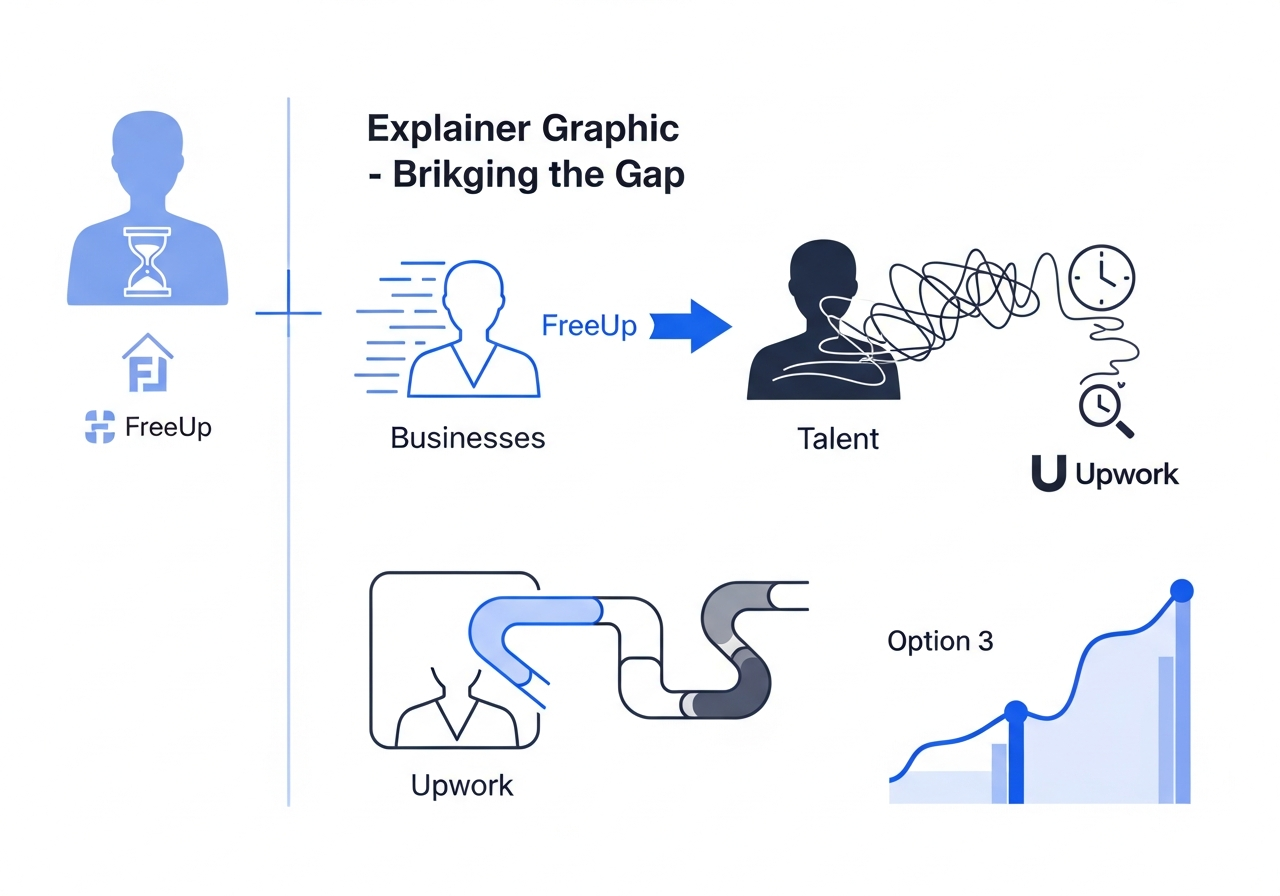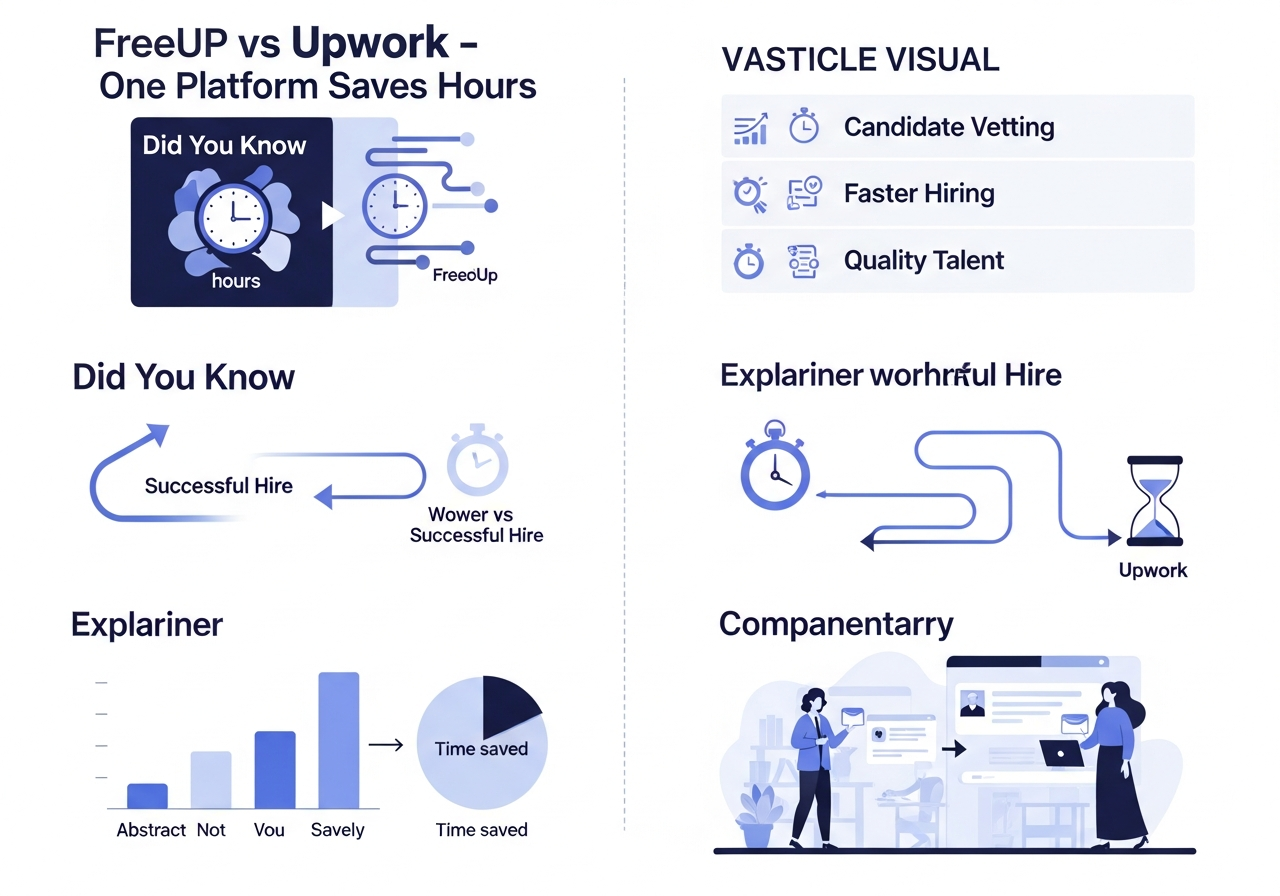
The FreeUp vs. Upwork comparison shows both platforms offer freelance talent but often leave businesses managing inconsistent quality and time-consuming hiring. Stealth Agents simplifies the process by providing pre-vetted, dedicated virtual assistants with expert support, so you save time, ensure reliability, and focus on growth.
When comparing FreeUp vs. Upwork, it becomes clear that finding the perfect solution for hiring virtual assistants requires careful consideration of both convenience and affordability.
Understanding key factors, such as virtual assistant pricing, ease of hiring, and the level of support, can save you from wasting valuable hours and unnecessary frustration.
Yet, many platforms fail to deliver the reliability and long-term value needed to support your business growth truly.
This is where Stealth Agents emerges as a standout option, delivering exceptional outsourcing services and providing businesses with highly trained virtual assistants.
With Stealth Agents, you are assured of services that are dependable, flexible, and cost-effective, giving you access to a tailored workforce ready to meet your specific needs.
By examining options such as FreeUp vs. Upwork or turning to dependable names like Stealth Agents, you position yourself to make informed decisions that align with both your goals and your budget.
Take charge of your time by selecting the right partner for your outsourcing needs, allowing you to focus on growing your business with confidence and clarity.
How to Choose the Right Tasks to Delegate to a Virtual Assistant
Determining what to hand off to a virtual assistant can be surprisingly empowering and it’s all about maximizing the value of your time. Begin by identifying which activities in your daily routine have the biggest impact on your business’s growth and revenue. These are usually the projects and decisions that require your expertise, vision, or direct involvement.
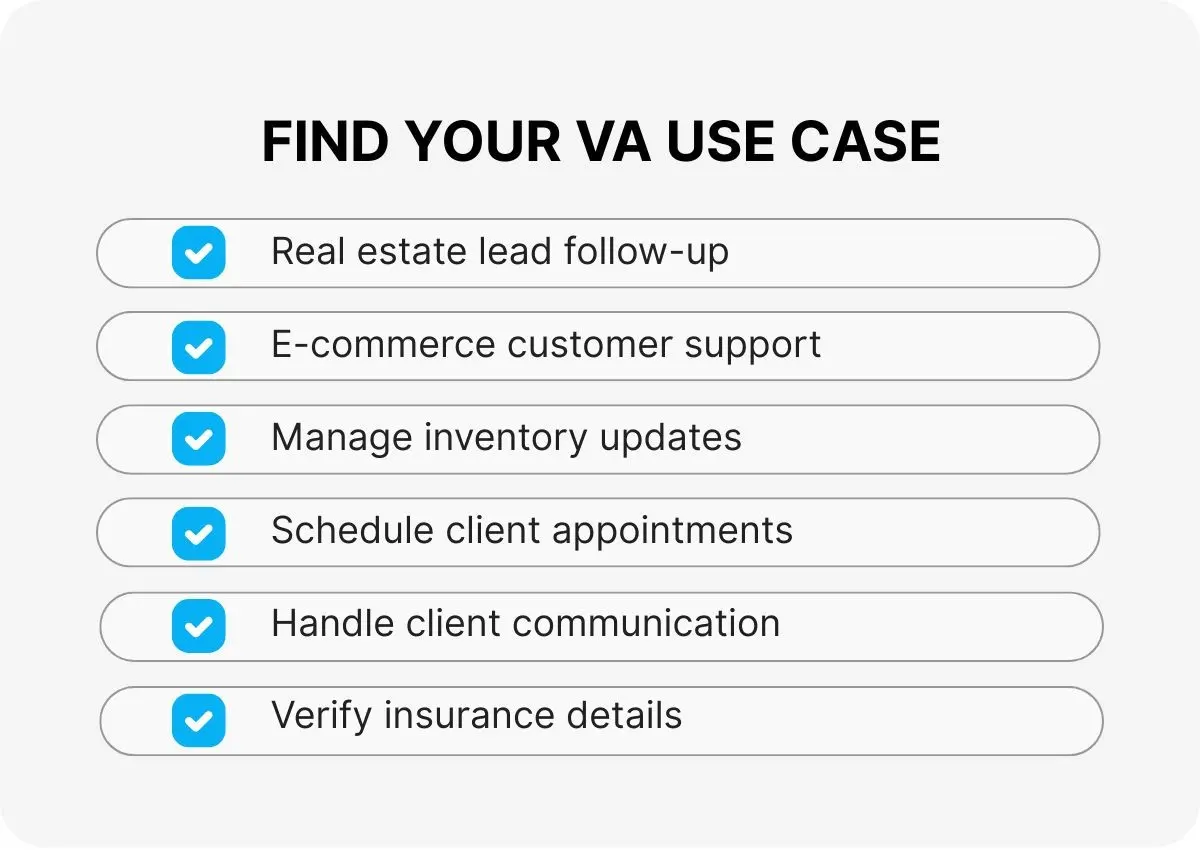
To streamline this process, try estimating your “hourly value”, what would it cost if you were to spend your precious focus elsewhere? Anything that consistently falls below that value is a strong candidate for delegation. Common examples include scheduling, inbox management, bookkeeping, customer support, and basic data entry, vital for business operations, but not necessarily tasks that move the needle for your bottom line.
By entrusting these time-consuming, lower-impact activities to a skilled virtual assistant, you reclaim hours in your day to strategize, innovate, and nurture important relationships. In short: delegate the repetitive, process-driven workload, so you stay laser-focused on high-impact business priorities.
What Should You Include in a Virtual Assistant Job Description?
Crafting an effective job description is essential to attract the best virtual assistant for your needs. To streamline your search and avoid costly missteps, be sure to include the following key elements:
- Required Skills and Experience: Specify both the must-have skills (such as calendar management, social media expertise, or customer service) and any prior experience that will help them excel in your business environment.
- Language Proficiency: If your operations require fluency in a particular language, mention it clearly to ensure candidates can communicate seamlessly with your team or customers.
- Business Environment Details: Outline the size or type of your business, whether you’re a small startup, an e-commerce brand, or an established organization, so the assistant can gauge if they’re the right cultural fit.
- Specialized Tools and Platforms: List the software, communication apps, or industry tools your virtual assistant must be comfortable using, such as Slack, Asana, Shopify, or HubSpot.
- Task Breakdown: Provide a clear overview of daily, weekly, or project-based tasks, be it inbox management, data entry, lead generation, or executive support, to paint an honest picture of the responsibilities.
- Time Commitment and Availability: Set expectations around work hours, whether you need full-time, part-time, or project-based support, and if you have a preference for specific time zones or working hours.
How a Virtual Assistant Handles Your Administrative Tasks
A virtual assistant can step in and expertly manage your day-to-day administrative workload, letting you focus on what matters most, growing your business.
Instead of getting bogged down by endless scheduling, appointment setting, or coordinating meetings, your virtual assistant can:
- Manage your calendar, syncing meetings and setting reminders so nothing falls through the cracks.
- Schedule and confirm appointments with clients, vendors, or colleagues, ensuring seamless communication.
- Handle phone calls, sort through emails, and follow up on reservations or bookings with efficiency and professionalism.
What Does a Marketing Virtual Assistant Do?
A marketing virtual assistant is like having an extra set of expert hands to elevate your brand’s visibility while you stay focused on strategy and growth.
These professionals can:
- Organize and schedule your social media calendar, ensuring your business stays active on platforms like Facebook, Instagram, and LinkedIn.
- Draft engaging content for blog posts, newsletters, and email campaigns that attract and nurture your audience.
- Design eye-catching graphics and promotional materials using tools such as Canva or Adobe Creative Suite.
- Coordinate marketing projects, whether that’s setting up a Google Ads campaign, managing influencer outreach, or assisting with podcast launches.
- Monitor analytics to identify what’s working, then provide insightful reports, so you know where your marketing dollars make the most impact.
- Handle incoming customer inquiries, ensuring that every lead gets prompt attention without you micromanaging your inbox.
What Are The Main Differences Between FreeUp And Upwork?
🔹 FreeUp
- Offers pre-vetted professionals.
- Streamlines the talent-selection process.
- Ideal for urgent or specialized projects.
- Charges a fixed platform fee.
- Prioritizes quality over quantity.
- Handles onboarding for users.
- Reduces time spent on hiring.
🔸 Upwork
- Features a vast and diverse talent pool.
- Suitable for a wide range of budgets and skills.
- Allows businesses to set custom terms.
- Operates on a commission-based system.
- Requires businesses to review multiple proposals.
- Provides flexibility in deciding project timelines.
- Ideal for businesses wanting expansive options.
FreeUp vs. Upwork highlights key differences in how businesses and freelancers can approach hiring.
FreeUp is recognized for its highly curated talent pool, enabling businesses to quickly hire the best virtual assistant services with proven skills.
This platform saves businesses time by prioritizing quality over quantity, which can be especially beneficial for those with urgent needs.
Upwork, on the other hand, offers a much larger and more diverse marketplace, making it ideal for hiring across a wide range of skill levels and budgets.
However, the hiring process on Upwork often requires more involvement, as businesses need to sort through numerous proposals to find the right fit.
Another notable difference is the pricing structure, with FreeUp typically charging a fixed fee for access to its network, while Upwork operates on a commission-based model.
FreeUp emphasizes simplicity by handling much of the onboarding process, whereas Upwork grants businesses more freedom to establish their terms and timelines.
Ultimately, the choice between FreeUp and Upwork depends on whether a business values a streamlined approach or a broader pool of choices during the hiring process.
How Is The Process Structured For Hiring a Freelance Virtual Assistant?
When it comes to hiring a freelance virtual assistant, the process is designed to be as straightforward and efficient as possible, particularly if you’re seeking both quality and speed.
Here’s how the typical hiring flow is structured:
- Sign Up With Ease
Most platforms make it free and simple to register, no hidden fees or minimum commitments. You’ll gain instant access to their marketplace of talent.
- Submit Your Requirements
Share the details of your project or what kind of support you need, whether it’s administrative tasks, scheduling, or more specialized services. Expect to get matched with a pre-vetted professional, often within a single business day.
- Interview and Selection
Once you receive candidate options, set up a brief interview (usually 15–20 minutes) to assess fit and communication style. This step ensures you’re not settling but choosing someone who aligns well with your needs.
- Onboarding and Management
After you choose your virtual assistant, onboarding is typically seamless, think streamlined paperwork, platform guidance, and support during setup.
- Ongoing Tracking and Payment
Hours are tracked transparently through the platform, with regular (often weekly) billing cycles. Review reported hours with ease, and manage payments through a secure system, similar to mainstream hubs like Upwork or Fiverr.
How To Determine If a Virtual Assistant Is the Right Fit for Your Business
Finding the right virtual assistant (VA) for your business is more than just matching skill sets, it’s about ensuring a seamless collaboration that supports your company’s workflow and goals.
Start with a Trial Period
Rather than making a long-term commitment right away, consider starting your VA off with a short-term contract or project. This initial trial phase gives both you and your assistant the opportunity to work together, allowing you to observe how they handle assignments, deadlines, and communication.
- Evaluate their ability to follow instructions: Assign a small but meaningful task that reflects the type of work they’ll handle regularly.
- Pay attention to response times and communication style: Professionalism and proactive updates are key indicators of reliability.
- Assess problem-solving skills: Do they ask clarifying questions and handle unexpected challenges effectively?
Hourly or Project-Based Engagements
Many businesses prefer to begin the partnership on an hourly or project-by-project basis. This method not only offers flexibility but also makes it easier to adjust course or end the partnership, if you find that the fit isn’t ideal.
Look for a Blend of Skills and Compatibility
While technical competence is crucial, it’s equally important to gauge whether the VA’s work style aligns with your business culture. Compatibility in workflow, adaptability, and even personality can greatly impact the success of your collaboration.
Once you’ve found a virtual assistant who meets both your requirements and expectations, you’ll be able to delegate more confidently, freeing up your time to focus on high-value tasks and, perhaps, enjoy those coveted shorter workweeks.
General vs. Specialized Virtual Assistants: Key Distinctions
When considering virtual assistant services, it’s important to distinguish between general and specialized virtual assistants and how each can impact your business operations.
General Virtual Assistants
General VAs are your go-to professionals for routine and repetitive tasks. Think of them as versatile support staff who manage:
- Data entry
- Calendar or schedule maintenance
- Inbox management
- Basic research
- Everyday administrative duties
Specialized Virtual Assistants
In contrast, specialized VAs bring advanced expertise to the table. They possess skill sets in specific domains such as:
- Bookkeeping and financial tracking
- Project management
- Digital marketing campaigns
- Graphic design or website development
How to Assess Virtual Assistant Candidates Before Hiring
Before locking in your next virtual assistant, it’s wise to put their skills to the test beyond just checking their resume or chatting on Zoom.
Here are a few practical ways to evaluate candidates:
- Simulated Assignments: Assign a task similar to what they’d handle on the job, whether it’s managing email inboxes, scheduling meetings, or researching vendors. Observe how efficiently they work, the quality of their output, and whether they can operate independently or need frequent input.
- Skill-Specific Challenges: Need someone who’s detail-oriented? Try sending them a set of instructions and see how closely they follow each step. If communication is key, ask for a sample email draft or have them respond to a hypothetical client inquiry.
- Personality Fit: Beyond just skills, cultural alignment matters. Popular online assessments like the Myers-Briggs or DISC can provide insights into how a candidate collaborates, handles pressure, or fits with your team’s dynamics.
- Time Management Checks: Assign a project with a deadline to gauge how well they prioritize tasks and meet timelines important if you have high-volume or time-sensitive work.
Steps to Create an Account and Request a Virtual Assistant
Getting started with hiring a virtual assistant is simpler than you might think. Here’s a quick walk-through of the process, so you know exactly what to expect, no convoluted sign-up journeys or buried fees.
- Sign Up in Minutes
Begin by setting up your account, no payments or minimum commitments required. Think of it as getting your backstage pass to a talent marketplace without worrying about surprise charges.
- Submit Your Request
Once you’re in, describe the role or project you need help with, whether it’s tackling emails, managing your calendar, or wrangling spreadsheets like a pro. Share the skills and experience you’re after so you can be matched with an assistant who hits the ground running.
- Interview and Select the Best Fit
You’ll have the opportunity to meet a pre-screened candidate (sometimes within a single business day). A short chat around 15–20 minutes, lets you gauge their fit for your workflow before making your pick.
- Monitor Progress and Payments
Track work hours and review progress easily. Payments are scheduled on a predictable weekly basis (hello, clarity). No more chasing down invoices or guessing at costs.
Which Platform Is Better For Hiring Virtual Assistants?
FreeUp vs. Upwork offers different advantages for hiring overseas virtual assistants, depending on what businesses prioritize.
FreeUp stands out for its pre-vetted pool of virtual assistants, which makes hiring faster and easier for businesses seeking reliable candidates.
It also reduces the effort involved by handling many initial hiring steps, like matching businesses with suitable professionals.
Upwork, in contrast, provides access to a much larger marketplace where businesses can hire assistants across a wide range of skill levels and price points.
This vast selection is better suited for businesses willing to invest time in reviewing profiles and proposals to find their ideal candidate.
FreeUp is particularly valuable for businesses seeking top-tier talent without incurring additional time spent on evaluations.
Meanwhile, Upwork benefits those searching for more flexible options and a range of budgets.
Choosing between these platforms depends on whether speed or selection is the priority for hiring a Filipino virtual assistant.
How Does Virtual Assistant Pricing Compare On FreeUp And Upwork?
FreeUp
1. Competitive Pricing
FreeUp offers businesses a streamlined platform for hiring virtual assistants, providing competitive pricing across various skill levels and expertise.
In the FreeUp vs. Upwork comparison, FreeUp stands out for its simplicity and efficiency.
The platform connects businesses with a diverse pool of pre-vetted freelancers, ensuring access to top-tier talent without the hassle of sorting through unqualified applications.
FreeUp’s transparent pricing structure eliminates confusion or unexpected charges, a notable advantage over Upwork.
The pricing model also takes into account the freelancer’s expertise, enabling businesses to find professionals within their budget without compromising quality.
When evaluating FreeUp vs. Upwork, FreeUp’s emphasis on quality and cost-effectiveness often appeals to businesses.
Its streamlined hiring process prioritizes efficiency and resource allocation, making it a preferred choice for many.
Overall, FreeUp provides a reliable and straightforward solution for businesses seeking the best offshore virtual assistant companies.
2. Budget-Friendly Options
FreeUp offers businesses a global network of freelancers, allowing them to explore budget-friendly options when seeking skilled BPO virtual assistants.
These freelancers represent a wide array of pricing tiers and areas of expertise, making it easy for companies to tailor their hiring decisions to align with their financial goals and project requirements.
Smaller businesses or individual entrepreneurs often find these budget-conscious hiring choices especially valuable, as they can access quality work without stretching limited resources.
Because FreeUp handles the rigorous pre-selection process, employers save significant time and effort that would otherwise go into filtering through applications, a step that often incurs hidden opportunity costs.
In the FreeUp vs. Upwork comparison, FreeUp’s ability to streamline hiring while offering pre-vetted talent is a key differentiator.
When comparing FreeUp vs. Upwork, FreeUp’s transparent pricing and focus on quality make it a standout choice for businesses.
FreeUp’s approach to connecting businesses with affordable specialists is frequently highlighted as a decisive advantage in the FreeUp vs. Upwork debate.
FreeUp provides a cost-effective and efficient solution for businesses seeking skilled virtual assistants.
3. Pre-Vetted Freelancers
FreeUp simplifies and accelerates the hiring process by presenting businesses with a curated selection of pre-vetted freelancers who are carefully matched to meet specific business needs.
The platform’s comprehensive pre-vetting process helps minimize hiring risks, eliminating the chances of bringing on board candidates who lack the necessary skills or qualifications. This saves businesses from incurring additional costs associated with rehiring or retraining.
These freelancers bring a high standard of professionalism to their work, enabling them to meet or exceed expectations from the outset, which ensures projects run smoothly and efficiently.
For businesses managing tight schedules where time is as valuable as money, FreeUp’s pre-vetted hiring process significantly reduces time lost in onboarding and vetting, without inflating costs.
Comparisons of FreeUp and Upwork frequently emphasize this robust vetting process as a key feature that helps businesses lower their long-term expenses and risks.
4. Fixed Payment Practices
FreeUp prioritizes clarity in financial dealings with its clear, standardized payment practices, which offer greater transparency and predictability when hiring freelancers for virtual assistant roles.
Employers only need to pay for hours that were actively worked or for specifically agreed-upon project deliverables, reducing financial uncertainty and ensuring spending aligns directly with productivity.
This system avoids potential disputes and billing surprises, which can arise on platforms with more ambiguous pricing structures or unclear project scopes.
By adopting fixed payment practices, FreeUp supports a predictable and streamlined financial arrangement that helps businesses stay on budget while maximizing value.
When businesses compare FreeUp and Upwork, this facet is often highlighted as a critical advantage that minimizes invoicing misunderstandings and ensures smoother overall collaborations.
5. No Monthly Fees
FreeUp makes hiring even more cost-effective by eliminating the need for monthly membership or subscription fees, positioning itself as a highly economical choice for businesses of all sizes.
This structure enables companies to allocate their financial resources more efficiently, ensuring that their funds are directed toward hiring talented professionals and completing essential projects, rather than incurring unnecessary platform fees.
Without the pressure of recurring costs, teams are empowered to focus on the work itself, prioritizing task management and project completion over nonessential expenses.
The absence of monthly subscription fees means pay-as-you-go simplicity, where costs directly correspond to tasks delivered by the freelance virtual assistants, ensuring maximum value for every dollar spent.
This cost-friendly feature is consistently highlighted in FreeUp vs. Upwork comparisons, often tipping the scales in favor of FreeUp for businesses seeking cost-sensitive hiring solutions.
Upwork
1. Flexible Pricing Structures
Upwork offers businesses access to a wide selection of virtual assistants, utilizing flexible pricing structures that depend on the freelancer’s experience and skill set, providing employers with numerous options.
Freelancers on Upwork have the autonomy to set their rates, and this often means businesses may encounter higher bids for professionals with advanced expertise or specialized skills.
The platform’s bidding system enables employers to post their projects and invite bids from freelancers, allowing them to compare prices and skill levels before making a hiring decision.
For smaller-scale tasks or less complex assignments, businesses can often benefit from the platform’s lower-cost freelancers, creating opportunities for cost-effective hiring in specific cases.
Conversations surrounding FreeUp vs. Upwork frequently revolve around this flexibility and how it can cater to businesses with varying levels of budgetary sensitivity, depending on their unique hiring needs.
2. Global Talent Pool
Upwork maintains an extensive global database of freelancers, providing businesses with access to a diverse pool of candidates capable of handling a wide range of tasks and projects.
The international nature of Upwork’s workforce offers businesses an opportunity to hire freelancers at cost-effective rates, particularly when employing professionals from regions with lower average labor costs.
However, due to the sheer size of the talent pool, employers are often required to dedicate more time to thoroughly screening profiles, which can incur indirect costs related to time and resources.
For businesses seeking to tap into a global talent base, Upwork offers unparalleled reach, enabling hiring for both niche needs and general tasks.
When comparing hiring platforms, debates about FreeUp vs. Upwork often center on whether the convenience of accessing a pre-vetted talent pool on FreeUp outweighs the broader variety of global freelancers offered by Upwork.
3. Transparent Review System
Upwork includes an intuitive and transparent review system designed to help businesses make more confident hiring decisions when seeking freelancers for virtual assistant roles and other projects.
The review system integrates client feedback, freelancer ratings, and detailed work histories, giving employers a clearer understanding of each candidate’s reliability, work quality, and professional demeanor.
Employers may need to invest time in carefully analyzing ratings and reviews before finalizing their choice, a step that helps ensure better hiring outcomes but can be resource-intensive.
For businesses with stringent hiring requirements, the ability to filter through reviews and examine freelancers’ reputations makes it easier to find the right match and avoid unnecessary risks.
When comparing FreeUp and Upwork, the value of real-world user testimonials and detailed feedback often stands out as a distinct advantage, particularly for employers who prioritize making informed decisions.
4. Project-Based Pricing Options
Upwork accommodates different types of hiring needs by offering businesses the choice of both hourly and project-based pricing systems, which allow for adaptability based on specific scenarios.
Freelancers on the platform can submit bids that outline the scope of the work and the associated costs, providing employers with a clear understanding of the expenses they can anticipate upfront.
This dual pricing option enables businesses to manage short-term projects with hourly hires or undertake longer, more complex initiatives with fixed pricing agreements, tailoring contracts to their specific goals.
Although the availability of project-based pricing is useful, bidding competition among freelancers can sometimes elevate costs when searching for highly specialized or in-demand skills.
Business discussions about FreeUp vs. Upwork often explore how these customizable pricing options make Upwork an appealing choice for companies with dynamic and evolving hiring needs.
5. Higher Initial Investment
Hiring on Upwork often requires a larger initial investment of time as businesses sort through profiles, compare bids, and evaluate freelancer qualifications before finalizing their decision.
Additionally, the platform may involve platform fees, payment processing charges, or administrative costs, which contribute to the overall expense of hiring via Upwork.
This upfront cost in terms of both money and time can, however, lead to more robust long-term relationships with skilled professionals who deliver excellent results on complex or high-stakes projects.
For larger-scale or specialized projects, this higher investment can be justified by the expansive range of services available and the potential to secure the right talent for the job.
When comparing FreeUp and Upwork, this initial investment is often a key factor in weighing the platforms’ suitability for businesses with tight timelines versus those prioritizing flexibility and depth of talent.
Which Platform Is More Reliable For Long-Term Projects?
FreeUp vs. Upwork offers distinct advantages for businesses seeking reliability in long-term projects.
FreeUp is known for its pre-vetted talent pool, which ensures that businesses can hire professionals with proven expertise.
This platform is particularly suited for long-term projects, as it prioritizes maintaining high-quality standards and consistent communication.
Upwork, on the other hand, excels in offering a vast network of freelancers, giving businesses the flexibility to find professionals at various experience levels.
It also enables businesses to establish direct and ongoing relationships with freelancers, which can lead to long-term collaborations.
FreeUp simplifies the hiring process by assigning dedicated account managers, adding another layer of support and reliability.
Meanwhile, Upwork’s advanced search features and reviews enable businesses to evaluate freelancers for extended projects carefully.
The key difference lies in whether a business values pre-screened quality or the freedom of a large talent pool when hiring for long-term needs.
How Can Businesses Save Money By Using FreeUp Or Upwork?
FreeUp
1. Clear Pricing Transparency
FreeUp stands out by offering businesses a pricing structure that prioritizes clarity, enabling companies to manage their budgets better and save money through predictable and controllable hiring expenses.
The platform’s commitment to transparent pricing ensures that businesses know exactly what services they are paying for, eliminating the stress and confusion caused by hidden fees or unexpected charges.
Additionally, the platform focuses on connecting businesses with pre-vetted freelancers, which not only saves money but also minimizes the risk of hiring unqualified candidates, a common issue that can become expensive to rectify.
By reducing hiring mistakes, companies experience fewer disruptions in their projects, fewer delays, and a significant cut in costs related to correcting errors stemming from poor hires.
This financial and operational clarity often positions FreeUp as a preferred choice compared to hiring platforms like Upwork.
2. Pre-Vetted Workforce
One of the most significant ways businesses can save money on FreeUp is through its well-curated pool of pre-vetted virtual assistants.
Every freelancer on the platform undergoes a thorough screening process to ensure they possess the necessary skills and qualifications, reducing the time businesses would otherwise spend evaluating potential hires.
This quick access to dependable professionals enables companies to initiate projects on time, thereby preventing the costly delays and inefficiencies associated with prolonged hiring cycles.
Since the freelancers are highly skilled, businesses often find that they do not need to allocate extra resources for extensive training or performance improvements.
By emphasizing quality and reliability, FreeUp frequently demonstrates its value in debates comparing the service with competitors like Upwork.
3. Focused Time Savings
FreeUp is designed to significantly shorten the time businesses spend finding and onboarding the right virtual assistant, ensuring a quick and smooth hiring process.
Prolonged hiring periods often result in wasted time, which can translate into financial losses for businesses that need to meet urgent deadlines or complete time-sensitive projects.
FreeUp’s streamlined system ensures faster hiring, allowing companies to reallocate time toward activities that directly contribute to generating income and building their business.
Unlike platforms that may involve prolonged wait times or drawn-out vetting processes, FreeUp ensures businesses can stick to deadlines without incurring additional costs caused by delays or inefficiencies.
This combination of convenience and cost efficiency is a key factor often highlighted in discussions praising FreeUp over other hiring platforms, such as Upwork.
4. Direct Support System
FreeUp enhances the hiring experience by offering businesses a dependable and accessible support system, which reduces the likelihood of expensive hiring mistakes and project pitfalls.
This system includes assistance in facilitating smooth interactions and seamless transactions between businesses and their freelance hires, creating an efficient workflow from start to finish.
By addressing potential issues early and providing ongoing support, the system helps minimize the financial impact associated with communication errors, task mismanagement, or misunderstandings.
With a proactive and hands-on support team to guide the hiring and project management process, businesses are less likely to encounter escalating errors that may lead to significant expenditures.
The ease and effectiveness of FreeUp’s hiring process are often seen as significant advantages compared to alternative platforms like Upwork.
5. No Monthly Subscriptions
FreeUp simplifies budget management for businesses by offering a cost model that is free from recurring monthly subscription fees, which can sometimes strain tight budgets.
With its pay-as-you-go system, businesses can avoid the unnecessary expense of paying for unused services or time unrelated to actual productive work.
This means companies only spend on the hours worked by freelancers, making the investment in talent straightforward, efficient, and aligned with task delivery goals.
Without the burden of subscription fees, businesses are free to redirect those savings toward essential projects or opportunities to grow and scale their operations.
This budget-friendly approach often gives FreeUp the upper hand in comparisons with platforms like Upwork, especially in scenarios where cost control is a top priority.
Upwork
1. Large Talent Pool with Cost Variations
Upwork offers businesses access to an expansive network of freelance talent, providing them with diverse options to find virtual assistants at varying price points that match their specific needs and budgets.
The wide range of pricing options available allows employers to carefully balance their budget constraints with the required skill levels, ensuring they get the best value for their money.
The platform caters to both affordability and expertise, offering freelancers who charge lower rates for simpler tasks and those who command higher rates for more complex, professional services.
Because Upwork operates globally, businesses can leverage regional pricing differences to secure high-quality work at more cost-effective rates than they might find locally.
This flexibility often emerges as a strong selling point in comparisons with other platforms, such as FreeUp, when discussing hiring within a range of pricing options.
2. Bid-Based Project Selection
Upwork utilizes a bidding system that enables businesses to negotiate and hire freelancers at competitive rates, resulting in significant cost savings.
Employers can determine the budget for their specific project or task, allowing freelancers to submit bids that fall within the specified financial parameters.
By comparing multiple bids, companies are empowered to choose the best combination of affordability and skill, ensuring their needs are met without overspending.
This system encourages healthy competition among freelancers, often resulting in high-quality work being offered at reasonable prices for companies seeking to control hiring costs.
Such flexibility and competitive advantages are frequently highlighted in discussions about the differences between FreeUp and Upwork’s pricing models.
3. Flexible Payment Structures
Upwork offers businesses a range of payment models, catering to various project types and financial circumstances, to deliver cost-effective outcomes.
Hourly payment options are ideal for short-term or sporadic work, allowing businesses to pay only for the time spent on specific tasks without committing to long-term costs.
For larger or more complex projects, fixed-fee agreements provide businesses with clarity and simplicity, ensuring budgets remain on track without unexpected expenses.
Freelancers on the platform tend to price their services according to the level of task complexity, enabling employers to save money on straightforward or smaller assignments.
This versatile approach to payment works well for businesses seeking affordable and flexible hiring solutions and is often contrasted with FreeUp in reviews where budget flexibility is a key concern.
4. Integrated Review Systems
Upwork features an in-depth review system that helps businesses make more informed hiring decisions by evaluating feedback and ratings left by other clients.
This system enables employers to assess the work history and reliability of freelancers before making hiring decisions, thereby reducing the risk of allocating resources to candidates who may not perform as expected.
The transparency provided by this feedback mechanism encourages freelancers to maintain high standards, ensuring tasks are often completed correctly on the first attempt and avoiding the cost of rework.
By creating a platform that values both cost-effectiveness and professionalism, Upwork enables businesses to align their budgets with high-quality outcomes, a benefit frequently highlighted in platform comparisons.
5. Budget-Friendly Small Tasks
Upwork’s platform is particularly well-suited for businesses needing to hire freelancers for minor tasks, which can often be completed quickly and cost-effectively.
Businesses can address one-off needs or localized projects without making long-term financial commitments, allowing them to allocate their resources cautiously.
Many freelancers on Upwork offer competitive rates for simpler tasks, creating an affordable solution for companies with smaller budgets or needs.
For businesses focused on achieving maximum efficiency, the platform’s ease in sourcing specialists for short-term engagements is a notable advantage.
When comparing FreeUp and Upwork, this flexibility for small-scale hiring often sets Upwork apart from its competitors.
Why Should Businesses Consider An Alternative Like Stealth Agents?
When comparing FreeUp vs. Upwork, both platforms offer access to freelance talent, but managing multiple freelancers often comes with time-consuming communication, inconsistent quality, and frequent rehiring.
If you’re looking to save hours every week and gain dependable support, Stealth Agents is a smarter alternative.
Unlike gig platforms, Stealth Agents pairs you with full-time, experienced virtual assistants trained to handle your business processes with precision. With 10–15+ years of executive assistant experience, our VAs are more than task-doers; they’re growth enablers.
Here’s why businesses choose Stealth Agents over freelance marketplaces:
✅ Dedicated Account Manager – No need to oversee every task yourself.
✅ Industry-Specific Assistants – From marketing to operations, we match you with the right fit.
✅ Secure Cloud Platform – Work is tracked, managed, and accessible anytime via mobile or desktop.
✅ Transparent Pricing – No bidding wars or unexpected costs.
✅ Top 1% Talent – Pre-vetted professionals focused on long-term execution.
✅ Recognized by Forbes as the #2 Virtual Assistant Service.
✅ Top-rated on Google – Clients trust us for reliability and results.
Takeaways
Choosing between FreeUp and Upwork ultimately comes down to your hiring priorities and the specific demands of your project.
Both platforms offer unique advantages, whether you’re looking for pre-vetted talent or a wide selection of freelancers.
For businesses seeking to save time while hiring a reliable virtual assistant, FreeUp’s streamlined and curated approach stands out.
On the other hand, if you prefer access to an extensive talent pool with flexibility in pricing, Upwork might be the better choice.
Regardless of your preference, Stealth Agents is a trusted service that can provide additional assistance in finding the ideal solution for your needs.
You can contact Stealth Agents to schedule a complimentary discussion tailored to your specific preferences and pricing requirements.
Take the next step today and make the ideal hiring choice for your business.
Frequently Asked Questions
How much does FreeUp vs Upwork cost for businesses hiring virtual assistants?
FreeUp charges a fixed fee based on the freelancer’s skill level, with no extra commission fees. Upwork uses a commission system where freelancers pay a percentage of their earnings, which can affect the overall pricing. Both platforms have clear billing systems, but their fee structures work differently.
What are the typical response times when posting jobs on FreeUp vs Upwork?
FreeUp matches you with candidates within 24-48 hours because they have a pre-vetted talent pool and account managers. On Upwork, you may get proposals within hours, but reviewing and finding the right person can take 3-7 days. FreeUp’s process is faster for finding quality matches.
Which industries work best with FreeUp vs Upwork virtual assistants?
FreeUp is great for e-commerce, digital marketing, and customer service roles where you need experienced professionals quickly. Upwork covers a wider range of industries, including legal, healthcare, and technical fields, thanks to its larger talent pool. Both platforms work well for general administrative tasks.
How do refund policies compare between FreeUp and Upwork?
FreeUp offers a satisfaction guarantee and free replacements if the match doesn’t work out in the first week. Upwork has a dispute system and payment protection, but refunds depend on the situation and agreed milestones. FreeUp’s policy is simpler for quick fixes.
What payment methods are accepted on FreeUp vs Upwork platforms?
Both platforms accept credit cards, PayPal, and bank transfers. Upwork also supports wire transfers and local payment options in some countries. FreeUp uses weekly billing cycles, while Upwork offers more flexible payment schedules, including hourly and milestone-based payments.
How do background checks work on FreeUp vs Upwork?
FreeUp does background checks, skill tests, and reference checks before freelancers join their network. Upwork relies on client reviews, portfolios, and optional identity verification. FreeUp’s process adds extra security by pre-screening freelancers.
What happens if a virtual assistant becomes unavailable on FreeUp vs Upwork?
FreeUp quickly finds a replacement, often within 24-48 hours, using their backup talent pool. On Upwork, you’ll need to start the hiring process again by posting a new job and reviewing applications. FreeUp’s system helps avoid delays.
How do communication tools differ between FreeUp and Upwork platforms?
Upwork has built-in messaging, video calls, and file sharing on its platform. FreeUp offers basic tools but often encourages clients and freelancers to use external tools like Slack or email. Upwork’s system keeps everything in one place.
What are the cancellation policies for FreeUp vs Upwork contracts?
FreeUp allows you to cancel or change contracts with short notice, usually 24-48 hours. On Upwork, you can end contracts anytime, but you’ll need to pay for completed work or milestones. Both platforms ensure freelancers are paid for work they’ve done.
How do skill verification processes compare between FreeUp and Upwork?
Upwork lets clients review skill tests, portfolios, and profiles to verify freelancers’ abilities. FreeUp does its own skill tests and checks before presenting candidates to clients. Upwork gives more transparency, while FreeUp ensures you only see pre-verified talent.