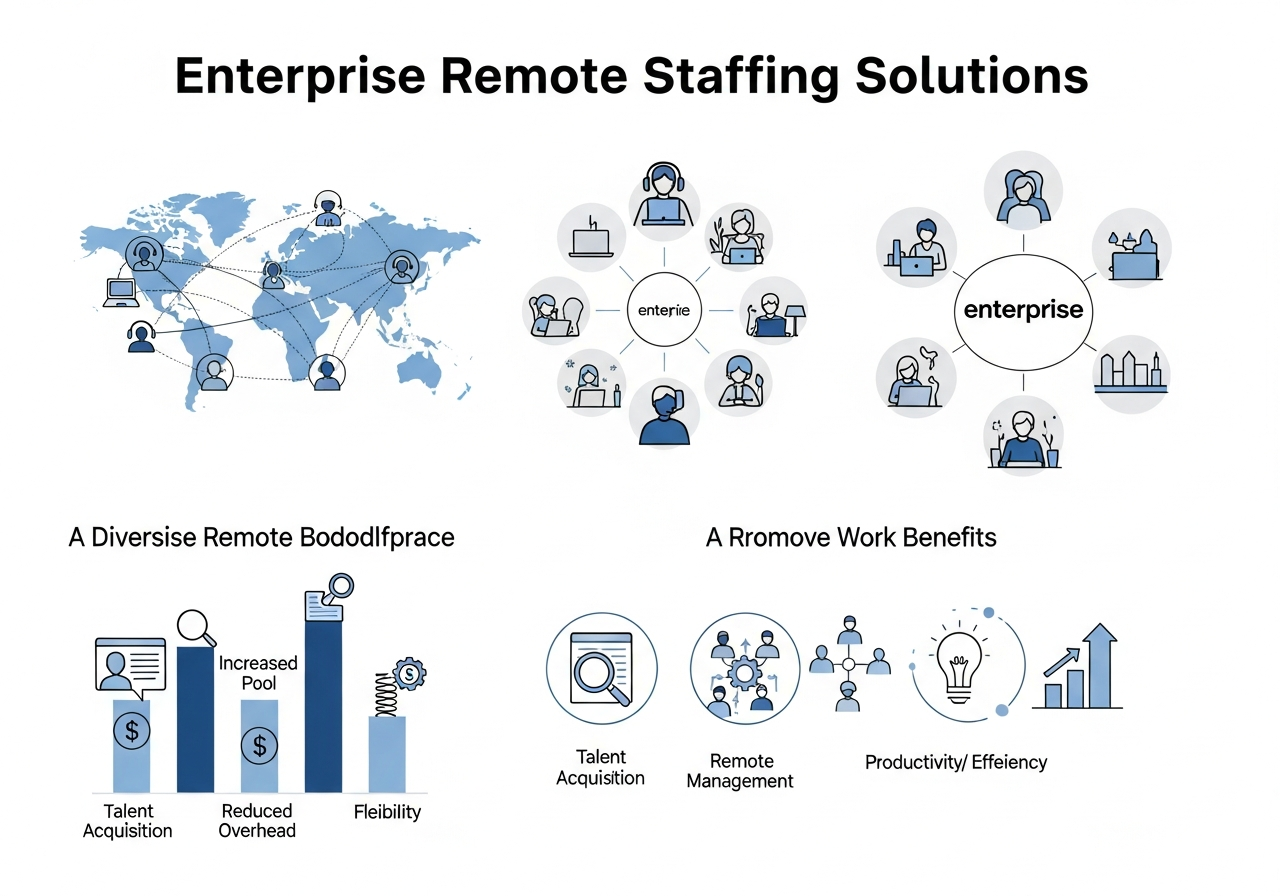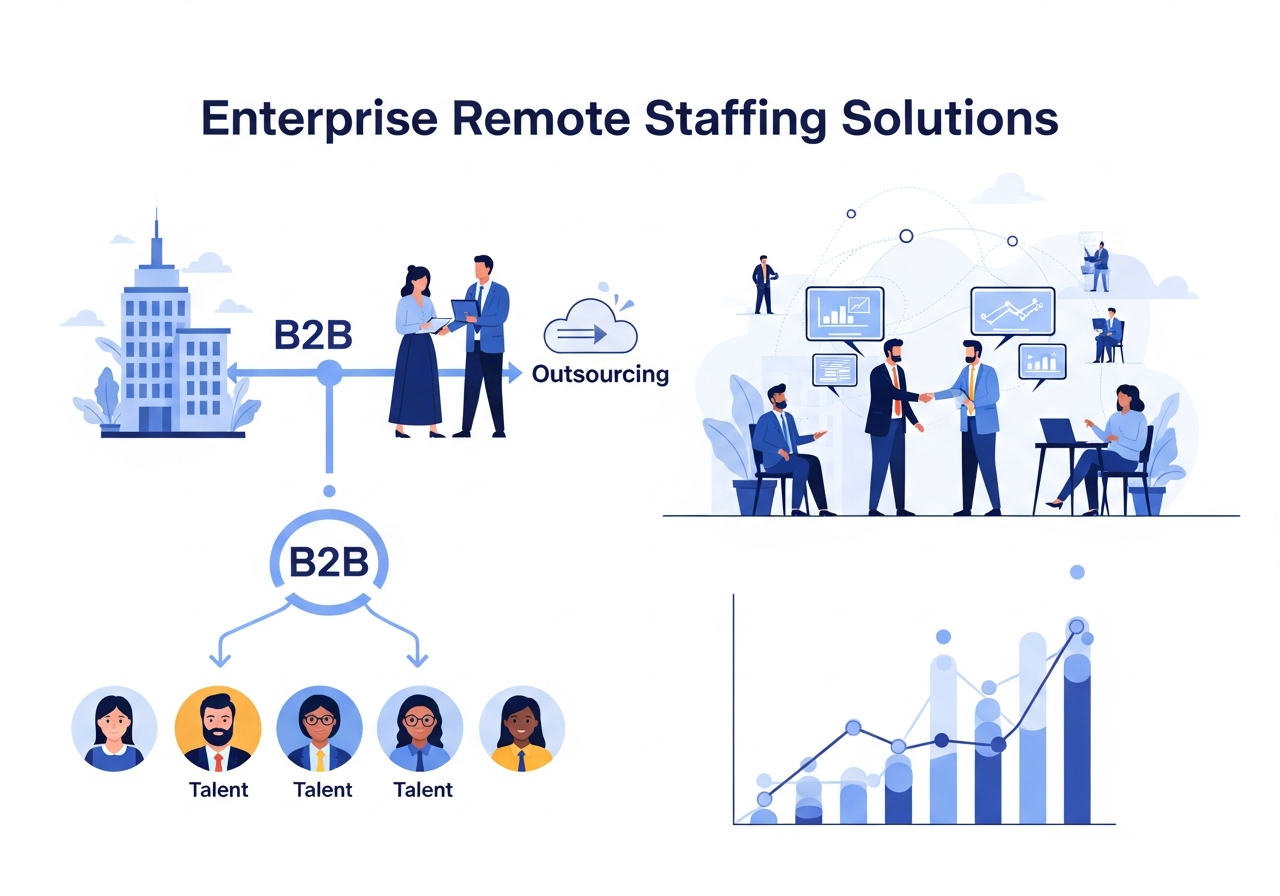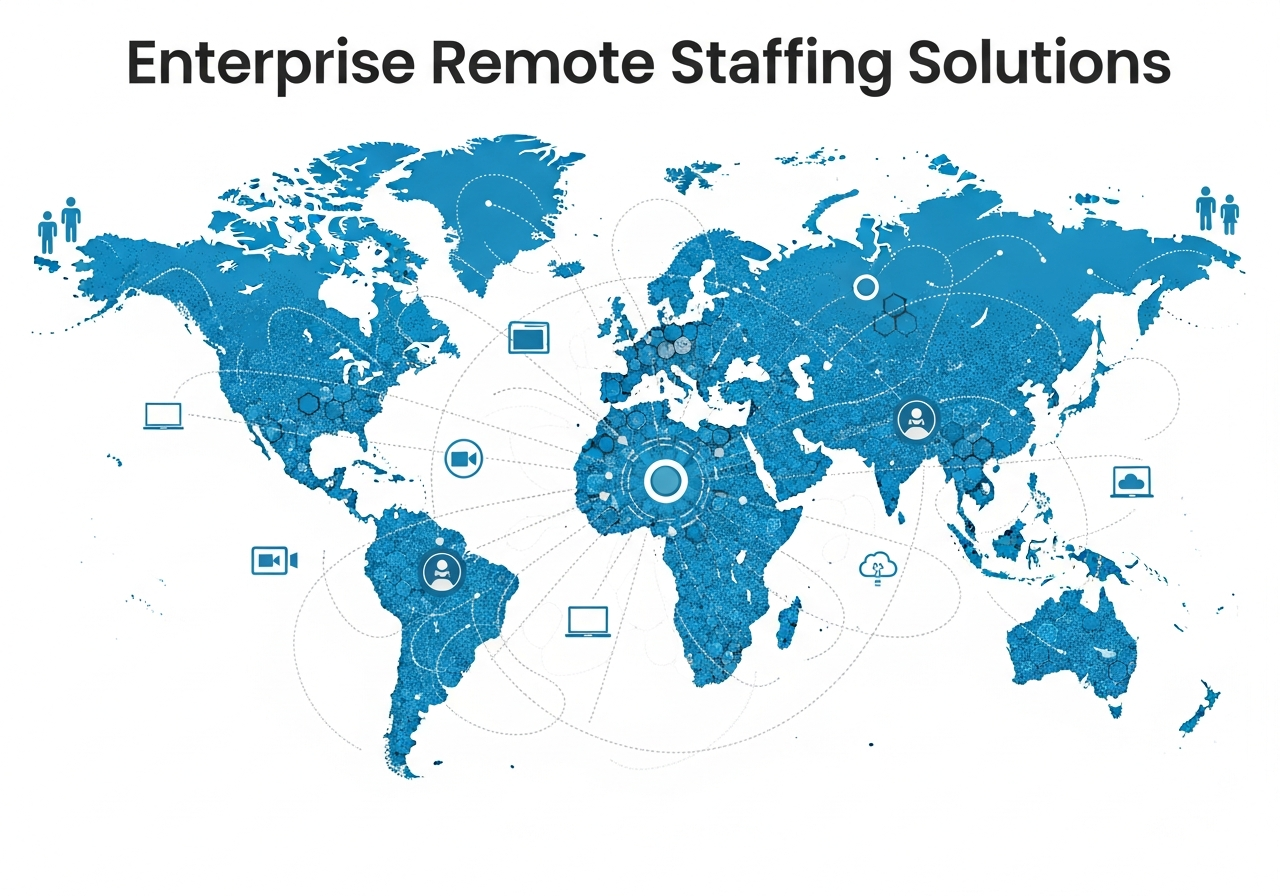
Many large companies are now turning to enterprise remote staffing solutions to grow faster, save money, and stay competitive. With the right virtual assistant package, enterprises can build teams across different countries and time zones without the high costs of traditional hiring.
Working with BPO virtual assistant providers gives access to trained professionals who can handle a wide range of roles, from admin tasks to specialized projects. Trusted BPO companies make it easy to bring in offshore virtual assistants who can work around the clock, giving your business constant productivity.
In this guide, we’ll explore why enterprises choose remote staffing, the benefits it brings, and how Stealth Agents can help you build a high-performing remote team that’s ready to scale.
Why Enterprises Choose Remote Staffing
-
Access to Global Talent
Remote staffing opens the door to skilled professionals from all over the world. Enterprises are no longer limited to hiring only in their local area, which means they can find the best person for each role. This also allows companies to bring in diverse perspectives that can lead to more creative solutions. By tapping into a global talent pool, businesses can stay competitive in rapidly changing industries.
-
Lower Costs
Hiring remote staff often costs less than maintaining in-house teams. Businesses save on salaries, office space, equipment, and other overhead expenses while still getting high-quality work. These savings can then be reinvested into growth, marketing, or new projects. It’s a cost-effective way to expand operations without compromising results.
-
Flexible Scaling
Enterprises can quickly add or reduce team members based on project needs. This flexibility allows companies to handle busy seasons or special projects without long-term hiring commitments. It also reduces the risk of overstaffing during slower periods. With remote staffing, scaling up or down can happen in days, not months.
-
Round-the-Clock Operations
With team members in different time zones, work can continue even after local office hours. This means faster turnarounds and better service for global customers. It also allows enterprises to respond quickly to urgent requests, no matter the time. Having continuous operations is a big advantage in fast-paced markets.
-
Specialized Skills on Demand
Enterprises can hire experts for specific tasks or industries without the need for long training periods. This speeds up project delivery and improves overall quality. It also lets companies access niche expertise that might be hard to find locally. By bringing in specialists only when needed, enterprises can stay efficient and focused.
Common Roles Filled by Enterprise Remote Staffing
1. IT and Software Development
Many enterprises hire remote developers, engineers, and IT specialists to build and maintain systems. This allows them to work with top tech talent without being limited by location. Remote IT teams can handle everything from troubleshooting to building new applications. Having experts available on demand also reduces downtime and speeds up project completion.
2. Customer Service and Support
Remote staffing makes it possible to provide customer support 24/7 through phone, email, or live chat. These teams handle inquiries, solve problems, and keep customers happy. With offshore support, enterprises can serve clients in different time zones without gaps in service. This leads to higher customer satisfaction and better brand loyalty.
3. Marketing and Sales Support
Remote marketing teams can manage social media, create content, run campaigns, and handle lead generation. Sales support staff can help with prospect research, outreach, and follow-ups. This allows in-house teams to focus on closing deals while remote staff handle repetitive or time-consuming tasks. As a result, marketing efforts become more consistent and scalable.
4. Administrative and Back-Office Work
Virtual assistants and admin staff can manage calendars, data entry, document preparation, and more. This frees up executives and managers to focus on strategic decisions instead of routine tasks. Remote admin teams can also handle large volumes of work without the need for additional office space. The result is higher productivity with lower overhead costs.
5. Finance and Accounting
Many enterprises outsource tasks like bookkeeping, payroll processing, and financial reporting to remote staff. This ensures accuracy and compliance without adding extra in-house positions. Skilled accountants and bookkeepers can also provide insights that help improve budgeting and cash flow. By outsourcing finance tasks, companies reduce costs while maintaining financial control.
Key Benefits of Remote Staffing Solutions for Enterprises
✔ 24/7 Productivity
With remote teams spread across different time zones, work can continue around the clock. This means projects move forward even when your local office is closed. Customers also get faster responses, which improves service and satisfaction. Continuous operations give enterprises a competitive edge in fast-moving industries.
✔ Faster Hiring and Onboarding
Remote staffing providers often have pre-vetted candidates ready to start. This shortens the hiring process from months to just days. With quick onboarding systems, new hires can start contributing almost immediately. This speed is crucial for enterprises that need to scale quickly to meet demand.
✔ Cost Savings
Remote staffing reduces expenses on salaries, office space, equipment, and utilities. Enterprises can hire top talent in regions with lower labor costs without sacrificing quality. These savings can be reinvested into growth initiatives like marketing, research, or product development. Over time, this creates a more efficient and profitable operation.
✔ Access to Specialized Skills
Remote staffing allows enterprises to bring in experts for specific tasks or projects. Whether it’s niche software development, multilingual support, or advanced analytics, you can find the right person without a long search. This access to specialized talent helps businesses innovate faster. It also ensures high-quality output from day one.
✔ Flexibility to Scale
Enterprises can increase or reduce their remote workforce based on changing needs. This means you can quickly respond to market changes, seasonal spikes, or new opportunities. Scaling is easier because you’re not tied to long-term contracts or office constraints. This flexibility reduces risk and improves agility.
✔ Improved Focus on Core Business
By outsourcing routine or specialized tasks, in-house teams can focus on high-level strategy and growth. This leads to better decision-making and faster progress toward business goals. Remote teams handle the day-to-day work so leaders can concentrate on big-picture initiatives. Over time, this focus improves overall performance.
✔ Access to a Wider Range of Tools and Technologies
Many remote staffing providers equip their teams with advanced software and collaboration tools. This means enterprises can benefit from modern systems without buying expensive licenses. Having access to the right technology improves productivity, communication, and work quality across the board.
Challenges in Managing Enterprise Remote Teams
- Communication Across Time Zones – Different working hours can make it harder to connect in real time. Without a plan, this can slow down decision-making and delay projects. Setting overlapping work hours or using clear communication channels can reduce these issues. Regular updates help keep everyone aligned, even when schedules don’t match perfectly.
- Maintaining Team Culture – Remote teams can feel disconnected without the daily interactions of an office. This can impact morale and collaboration over time. Leaders need to be intentional about creating virtual spaces for bonding and recognition. A strong culture keeps people engaged and committed to company goals.
- Tracking Performance and Accountability – Without direct supervision, it can be harder to see who is meeting expectations. Relying only on self-reporting may not give a full picture. Using project management tools and performance metrics helps track progress fairly. Clear accountability systems ensure that work gets done on time and at the right quality.
- Technology and Security Concerns – Remote teams rely heavily on technology, and issues like poor internet or outdated systems can hurt productivity. Security is also a concern, especially when sharing sensitive company data. Providing secure tools and proper training can reduce these risks. Investing in reliable tech keeps operations running smoothly.
- Consistency in Quality – With team members spread out, differences in skills or processes can lead to inconsistent results. This can affect customer experience and project outcomes. Having standard operating procedures (SOPs) ensures everyone follows the same guidelines. Regular reviews help catch quality issues before they escalate.
- Onboarding Large Numbers of Staff – Bringing in multiple new hires at once can overwhelm managers and HR teams. Without a clear onboarding plan, new staff may take longer to get up to speed. Using structured training materials and mentorship programs can make onboarding smoother. This helps new hires contribute faster and with fewer mistakes.
- Managing Workload and Burnout – Remote work can blur the line between personal and professional time, leading to overwork. Burned-out employees are less productive and more likely to leave. Encouraging regular breaks, realistic deadlines, and balanced workloads keeps morale and performance high. Healthy teams are sustainable teams.
How Stealth Agents Delivers Enterprise Remote Staffing Solutions
Building and managing a large remote team can be challenging, but Stealth Agents makes the process simple and stress-free. With proven systems, experienced talent, and dedicated support, they help enterprises scale without sacrificing quality or efficiency.
Key Features of Stealth Agents
✔ Hire 10–15+ Years Experienced Professionals
Gain access to top-tier talent with deep industry knowledge. These professionals can handle complex projects with minimal training. Their experience means fewer mistakes and faster results for your business.
✔ Dedicated Account Manager
Work with a single point of contact who oversees your team and handles any issues. This ensures smooth communication and faster problem-solving. Your account manager also provides regular updates so you always know how your team is performing.
✔ Cloud-Based Platform
Manage tasks, reports, and updates in one secure online platform. This keeps everyone organized and connected no matter where they are in the world. The platform also allows real-time tracking, so you can monitor progress instantly.
✔ Best Reviews on Google
Stealth Agents has a strong track record backed by positive client feedback. These reviews highlight their reliability, quality, and customer service. Knowing other enterprises trust them gives you confidence in your decision.
✔ Top 1% Vetted Talent
Only the most qualified candidates make it through Stealth Agents’ screening process. This means you’re getting professionals who are already proven in their fields. The result is higher productivity and better long-term outcomes.
✔ Recognized by Forbes as Top 2 Virtual Assistant Services
This recognition reflects Stealth Agents’ commitment to excellence. It also shows they are trusted by global brands to handle high-level tasks. Partnering with them means working with a proven industry leader.
Best Practices for Managing Enterprise Remote Teams
- Create Clear SOPs (Standard Operating Procedures) – Write step-by-step guides for each task so everyone follows the same process. This reduces confusion and helps maintain consistent quality. Updating SOPs regularly keeps them relevant as your business evolves.
- Use the Right Project Management Tools – Platforms like Trello, Asana, or ClickUp keep tasks, deadlines, and responsibilities in one place. This makes it easier for large teams to stay organized and collaborate. Tools with built-in chat and file sharing also improve efficiency.
- Schedule Regular Check-Ins – Weekly or bi-weekly video calls help maintain team alignment. These meetings are a chance to address issues, share updates, and celebrate wins. Consistent communication builds trust and keeps projects moving smoothly.
- Encourage Open Communication – Make it easy for team members to ask questions or share ideas. Use dedicated channels for quick discussions and problem-solving. An open environment helps avoid misunderstandings and improves teamwork.
- Provide Ongoing Training – Keep your team’s skills sharp with regular training sessions or updated resources. This ensures they can adapt to new tools, trends, or processes. Well-trained employees are more confident and productive.
- Recognize and Reward Good Work – Show appreciation for top performers with shoutouts, bonuses, or small rewards. Recognition boosts morale and motivates others to perform better. A culture of appreciation makes people want to stay long-term.
- Track Performance and Offer Feedback – Use KPIs and regular performance reviews to measure success. Give constructive feedback to help team members improve. Combining praise with actionable advice keeps performance on track.
Final Thoughts: Build a High-Performance Remote Team with Confidence
Enterprise remote staffing solutions give businesses the power to grow faster, work smarter, and operate on a global scale. With access to top talent, reduced costs, and the flexibility to scale, enterprises can stay competitive in fast-changing markets. The key is having the right systems, tools, and partner to make remote staffing smooth and effective.
Stealth Agents takes the stress out of building and managing large remote teams. They handle the hiring, onboarding, and management so you can focus on strategy and growth. With their experienced talent, proven processes, and personalized support, you can scale your operations without losing quality or efficiency.
A well-managed remote team can transform how your enterprise operates—providing 24/7 coverage, specialized skills, and faster project delivery. By partnering with Stealth Agents, you’re not just filling roles—you’re building a global workforce that works like an extension of your in-house team.f you’re ready to grow your enterprise with reliable, high-performing remote staff, contact Stealth Agents today and start scaling with confidence.
Frequently Asked Questions
What is the average cost comparison between enterprise remote staffing and traditional hiring?
Remote staffing is often more cost-effective than traditional hiring. By hiring remotely, you can save on expenses such as office space, equipment, and other overheads typically associated with in-person employees.
How do enterprise remote staffing contracts typically work regarding termination and replacement policies?
Most contracts allow you to end the agreement with 30-90 days’ notice. Companies like Stealth Agents often replace staff for free if they don’t meet expectations. Contracts may also include trial periods, guarantees for performance, and flexible terms so you can adjust team size as needed without extra fees.
What compliance and legal considerations exist when hiring enterprise remote staff internationally?
Hiring remote staff internationally means following local employment laws, tax rules, and data protection laws like GDPR or CCPA. You also need to protect intellectual property and classify workers correctly as contractors or employees. Trusted staffing companies usually handle these legal details, including contracts and proper documentation.
Which enterprise remote staffing models work best for different company sizes and industries?
Small businesses (50-200 employees) often prefer managed services with a dedicated manager. Medium-sized companies (200-1000 employees) use a mix of direct hires and managed teams. Large companies (1000+ employees) may use several models, such as adding temporary staff, hiring dedicated teams, or hiring for specific projects across different locations.
What are the typical turnaround times for scaling enterprise remote teams up or down?
It usually takes 5-14 days to add staff for common roles and 2-4 weeks for specialized jobs. Scaling down can happen right away with proper notice. For urgent needs, some providers can add staff within 24-48 hours if they have pre-screened candidates ready to go.
How do enterprise remote staffing providers handle intellectual property protection and confidentiality?
Good providers use strong protections like NDAs, secure VPNs, encrypted communication, and limited file access. They may also monitor workstations, block USB ports, and keep detailed logs of who accesses what. Many have cyber insurance and follow strict security standards like SOC 2 Type II.
What training and onboarding processes do enterprise remote staffing companies provide for large teams?
Top providers offer step-by-step onboarding, including company introductions, job-specific training, and setting up tools. Training often covers company rules, industry knowledge, and communication practices. Many providers assign trainers, offer 24/7 support during the first few weeks, and provide ongoing training to keep skills up to date.
Which key performance indicators should enterprises track when managing remote staffing solutions?
Track how much work gets done (tasks completed, response times), the quality of work (accuracy, client satisfaction), and cost savings (cost per task, ROI). Other important metrics include how quickly new hires become productive, how long staff stay, and how well teams communicate and work together.
What backup and business continuity plans do enterprise remote staffing providers offer?
Providers usually have backup staff, extra data centers, and plans for handling emergencies. They offer guaranteed coverage, alternative ways to communicate, and quick solutions for problems like power outages or internet issues. Many also provide 24/7 support and can quickly shift work to other team members if needed.
How do enterprise remote staffing providers ensure cultural alignment and team integration across global teams?
Providers check for cultural fit, offer training on working with different cultures, and set clear communication rules. They may organize virtual team-building activities, assign mentors, and use tools to help teams work together across time zones. Regular surveys and informal virtual spaces also help keep teams connected.