Summarize This Article With AI :

Customer service support agent solutions are essential for businesses that want fast, consistent, and professional responses without the stress of managing it all in-house. Stealth Agents provides top-tier virtual support agents who handle your customer inquiries with care, helping you boost satisfaction, save time, and focus on growth.


A customer service support agent can make or break your business reputation, especially when 90% of customers say their experience with service quality impacts their loyalty.


Many businesses struggle with managing customer expectations, rising operational costs, and the time-consuming nature of support tasks. Outsourcing these roles isn’t just smart it’s a game-changer.


Companies that hire expert support solutions have reported a 30% boost in efficiency while cutting overhead costs.


Stealth Agents offers personalized services to businesses, helping them employ experienced support agents and virtual assistant services tailored to their needs.


With free consultations on virtual assistant pricing and preferences, finding your ideal customer service partner has never been easier.


What Is a Customer Service Support Agent?

A customer service support agent is a professional who addresses customer inquiries, handles complaints, and ensures a positive experience for every customer interaction.


This role focuses on clear communication, problem-solving, and creating satisfaction by resolving issues effectively and quickly.


Businesses with excellent customer service see up to a 60% higher retention rate, highlighting the value of this role.


A virtual assistant for customer service offers similar benefits but works remotely, providing flexibility for companies and quick customer responses.


These agents often manage emails, live chats, and phone calls, ensuring customers feel heard and valued. Serving as a conduit between companies and their target market is essential to preserving loyalty and trust.


The demand for skilled customer service professionals continues to grow as companies prioritize meaningful, responsive customer engagement.


What Are the Benefits of Hiring Customer Service Support Agents?

1. Professional Responses Elevate Customer Experience

When it comes to customer service, every encounter counts. Hiring a skilled customer service support agent ensures customers receive professional, accurate, and timely responses. Using third party customer service can help scale support while maintaining this high standard.

This level of service makes your business appear reliable and attentive, leaving a lasting positive impression.

Customers appreciate clear solutions to problems without unnecessary delays or confusion.

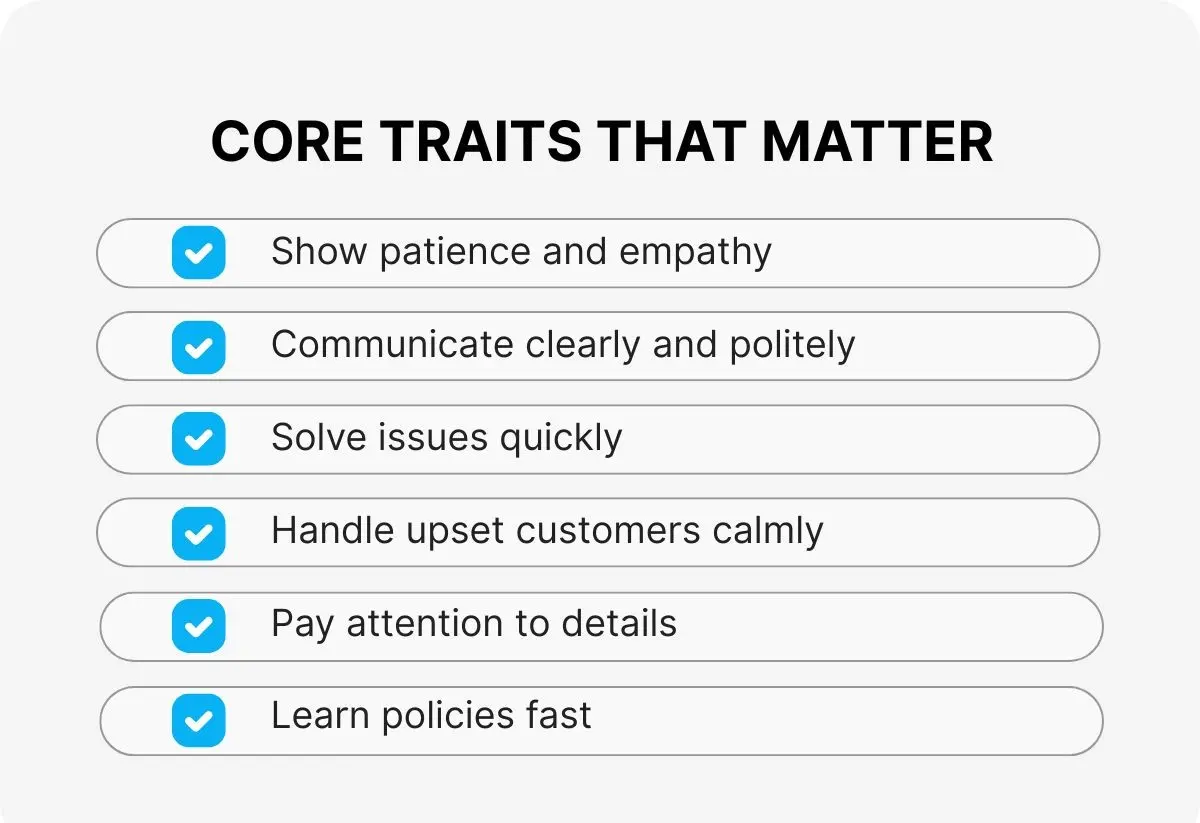
Well-trained agents are also equipped to handle stressful situations without letting emotions interfere.

This creates a smoother resolution process, keeping customers satisfied even during tricky circumstances. Satisfied clients are more likely to use your company again and refer others to it.


2. Saves Time for Core Business Functions

Managing customer inquiries can quickly consume valuable time. By delegating these tasks to an online customer service representative, your team can focus on other priorities like product development or marketing.


Agents trained exclusively for customer interactions can efficiently manage complaints and queries, reducing operational bottlenecks.


This division of responsibilities ensures each aspect of the business runs smoothly without interruptions.


Additionally, it minimizes errors caused by multitasking, helping your core team stay more focused and productive.


This separation is essential for growing businesses to maintain high service levels without impacting other departments. Efficiently handled support allows you to maintain a good reputation while scaling different parts of the operation.


3. Consistent Communication Across Channels

Consistency is crucial in customer service through phone, email, or chat.


When you hire customer service representatives, they help maintain the same tone and message across all communication platforms.


This creates trust, as your customers know what to expect no matter how they reach you.


Having a unified approach also prevents mixed signals or confusion that could arise from varied responses. Clear communication reassures customers that they are dealing with a professional and reliable team.


Agents can also tailor language to fit your brand’s voice, ensuring authentic and engaging interactions. Consistent service builds your credibility and positions your brand as one that values customer relationships.


4. Improves Handling of High-Volume Periods

Customer inquiries often spike during peak seasons or product launches. A customer service support agent is vital for managing these periods without overwhelming other teams.


Their training ensures they can work quickly and efficiently under pressure, keeping customers satisfied while addressing their concerns.


This targeted assistance prevents delays or frustrations that could lead to lost business.


With experienced support in place, whether handling returns or fielding product questions, inquiries are resolved promptly. Quick turnarounds show you’re prepared and dedicated, even during busier times.


This preparedness boosts your overall reputation, making your business stand out compared to competitors struggling under the same strain.


5. Builds Long-Term Customer Loyalty

Providing exceptional customer care is one of the fastest ways to foster loyalty.


An experienced online customer service representative can make customers feel valued through honest communication and problem-solving skills.


Treating each inquiry thoughtfully, even minor ones, can win long-term trust and repeat purchases. Agents who go the extra mile, such as following up or personalizing responses, demonstrate their commitment to customer happiness.


The goodwill created by excellent service can turn casual buyers into brand advocates. These loyal customers not only return but also actively recommend your business within their networks.


A proactive and caring approach leads to sustainable benefits that reflect steady sales and brand reputation.


What Does a Customer Service Support Agent Do?

1. Respond to Customer Queries and Concerns

A significant part of the role involves addressing customer questions about products, services, or company policies. The goal is to provide clear and meaningful responses, turning potential frustrations into positive experiences.


A customer service support agent may interact through various channels, such as live chat, phone, and email.


Their ability to actively listen and respond empathetically is at the heart of building trust.


Great agents ensure customers feel heard and valued, even when dealing with challenging situations. This interaction often builds the foundation for lasting customer loyalty.


Skilled professionals know how to organize information logically, delivering solutions that simplify customers’ processes. By managing queries effectively, they help strengthen a brand’s reputation.


2. Resolve Complaints and Provide Solutions

Handling complaints with professionalism is an essential task for any customer service role.


Rather than focusing on the problem alone, great agents look for actionable solutions to satisfy both the customer and the company. Whether issuing refunds or troubleshooting technical issues, the approach must be practical yet diplomatic.


Imagine an irate customer reaching out after a product fails to deliver as promised a skilled agent can turn this into an opportunity to improve their experience.


Even when demands seem unreasonable, staying calm while negotiating alternatives reflects expertise.


Successful resolution is often the result of patience, active listening, and resourceful thinking. Such efforts contribute to customer satisfaction and a brand’s ability to grow through constructive feedback.


3. Maintain Accurate Customer Records

A customer service support agent must document all interactions. Keeping thorough and orderly records ensures that ongoing issues can be resolved without hassle.


This also helps companies analyze trends in customer behavior or recurring problems.


Whether tracking refunds or noting a technical complaint, proper documentation prevents misunderstandings.


For example, accurate records make it easier for teams to pick up where the previous agent left off if a customer reaches out again.


These logs are especially crucial for firms among the best 50 24/7 customer service firms, where smooth transitions between shifts are essential.


Maintaining such records adds a sense of professionalism that builds trust. Attention to detail here reflects a company’s commitment to high-quality support.


4. Provide Product or Service Guidance

Customers often seek advice on how to use a product or service effectively. Whether walking them through installation processes or explaining features, agents act as guides.


For example, if a client struggles to activate software or assemble a product, the agent provides step-by-step instructions tailored to their understanding.


This assistance elevates the user experience, ensuring customers get the most out of purchases. Advice tailored to the client’s individual needs can make a huge difference.


Unlike mere problem-solving, this proactive effort fosters satisfaction and boosts confidence in the brand.


Effectiveness in this work area is defined by having a solid understanding of the product and the capacity for clear communication.


5. Build Relationships and Represent the Brand

Customer service goes beyond solving immediate problems; it fosters long-term relationships.


Agents often serve as the face of the company, representing its values and ethos in every interaction. A warm tone and consistent follow-ups leave customers feeling appreciated.


For instance, a customer service assistant executive team might include agents who send thank-you emails after resolving issues, reinforcing loyalty.


This human touch resonates with customers, ensuring they feel connected to the brand. Small gestures like personalized recommendations or recognizing loyal customers can set a company apart.


Strong relationships lead to more than satisfied individuals; they create advocates who recommend the company to others. Excellent customer service is a powerful way to nurture this goodwill.


What Tools Do Customer Service Support Agents Use?

1. Zendesk

Zendesk is excellent for managing and tracking customer support requests through tickets. It provides a neat interface for agents to respond to queries across different channels like email, chat, and social media. The tool offers automation options, which help assign tickets and send quick updates. It also includes reporting and analytics to monitor team performance. Zendesk integrates smoothly with many third-party apps to extend its capabilities.


  • Google Rating: 4.3/5
  • Price: Starts at $19/user/month
  • Website: www.zendesk.com


2. Freshdesk

Freshdesk stands out for its easy-to-use interface that supports ticket management and live chat. It comes with features like canned responses to quickly address common issues. Freshdesk also includes a knowledge base feature, letting businesses create customer self-help articles. Its collaboration tools make it simple for agents to work together on complex queries. The system also offers built-in analytics for tracking customer satisfaction and team progress.


  • Google Rating: 4.4/5
  • Price: Free plan available; paid plans start at $15/agent/month
  • Website: www.freshworks.com/freshdesk


3. HubSpot Service Hub

HubSpot Service Hub is ideal for companies looking for a customer-first approach with tools like ticket tracking and live chat. It allows agents to create a shared inbox so teams can view and manage customer messages. The tool also integrates with the HubSpot CRM, making customer data easily accessible. Its customer feedback surveys help businesses improve their service based on real insights. Service Hub supports extensive reporting to ensure service goals are met.


  • Google Rating: 4.5/5
  • Price: Starts at $50/month (includes two users)
  • Website: www.hubspot.com/products/service


4. LiveChat

Best Features: LiveChat is designed to communicate flawlessly in real-time with customizable chat widgets. It offers chat routing, which directs customers to the right agents for faster responses. The chat history feature allows agents to revisit and address previous interactions. Integrations with various tools, like CRM systems, help streamline agents’ workflows. Additionally, LiveChat provides detailed analytics to track agent performance and customer satisfaction.


  • Google Rating: 4.6/5
  • Price: Starts at $20/user/month
  • Website: www.livechat.com


5. Intercom

Best Features: Intercom is widely known for its messenger-based customer support system. Its chatbot feature can automatically interact with customers, resolving simple queries around the clock. Agents can also manage tickets and emails from a single dashboard within Intercom. This tool provides proactive support by letting businesses send personalized messages based on user behavior. It works well with tools like Slack and Salesforce to enhance team performance.


  • Google Rating: 4.2/5
  • Price: Starts at $74/month
  • Website: www.intercom.com

These tools provide practical solutions to help any customer service support agent deliver top-notch assistance to customers.


Why Choose Stealth Agents When Hiring Customer Service Support Agents?

Stealth Agents stands out as a trusted choice when hiring a customer service support agent, offering quality and reliability that businesses can depend on.


Research indicates that 93% of consumers are inclined to return to businesses that offer superior customer service, highlighting its importance for growth.


Businesses can access skilled professionals trained to handle customer concerns with empathy and care by choosing Stealth Agents.


Their offerings are customized to satisfy particular requirements, ensuring a personalized experience that helps foster long-term customer loyalty.


By outsourcing to Stealth Agents, companies can save up to 70% in operational costs while maintaining high service standards.


The team is equipped to handle everything from basic inquiries to complex customer issues, always maintaining professionalism and efficiency. With Stealth Agents on board, you can focus on scaling your business while leaving customer service in dependable hands.


How Do Different CSaaS Providers Structure Their Pricing?

It can be hard to understand what you’re paying for when looking at pricing tables, but most Customer Support as a Service (CSaaS) providers offer a few key plans to suit different businesses whether you’re running a small Shopify store or a growing company with custom needs.


Here’s a quick overview of common CSaaS pricing models and what they include:


Flat-Rate, All-Inclusive Plans

Some providers offer simple flat monthly plans. These include everything support agents, AI tools (like chatbots), reporting dashboards, quality checks, knowledge base management, and compliance. The best part? No extra fees or surprise charges for new features.


Who is it for?


Businesses that want a simple, hands-off solution with no hidden costs.


Hybrid Plans: Human + AI Support

These plans combine human support and AI. You get a set number of tickets, with some handled by people and others solved by automation. These plans are great for businesses that want to keep costs low but still need a mix of human help and automation.


Who is it for?


E-commerce stores, like Shopify shops, looking to cover a lot of ground but without hiring large teams.


Pay-As-You-Go or Flexible Plans

If you prefer paying only for what you use, some providers offer flexible pricing. You can pay hourly or per task, with no contracts or setup fees. These plans let you scale up or down based on your needs and track performance easily.


Who is it for?


Startups or fast-growing e-commerce stores that want low commitment and simple support options.


Custom & Enterprise Plans

For businesses with more complex needs, custom plans are available. These are tailored to your team size, workflows, and ticket volume. They often include training, custom reporting, and strict quality checks. However, tools like CRMs or ticketing systems may not be included in the base cost.


Who is it for?


Larger companies that need premium support, scalability, and specific performance goals but can manage other tools on their own.


Software-Only Plans

Some providers focus on software rather than staffing. These plans provide tools to help your in-house support team. Pricing usually depends on the features, like:


  • Basic automation and SLA tools (entry-level)


  • Custom workflows and integrations (mid-tier)


  • Advanced AI, multilingual support, and audit logs (high-tier)


How Do Customer Service Providers Keep Quality High and Measure Success?

A good Customer Service as a Service (CSaaS) provider does more than just answer calls with a friendly voice. They focus on providing great service every time and showing you that it’s working.


How They Check for Quality

To make sure their service is always good, most providers use a few key methods:


  • Quality Check Teams: They have special teams that listen to calls and read messages to make sure agents are doing a good job. They give feedback to help them improve.


  • Tools and Software: They use programs like Zendesk or Freshdesk that can automatically spot problems and make sure they meet their goals.


  • Constant Training: Agents get regular training to keep their skills sharp and stay updated.


  • Being Open: Good providers let you see how your customer support is doing so you know what’s happening.


Important Numbers They Watch

Top CSaaS teams track a few main numbers to make sure agents are performing well and customers are happy:


  • Customer Satisfaction (CSAT): A quick survey asking customers if they were happy with the help they received.


  • First Response Time (FRT): How fast an agent first replies to a customer. A quick reply makes customers feel heard.


  • Average Handle Time (AHT): The average time it takes to solve a customer’s problem.


  • Resolution Rate: The percentage of problems solved in the first contact. This shows how effective the agents are.


  • Net Promoter Score (NPS): A score that shows how likely customers are to recommend your business to others.


Can Customer Service Support Agents Integrate With Existing Tools?

Most customer service tools work easily with popular platforms like Zendesk, Intercom, Shopify, and more. This means your team can keep using the systems they know without needing to switch or do extra work.


Setting up integrations is quick and simple, so your team can handle tickets, chats, and customer info all from one place. This makes it easier to give great service and stick to your usual workflows, saving time and avoiding the need for long training.


Whether you’re helping customers through email, live chat, or social media, these tools connect everything for a smooth and simple experience for both your team and your customers.


How Do CSaaS Providers Blend Human and AI Support for Seamless Customer Service?

Today’s best CSaaS (Customer Service as a Service) providers combine smart AI tools with human skills to give great support. The goal is to let automation and human care work together smoothly, without frustrating customers.


Here’s how they do it:


  • Helpful Chatbots: Tools like Intercom and Zendesk use AI chatbots to answer simple questions, share helpful links, and solve easy problems quickly.  


  • Smooth Handovers: When a problem is more complicated, AI passes the chat (along with all the details) to a human agent. This way, customers don’t have to repeat themselves.  


  • All-in-One Communication: Platforms like Freshdesk and HubSpot Service Hub bring all customer messages whether from chat, email, phone, or social media into one place. AI helps sort and prioritize messages, while humans step in when extra care or expert knowledge is needed.  


  • Better Insights: AI looks at customer interactions and feedback to help agents improve their responses and solve issues faster. Over time, this helps teams provide even better service.


Do CSaaS Providers Combine Human Agents With AI Support?

Most Customer Support as a Service (CSaaS) providers mix real human agents with smart AI tools to offer fast and personalized help. It’s like having a helpful assistant and a smart robot working together: customers get quick answers for simple issues, and a real person steps in for more complex problems.


Here’s how it works:


  • AI Chatbots & Assistants: AI chatbots or voice assistants handle basic questions, troubleshooting, and common requests. They’re available 24/7 and reply instantly, so customers don’t have to wait.


  • Smooth Handoffs: If the issue needs a human touch for something like billing, special requests, or more personal help the AI sends the conversation to a trained agent right away. No long holds or waiting around.  


  • Teamwork Tools: Agents can see all the chat history and customer details, so they can pick up where the AI left off without any confusion.  


  • Learning System: Both AI and human agents help improve the system by providing data, so responses get better and faster over time.  


Frequently Asked Questions

How do customer service support agents enhance brand reputation?

They build trust and loyalty by delivering consistent, professional interactions. Efficiently addressing inquiries and complaints creates positive customer experiences, encouraging repeat business and word-of-mouth referrals, which strengthen the company’s image.


What qualifications should you look for when hiring a customer service support agent?

Key qualifications include strong communication skills, problem-solving abilities, experience with support tools, and a customer-focused attitude. Industry-specific knowledge and the ability to perform under pressure are also valuable assets.


How does technology improve customer service support agent performance?

Technology streamlines processes, provides real-time data, and enables efficient communication through tools like CRM systems and AI chatbots. These tools help agents respond quickly and effectively, enhancing service quality and customer satisfaction.


What are the top challenges faced by customer service support agents?

Agents often manage high call volumes, address diverse customer needs, and maintain a positive demeanor under pressure. Staying updated on product knowledge and adapting to new technologies are additional challenges they must navigate.


How can businesses measure the success of customer service support agents?

Success is measured through KPIs like customer satisfaction scores, first response time, resolution rate, and average handle time. Regular feedback and performance reviews also provide insights into their effectiveness.


Why is empathy important for customer service support agents?

Empathy allows agents to understand and address customer emotions effectively. By showing empathy, they can provide personalized solutions, improve satisfaction, and build long-term relationships with customers.


How do customer service support agents handle difficult customers?

They remain calm, listen actively, and provide clear, empathetic responses. By focusing on solutions and maintaining professionalism, agents de-escalate tensions and resolve issues efficiently.


What role do customer service support agents play in customer retention?

Agents ensure positive interactions that foster trust and loyalty. By resolving issues promptly and maintaining consistent communication, they enhance satisfaction and encourage repeat business, playing a key role in retention.


How does outsourcing customer service support impact business growth?

Outsourcing allows businesses to scale efficiently, reduce costs, and access specialized expertise. This enables companies to focus on core functions while maintaining high-quality customer interactions that drive growth and profitability.


What are the best practices for training customer service support agents?

Effective training includes comprehensive onboarding, ongoing skill development, role-playing scenarios, and regular feedback. Leveraging technology tools and fostering a supportive work environment further enhance training outcomes.


Takeaways

A reliable customer service support agent can make all the difference for your business.


By partnering with experts who understand the value of excellent customer communication, you’re ensuring a smoother experience for your clients and more time for you to focus on growth.


Skilled agents address customer concerns and help build trust and loyalty with your audience.


Choosing the proper support can set your business apart in today’s competitive market. It is essential to work with professionals who deliver consistently high-quality service.


Summarize This Article With AI :