Assistants for doctors help streamline your practice by handling time-consuming admin tasks like scheduling, billing, and patient communication, so you can focus on patient care, not paperwork. Stealth Agents provides HIPAA-trained virtual assistants who reduce burnout, cut costs, and boost clinic efficiency. Start today with a free consultation at stealthagents.com.
Looking to streamline your healthcare practice? The global market for virtual medical assistants is expanding rapidly, with only 19% of medical practices using them in 2025, despite large gains in efficiency. These assistants help reduce administrative burdens, medical professionals spend up to 50% of their time on non-clinical tasks, allowing you to devote more time to patient care. With Stealth Agents, you can hire trained virtual assistants who support your workflow, ensuring you focus more on your patients and less on paperwork.
Virtual assistants for doctors have become essential to the healthcare industry. They provide expert support that enhances efficiency and patient care.
Statistics show that doctors with virtual assistants can handle up to 30% more patients, significantly boosting productivity.
Whether you’re a new practitioner or a seasoned physician, leveraging virtual assistants can transform how you manage your workflow. The shift to using virtual assistants in healthcare has never been easier or more impactful.
At Stealth Agents, we specialize in connecting doctors with top-tier assistants to ensure your practice thrives.
Please use our free consultations to explore client preferences and virtual assistant pricing today.
What Other Industries Use Virtual Assistants?
Virtual assistants (VAs) are helpful in many industries, not just healthcare. Here are some examples:
- Law Firms: VAs help with scheduling, document preparation, and client communication.
- E-Commerce: Online store owners use VAs to manage orders, update product listings, and handle customer service.
- Accounting and Finance: VAs assist with bookkeeping, invoicing, and tracking expenses.
- Real Estate: Agents rely on VAs to schedule showings, manage listings, and follow up with clients.
- Therapy Practices: VAs handle appointment scheduling, billing, and patient communication.
- Marketing and Social Media: Influencers, digital marketers, and business coaches use VAs to create content, manage social media, and engage with their audience.
- Small Businesses and Entrepreneurs: From running Shopify stores to managing client projects, VAs help business owners save time and stay organized.
How We Match Doctors With the Right Virtual Assistant
Edit PostsFinding the perfect fit is key. We start by conducting a thorough consultation to learn your clinic’s unique needs, preferred technologies, and daily workflow. This way, we can pinpoint exactly which skills and experience your assistant should bring to the table.
Once we know what you’re looking for, our team reviews your requirements. It identifies candidates within our highly trained pool, focusing on those familiar with your specific software, time zone, and specialty. Each assistant undergoes a comprehensive vetting and hands-on training process, including our proprietary healthcare training modules and full HIPAA compliance certification.
All of this ensures that, by the time you meet your matched assistant, they’re fully equipped to jump in and support your team right away. Whether you use Athenahealth, Epic, Kareo, or custom tools, your VA will already know the ropes.
What Does a Healthcare VA Do?
A healthcare virtual assistant (VA) supports medical professionals, including surgeons; a virtual assistant for family medical doctors can assist physicians by handling administrative tasks.
These tasks may include scheduling appointments, managing patient records, and assisting with billing, making them valuable for a virtual assistant medical practice.
A virtual assistant for surgeons can ensure that operating schedules are well-organized and that pre- and post-operative communication with patients runs smoothly.
A virtual assistant can manage patient follow-ups and coordinate care across various health services in a family medical practice.
Virtual admin support for general practice involves streamlining daily operations, allowing doctors to focus more on patient care.
A virtual assistant for physicians can also help with research, data entry, and other clerical work, reducing the workload on healthcare providers.
Now, hire a healthcare virtual assistant for doctors to assist with financial record-keeping and reporting, ensuring accurate and timely financial management.
What Qualifications and Skills Should Doctors Look for When Hiring a Virtual Assistant?
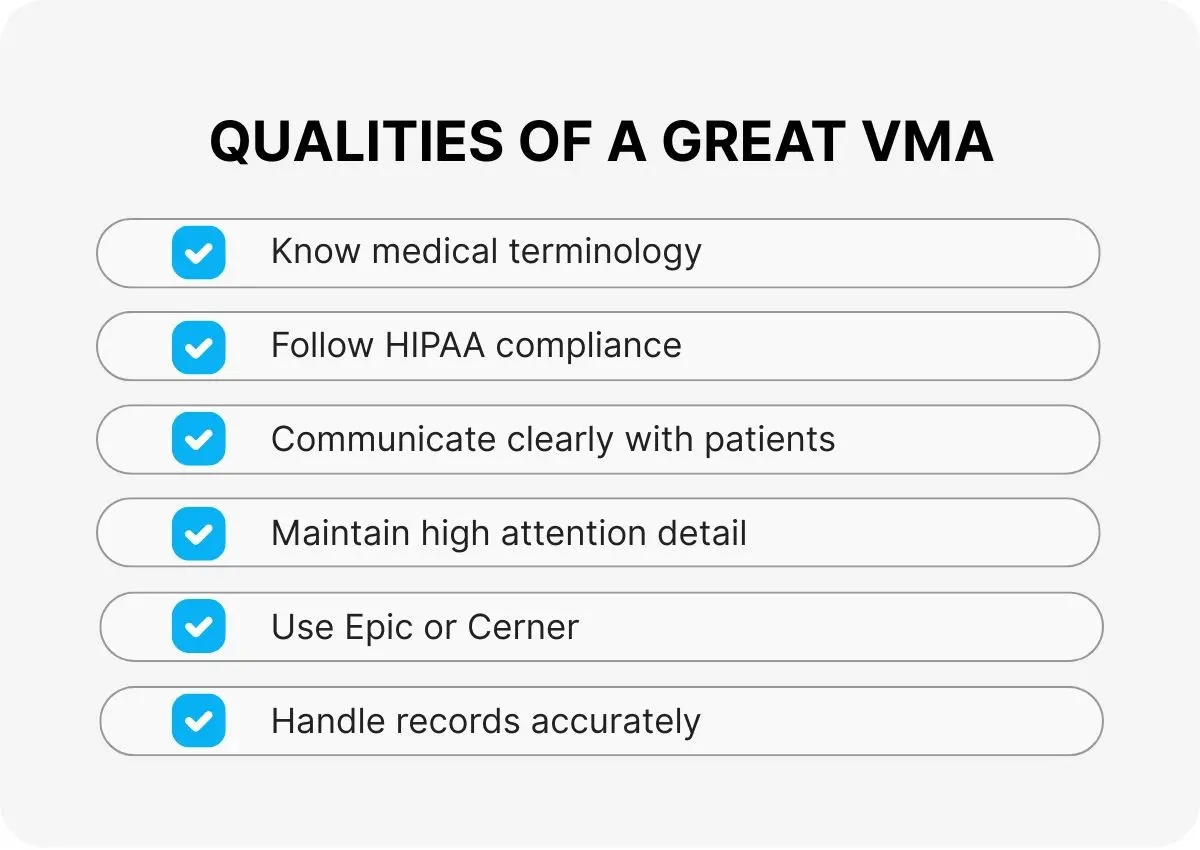
When choosing a virtual assistant for your medical practice, it’s important to focus on a mix of professionalism, communication skills, and industry-specific expertise.
Key qualifications and skills to consider include:
- Medical knowledge and training
Look for candidates who have experience working in healthcare settings and ideally have completed training or coursework in medical administration or medical terminology. Familiarity with HIPAA regulations is non-negotiable.
- Attention to detail
Handling patient records, scheduling, and billing requires a high level of accuracy. A great VA should consistently demonstrate meticulous attention to every task, reducing the risk of administrative errors.
- Proven communication abilities
Your assistant will often be the first point of contact for patients. Choose someone with excellent written and verbal communication skills, they should be able to communicate with empathy and clarity, especially in stressful situations.
- Problem-solving skills
Healthcare can be unpredictable. A top-tier VA needs to be resourceful and able to address issues calmly as they arise.
- Tech proficiency
Your virtual assistant should be comfortable using EHR (Electronic Health Record) systems, secure messaging, and telehealth platforms. Experience with popular medical software such as Kareo, Athenahealth, or eClinicalWorks is a plus.
Why Do Doctors Need Virtual Assistant Support?
Assistants for doctors play a crucial role in healthcare by enhancing patient care efficiency through managing administrative tasks, which allows doctors to focus more on patients.
They support clinical responsibilities by assisting in examinations and preparing lab samples, improving diagnostic accuracy. Additionally, assistants foster better patient communication, reducing readmission rates by explaining medical instructions clearly.
Office coordination is improved as assistants maintain organized medical records and manage inventory, reducing the risk of errors. They also optimize time management by handling routine tasks, freeing up doctors for more complex cases.
Effective communication between assistants and doctors ensures high-quality patient care. Consequently, assistants significantly contribute to the smooth operation and efficiency of medical practices.
What Is the Role of a Virtual Executive Assistant for Doctors?
A virtual executive assistant for doctors serves as a behind-the-scenes powerhouse, ensuring that physicians can dedicate their energy where it matters most, directly to patients. While clinical skills are crucial, time-consuming tasks like generating invoices, updating patient management systems, and responding to a flood of emails can quickly overwhelm even the most organized medical professional.
These specialized assistants step in to tackle such responsibilities discreetly and efficiently. With experience in healthcare administration, they smoothly handle everything from financial documentation to CRM management. Over time, they learn a doctor’s unique workflow preferences, enabling them to anticipate needs and keep day-to-day operations running like a well-oiled machine.
The result? Doctors reclaim valuable hours, reduce stress, and create a more balanced work environment, ultimately improving both patient satisfaction and provider well-being.
What Does a Medical Virtual Assistant Do?
1. Patient scheduling and coordination
Medical office administrative assistants handle patient scheduling and coordination efficiently, ensuring well-organized and timely appointments.
They send reminders to patients, which significantly reduces the number of missed appointments. By managing calendars, doctors can focus more on patient care and less on logistics.
Statistics show that automated reminders can reduce no-shows by up to 30%, improving clinic efficiency.
Additionally, they coordinate with other healthcare providers for referrals, ensuring seamless patient transitions. This saves both doctors and patients time while enhancing the overall patient experience.
Consequently, doctors can optimize their daily schedules, dedicating more time to critical medical tasks and less to administrative duties.
Moreover, patient satisfaction is often higher when appointments and follow-ups are meticulously managed, resulting in better health outcomes.
2. Administrative Support
These medical administrative specialists are critical to administrative support. They manage various administrative tasks, including medical records and billing.
This reduces the administrative burden on healthcare professionals, allowing them to focus more on patient care.
According to estimates, doctors spend nearly 17% of their time on paperwork, a task that can be significantly reduced with the help of virtual assistants for medical practice.
These assistants streamline administrative processes, ensuring all documents are accurately maintained and easily accessible.
Furthermore, they help manage patient records, ensuring that all information is up-to-date and compliant with healthcare regulations.
This improves overall efficiency and patient satisfaction, as administrative tasks are handled promptly and accurately.
The presence of doctor virtual assistants in administrative roles can lead to a more organized and efficient healthcare practice, benefiting both doctors and patients.
3. Patient Communication
Effective patient communication is vital in healthcare, and virtual assistants for doctors excel in this area.
They manage incoming calls, emails, and messages, providing timely and accurate responses to patient inquiries.
They significantly improve patient relations and satisfaction by answering questions and providing essential information.
Studies show that good communication can enhance patient compliance with treatment plans, leading to better health outcomes.
Additionally, virtual healthcare assistants handle follow-up calls to check patients’ progress, ensuring care continuity and promptly addressing any concerns.
This level of communication helps build trust and rapport between patients and healthcare providers.
Ultimately, they contribute to better health outcomes by ensuring patients are well-informed and engaged in their care.
The role of healthcare virtual assistants in patient communication cannot be overstated.
They bridge the gap between doctors and patients, facilitating smoother interactions and better overall care.
4. Medical Transcription
Medical transcription is another critical responsibility handled by virtual assistants for doctors.
They accurately transcribe physicians’ notes, dictations, and patient records, ensuring that all medical documentation is up-to-date and easily accessible.
Reliable transcription services can reduce errors in patient records by up to 26%, which is crucial for maintaining accurate medical histories.
They also assist in preparing reports and other documentation required for patient care and administrative purposes.
By handling these transcription tasks, doctors save valuable time that can be better spent on clinical duties.
Consequently, doctors can focus more on diagnosing and treating patients than on paperwork.
The accuracy and efficiency of medical office virtual support in transcription roles are invaluable to healthcare practices.
This ensures that all patient information is recorded correctly, contributing to better patient outcomes and streamlined operations.
5. Data Management and Research
Managing and researching medical data is an essential task for virtual assistants for doctors.
They organize and maintain databases, ensuring data integrity and security, which is crucial for any medical practice.
Conducting research provides valuable information that supports clinical decisions and patient care.
Statistical data indicate that accurate data management can improve healthcare delivery by 15%, highlighting its importance.
Additionally, virtual assistants for health practitioners keep doctors updated on the latest medical advancements and research findings, ensuring that healthcare providers are well-informed.
This continuous flow of information helps make better clinical decisions and stay abreast of new treatment options.
Ultimately, they enhance the quality of patient care by ensuring that all data is accurate and up-to-date.
The role of virtual assistants in data management and research is vital for maintaining the high standards of modern healthcare practices, benefiting both doctors and patients.
What is the Impact of Virtual Assistants on Doctors’ Patient Satisfaction?
Virtual assistants for doctors significantly enhance patient satisfaction by improving communication, streamlining administrative tasks, and personalizing care.
They provide immediate responses, reducing waiting times and increasing trust. Eighty percent of patients prefer timely updates.
Virtual assistants reduce administrative work by 40%, boosting administrative efficiency and allowing doctors to focus more on patient care.
Personalized care is enhanced, with tailored health recommendations increasing satisfaction by 30%.
They also reduce errors, with studies showing a 20% decrease in diagnostic mistakes. Accessibility to healthcare improves, with 24/7 support offered, which 65% of patients appreciate.
Overall, virtual assistants for doctors play a crucial role in elevating the quality and satisfaction of healthcare services.
Client Satisfaction with Virtual Assistant Services: Positive Feedback
People who use virtual assistant (VA) services often share how happy they are with the help they receive. Over time, many find the support even more valuable as VAs become familiar with their needs.
Here’s what clients love most:
- Getting More Done: By handing off tasks like emails, scheduling, or paperwork, clients have more time to focus on important work. This helps them feel less stressed and more productive.
- Professional and Reliable Help: VAs are praised for being dependable, detail-oriented, and quick to understand what needs to be done. Clients trust them with important tasks, which makes daily work easier.
- Less Stress, Better Workflows: Clients appreciate having someone to handle both one-time and regular tasks. Knowing these jobs are in good hands helps them feel more relaxed.
- Long-Term Value: Many clients say they can’t imagine working without a VA after seeing how much easier their lives become. Over time, VAs learn their specific needs, making their help even more effective.
- Works for Any Industry: Whether it’s doctors, lawyers, small business owners, or nonprofit leaders, VAs adapt to different jobs and bring real value to their work.
What Clients Say About Professionalism and Service Quality
Clients often highlight how VAs improve their workday by being professional, reliable, and skilled.
- Quick Learners: VAs adapt to new systems and tasks quickly, often needing little supervision.
- Specialized Skills: From managing schedules to handling data, VAs bring expertise that clients appreciate.
- Time-Saving Help: Delegating routine tasks allows clients to focus on more important work, improving their productivity.
What Do Customers Say About Virtual Assistant Services?
People who use VAs often share how much these services improve their work and daily life.
- More Time for Important Work: Clients love that VAs take care of routine tasks, giving them more time to focus on what matters most.
- Reliable and Professional: VAs are praised for being dependable, detail-focused, and great at communication.
- Personalized Support: Many clients say their VAs quickly become key team members, learning their specific needs and even suggesting helpful ideas.
Why Clients Keep Coming Back
Clients from all kinds of industries, like nonprofits, small businesses, and law firms, say VAs help them focus on big goals while handling the small stuff. Many wish they had started using a VA sooner, as it helps them feel more organized, less stressed, and better able to tackle long-term plans.
The feedback is clear: VAs don’t just help with tasks, they make life easier and allow clients to focus on what truly matters.
Benefits of Virtual Assistants for Doctors
1. Reduced Administrative Burden
Virtual assistants for doctors significantly reduce the administrative burden, allowing physicians to focus more on patient care.
These assistants can efficiently manage appointments, handle billing, and process claims.
Doctors spend much time doing paperwork, which virtual assistance can drastically reduce.
Furthermore, the streamlined process enhances overall office efficiency and patient satisfaction.
With fewer administrative tasks, doctors can allocate more time to direct patient interactions. This improved patient care ultimately leads to better health outcomes.
Consequently, incorporating virtual assistants into medical practice can create a more organized and productive environment.
2. Improved Patient Communication
Improved patient communication is another significant benefit of employing virtual assistants for doctors.
These assistants can handle patient inquiries, schedule follow-up appointments, and send reminders.
Studies indicate that appointment no-shows can decrease by 38% with timely reminders.
Additionally, virtual assistants ensure patients receive accurate information and prompt responses to their questions.
Effective communication between patients and healthcare providers is crucial for treatment adherence and overall health outcomes.
Moreover, virtual assistants can manage patient records, ensuring up-to-date information is always available.
Consequently, the quality of patient care and satisfaction is greatly enhanced.
This benefit showcases the importance of integrating virtual assistants into medical practices for better patient relationships.
3. Enhanced Work-Life Balance
Doctors often struggle with maintaining a healthy work-life balance due to the demanding nature of their profession.
Virtual assistants for doctors can alleviate some of this stress by handling time-consuming tasks.
A survey found that 51% of physicians experience burnout, which can be mitigated by reducing workload.
By delegating duties to these medical administrative specialists, doctors can spend more time with family and engage in self-care activities.
Consequently, improved work-life balance can increase job satisfaction and improve physicians’ mental health. Virtual assistance can significantly enhance doctors’ overall quality of life.
Therefore, integrating virtual assistants is essential for the well-being of healthcare providers.
4. Cost-Effective Solution
Employing virtual assistants is a cost-effective solution for medical practices, reducing the need for full-time administrative staff.
Employing virtual assistants can save practices money on salaries, benefits, and office space. Statistics show that it can reduce operational expenses by up to 30%.
Additionally, virtual assistants for doctors can provide specialized skills, such as medical transcription, which might be more costly to outsource otherwise.
Consequently, practices can allocate saved resources to other critical areas, such as patient care and medical equipment. Virtual assistants’ financial benefits make them an attractive option for modern medical practices.
This cost-effectiveness highlights the practicality of virtual assistants in contemporary healthcare environments.
5. Increased Efficiency and Accuracy
Virtual assistants significantly increase the efficiency and accuracy of medical practice operations.
They ensure that data entry and patient record management are completed promptly and accurately.
Studies have shown that the error rate in medical documentation can be reduced by 50% with virtual assistance.
Furthermore, swift and precise handling of tasks can improve the overall workflow.
This increased efficiency allows doctors to see more patients, thus boosting practice revenue.
Additionally, virtual assistants’ reliability ensures that critical information is always up-to-date, contributing to better patient care.
Consequently, medical practices’ overall efficiency is greatly enhanced. The incorporation of virtual assistants is essential for achieving high operational standards.
6. Comparing Virtual Assistants to Local Hires
Choosing a virtual assistant instead of hiring someone locally offers many benefits, especially for medical professionals.
- Easier Hiring Process: Finding a good local assistant can take a lot of time and effort. Virtual assistants, on the other hand, are often pre-screened and ready to start, making the process much simpler.
- Lower Costs: Virtual assistants are usually more affordable. You don’t have to pay for office space, benefits, or extra equipment, and they often offer flexible pricing options. Local hires, however, may expect higher salaries and come with extra costs.
- Specialized Skills: Virtual assistants often have training in specific areas, like medical billing or patient communication. They also follow strict rules for privacy and accuracy, which is very important in healthcare.
- Reliable Support: Virtual assistants are known for being consistent and professional, helping you handle your workload without the unpredictability of local hiring.
How Do Virtual Assistants Streamline Doctors’ Admin Work?
Virtual assistants streamline doctors’ admin work by automating appointment scheduling, reducing no-shows by 30%, and integrating seamlessly with electronic health records.
They efficiently manage patient records, ensuring accurate organization, instant access, and compliance with medical regulations.
Precise coding and automated systems revolutionize billing processes, reducing claim rejections by 50% and enhancing cash flow.
Effective communication is established as virtual assistants manage emails, calls, and messages, improving patient satisfaction and departmental coordination.
Prescription management is streamlined with automated refills and electronic prescriptions, ensuring medication accuracy and compliance.
Overall, virtual assistants for doctors optimize time management, enhance record-keeping, improve financial operations, facilitate communication, and provide precise prescription handling.
How Much Do I Pay a Virtual Assistant for Doctors?
Hiring a doctor’s assistant involves various costs, including salaries that range from $30,000 to over $50,000 annually, influenced by location and experience.
Benefits and perks like health insurance and retirement plans can add 20-30% to the base salary.
Training and certification costs, ranging from $1,200 to $4,000, are essential for maintaining high-quality care.
Recruitment expenses, including advertising and background checks, can quickly accumulate. Outsourcing insurance virtual assistants offers a more cost-effective alternative, reducing overhead while maintaining efficiency.
Hiring an outsourced medical office administrative assistant enhances practice efficiency, increasing patient satisfaction and revenue despite these costs.
Quickly Spot Tasks to Delegate
If you’re unsure where to start, think about the repetitive or time-consuming tasks you handle every day. Virtual assistants (VAs) can take care of things like scheduling, insurance calls, and data entry. By handing off these duties, you’ll have more time to focus on patient care or other important work.
Delegating these tasks not only frees up your schedule but also helps your team work better and reduces stress. With less paperwork to worry about, you can create a more enjoyable and productive work environment.
Addressing Concerns About Hiring a Virtual Assistant
It’s normal to feel unsure about hiring a VA, especially in healthcare where privacy and accuracy are so important. Common worries include:
- Using New Technology: Some may feel nervous about learning new tools.
- Trusting Someone with Sensitive Tasks: Delegating important work can feel risky at first.
- Remote Workflows: Working with someone who isn’t in the office might seem unfamiliar.
These concerns can be solved with the right approach:
- Step-by-Step Training: Agencies like Stealth Agents and Belay help you and your VA get started smoothly.
- Specialized Skills: Many VAs are trained in healthcare systems and privacy rules like HIPAA, so they’re ready to handle your needs securely.
- Clear Communication: Regular check-ins and feedback help build trust and ensure tasks are done right.
Surprises and Regrets When Hiring a Virtual Assistant
Many people who hire VAs are surprised by how much their work improves. Here’s what they often experience:
Positive Surprises:
- More Done in Less Time: VAs quickly learn your needs and take over tasks like managing emails or updating records, saving you hours each week.
- Less Stress: Delegating tasks lightens your mental load, giving you more time to focus on important goals.
- Unexpected Help: VAs often go beyond their duties, offering ideas or solutions you didn’t think of.
- Financial Benefits: With more time to focus on patients or key tasks, many practices see an increase in revenue.
Common Regrets:
- Waiting Too Long: The biggest regret is not hiring a VA sooner. Once they see the difference, many wonder why they waited.
- Underestimating the Help: Some think a VA will only save a little time but are amazed at how much smoother their work becomes.
- Worrying Too Much: Initial fears about delegating or trusting someone new often disappear once they see how reliable and professional VAs are.
Why Choose Stealth Agents for Virtual Medical Support?
Stealth Agents provides virtual medical support with comprehensively trained assistants for doctors, ensuring they are adept in medical terminologies, patient management, and electronic health records.
Their services are cost-effective, reducing administrative expenses by up to 50% and allowing doctors to allocate resources more efficiently.
Patient confidentiality is paramount, and assistants trained in Health Portability and Accountability Act (HIPAA) compliance and secure communication practices have achieved a 99.9% success rate in data security.
Productivity and efficiency are significantly enhanced as virtual assistants manage administrative tasks, improving overall practice efficiency by 40%.
Flexibility and scalability are key features, and services tailored to specific needs and 24/7 availability make it adaptable for any size practice.
This combination of expertise, cost savings, security, efficiency, and adaptability makes Stealth Agents a top choice for virtual medical support.
What Real Users Are Saying
People who hire virtual assistants often share how much easier their work becomes. Many say they can focus more on patient care and growing their practice because their assistants handle the time-consuming tasks.
Doctors and healthcare teams appreciate how quickly their assistants learn the specific needs of the practice. They take care of important jobs like managing schedules, reaching out to patients, organizing records, and dealing with insurance companies.
Some practices have seen big improvements, like fewer missed appointments and fewer problems with insurance claims. Many users describe their assistants as “essential,” “very professional,” and “a great part of our team.”
The feedback is clear: virtual assistants help with accuracy and efficiency while also being reliable and trustworthy. This allows doctors and staff to focus on what’s most important.
Takeaways
Virtual assistants for doctors are vital for improving healthcare efficiency and patient care.
These expert healthcare administrative support professionals help streamline administrative tasks, allowing doctors to focus more on patient care.
With assistants for doctors from Stealth Agents, you get a blend of efficiency and expertise that enhances productivity.
They handle everything from appointment scheduling to patient follow-ups, ensuring no detail is overlooked.
Using tools like the Time Doctor login, assistants can efficiently track tasks and manage time.
Medical practices can operate more smoothly and effectively by leveraging the skills of these virtual assistants.
Investing in assistants for doctors means investing in the future of your training and patient satisfaction.
Experience the unparalleled support of Stealth Agents’ virtual assistants and elevate your healthcare practice today.
Frequently Asked Questions
How do virtual assistants improve patient engagement in healthcare?
Virtual assistants help patients stay engaged by sending reminders, following up after visits, and answering questions quickly. This makes patients feel cared for and helps them stick to their treatment plans, leading to better health and stronger relationships with their doctors.
What are the security measures for virtual assistants in healthcare?
Virtual assistants in healthcare follow strict rules to protect patient information, like HIPAA. They use secure ways to communicate, encrypt data, and do regular security checks to keep medical information safe and private.
How can virtual assistants help with healthcare marketing?
Virtual assistants can manage social media, write posts, and check how well campaigns are doing. They also help with email campaigns and reaching out to patients, making the practice more visible and bringing in new patients.
What time management strategies do virtual assistants use for doctors?
Virtual assistants help doctors save time by organizing tasks, setting priorities, and using scheduling tools. They make sure doctors’ calendars are well-planned, giving them more time to focus on patients and reducing stress.
How do virtual assistants facilitate telehealth services?
Virtual assistants help with telehealth by setting up virtual appointments, handling patient messages, and fixing technical problems. They make sure online visits go smoothly, making it easier for patients to get care from their doctors.
What are the challenges of integrating virtual assistants into medical practices?
Some challenges include getting used to new systems, training the assistant, and making sure they work well with current tools. These can be solved with proper onboarding, clear communication, and ongoing support.
How do virtual assistants assist with healthcare compliance?
Virtual assistants help with compliance by keeping records accurate, managing paperwork, and following rules. They stay updated on changes in regulations, helping practices avoid problems and maintain high-quality care.
Can virtual assistants help with medical research projects?
Yes, virtual assistants can help with research by organizing data, scheduling interviews, and finding information in studies. They handle administrative tasks so researchers can focus on their main work, making projects run more smoothly.
How do virtual assistants support healthcare providers in managing stress?
Virtual assistants reduce stress for healthcare providers by taking care of tasks like scheduling and paperwork. This gives providers more time to rest and focus on their patients, creating a better work-life balance.
What criteria should be considered when hiring a virtual assistant for healthcare?
When hiring a virtual assistant, look for someone with experience in healthcare, knowledge of HIPAA rules, good tech skills, and strong communication. It’s also important to find someone who fits well with your team and understands your practice’s needs.