
Virtual assistants for property acquisition help real estate professionals close more deals by taking over time-consuming tasks like lead sourcing, follow-ups, and scheduling. Stealth Agents provides trained virtual assistants who streamline your workflow so you can focus on acquiring more properties and scaling faster, all while saving time and money.
Virtual assistants for property acquisition are revolutionizing how businesses manage their time and resources.
With 65% of business owners struggling to handle administrative tasks and property acquisitions simultaneously, outsourcing is no longer a luxury, it’s a necessity.
These professionals free up your schedule, allowing you to focus on closing deals and scaling your enterprise.
Studies show that companies using virtual assistants can reduce operational costs by 78%, making this a smart move for startups and executives aiming to grow efficiently.
This blog offers a step-by-step guide to show how these services can solve common challenges, like time constraints and missed opportunities, while maximizing your booked calls.
Stealth Agents specializes in connecting businesses with skilled outsourced help. It offers free consultations tailored to your preferences and virtual assistant pricing.
Why Hire Virtual Assistants For Property Acquisition?
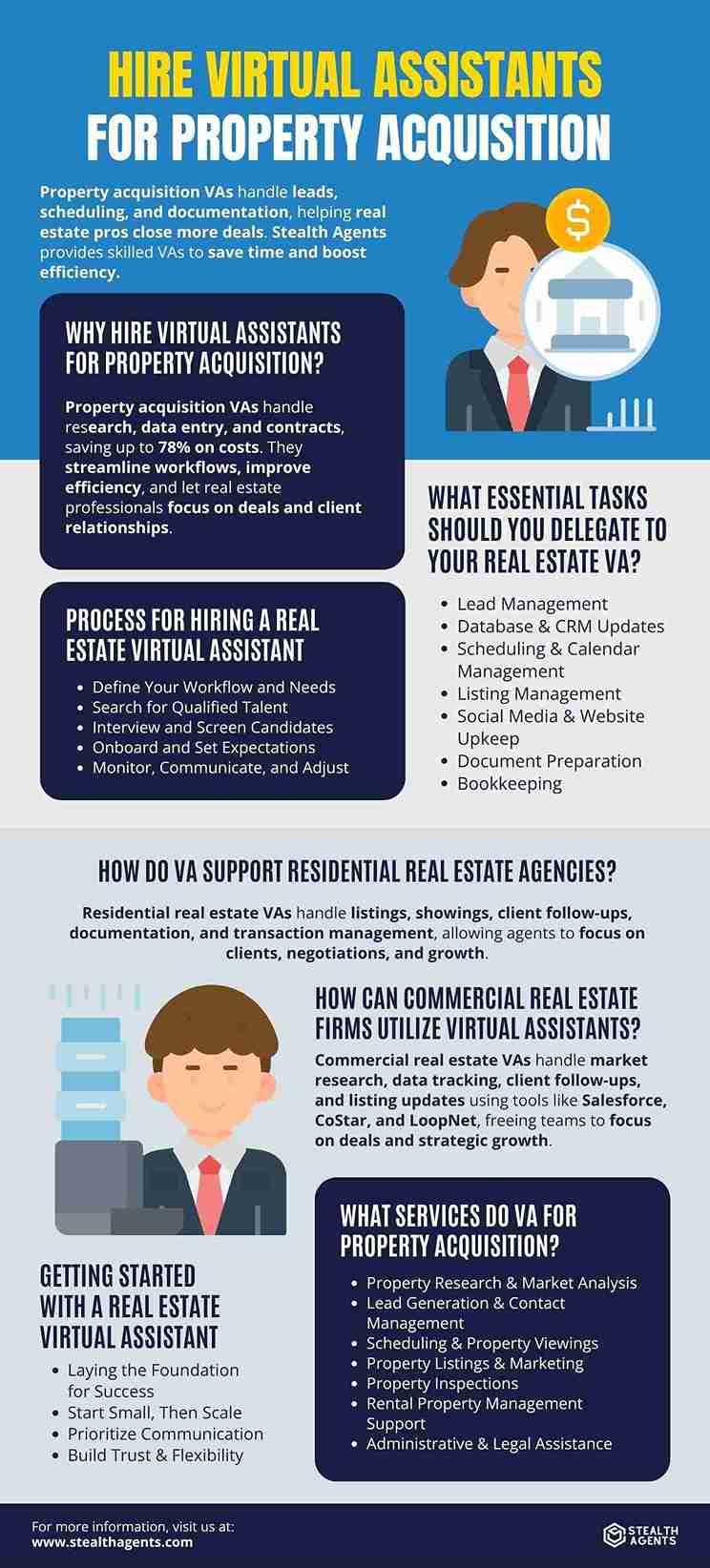
Hiring virtual assistants for property acquisition helps real estate professionals efficiently handle time-consuming tasks like market research, data entry, and contract preparation.
Many companies report saving up to 78% on operating costs by utilizing remote talent, making this approach highly cost-effective.
These assistants can help automate property development workflows, streamline repetitive processes, and ensure consistent project tracking. By delegating administrative work to virtual assistants, professionals can focus on high-value tasks like negotiating deals or building client relationships
Businesses can access skilled talent from diverse online job platforms and find workers trained in real estate software and task management.
Remote assistants also enable flexibility, allowing tasks to be completed around the clock and accelerating timelines for property acquisition projects. Ultimately, combining skilled support and improved efficiency enhances productivity and reduces stress for real estate professionals.
How Do You Decide if a Real Estate Virtual Assistant Is Right for Your Business?
Determining whether a real estate virtual assistant (VA) is the right move for your business comes down to a few key considerations.
Start by assessing which tasks pull you away from revenue-generating activities.
If you often find yourself overwhelmed by market research, data entry, appointment scheduling, or chasing down paperwork, while high-level negotiation and client meetings get pushed aside, a VA could be your solution.
Next, evaluate your budget. Many professionals discover that outsourcing is surprisingly affordable, especially given the potential to cut operational costs by up to 78%. Calculate what your time is worth compared to the cost of hiring experienced virtual support from platforms like Upwork or Fiverr, and weigh the investment against potential growth.
Finally, clarify your goals. Are you looking to scale faster, improve client responsiveness, or simply reclaim your evenings and weekends?
Identifying your pain points and where you need the most help ensures that, when you do bring a VA on board, the impact is immediate and measurable. If these challenges sound familiar and you’re ready to optimize your workflow, it might be time to explore hiring a real estate virtual assistant.
How Do You Determine What Kind of Real Estate VA You Need?
Selecting the right real estate virtual assistant starts by identifying the specific pain points in your daily workflow. Are you struggling with administrative overload, endless data entry, or chasing leads that never seem to convert? Pinpointing these bottlenecks helps clarify the talents and specialties your virtual assistant should have.
Start by making a list of routine tasks that drain your time or fall outside your core strengths. Common areas include:
- Lead generation and qualification
- Scheduling property tours and meetings
- Market research and comparative analysis
- CRM/database management
- Preparing contracts and documentation
Once your priority tasks are clear, match them to the required skills, like familiarity with real estate tools (think DocuSign, HubSpot, Zillow, or Salesforce), strong communication abilities, or experience with market research. Consider whether you need a generalist VA for varied support or a specialist who excels at one particular area, such as cold calling or transaction coordination.
Define your expectations early and document them clearly in your job description, specifying both the day-to-day tasks and any platforms your team relies on. This targeted approach narrows your applicant pool and ensures you only interview candidates whose backgrounds align with your business needs.
By being strategic upfront, you’ll save time during hiring and set the stage for a smooth, productive partnership with your new virtual assistant.
What Essential Tasks Should You Delegate to Your Real Estate Virtual Assistant?
A real estate virtual assistant can transform your daily operations by taking on the repetitive and time-intensive responsibilities that often bog down your workflow.
Common tasks to delegate include:
- Lead Management: Following up with leads, conducting cold calls, and nurturing prospects to keep your sales pipeline active.
- Database and CRM Updates: Keeping your contact lists organized, updating client information, and maintaining accurate records for seamless communication.
- Scheduling and Calendar Management: Coordinating appointments, property showings, and meetings to ensure you never miss an opportunity.
- Listing Management: Uploading new property listings to platforms like Zillow, Realtor.com, and MLS, as well as refreshing outdated listings to maintain relevance.
- Social Media & Website Upkeep: Managing your online presence by posting new content, responding to inquiries, and engaging with potential clients across sites like Facebook, Instagram, and LinkedIn.
- Document Preparation: Drafting and organizing contracts, agreements, and other essential documents required for property transactions.
- Bookkeeping: Tracking expenses, processing invoices, and preparing basic financial reports for better business insights.
By handing off these essential tasks to a skilled virtual assistant, you’ll create more room in your schedule for strategic work, like closing deals, cultivating relationships, and expanding your portfolio. Virtual assistants trained in industry-standard software such as Salesforce, DocuSign, and Trello can easily adapt to your established systems, making delegation smooth and reliable.
How Can a Real Estate Virtual Assistant Provide Customer Service Support?
A real estate virtual assistant can serve as the cheerful, professional front line of your client communications, keeping your reputation polished and your clients satisfied.
Key ways a virtual assistant can support your customer service efforts:
- Prompt Responses to Inquiries: Whether it’s handling email inquiries, responding to messages from platforms like Zillow or Realtor.com, or fielding phone calls, a virtual assistant ensures your clients receive timely and helpful responses, even outside traditional business hours.
- Client Onboarding and Process Guidance: Assisting new prospects by clearly explaining steps in the buying, selling, or leasing process, so clients always know what to expect next.
- Feedback Gathering and Follow-Up: Reaching out after showings or transactions to collect feedback, identify client concerns, and gather testimonials, helping you continuously refine your services.
- Issue Resolution Coordination: Addressing basic client questions or concerns and, when needed, escalating complex matters to you, ensuring no inquiry slips through the cracks.
- CRM Management and Updates: Maintaining detailed records of every client interaction in your CRM system, so your communications stay organized, relevant, and highly personalized.
What Is the Process for Hiring a Real Estate Virtual Assistant?
Hiring a real estate virtual assistant is a streamlined process designed to save you both time and resources while ensuring you find the right fit for your business.
1. Define Your Workflow and Needs
Begin by outlining the specific tasks you want to delegate, such as market analysis, lead generation, data entry, or managing contracts. Clarity in your requirements sets the foundation for a successful partnership.
2. Search for Qualified Talent
Utilize reputable platforms like Upwork, Freelancer, and specialized real estate outsourcing firms such as Stealth Agents. Look for candidates with a proven background in property acquisition tasks, experience with real estate software (e.g., Salesforce, Podio, or REI BlackBook), and reliable references.
3. Interview and Screen Candidates
Conduct interviews to assess communication skills, problem-solving ability, and technical know-how. Request work samples or short skill assessments tailored to your real estate processes to verify expertise.
4. Onboard and Set Expectations
Once you’ve selected the right assistant, provide clear documentation of your key processes. Establish goals, preferred communication channels, and reasonable timelines. Transparent onboarding sets everyone up for success.
5. Monitor, Communicate, and Adjust
Start with a few core tasks to build trust and familiarity. Regular check-ins, whether weekly video calls or daily reports, help track progress and quickly resolve any issues. As confidence grows, you can steadily delegate more complex or high-value activities.
Following this approach not only allows you to tap into specialized remote talent, but also ensures your virtual assistant becomes an invaluable extension of your team, freeing you up to focus on closing deals and growing your property portfolio.
How Do Virtual Assistants Support Residential Real Estate Agencies?
Virtual assistants play a crucial role in helping residential real estate agencies operate smoothly and efficiently. By taking charge of tasks like updating listings on platforms such as the MLS, coordinating property showings, and managing follow-ups with prospective buyers, VAs ensure nothing falls through the cracks during a bustling sales cycle.
They also handle essential behind-the-scenes work: organizing property photos, drafting compelling listing descriptions, and promptly responding to client inquiries. With dedicated support managing documentation, tracking deadlines, and handling transaction paperwork, agencies can juggle multiple sales and listings at once without missing important steps.
This allows real estate professionals to devote more energy to client relationships, negotiations, and business growth, confident that administrative details are managed with accuracy and care.
How Can Commercial Real Estate Firms Utilize Virtual Assistants?
Commercial real estate firms can tap into the power of virtual assistants to streamline operations and enhance client engagement. These professionals are adept at conducting market research, compiling detailed property and competitive analysis reports, and tracking key data such as lease expirations and tenant improvements, tasks that often consume countless hours of administrative time.
Virtual assistants play a key role in managing relationships with commercial clients by sending updates, scheduling meetings, and ensuring timely follow-ups. They can also assist in creating and updating materials for property listings, using industry-standard tools like Salesforce, CoStar, and LoopNet.
By outsourcing these responsibilities, commercial real estate firms free up their in-house teams to focus on deal-making, property tours, and strategic negotiations, ultimately driving growth and efficiency across their portfolio.
What Services Do Virtual Assistants For Property Acquisition?
1. Property Research and Market Analysis
Virtual assistants excel at thorough research, identifying investment opportunities by analyzing market trends, property values, and neighborhood conditions. This saves busy individuals time.
This service provides real-time, data-backed insights, including recent sales trends or vacancy rates.
This support simplifies decision-making, especially when targeting high-demand housing zones. Many find virtual assistants streamline this time-intensive task while ensuring accuracy.
Research shows that over 87% of professionals rely on data-driven decisions to secure profitable properties. Their research skills are essential, whether finding potential rentals or future flips.
2. Lead Generation and Contact Management
Generating leads is fundamental for successful property acquisition, and virtual assistants excel at it. They compile detailed lists of potential sellers, buyers, or agents using online resources and tools.
These assistants also update contact databases, ensuring all essential details are well-organized.
Managing communication with multiple leads for virtual acquisitions is streamlined, especially when overseeing numerous projects.
A study revealed that 73% of real estate professionals credit lead management for conversion success, and virtual assistants simplify this.
Their efforts drive smoother client interactions, minimizing the risk of missed opportunities.
3. Scheduling and Coordination of Property Viewings
Managing property viewings often requires seamless scheduling and communication, an area where virtual assistants offer great help.
They carefully organize viewing calendars and confirm appointments with sellers, buyers, or agents.
This service helps clients view high-priority properties on schedule, avoiding double bookings, a key component of seamless virtual acquisition.
Research shows that 65% of clients face acquisition delays due to scheduling issues, making this support essential.
Virtual assistants manage all logistical hurdles, freeing clients to focus purely on property evaluation. Their precise coordination keeps everything running smoothly, from arranging virtual tours and inspections to organizing property showings, significantly enhancing the acquisition process.
4. Property Listings and Marketing
Virtual assistants help manage property listings and online marketing for those looking to buy or sell homes. They create accurate and engaging listings with descriptions and photos that align with local housing trends.
Additionally, they post updates on platforms like Zillow or social media, improving visibility among potential customers.
Online jobs in marketing consistently rank high for real estate needs, which virtual assistants effectively fulfill.
Accurate and timely promotions help properties stand out in competitive markets.
A 2022 report showed properties with detailed listings sell 34% faster than others, making this a vital service.
5. Managing Property Inspections
Virtual assistants for property inspections provide focused support by arranging evaluations and managing related documents.
They communicate with inspectors and ensure all inspection reports are received and filed correctly.
This is consistently rated as a valuable area of support, streamlining processes and alleviating common issues.
Delegating property inspections helps save time while staying compliant with required safety standards.
Data shows that 58% of buyers delay purchases pending inspection clearance, underscoring its importance. Streamlining the inspection process is essential for a smoother buying experience.
6. Rental Property Management Support
A best virtual assistant for real estate investors often handles rental property management tasks that reduce landlords’ stress.
They screen tenant applications, verify references, and track rental payments or lease agreements.
This service is critical when scaling property portfolios while maintaining tenant satisfaction.
With nearly 10 million rental units across the U.S., virtual assistants are key to streamlining property acquisition, ensuring a steady cash flow.
Assistants use spreadsheets to track late payment rates or set reminders for lease renewals. Their involvement leads to fewer issues and smoother tenant interactions.
7. Administrative and Legal Assistance
Managing documents like purchase agreements, contracts, and invoices is essential during property acquisition, and virtual assistants excel at this.
They organize, review, and store crucial legal or financial paperwork, reducing the risk of errors.
These tasks build smoother workflows, especially for those managing properties across different states.
Research indicates that 45% find administrative tasks the most time-consuming part of property acquisition.
Virtual assistants ensure timely compliance with state laws and requirements, removing unnecessary complications. Their attention to detail makes them invaluable, from signing papers to filing permits.
Getting Started with a Real Estate Virtual Assistant
Laying the Foundation for Success
Kicking off a productive relationship with a real estate virtual assistant requires a bit of groundwork, but it’s time well spent if you want results. Begin by mapping out your essential daily processes, from lead tracking to tenant communication. A clear playbook not only sets proper expectations but also helps your new assistant onboard without hiccups.
Start Small, Then Scale
When you’re ready to delegate, hand off just one or two key tasks at first, think property research, contact management, or scheduling. This gives both of you a chance to find a rhythm and iron out any creases before you increase responsibilities. As your assistant grows more comfortable, gradually expand their role to cover more complex functions, like marketing or legal paperwork.
Keep Communication Front and Center
Regular check-ins, whether by Zoom, Slack, or a quick email, are key. Clear, timely feedback helps your assistant fine-tune their approach to your preferences. An open line of communication fosters trust, which is the real secret to a lasting and productive partnership.
Build Trust and Flexibility Over Time
Like any collaborative process, your relationship with a virtual assistant will get stronger the more you work together. Set up recurring meetings to discuss priorities, share wins, and pivot as your business evolves. With the right setup, a real estate virtual assistant becomes not only a timesaver but also a key contributor to your long-term growth.
How to Document Processes and Train Your Real Estate Virtual Assistant
Proper onboarding is key to maximizing your virtual assistant’s effectiveness in real estate. Start by outlining all key workflows, think detailed checklists for tasks like inputting property data, scheduling showings, or updating marketing materials. Tools such as Google Docs or Trello boards work great for sharing instructions and templates.
Assign new assistants one or two core tasks at first. This allows you to gauge their strengths and offer specific feedback before handing off more responsibilities. As their confidence grows, gradually introduce new duties like coordinating with inspectors, managing listings, or handling tenant inquiries.
Consistent communication is essential. Hold quick weekly check-ins via Zoom or Slack to discuss progress, review completed work, and clear up questions. Providing timely feedback helps fine-tune their performance and ensures your processes are followed to the letter.
Over time, update your documentation to reflect best practices and lessons learned. This not only smooths the training of future assistants but also keeps your real estate operation running like a well-oiled machine.
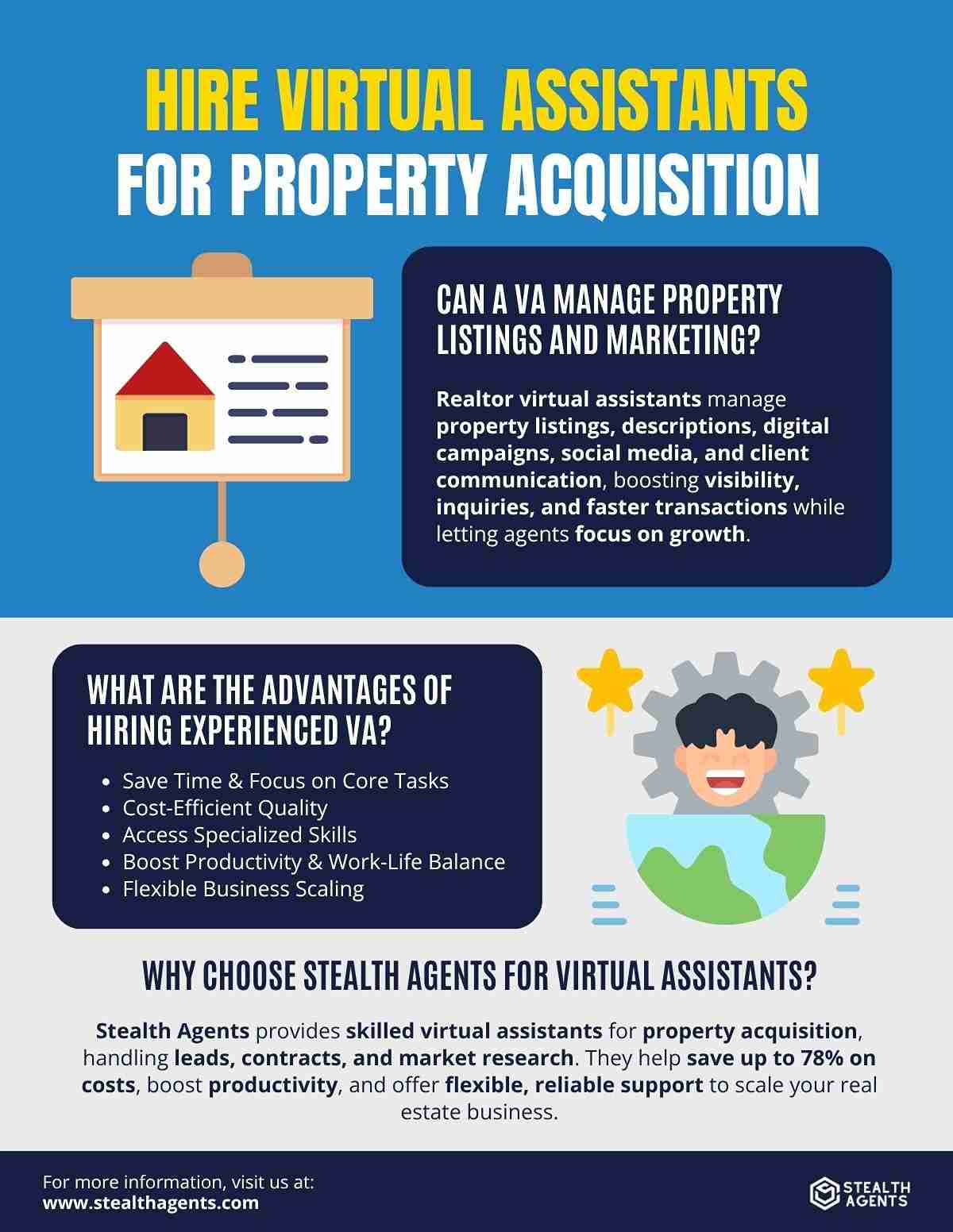
Can A Virtual Assistant Manage Property Listings And Marketing?
Yes, virtual assistants for property acquisition and marketing can manage tasks such as maintaining property listings, creating eye-catching descriptions, and running targeted digital campaigns. A realtor virtual assistant ensures properties attract the right audiences through social media management, email strategies, and engaging content creation.
Over 50% of real estate agents now rely on remote work, and these freelance opportunities allow realtors to hire skilled professionals without local restrictions.
A real estate virtual assistant essentially becomes your right hand, seamlessly supporting your operations behind the scenes. Much like traditional personal assistants, they can take on a variety of roles, from administrative tasks and data management to customer support and marketing, depending on their expertise and your evolving business needs.
With your workload often filled with spinning plates, phone calls, CRM updates, scheduling, and constant emails, having a dedicated assistant frees you to focus on high-impact activities. Tasks like updating listings, crafting compelling property descriptions, or handling digital marketing campaigns are delegated, ensuring no detail is overlooked.
These virtual assistants analyze market trends, manage property data, and communicate effectively with clients and prospects. They work remotely, sometimes from the other side of the world, yet their impact is tangible, whether you’re hosting open houses or planning strategic growth. And as your trust in their skills grows, you can confidently hand off more responsibilities, knowing your business is in capable hands.
Many properties marketed by skilled virtual assistants gain greater visibility, leading to increased buyer inquiries and faster transactions.
Combining their expertise with digital tools, a realtor virtual assistant provides invaluable support for property marketing strategies. This proactive approach helps realtors stay competitive while focusing on building their business effectively.
What Are The Advantages Of Hiring Experienced Virtual Assistants?
1. Save Time and Focus on Core Tasks
Hiring experienced virtual assistants can save you hours each week. They handle admin tasks, scheduling, and research so you can concentrate on business growth.
For example, managing emails or updating client databases becomes their responsibility.
Studies show that professionals reclaim up to 20% of their workdays with assistance.
Virtual assistants for property acquisition can speed up identifying profitable deals, allowing you to act quickly.
Their expertise ensures tasks are done efficiently without hand-holding. Over time, they become a crucial extension of your team.
2. Cost Efficiency Without Compromising Quality
Adding a full-time employee comes with high costs, such as benefits, office space, and equipment. Virtual assistants offer the support you need at a fraction of the cost.
Data from various studies suggest businesses save over 78% of operational expenses by hiring remote staff.
A virtual assistant already understands key industry tasks, saving you valuable training time. They come equipped with the tools and skills needed for the role, delivering professional results without added expense. Lower overhead means more funds available.
3. Access to Specialized Skills
Hiring experienced virtual assistants allows businesses to tap into a global talent pool.
Many assistants specialize in CRM management, lead qualification, or property evaluations.
A virtual assistant for property inspections can take on tasks requiring attention to detail, ensuring all aspects of a property meet standards.
LinkedIn reports show remote roles are growing over 25% annually, showcasing the shift toward specialized online jobs. Their expertise adds depth to your team without the hassle of extensive onboarding.
Whether managing showings or updating listings, they’ll deliver quality work faster. This ensures you meet deadlines and impress clients.
4. Improve Productivity and Work-Life Balance
Delegating tasks to a virtual assistant can help boost productivity while preventing burnout. A Harvard Business Review study found that effective delegation can double productivity for most professionals.
They care for routine or repetitive jobs, allowing you to focus on overall strategies.
Their flexibility allows them to work around your schedule, ensuring deadlines are met.
A virtual assistant for property acquisition may research deals while you close on others, creating a seamless workflow.
This arrangement also means less time working late or on weekends. Ultimately, hiring allows you the freedom to enjoy personal time without sacrificing business goals.
5. Scale Your Business Flexibly
Experienced virtual assistants can help you adapt quickly as your business grows. Whether you’re taking on more clients or entering a new market, they provide scalable support.
Remote workers fill gaps without requiring long-term commitments, keeping your operations lean.
Virtual assistants for property inspections handle increasing responsibilities, ensuring no task gets overlooked during busy periods.
Reports suggest that over 50% of small businesses will expand with remote roles by next year.
This flexible approach ensures you can handle growth without stress or sacrificing quality. Working with experienced assistants means staying agile and responsive to demand changes.
Why Choose Stealth Agents For Virtual Assistants?
Stealth Agents stands out as a trusted choice when hiring skilled virtual assistants for property acquisition, offering dedicated support tailored to your business needs.
Recent studies show that businesses save up to 78% on operational costs by utilizing virtual assistants, making this a shrewd, budget-friendly decision.
Virtual assistants with Stealth Agents can handle critical tasks such as lead generation, contract management, and market research, ensuring seamless operations.
The team is highly trained, experienced, and familiar with the latest trends in remote work, enhancing productivity for your real estate goals.
Whether you need help managing properties or closing deals faster, Stealth Agents provides dependable staff ready to make real progress.
Flexible schedules and personalized service ensure that your workload is handled efficiently while maintaining high standards. Their commitment to quality and proven results make hiring virtual assistants a practical solution for scaling your business.
Frequently Asked Questions
What qualifications should virtual assistants for property acquisition have?
They should have experience in real estate, knowledge of MLS systems, and an understanding of property valuation methods. Familiarity with tools like BiggerPockets or REI software, experience with title companies, and knowledge of local property laws are also important.
How much do virtual assistants for property acquisition typically cost?
The cost depends on their experience and location. Rates usually range from $5-25 per hour, with specialized real estate VAs charging more. Consider your budget, the skills you need, and whether you want full-time or part-time help.
Which software tools do property acquisition virtual assistants need access to?
They need tools like MLS platforms, CRMs (e.g., Podio, REI BlackBook), deal analysis software (e.g., BiggerPockets calculators), DocuSign for contracts, Google Workspace for collaboration, and property research tools like Zillow Pro or Redfin.
What time zones work best when hiring virtual assistants for property acquisition?
Time zones within 3-4 hours of your location are ideal for tasks requiring real-time communication. However, VAs in other time zones can handle tasks like research and data entry during off-hours, helping your business run 24/7.
How do you protect confidential information when working with property acquisition virtual assistants?
Use secure file-sharing platforms, require non-disclosure agreements, and limit access to sensitive systems. Tools like VPNs, password managers, and cloud-based project management systems with permission controls can help keep your data safe.
What metrics should you track when measuring virtual assistant performance in property acquisition?
Track the number of leads generated, deal conversion rates, time taken for property research, accuracy of market analysis, response times to inquiries, and cost per acquired property. Also, monitor task completion rates and overall ROI.
When is the best time to scale up your virtual assistant team for property acquisition?
Scale up when you’re managing 10+ active deals, have more leads than you can handle, or are expanding into new markets. Consider growth projections, seasonal trends, and your current team’s workload to decide the right time.
What are common mistakes to avoid when hiring virtual assistants for property acquisition?
Avoid hiring VAs without real estate experience, skipping clear instructions or training, and neglecting reference checks. Don’t choose solely based on cost or overlook time zone differences for urgent tasks. Proper onboarding and communication protocols are essential.
How do virtual assistants for property acquisition handle multiple real estate markets?
They research local market conditions, learn area-specific rules, and build contact lists for agents and contractors. They adapt marketing strategies to fit different demographics and use tools to track regional pricing trends and workflows.
What backup plans should you have for virtual assistants handling property acquisitions?
Have cross-trained backup VAs, clear standard operating procedures, and cloud-based file storage for easy handoffs. Keep updated task lists, client contacts, and deal statuses accessible. Relationships with VA agencies can also help with quick replacements if needed.
Takeaways
Hiring virtual assistants for property acquisition can make a real difference in how efficiently you run your business.
These professionals can handle tasks that free up your time, such as managing leads, scheduling, and follow-ups, creating more opportunities for your team to close deals.
By letting skilled virtual assistants take on the daily operations, you’ll see an increase in booked calls and a more streamlined workflow.
This service is not just a convenience; it’s a smart way to grow your property acquisition efforts without adding the cost of in-house staff.
Don’t miss out on the chance to enhance your productivity, Stealth Agents offers virtual assistants for property acquisition.