
Updated Mar 19, 2026
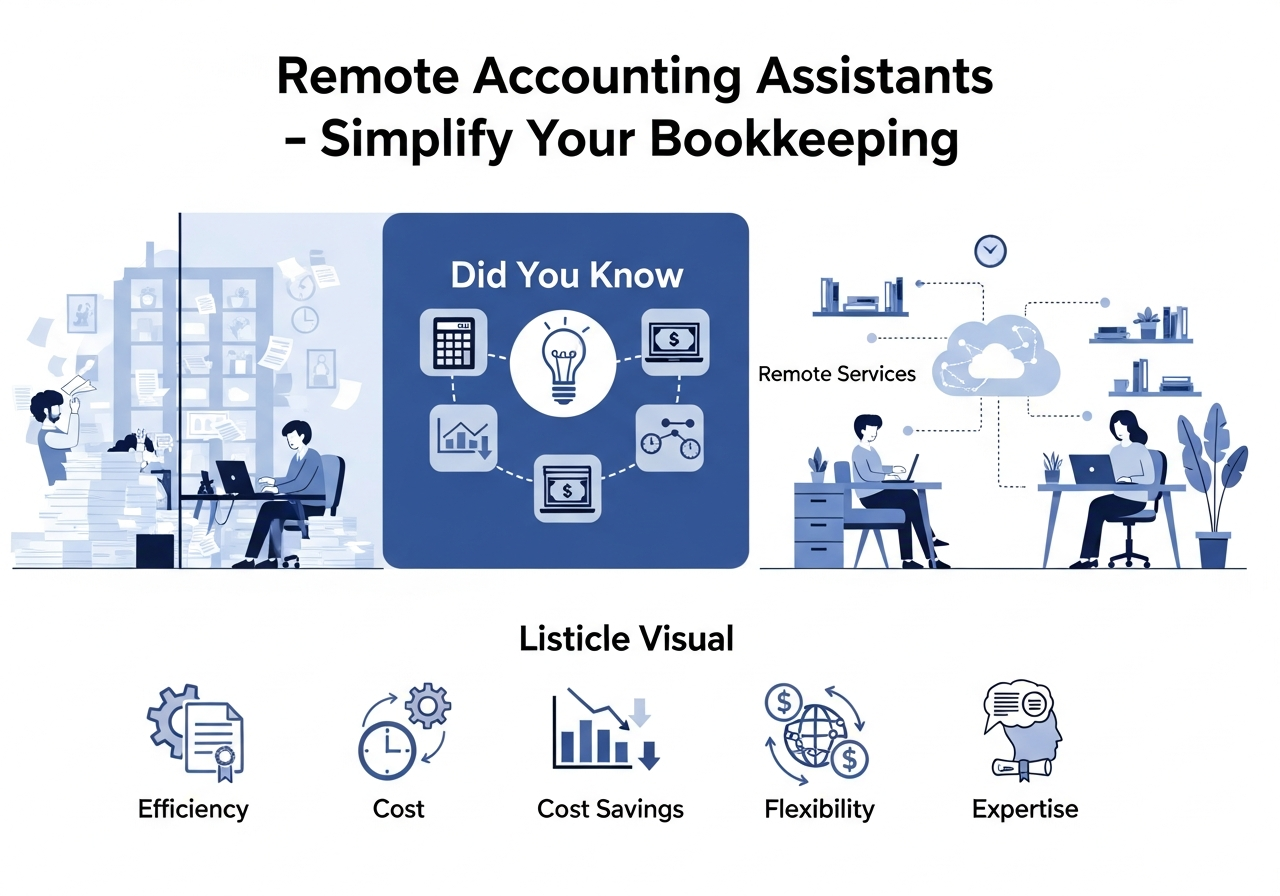
Smart businesses treat Remote Accounting Assistants as an investment, not an expense.
Businesses save $52,000+ per year compared to hiring in-house.
Here is why thousands of businesses are making the switch.
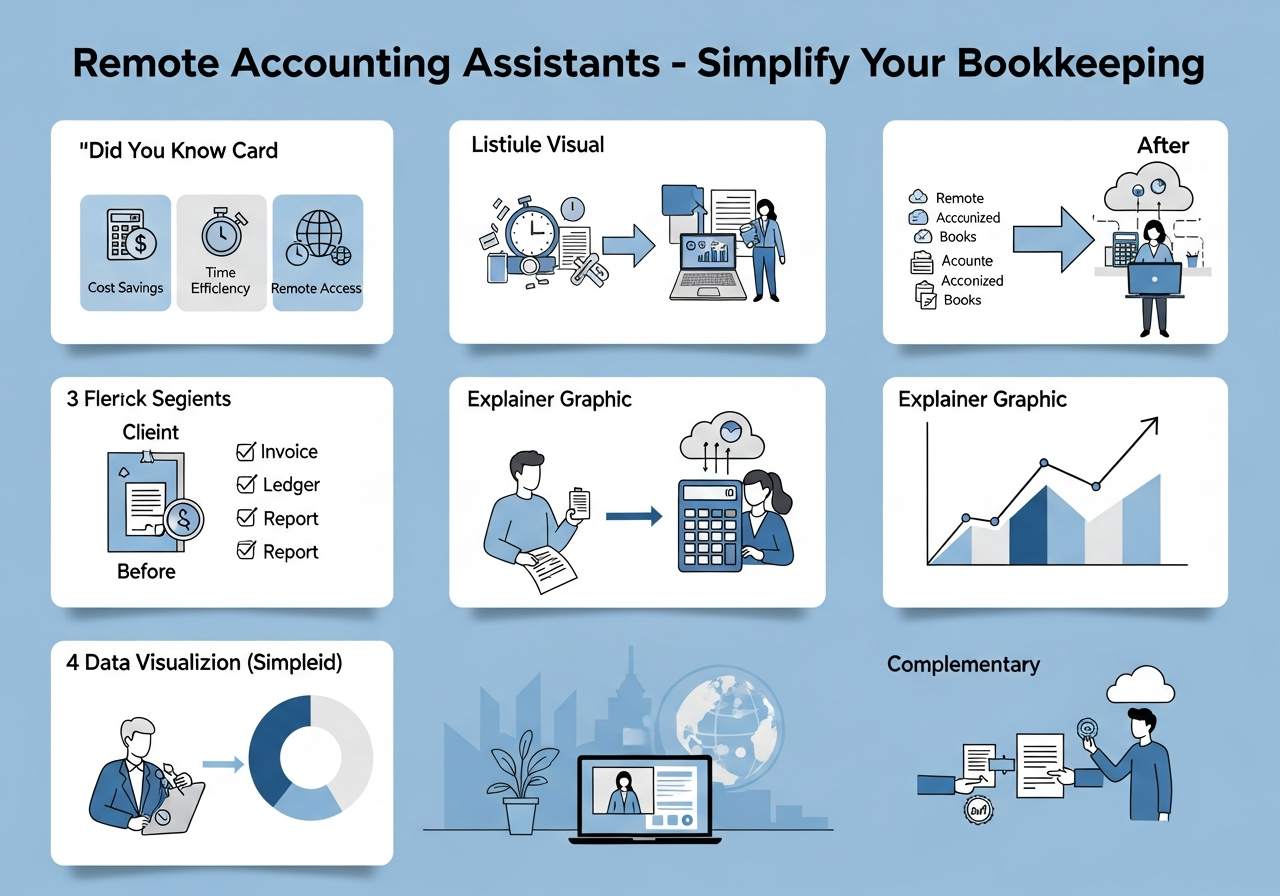
Quick Overview: Remote Accounting Assistants
| Factor | Details |
|---|---|
| Monthly Investment | $1,600/month (full-time, dedicated) |
| In-House Equivalent Cost | Bookkeeper salary + benefits = $71,500/year |
| Your Annual Savings | $52,300 back in your business |
| Tasks Handled | Bookkeeping, invoicing, payroll, tax prep |
| Experience Level | 3+ years accounting experience |
| Software Skills | QuickBooks, Excel, accounting platforms |
| Backup Coverage | Included at no extra cost |
Your Remote Accounting Assistants saves you time and money while keeping your books perfect.
The Hidden Cost Of DIY Bookkeeping
Business owners spend 16 hours per week on admin tasks.
That means you waste 832 hours per year on paperwork instead of growing your business.
Missed tax deadlines cost companies an average of $5,000 in penalties.
Plus, 73% of small business owners work nights and weekends trying to keep up.
Tasks Your Remote Accounting Assistant Can Handle
| Category | Specific Tasks | Time Saved Per Week |
|---|---|---|
| Daily Bookkeeping | Data entry, bank reconciliation, expense tracking | 8-12 hours |
| Invoicing | Create invoices, send reminders, track payments | 4-6 hours |
| Payroll Support | Process payroll, track hours, handle deductions | 3-5 hours |
| Tax Preparation | Organize documents, prepare reports, quarterly filings | 5-8 hours |
| Financial Reports | Monthly reports, profit/loss, budget tracking | 4-6 hours |
| Accounts Management | Accounts payable, accounts receivable, vendor management | 6-8 hours |
Your Remote Accounting Assistant handles all these tasks while you focus on what you do best.
Most business owners get back 20-25 hours per week when they delegate accounting tasks.
That time can go toward sales, strategy, and actually running your business.
The global accounting outsourcing market is projected to reach $81.25 billion by 2030, growing steadily.
💡
Did You Know?
Companies with organized books are 3x more likely to get approved for business loans and lines of credit.
The True Cost Comparison
| Expense | In-House Bookkeeper | Remote Accounting Assistant |
|---|---|---|
| Base Salary | $55,000/year | $19,200/year |
| Benefits & Taxes | $16,500/year | $0 |
| Office Space & Equipment | $4,000/year | $0 |
| Training & Onboarding | $2,500/year | $0 |
| Backup Coverage | None | Included |
| Management Support | You handle everything | Campaign Manager helps |
| Total Annual Cost | $78,000+ | $19,200 |
| Your Savings | - | $58,800/year |
You save almost $59,000 per year with a Remote Accounting Assistant.
That money can go toward marketing, equipment, or growing your team.
Accounting firm executive assistants will help you to grow your team without getting bogged down by tasks.
How A Remote Accounting Assistant Transforms Your Finances
Your books go from messy to organized in just a few weeks.
You get clear reports that show where your money goes and where it comes from.
Tax time becomes easy instead of stressful.
Plus, you can make better business decisions with accurate financial data.
-
Never miss another invoice or payment deadline
-
Get monthly reports that actually make sense
-
Keep perfect records for tax season
-
Track expenses so you know where money goes
-
Have backup support when your assistant is out
-
Work with someone who knows accounting software
Accounting staff agencies will help you save time and reduce hiring risks.
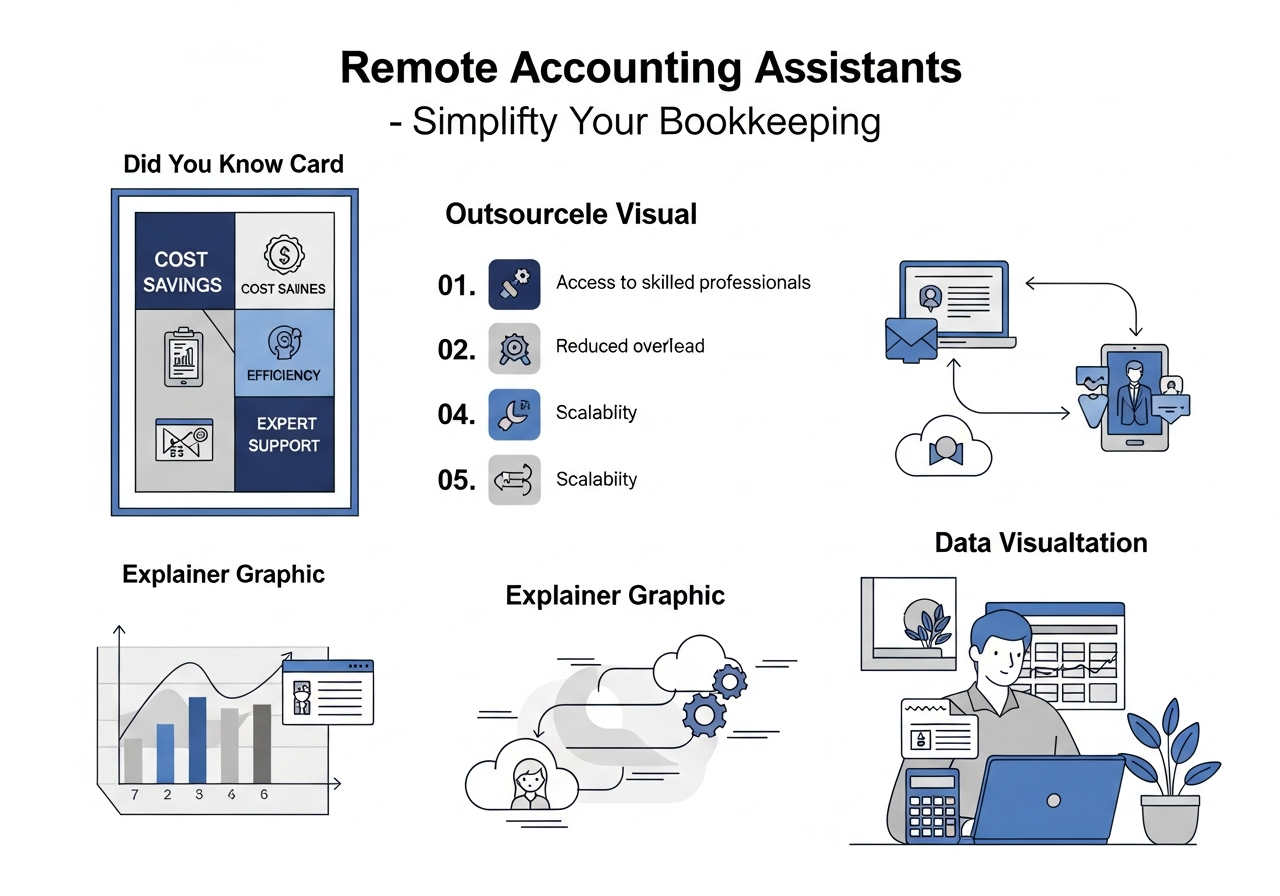
A Day In The Life Of Your Remote Accounting Assistant
Your assistant starts each morning by checking bank accounts and updating transactions.
They create and send invoices, then follow up on overdue payments.
Afternoons are for processing expense reports, reconciling accounts, and preparing financial reports.
They end each day by updating your books so everything is current.
💡
Remote Accounting Assistant Pro Tip
Set up weekly check-ins with your assistant to review reports and discuss any questions. This keeps you in the loop without micromanaging.
What Makes A Great Remote Accounting Assistant
Look for someone with at least 3 years of bookkeeping experience.
They should know QuickBooks, Excel, and other accounting software.
Strong attention to detail is crucial since one mistake can cause big problems.
Good communication skills help them explain financial reports in simple terms.
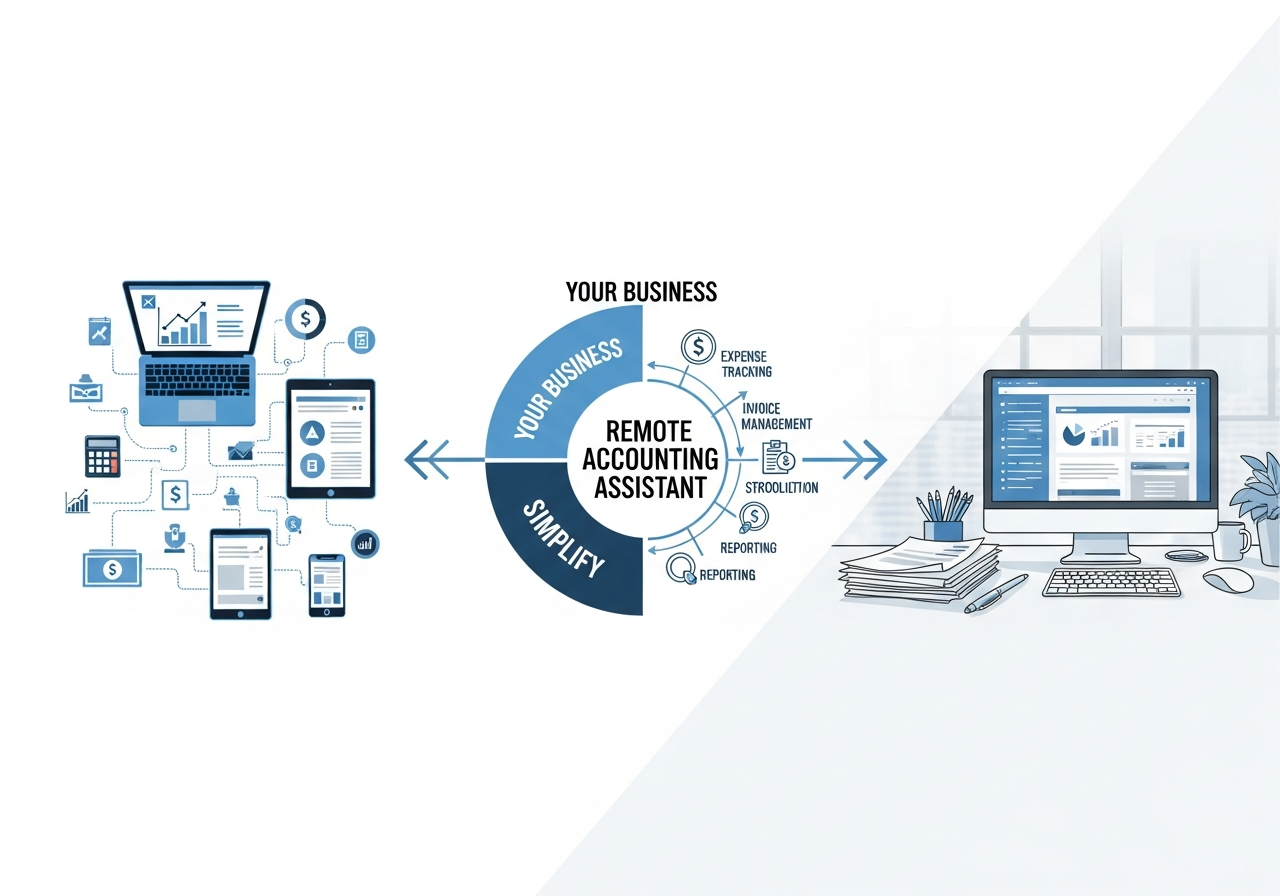
Keys To Success With Your Remote Accounting Assistant
| Success Factor | How To Implement | Expected Results |
|---|---|---|
| Clear Process Setup | Document how you want tasks done | Consistent, accurate work |
| Regular Communication | Weekly check-ins and monthly reviews | No surprises or issues |
| Proper Access | Give access to needed software and accounts | Work gets done on time |
| Realistic Goals | Set clear deadlines and expectations | Better productivity and results |
Success comes when you treat your assistant like a real team member.
Industries We Support
We work with law firms, medical offices, contractors, and retail businesses.
Real estate agencies love having someone track commissions and expenses.
Restaurants use our assistants for payroll and food cost tracking.
Every industry has unique accounting needs, and we match you with someone who gets it.
Common Mistakes To Avoid
Do not try to save money by hiring someone without accounting experience.
Avoid assistants who only work with basic software or limited hours.
Never skip the onboarding process - it sets your assistant up to win.
Do not forget to give access to all the tools they need to do the job right.

The Stealth Agents Difference
We match you with pre-vetted accounting professionals who know your industry.
Your assistant gets backup support so work never stops.
Our Campaign Managers help with training and any issues that come up.
Plus, we handle all the HR stuff so you can focus on your business.
Common Questions Answered
How Do I Know My Financial Data Is Safe?
All our assistants sign strict privacy agreements and use secure systems.
We follow the same security standards that banks and CPA firms use.
What If My Assistant Gets Sick Or Takes Time Off?
We provide backup coverage at no extra cost.
Another trained assistant steps in so your work never stops.
Can My Assistant Work With My Current Accounting Software?
Yes, our assistants know QuickBooks, Xero, FreshBooks, and most other platforms.
They can learn new software quickly if needed.
How Long Does It Take To Get My Books Organized?
Most businesses see organized books within 2-3 weeks.
Complex businesses might take 4-6 weeks to get everything perfect.
🎯
Key Takeaway
A Remote Accounting Assistant gives you organized books, accurate reports, and 20+ hours per week back in your schedule - all for less than half the cost of hiring in-house.
Ready To Get Your Time Back?
Stop spending nights and weekends on bookkeeping when you could be growing your business.
For every $1 you spend on a Remote Accounting Assistant, you get $3-5 back in saved time and better financial decisions.
Contact Stealth Agents today to find your perfect Remote Accounting Assistant and start saving money right away.
Ready to Get Started?
Stealth Agents provides dedicated support teams to handle the work that matters. Compare plans and pricing or explore our services to find the right fit for your business.