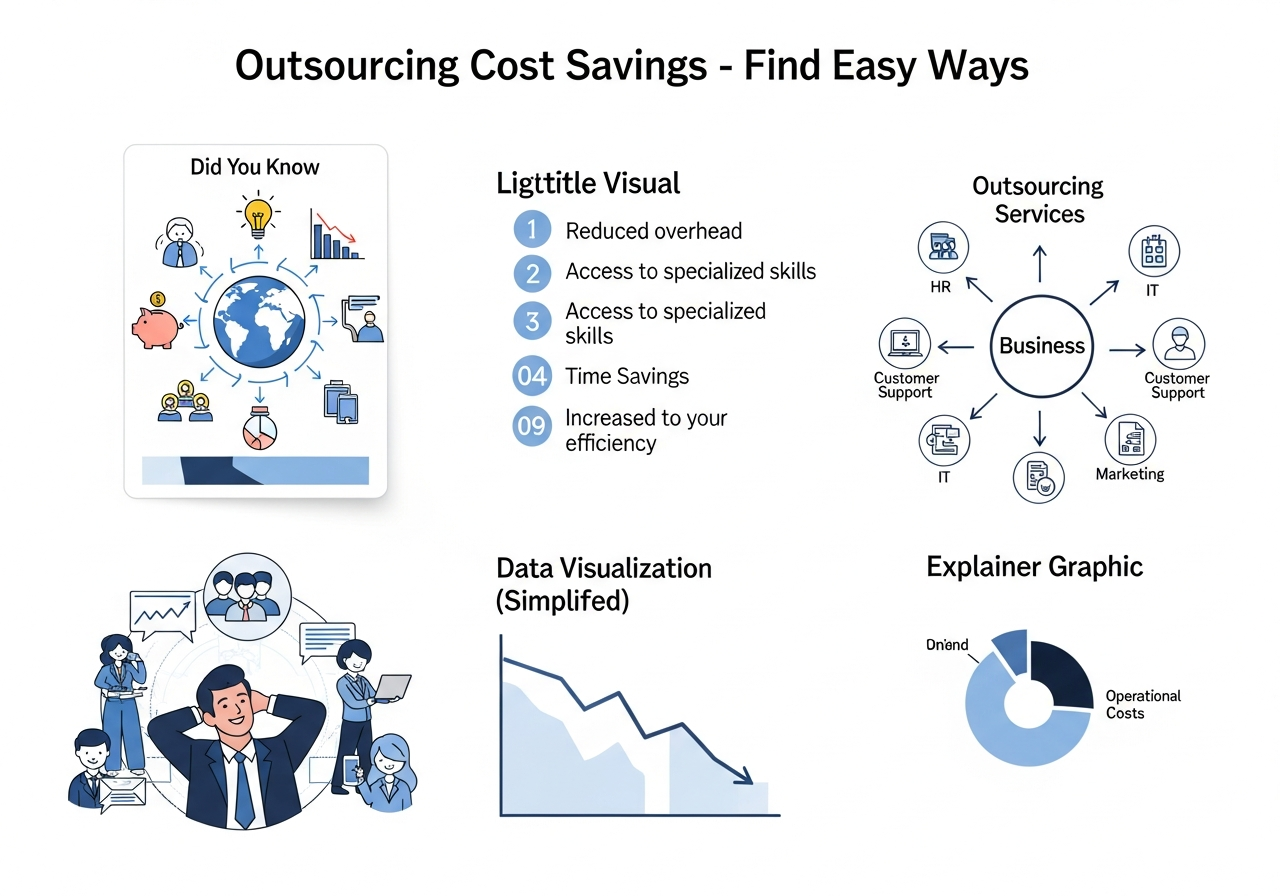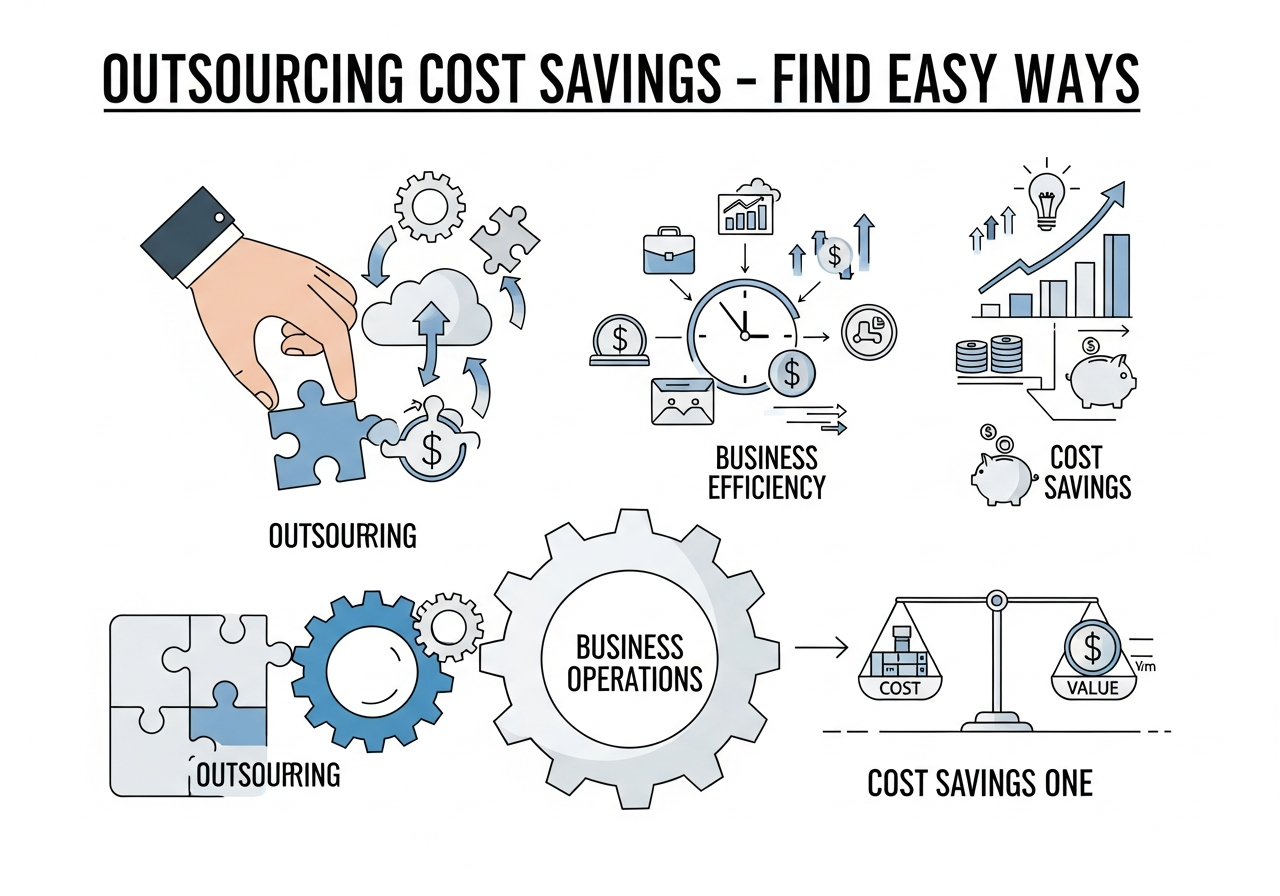
Outsourcing cost savings is the fastest way to reduce overhead and boost productivity without sacrificing quality. Stealth Agents helps businesses save money by providing expert virtual support tailored to their goals, allowing teams to scale smarter and focus on growth.
According to Deloitte, 59% of businesses cite cost reduction as their top reason for outsourcing, with average savings ranging from 30% to 70% compared to in-house operations. Beyond cutting expenses, outsourcing also boosts efficiency and allows teams to focus on growth-driving tasks. By partnering with Stealth Agents, companies can access skilled virtual professionals who deliver high-quality results at a fraction of the cost, proving that smart outsourcing isn’t just about saving money, it’s about scaling smarter.
Outsourcing has been shown to reduce operational costs by up to 60% for businesses, providing a compelling financial incentive for companies of all sizes.
Transitioning to outsourced services can address societal challenges such as unemployment by creating job opportunities globally. As entrepreneurs explore outsourcing cost savings, they uncover financial benefits, enhanced efficiency, and access to specialized skills.
Stealth Agents stands ready to guide you through this transformative process, offering free consultations to align with your preferences and discuss virtual assistant pricing.
With an estimated 37% of small businesses already utilizing outsourcing, the trend is clear and growing. By embracing this strategy, companies can strategically allocate resources while contributing positively to economic shifts.
Such pragmatic decisions ensure sustainability and continued growth in today’s competitive marketplace.
Is Outsourcing Strategy to Reduce Labor Costs?
Outsourcing can be a smart way for businesses to save money because it cuts down on unnecessary spending in many areas.
Hiring employees directly often brings high costs, like salaries, benefits, and office space, but using outsourcing cost reduction strategies eliminates many of these expenses.
Many companies use outsourcing specifically to curb hiring costs, as it helps them get the work done without the need to pay full-time salaries.
For instance, by relying on outsourcing labor costs, businesses can access highly skilled workers at a fraction of the price they’d pay locally.
The total costs of outsourcing are often much lower because businesses don’t have to handle training, equipment, or benefits.
Through outsourcing to reduce costs, you can also hire experts like outsourced executive assistants or outsourcing agents who streamline tasks efficiently without adding to your permanent workforce.
Additionally, startups benefit from cost-effective outsourcing solutions for startups, such as affordable appointment setting services cost options, which help them stay competitive without draining their budgets.
What is outsourcing?
Outsourcing is when a company hires another company to do work for them. Instead of using their own employees, they pay outside experts to handle certain tasks or projects. This helps companies get expert help without hiring more staff.
There are three main types of outsourcing based on location:
- Onshore outsourcing: Hiring a company in the same country.
- Nearshore outsourcing: Hiring a company in a nearby country (for example, a U.S. company hiring in Canada or Mexico).
- Offshore outsourcing: Hiring a company in a faraway country (for example, hiring for computer support from India or the Philippines).
Does offshoring really save money compared to in-house operations?
Offshoring is still one of the best ways to save money compared to running everything in-house.
Here’s why offshoring helps reduce costs:
- Lower Operating Costs: By offshoring, companies avoid expenses like office space, utilities, and equipment for local staff. Service providers like Accenture or Infosys often include these in their packages.
- Skilled Workers, Ready to Go: Offshoring gives you access to experienced workers worldwide. There’s no need to spend time or money on hiring or training—they’re ready to start immediately.
- Faster Project Completion: Without the delays of training or onboarding, work gets done faster. This means businesses can launch products or services more quickly.
- Less Admin Work: Things like payroll, HR, and employee benefits are handled by offshoring agencies, freeing up your team to focus on growing the business instead of dealing with paperwork.
How Outsourcing Can Significantly Reduce Costs for Businesses?
Outsourcing to reduce costs allows businesses to lower operational expenses and focus their budgets on growth areas.
Using outsourcing labor costs, companies avoid high employee salaries and benefit costs while still accessing skilled professionals.
The managed outsourcing costs also support companies in hiring cost avoidance gains by removing recruitment challenges.
Services like an executive assistant or specialized outsourcing agents streamline operations without adding full-time expenses.
Startups especially gain from cost-effective outsourcing solutions for startups, such as affordable tools for managing appointment-setting services cost-efficiently
How Much Does It Cost to Outsource Various Business Functions?
Outsourcing business tasks can come with a wide range of costs, depending on several key factors. Here’s what to consider before making a decision:
Main Factors That Influence Outsourcing Costs
1. Type of Service: Simple tasks like data entry or customer support are usually cheaper, while specialized services like software development, graphic design, or legal advice cost more.
2. Skill Level Required: Hiring highly skilled experts, such as certified accountants, experienced developers, or marketing strategists, will cost more than hiring for basic tasks like admin support or virtual assistance.
3. Location of the Provider: Outsourcing to countries like India, the Philippines, or Eastern Europe is often less expensive than hiring in North America, Western Europe, or Australia. Platforms like Upwork or Fiverr can help you compare prices across different regions.
4. Payment Model:
- Hourly Rate: Good for projects with unpredictable or changing needs.
- Fixed Fee: Best for tasks with clear goals and budgets.
- Retainer/Dedicated Team: Ideal if you need regular, ongoing support with a set monthly or quarterly fee.
Why Do Companies Pursue Outsourcing Cost Savings?
Businesses often look for ways to reduce expenses, and outsourcing for cost savings is a significant strategy in achieving this goal.
By delegating certain operations to external providers, companies can access specialized skills and services without the expense of maintaining them in-house. A study found that about 59% of companies report outsourcing as a cost-cutting tool, highlighting its financial benefits.
This approach allows businesses to focus on core activities, enhancing productivity and growth. Outsourcing cost savings also provides flexibility in scaling operations up or down based on demand, offering a competitive edge in fluctuating markets.
Additionally, it enables firms to convert fixed costs into variable ones, freeing up capital for investment in other areas.
As organizations face increasing pressure to maintain profitability, outsourcing remains a practical solution for managing expenses effectively.
What Are the Benefits of Outsourcing for Cost Savings?
1. Lower Operational Costs
Outsourcing can significantly reduce operational expenses by transferring tasks to external specialists.
Businesses often face high labor costs and overheads, which can be alleviated by employing services where labor is less expensive. This approach lowers direct labor costs and minimizes office space, equipment, and utilities expenses.
Companies can redirect the saved funds toward core business activities, fostering growth and development.
Moreover, outsourcing allows firms to pay for services only when needed, avoiding the financial burden of maintaining a full-time workforce.
Businesses can achieve substantial savings by strategically selecting outsourcing partners without compromising on quality. This method is a viable solution for companies aiming to remain competitive and financially prudent.
2. Access to Expertise
Outsourcing provides businesses with access to a pool of skilled professionals with expertise and experience in specific fields. This is particularly beneficial for companies that lack the resources to hire specialists in-house.
By outsourcing, businesses can tap into industry experts who are up-to-date with the latest practices and technologies.
This access ensures work is done efficiently and to a high standard, reducing the need for costly training programs for existing employees.
Additionally, outsourcing partners often have a deeper understanding of compliance and regulatory requirements, safeguarding the business from potential legal issues.
This transfer of knowledge enhances productivity and contributes to overall cost savings. Utilizing specialized services enables companies to maintain a competitive edge without incurring excessive costs.
3. Focus on Core Competencies
Outsourcing allows companies to concentrate on their core competencies by delegating non-essential tasks to external providers.
This focus is crucial for maintaining competitive advantage and ensuring long-term success. By offloading administrative functions or specialized services, businesses can allocate more resources to areas directly impacting growth and profitability.
This shift enables management to dedicate time and effort to strategic planning and innovation rather than getting bogged down by routine tasks.
Furthermore, outsourcing streamlines operations, leading to improved efficiency and service delivery.
Concentrating on core strengths enhances productivity and elevates brand reputation. By doing so, businesses can achieve optimal performance while realizing significant cost savings.
4. Increased Flexibility
Outsourcing allows businesses to scale operations up or down based on demand without incurring significant costs.
This adaptability is vital in today’s fast-paced market, where needs can change rapidly. By outsourcing certain functions, companies can quickly adjust to market conditions, ensuring they remain competitive and responsive.
This flexibility extends to workforce management, allowing firms to access additional resources during peak periods and reduce them during slower times.
Outsourced services can be tailored to meet specific business needs, providing a customized approach that aligns with company objectives.
This adaptability contributes to operational efficiency and helps maintain financial stability. As a result, businesses can confidently navigate market fluctuations, ultimately leading to cost savings from outsourcing.
5. Risk Management
Outsourcing is crucial in effective risk management, as it allocates responsibilities to external partners. This collaboration can help mitigate risks tied to business operations, such as compliance, security, and data management.
Outsourcing providers often have robust systems and processes to handle potential risks, offering an added layer of protection. By leveraging their expertise, businesses can better navigate challenges and lessen the likelihood of costly errors.
Furthermore, outsourcing can provide financial stability by transforming fixed costs into variable ones, allowing for more predictable financial planning.
This risk-sharing model strengthens business resilience, ensuring companies are well-prepared for unforeseen events. Introducing a risk management virtual assistant can enhance this strategy by offering specialized skills and flexibility in addressing specific risk management needs.
By adopting outsourcing as a risk management strategy, businesses can safeguard their interests while achieving cost efficiencies.
Common Challenges Associated with Outsourcing
Outsourcing can bring many benefits, but it also comes with challenges that businesses need to manage for a smooth experience.
1. Communication Issues
Working with teams in different countries can lead to communication problems. Time zone differences, language gaps, and cultural differences can cause delays or misunderstandings. Using tools like Slack, Zoom, or Microsoft Teams can help keep everyone on the same page and projects running smoothly.
2. Ensuring Quality
It can be tricky to make sure outsourced work meets your company’s standards. To avoid issues, set clear expectations, create measurable goals, and regularly check the work. This helps maintain quality and protects your brand.
3. Integrating External Teams
Adding outsourced services to your existing processes can sometimes be complicated. Combining tools, systems, and workflows might take time and effort. Businesses should align technologies and reporting systems carefully to ensure smooth teamwork between in-house and external teams.
4. Keeping Data Safe
Sharing sensitive information with third-party providers can increase security risks. To protect data, make sure your partners follow strict security rules and meet compliance standards like GDPR or HIPAA. Investing in strong cybersecurity measures is also important to keep your data safe.
5. Onboarding New Teams
Getting started with outsourcing can require time and resources. Training new teams on your company’s processes, culture, and expectations may take extra effort. However, investing in thorough onboarding helps ensure smooth operations and better results over time.
What Are Affordable Solutions for Outsourcing Cost Savings?
1. Virtual Assistance Services
Virtual assistance services provide an effective way to manage administrative tasks without the overhead of full-time staff.
By hiring affordable virtual assistants, businesses can delegate routine tasks like scheduling, email management, and data entry to skilled professionals who work remotely. This strategy reduces costs associated with office space and equipment and offers the flexibility to scale the workforce as needed.
This virtual assistant brings diverse skill sets, allowing companies to choose the expertise that aligns with specific business needs.
The financial advantage lies in paying for services only when required, thereby avoiding the expenses associated with traditional employment benefits.
By integrating virtual assistance, companies can concentrate more on core operations while ensuring efficient daily task management. Affordable virtual assistants are crucial for businesses aiming to enhance productivity and achieve strategic goals without overstretching their budgets.
2. Freelance Talent Acquisition
Engaging freelancers for short-term projects grants businesses access to a wide array of experts without binding them to long-term commitments.
This adaptable hiring framework allows companies to secure specialized skills for diverse projects, ensuring top-tier results without the overhead of full-time staff.
Freelancers bring fresh insights and innovative solutions, boosting the quality of work delivered. Utilizing freelancers also enables companies to navigate workload variations efficiently, bringing in professionals only when needed.
This setup supports cost savings by minimizing employee benefits, office space, and training expenses. By integrating the Philippines’ freelance services, businesses can maintain agility and swiftly adapt to market shifts.
These services are crucial for balancing quality and cost, making them a strategic choice for outsourcing.
3. IT Outsourcing
Outsourcing IT functions is a strategic choice for businesses seeking to manage costs and enhance technical capabilities.
By leveraging IT outsourcing services for small businesses, companies gain access to the latest technology and expert support without substantial capital investment. These service providers offer a range of solutions, including infrastructure management, cybersecurity, and software development, all tailored to specific business needs.
The financial benefits stem from paying only for necessary services, eliminating the expense of an in-house IT department. This strategy allows businesses to concentrate on their primary objectives, delegating technical challenges to skilled professionals.
IT outsourcing improves operational efficiency, mitigates risks related to technology changes and cyber threats, and ensures reliable service delivery and significant cost savings.
These services are crucial for small businesses as they enable access to advanced IT solutions that might otherwise be unaffordable, fostering growth and competitive advantage.
4. Call Center Outsourcing
Call center outsourcing is a valuable solution for businesses seeking to optimize customer service without incurring high costs.
Outsourcing these services to specialized providers ensures professional handling of customer inquiries, complaints, and support, enhancing customer satisfaction.
Call centers have the expertise to manage high call volumes efficiently, offering businesses scalability without the expense of building an in-house team.
Outsourced call centers operate around the clock, providing customer support across different time zones. This not only improves customer experience but also increases sales opportunities. The cost benefits include reduced staffing, infrastructure, and technology expenses.
By outsourcing call centers, businesses can focus on growth while delivering exceptional customer service. This is a strategic move to maintain competitiveness and operational efficiency.
5. Content Creation Services
Engaging professional content creators can significantly enhance a company’s marketing efforts while controlling expenses.
By outsourcing content creation, businesses can leverage the expertise of writers, designers, and videographers who craft high-quality materials tailored to the brand’s needs.
These professionals infuse creativity and industry insight, ensuring content that resonates with target audiences. The financial advantages include sidestepping the costs of hiring full-time creative staff and investing in production equipment and software.
By collaborating with a content creation virtual assistant, companies can efficiently scale their content efforts in response to market demands, ensuring timely campaign execution.
This approach boosts brand visibility and strengthens customer engagement and loyalty. They are crucial in enhancing marketing strategies by providing flexible and expert support and helping businesses achieve impactful marketing outcomes through strategic cost management.
Why Choose Stealth Agents for Outsourcing Cost Savings?
Choosing Stealth Agents for outsourcing cost savings is a strategic decision combining affordability and high-quality service. Starting at just $15, Stealth Agents offers competitive pricing that allows businesses to optimize their operational budgets efficiently.
Companies that rely on outsourcing often report a 20% to 30% reduction in costs, and with Stealth Agents, these savings become even more significant.
Known for their reliability and expertise, Stealth Agents is trusted by over 500 clients worldwide, demonstrating their capacity to handle diverse business needs effectively.
Clients consistently praise Stealth Agents’ professional approach and dedication to understanding unique business challenges.
By partnering with Stealth Agents, businesses achieve cost efficiencies and benefit from a service-oriented team committed to their success. Experience the assurance of quality outsourcing solutions tailored to achieve substantial cost savings and drive growth.
What Is the Hiring Process If I Decide to Outsource?
If you’ve been thinking about outsourcing tasks for your business, you’re probably wondering how the hiring process works.
We’ve broken it down into simple steps so you can see how easy, cost-effective, and stress-free it can be.
By using outsourcing, you can experience outsourcing cost savings while gaining skilled professionals without the overhead of hiring in-house.
Here’s a straightforward guide that shows you how we make outsourcing simple and effective.
1. Tell Us Your Needs
The first step is to share exactly what your business needs. Whether you’re looking for an outsourced executive assistant, someone for finance outsourcing cost saving, or cost-effective outsourcing labor solutions, we’ll match you with the right person.
Be specific about tasks like appointment setting services cost, administrative help, or even IT outsourcing cost savings so we can find the best fit.
This helps us choose a candidate with the right skills while keeping outsourcing costs low. It’s about your goals, your budget, and how outsourcing can reduce costs for your business.
2. We Find the Perfect Match
Once we know what you need, our team screens candidates to ensure you’re getting top talent.
Our outsourcing agents handle all the heavy lifting—background checks, skills tests, and interviews—to make sure the candidate is the right fit for your company.
Whether you need cost-effective outsourcing solutions for startups or experienced outsourcing agents, we prioritize quality.
You’ll receive a short list of skilled virtual assistants so you can focus on real outsourcing savings.
This step is designed to help companies curb hiring cost avoidance while getting the best hire.
3. Your Campaign Manager Ensures Smooth Onboarding
When you’ve chosen your virtual assistant, a dedicated campaign manager steps in to guide the process.
The campaign manager supervises the VA’s performance, tracks progress, and ensures everything runs smoothly from day one.
You get continuous support, so your outsourcing is cost-effective and delivers results.
If you’re wondering, does outsourcing reduce costs while saving time? The answer is yes, especially with a team backing you up at all times.
A well-managed onboarding process means quicker results and cost reduction.
4. 100% Satisfaction Guarantee
We’re so confident in our hiring process that we offer a 100% money-back guarantee.
If we can’t deliver the best hire for your needs, we’ll make it right or give you back what you invested.
This guarantee ensures zero risk while maximizing your outsourcing for cost savings.
Whether you’ve chosen an outsourced executive assistant or someone for IT outsourcing cost savings, you can have peace of mind that you’ll always get the best.
Reducing outsourcing costs doesn’t mean cutting corners, and we stand by that promise.
5. Enjoy the Benefits of Outsourcing
With a virtual assistant on board, you can experience outsourcing cost savings through lower labor costs and increased productivity.
Cost-effective outsourcing labor solutions provide you with affordable yet highly skilled talent.
Imagine how outsourcing to reduce costs could free up your time or help your team focus on core tasks.
From finance outsourcing cost-saving to cost-effective outsourcing services, it’s all about a more innovative business.
Over time, outsourcing reduces costs and leads to better gains for companies to achieve cost avoidance success and faster growth.
Takeaways
Outsourcing cost savings represent a strategic advantage in today’s competitive business landscape.
By leveraging external expertise, businesses can significantly reduce overhead expenses while maintaining high-quality service delivery. As companies strive for efficiency, outsourcing becomes a choice and a necessity for sustainable growth.
The benefits extend beyond cost reduction, fostering innovation and allowing access to a global talent pool. Businesses can enhance productivity and drive profitability by focusing resources on core competencies.
Moreover, outsourcing offers flexibility and scalability, which are crucial for adapting to market demands. Embracing outsourcing is a proactive step toward achieving long-term success and operational excellence.
To experience the transformative benefits of outsourcing, consider professional virtual assistant services from Stealth Agents. With pricing starting at just $15, these services are tailored to meet your business needs efficiently and affordably.
Frequently Asked Questions
What percentage of cost savings can businesses expect in the first year of outsourcing?
Businesses can save 20-40% in their first year of outsourcing, with some saving up to 60%. The exact amount depends on what tasks are outsourced, current costs, and the provider’s pricing. Many companies recover their initial costs within 3-6 months and see bigger savings after that.
Which business functions offer the highest cost savings when outsourced?
IT services, customer support, and accounting/bookkeeping often save the most, with reductions of 40-70%. Tasks like data entry, administrative work, and content creation can save 30-50%. Manufacturing and technical services may save 25-45%, depending on the complexity and location.
How do you calculate the actual cost savings from outsourcing versus keeping operations in-house?
To calculate savings, compare in-house costs (salaries, benefits, office space, equipment, and training) with outsourcing fees and any setup costs. Don’t forget hidden costs like hiring, HR management, and employee turnover. Many businesses compare costs per task or per hour over a year to see the real savings.
What are the hidden costs that can reduce outsourcing savings?
Hidden costs include setup fees, training, communication tools, quality checks, and rework. Other costs may come from time zone differences, cultural training, legal compliance, and technology setup. During the transition, extra management time may also add to expenses.
When is the best time for a company to start outsourcing for maximum cost savings?
The best time to outsource is when your business is growing and hiring costs are rising, or when you need to cut costs quickly. If repetitive tasks take more than 20 hours a week, or if you have seasonal work or lack certain skills, outsourcing can save money fast.
How long does it take to see measurable cost savings after implementing outsourcing?
Most businesses see savings within 30-60 days, with full benefits after 3-4 months once processes are running smoothly. Simple tasks like admin work show savings quickly, while more complex tasks may take up to 6 months to see the biggest cost reductions.
What contract terms maximize cost savings in outsourcing agreements?
Contracts with clear goals, flexible pricing, and performance guarantees save the most money. Include penalties for poor performance and regular price reviews. Longer contracts (12-24 months) often have better rates, and flexible terms let you adjust services to avoid paying for unused work.
How do small businesses achieve cost savings through outsourcing compared to large corporations?
Small businesses save 35-50% by outsourcing because they don’t need to hire full-time staff or pay for office space and equipment. While large companies save by scaling, small businesses benefit from turning fixed costs into variable ones and accessing skills they couldn’t afford in-house.
What metrics should companies track to measure outsourcing cost savings success?
Track cost-per-task, total savings percentage, time-to-complete improvements, and quality scores. Also, measure productivity gains, lower hiring costs, and reduced overhead. Monthly comparisons and efficiency reports help track savings and find ways to improve.
How do different outsourcing models (project-based vs. dedicated team) impact cost savings?
Project-based outsourcing saves 20-30% with no long-term commitment but has higher hourly rates. Dedicated teams save 40-60% with lower rates and steady work but need longer contracts. A mix of both models can save the most by matching the right approach to each task.